Former president’s son described condition as ‘very painful’ and ‘very debilitating in many respects’
Former President Joe Biden’s prostate cancer has spread further since his diagnosis last year, his son Hunter Biden revealed in a BBC interview that aired Friday.
“The cancer has spread, metastasized into his bones and further,” Hunter Biden told BBC Newsnight, describing his father’s condition as “very painful” and “very debilitating in many respects.”
“It’s really sad to watch,” the younger Biden went on. “The only thing that I’d say about my dad, about his health right now, is I wish he would complain more, because it’s not good.”
Biden, 83, announced his diagnosis in May 2025, after news that a “small nodule” had been found in the former president’s prostate during a routine exam.
“While this represents a more aggressive form of the disease, the cancer appears to be hormone-sensitive, which allows for effective management,” his office said at the time. “The president and his family are reviewing treatment options with his physicians.”
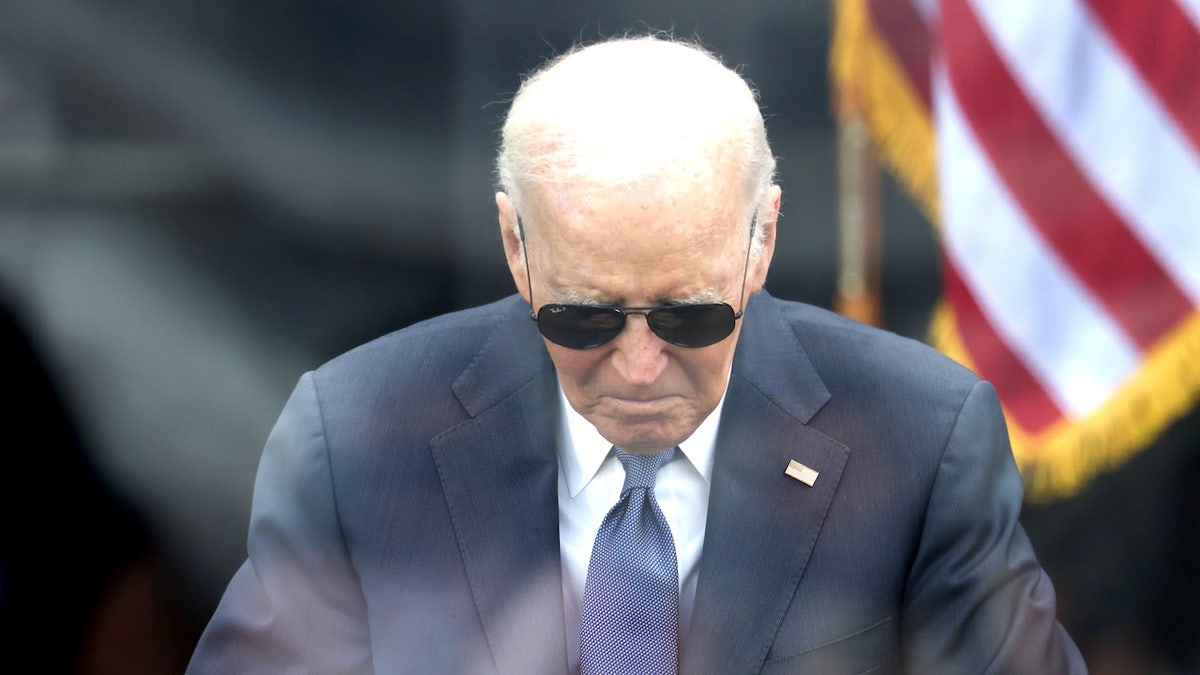
Former President Joe Biden’s prostate cancer has spread further since his diagnosis last year, his son Hunter Biden revealed. (Getty Images)
Biden later underwent hormone therapy and radiation treatment, completing a course of radiation at Penn Medicine Radiation Oncology in Philadelphia in October 2025, according to the former president’s spokesperson.
In addition to hormone therapy, common treatment options for prostate cancer include chemotherapy, targeted therapy, immunotherapy and radiopharmaceutical treatments.
Fox News Digital reached out to Biden’s office for comment.
What to know about prostate cancer
Prostate cancer is a disease found in men that develops in the prostate gland. Cases have been on the rise in recent years, with overall incidence increasing about 3% annually from 2014 through 2021, according to the American Cancer Society.
Rates of advanced-stage prostate cancer rose about 5% per year during that period.

Hunter Biden says his father ‘chose me over his legacy’ with controversial pardon
About 333,830 new cases of prostate cancer are expected to be diagnosed in the U.S. in 2026, and about 36,320 men are expected to die from the disease, according to the American Cancer Society.
One in eight men will be diagnosed with prostate cancer in their lifetime, the same source stated.
Older men are at a higher risk of the disease, with six in 10 cases diagnosed in patients 65 and older. The average age at diagnosis is 67, with men under 40 rarely affected.
Prostate cancer is the second-most common cancer in men, behind only skin cancer, the ACS noted.
Signs and symptoms
Among men who undergo routine prostate cancer screening, the disease is usually caught early before symptoms emerge, per the ACS.
Typical early symptoms include problems urinating, a weak or slow urinary stream or an increased need to urinate. Some men may also notice blood in the urine or bodily fluids.
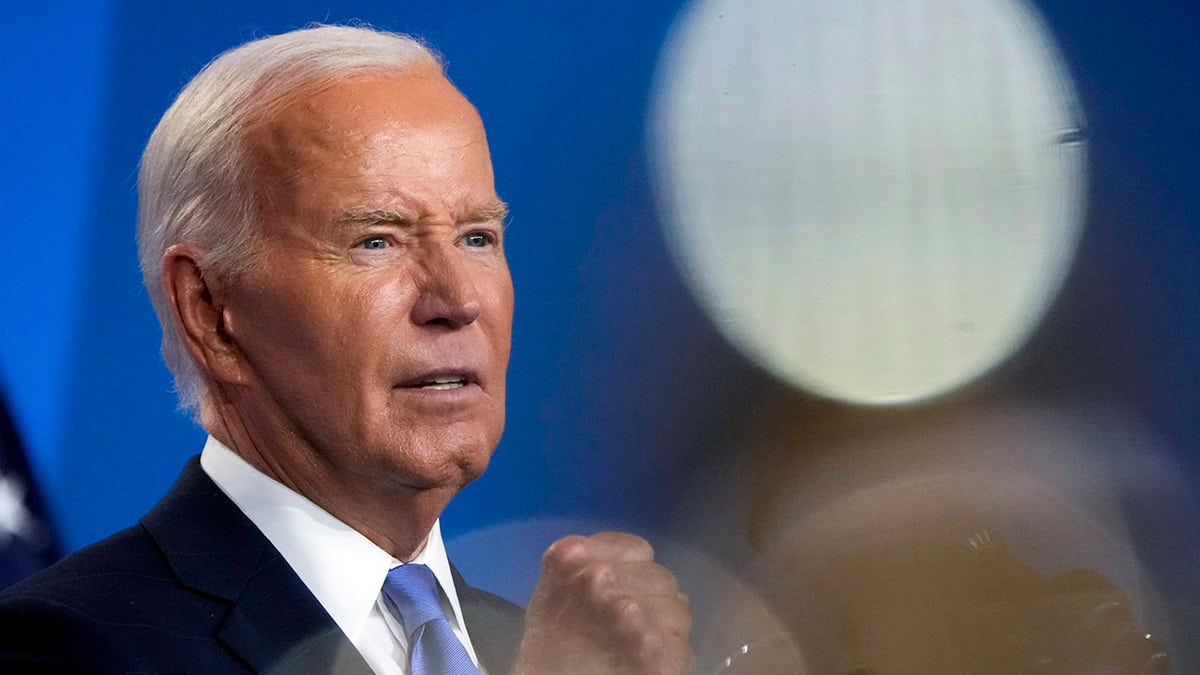
Biden, 83, announced his diagnosis in May 2025, after news that a “small nodule” had been found in the former president’s prostate during a routine exam. (AP Photo/Jacquelyn Martin, File)
Former U.S. President Joe Biden Diagnosed with Malignant Cancer
More advanced symptoms may occur after the disease has spread. Those may include pain in the hips, back (spine), chest (ribs) or other areas, the ACS stated.
Men may also suffer from erectile dysfunction, weight loss, extreme fatigue, weakness in the legs or feet, or loss of bladder or bowel control.
Screening recommendations
The U.S. Preventive Services Task Force states that men aged 55 to 69 years should have the option to undergo periodic prostate-specific antigen (PSA)-based screening to monitor for prostate cancer.
“Before deciding whether to be screened, men should have an opportunity to discuss the potential benefits and harms of screening with their clinician and to incorporate their values and preferences in the decision,” the USPSTF states.
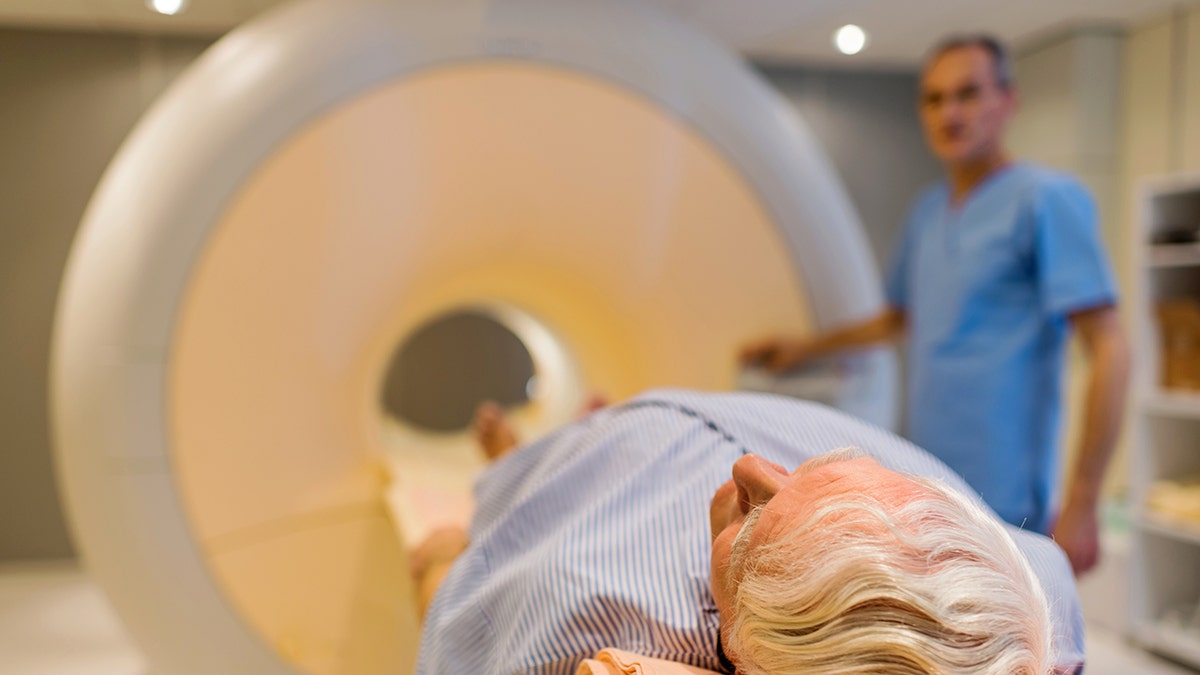
The U.S. Preventive Services Task Force states that men aged 55 to 69 years should have the option to undergo periodic prostate-specific antigen (PSA)-based screening to monitor for prostate cancer. (iStock)
While screening offers a “small potential benefit” of reducing the chances of dying from the disease, the agency noted that some men may experience negative effects, including false-positive results, overdiagnosis and overtreatment, and treatment complications.
Alternative prostate cancer screening methods are currently being researched, including one that uses a non-invasive urine test, as Fox News Digital recently reported.
Survival rates
For localized prostate cancers, where the disease is contained within the prostate, the five-year survival rate is at least 99%, according to the ACS.
For regional cases, where the disease has spread only to “nearby structures or lymph nodes,” the five-year survival rate is also 99% or greater.
If the cancer has spread to other areas of the body, the five-year survival rate drops to 37%.
Actual survival rates may vary based on the patient’s age, overall health, how the cancer has progressed post-diagnosis, the disease’s response to treatment, and other factors, the ACS noted.
DOJ continues Biden autopen probe despite former president unlikely to face charges
The shrinking world of former president Joe Biden
Cancer treatment has sharply limited Biden’s post-White House life even as his upcoming memoir threatens to reopen debates over his health and presidency.
Joe Biden’s world has grown smaller.
Eighteen months after leaving the White House, the 83-year-old former president moves within a narrowed circle of relatives, old friends and longtime aides as he undergoes treatment for metastatic cancer.
The treatment appears to be working, according to five former aides and others close to Biden, many of whom spoke on the condition of anonymity to candidly discuss his health and private life. But the disease — and the toll of treating it — has left him visibly frail.
Those around Biden describe a post-presidency constrained by illness with his days increasingly organized around treatment, family and efforts to shape his legacy.
Unlike some recent predecessors, Biden has maintained a limited public schedule, has yet to build a sprawling philanthropic or policy operation and has struggled to raise money for a presidential library, leaving him with fewer avenues to influence how his presidency is remembered.
Biden waves before departing the Edward M. Kennedy Institute for the United States Senate in Boston in October. (Scott Eisen/Getty Images)
That frailty is likely to become harder to keep private this fall, when Biden begins promoting a memoir scheduled for publication on Nov. 17, two weeks after the midterm elections. The timing has unsettled some friends and former advisers, who worry not only about Biden’s well-being, but also about how much his visible health struggle could revive the bitter arguments of 2024 just as Democrats are trying to make the election a referendum on President Donald Trump.
Trump has repeatedly mocked Biden’s age and acuity and replaced his portrait along a White House colonnade with an image of an autopen, a visual taunt built on the unsupported allegation that aides used the device to exercise presidential authority for a debilitated commander in chief.
Those close to Biden bristle at the way his illness and physical decline have become part of his critics’ case against him and his party.
Hunter Biden gave voice to the family’s frustration last month after a critic attacked his father’s cancer diagnosis on social media.
“Listen man — I understand if you don’t like my Dad’s politics and you hate me because you believe everything Fox News has told you,” he wrote. “I’m fine with that, but my Dad has cancer. How is that an issue you want to attack. What sickness is in you that makes that fair game?”
Biden is seen leaving Janssen’s Market in Wilmington, Delaware, in September. (Mega/GC Images)
The Biden health debate may soon be reignited. On Tuesday, a federal appeals court cleared the way for the Heritage Foundation, a conservative think tank, to obtain redacted transcripts and audio recordings that were among the evidence a special prosecutor used to portray Biden as an “elderly man with a poor memory.”
Questions about Biden’s age, stamina and mental acuity shadowed much of his presidency and eventually overwhelmed his campaign for a second term.
The health concerns became an acute political crisis after Biden’s June 27, 2024, debate against Donald Trump. Speaking in a weak, hoarse voice, Biden repeatedly lost his train of thought, struggled to complete answers and at times appeared unable to press a forceful case against his opponent.
Biden’s performance intensified doubts among Democratic lawmakers, donors and voters about both his ability to campaign and his capacity to serve through January 2029. Biden initially rejected calls to withdraw, attributing the performance to a cold, exhaustion and a bad night. But after more than three weeks of mounting pressure, he ended his reelection bid on July 21.
Biden’s planned return to the spotlight presents an awkward political challenge for Democrats. Many remain personally fond of Biden, grateful for the accomplishments of his presidency and sympathetic to a man battling a serious illness. But they are also trying to distance themselves from a 2024 campaign in which questions about his age, health and decision to seek reelection damaged public trust and divided the party.
“President Biden has every right to tell his story. But Democratic candidates are already working their tails off to overcome the political damage he left behind,” said Sawyer Hackett, a Democratic strategist who worked on presidential campaigns for Barack Obama and Hillary Clinton. “The best thing Biden could do to help that effort is to get as far away from the spotlight as possible.”
In May 2025, four months after leaving the White House, Biden was diagnosed with an aggressive form of prostate cancer that had spread to his bones. He is undergoing treatment for the disease, which can be managed but is not considered curable.
In media interviews, former first lady Jill Biden has described her husband’s diagnosis as deeply unexpected, saying the family was shocked to learn that the cancer had already reached Stage 4 and metastasized to his bones. Since then she has offered a cautiously optimistic assessment of her husband’s health, saying his treatment is working and that he is maintaining a regimented schedule.
Since leaving office, Biden has addressed the issue intermittently, generally offering upbeat but limited public accounts of his condition. He has made a handful of appearances, at Democratic Party events in South Carolina and South Dakota, and at the dedication of Obama’s presidential library, where he beamed alongside several other former occupants of 1600 Pennsylvania Ave.
“Given all the health diagnoses, he was energetic, in good spirits,” former Democratic National Committee chair Jaime Harrison said of Biden at the South Carolina Democratic Party convention in May. Like many Democrats, Harrison knew the seriousness of Biden’s prognosis and wondered whether he would seem like his old self. Instead, the former president — also the convention’s keynote speaker — moved through a full slate of events, many of them organized to honor him.
“He was fired up,” Harrison said. “You sure as hell couldn’t tell he was an 83-year-old man battling cancer.”
Biden, along with other former residents of 1600 Pennsylvania Ave., attends the dedication ceremony for the opening of the Barack Obama Presidential Center in Chicago last month. (Win McNamee/Getty Images)
Biden’s post-presidential office declined to answer questions about his day-to-day activities, medical treatment or ongoing prognosis. Through a spokesman, the former president declined an interview. His office disclosed in fall 2025 that he was receiving radiation and hormone therapy and that he had undergone Mohs surgery to remove cancerous skin cells. When he announced his forthcoming memoir earlier this month, Biden offered another brief update, saying that he was undergoing treatment and that it was going “really well.”
The fallout from Biden’s 2024 campaign also sharpened scrutiny of how his aides — and even his successor, Vice President Kamala Harris — had managed his public exposure. Subsequent reporting described a presidency increasingly structured around shorter meetings, tightly controlled appearances and greater reliance on senior advisers to serve as intermediaries.
The public, jarring image of his shaky debate presentation made some voters feel that they had been misled — not only by the White House, but by a broader Democratic establishment that had defended his reelection bid and discouraged a competitive primary.
Republicans have seized on those lingering questions, portraying Biden’s decline as evidence not only of the former president’s failings but of a coordinated effort by Democratic leaders they accuse of concealing his condition.
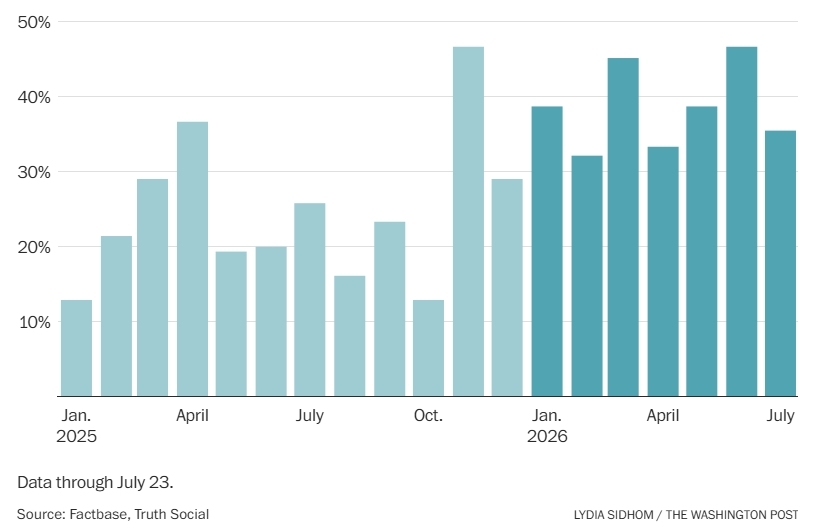
In speeches, posts, anecdotes and asides, Trump has repeatedly mentioned Biden’s health — often using the nickname “Sleepy Joe,” according to a Washington Post analysis.
Last month, he referenced it nearly every other day, compared with about 1 in 5 days during the previous June, according to The Post’s review of Trump’s speeches, interviews, social media posts and other public remarks.
Trump has mentioned Biden’s health more often this year
He mentioned Biden’s health nearly half of the days last month.
Biden’s aides and other Democrats reject the idea that a book tour by a former president who has not shaped policy in more than a year — and is now undergoing cancer treatment from his Delaware home — will meaningfully influence the midterm elections.
“No one is going to be thinking about Joe Biden in November,” said one former aide, who requested anonymity to speak candidly about a former boss. “They’re going to be thinking about filling up their tank and putting food on their table, and Joe Biden has nothing to do with that.”
Harrison, the former DNC chair, argued that voters have more immediate questions about the health of the man now occupying the Oval Office, who turned 80 in June.
“It was amplified, it was even caricaturized when Biden was president, but Trump falls asleep during meetings. He is literally sleeping,” Harrison said. “But yet it’s like a blip. The man has more blemishes and marks on his skin — that says something is going on.”
The White House has consistently pushed back on such criticism, insisting Trump remains in strong health and dismissing questions about his physical condition.
“The man has more blemishes and marks on his skin — that says something is going on,” former Democratic National Committee chair Jaime Harrison says of President Donald Trump. (Saul Loeb/AFP/Getty Images)
Trump has made three trips to Walter Reed National Military Medical Center since April 2025 as persistent bruising on his hands and swelling in his lower legs have drawn scrutiny. His most recent examination involved 22 medical specialists — an unusually large team — though his physician pronounced him in “excellent health,” attributing the swelling to chronic venous insufficiency and the bruising to frequent handshaking combined with aspirin use.
Health inevitably shapes what presidents can do after leaving office.
Before age and illness restricted his public life, Jimmy Carter devoted decades to election monitoring, diplomacy, public health and Habitat for Humanity — work that transformed his reputation and earned him the Nobel Peace Prize.
Bill Clinton, who will turn 80 next month, remained highly visible, building a global foundation, writing books, delivering paid speeches and campaigning for Democrats, including his wife. George W. Bush largely stepped away from partisan politics, focusing on veterans, the Bush Institute and painting. Obama has been more selective, emerging for major political moments while devoting much of his time to books, media projects, his foundation and, most recently, the Obama Presidential Center.
Biden’s allies are raising money for a presidential library in Delaware, imagined as a center for public service and civic life. But his library effort has so far attracted only a fraction of the money raised for the legacy projects of recent presidents: His foundation expected to collect about $11 million by the end of 2027, compared with the hundreds of millions raised by Bush and Obama in the first years after they left office.
Step into a world dedicated entirely to man's best friend - dogs. Our website is a treasure trove of heartwarming news, touching stories, and inspiring narratives centered around these incredible creatures. We invite you to join us in spreading the joy. Share our posts, stories, and articles with your friends, extending the warmth and inspiration to every corner.With a simple click, you can be part of this movement.Related Articles








:max_bytes(150000):strip_icc():focal(753x271:755x273):format(webp)/cole-the-deaf-dog-112125-1a-ad248101bd174108a795d88d6afd93d8.jpg?fit=750,500&ssl=1 "Elementary School Throws Deaf Therapy Dog a Surprise Birthday Party as Students Learn Sign Language to Sing ‘Happy Birthday’")