Crushing student debt and soaring living costs pushed wave after wave of young voters to turn their backs on the Republican Party, dealing the GOP a devastating loss in the midterms.
After graduating from college, 23-year-old Gavin Jacobsen, hailing from rural Jackson, Minnesota, was saddled with roughly $120,000 in student loan debt. Now in graduate school, he is deeply anxious about his job prospects when he graduates next June.

This past Thanksgiving, he couldn’t afford to fly home to his parents from Los Angeles due to a $500 plane ticket. His family’s financial situation back home isn’t much better, even though Jacobsen’s father works as a high school teacher who coaches sports on the side, and his stepmother works as a dental specialist.
“In the richest country in the world, my parents work multiple jobs and still can’t afford a plane ticket to bring their child home,” he said. “It’s a massive paradox.”
Jacobsen’s roommate struggled for five months after graduation without being able to find a full-time job, ultimately taking a manual labor gig.
That reality led Jacobsen to vote for Democratic candidates in the midterm elections on Nov. 3. “Democrats finally started listening to us and began drilling down on issues that directly impact young people and the working class,” Jacobsen said.
According to Jacobsen, he had never previously felt that any candidate or party truly represented his voice. That deep frustration and a sense of floundering among young people—unable to hit traditional milestones of independence and starting a career—sparked one of the most dramatic voter shifts in modern U.S. political history, according to The Wall Street Journal.
The Reversal
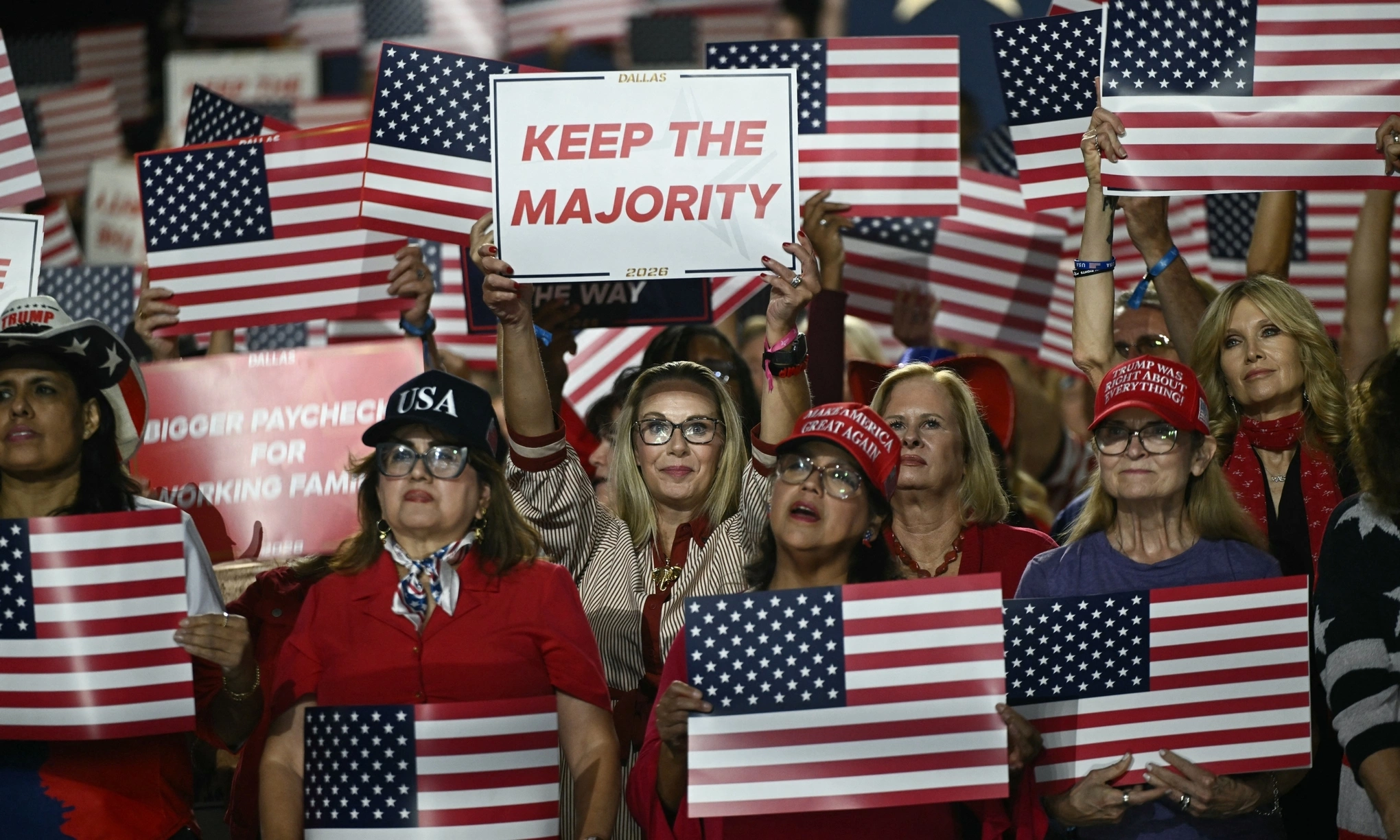
Heading into the midterms, President Trump urged voters to turn out, asking them to “imagine that my name is on the ballot.” But according to AP Voter Poll data, most voters nationwide were hungry for change, with 75% of respondents saying they felt “angry” or “frustrated” with the direction of the country during the first two years of Trump’s term.
Voters aged 18 to 29 recorded the most dramatic reversal, with support for Democratic House candidates jumping by more than 20 percentage points compared to 2024. The largest shifts occurred among young non-college-educated voters, as well as white and Latino men under 30—the very bedrock demographics that helped propel Trump back to the White House two years prior.
Preliminary estimates from Circle, a nonpartisan youth civic engagement research center at Tufts University, indicate that youth turnout this year reached 27%, matching 2022 midterm levels. While 16% of young voters who supported Trump in 2024 flipped to vote for Democrats, many others simply chose to stay home.

“It is clear that campaign managers and politicians can no longer ignore young people,” said Leela Strong, executive director of Circle.
Many of Jacobsen’s friends in Minnesota had originally supported President Trump, but decided to skip the midterms altogether, feeling he had broken key promises, particularly regarding the economy. Trump had pledged to bring back a golden economic era, driving down unemployment, inflation, and gas prices.
However, Federal Reserve Bank of Atlanta data shows that unemployment for Americans aged 18 to 29 remains about a percentage point higher than pre-pandemic levels, averaging 7% since early 2026. Meanwhile, wage growth for young entry-level workers aged 16 to 24 has plunged to its lowest point in a decade.
“Young adults feel like the ground is collapsing under their feet,” remarked Betsey Stevenson, professor of economics and public policy at the University of Michigan. “The current economy simply doesn’t give them enough confidence to plan a stable future.”
In recent years, the economic outlook for young men has lagged behind that of young women due to falling college enrollment rates among men, manual labor being automated, and new job creation concentrating in female-dominated sectors like healthcare.
The Democratic Strategy
Republicans previously seized on this sense of angst to woo young men in 2024. But on Nov. 3, Democrats flipped the script using their own economic play.
“Young men are becoming the new swing voters in American politics,” said Richard Reeves, president of the American Institute for Boys and Men.
This time, Democrats focused on the economic gridlock confronting young men, rather than getting bogged down in culture war debates that painted men as the root of societal problems.
Joshua Evans, 26, living in Kannapolis, North Carolina, voted for Trump in both 2020 and 2024, but chose to sit out last week’s election.
He felt disillusioned seeing Republicans control both the White House and Congress yet fail to deliver on their promises. “The Republican Party truly took its core youth male base for granted,” he said.
Evans ran up $40,000 in debt studying journalism and communications, but has been unable to find a job in his field.
He currently works as a supermarket stocker making $21 an hour, spending nearly $1,000 a month on loan repayments. Splitting rent with his sister, Evans now views his dream of buying his own home as entirely out of reach.

He said he didn’t “expect to become a millionaire” under President Trump, but at least expected genuine efforts to lower gas and food prices. Ultimately, Evans was crushed when the conflict in Iran further drove up living costs.
While Evans still considers himself a Republican, he remains undecided on whether he will vote for them in the 2028 election.
According to AP Voter Poll data, 50% of voters under 30 stated their personal finances had deteriorated significantly compared to two years ago—a higher proportion than any other age group. Young voters have also felt the brunt of price spikes and tend to blame Trump’s policies more directly.
Beyond cost-of-living issues, Democrats tapped into a fresh anxiety among young voters: the fallout from the AI boom. Many perceive the aggressive surge in AI data center construction as a driving factor behind rising energy bills, shrinking residential land supply, and growing threats to job security.
Xavier Sepesi, an 18-year-old college freshman and bank teller in Kansas, voted Democratic after witnessing heated local battles over data center developments.
“I just don’t see how they benefit the community at all,” he said.
In the northern suburbs of Columbus, Ohio, 19-year-old Grayson McCartney also cast his very first ballot on Nov. 3, backing the Democratic ticket. McCartney, who works at a fast-food chain, desperately wants to go to college but can’t stomach the tuition fees. He is also saving up to rent an apartment, but rental prices are way out of reach.
“I can barely afford the gas to drive to work,” he said. McCartney hopes elected officials will roll out more financial aid policies so young adults can afford higher education, along with expanding student loan forgiveness.

Another factor alienating young voters from the Republican party was the widespread immigration crackdown conducted by Immigration and Customs Enforcement (ICE). Sepesi, a Latino living in a working-class, multicultural neighborhood, has spent recent months watching friends and bank customers suffer as loved ones were detained and deported.
Although Sepesi’s own family was unaffected, seeing families torn apart hardened his resolve to back Democrats. “I feel that crackdown campaign was entirely wrong,” he noted.
Even President Trump himself conceded that his administration’s immigration crackdown was “probably too tough,” acknowledging widespread sentiment that immigrants who are law-abiding, hard-working, and paying taxes should be allowed to remain in the U.S.
Still, according to expert Reeves, if Democrats fail to improve the economic situation after taking control of Congress ahead of the 2028 presidential election, young voters—particularly young men—could quickly defect once again.
“The very volatility of this voting block demands that everyone tread carefully,” he observed. “You can never take their votes for granted forever; you have to continually earn them.”
Trump Admits Harsh Anti-Immigration Policy ‘Backfired’
U.S. President Donald Trump admitted that his administration’s deportation policies were a key factor behind the losses he and the Republican Party suffered in the midterm elections.
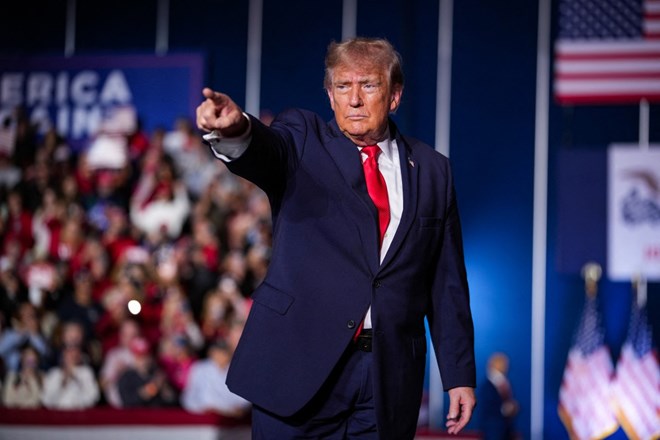
In an interview on CBS News’s 60 Minutes broadcast on Nov. 8, President Donald Trump acknowledged that his policies had become overly harsh by targeting undocumented immigrants who had no criminal record.
“It hurt me because we picked up people that had good jobs. Their only infraction was entering the country illegally,” Mr. Trump said. The White House occupant referred to a large segment of the public who believe that immigrants who are law-abiding, working, and paying taxes should be allowed to remain in the country.
President Trump highlighted immigration as one area where he hopes to cooperate with Democrats, while leaving open the possibility of establishing legal status for undocumented workers. However, he noted that a major hurdle comes from far-right politicians who insist on deporting all undocumented immigrants.
Beyond immigration, Mr. Trump also blamed the Republicans’ heavy midterm defeat partly on poor communications strategy, which he said failed to convey the right message to voters. He added that the media gave the GOP unfair coverage, forcing him to speak out personally.
White House communications efforts faced additional strain following the resignation of former Press Secretary Karoline Leavitt in August. Her successor, Katie Zacharia, departed after less than a week on the job, leaving the administration without a key spokesperson during the final stretch of the election campaign, NBC News reported.
During the CBS News interview, Mr. Trump was also asked about his net worth increasing by nearly $3 billion since returning to the Oval Office in 2025. The U.S. president remarked that “everyone’s wealth has gone up.”
According to Forbes, President Trump’s net worth currently stands at $6.3 billion, with much of the gain driven by cryptocurrency values. Nevertheless, the American leader said he spends almost no time monitoring his wealth, as all financial matters are directly managed by one of his sons.

Sweeping Congress, Do Democrats Have Enough Power to Check Trump?
A decisive midterm victory handed Democrats control of the U.S. Congress starting in January 2027. Yet, once the celebrations fade, the party faces the daunting challenge of overseeing and checking President Donald Trump.
Political observers point out that taking control of both chambers of Congress does not mean Democrats can easily turn campaign promises into policy—especially with President Trump retaining veto power and the GOP maintaining control of the White House.
On the campaign trail, Democratic lawmakers pledged to investigate corruption, lower healthcare, food, and fuel costs, and curb the conflict with Iran. However, delivering on these promises will require complex negotiations and compromises.
Senate Democratic Leader Chris Coons cautioned that the party should not view the election outcome as a mandate, noting that overall approval ratings for the party remain low. According to Coons, the imperative now is to demonstrate an ability to deliver concrete results on issues voters care about most—particularly sluggish wage growth and rising living costs.

Ability to Oversee and Check the Trump Administration
One of the most significant powers Democrats gain following their victory is enhanced oversight of the Trump administration through congressional committees.
Representative Robert Garcia, expected to chair a powerful oversight committee in the House, declared that Republicans and those close to President Trump should brace for investigations. Targets highlighted by Garcia include the president’s family, allegations of corporate corruption, and alleged abuses of power by federal agencies.
According to the BBC, armed with subpoena and investigative powers, the House Oversight Committee could launch inquiries into potential conflicts of interest, corporate profiteering, operations of the Department of Homeland Security and Immigration and Customs Enforcement (ICE), as well as the administration’s handling of files related to convicted sex offender Jeffrey Epstein.
In addition to oversight capabilities, Senate Democrats can confirm or reject presidential nominations for Cabinet positions and federal judgeships. Should a vacancy arise on the U.S. Supreme Court during Trump’s term, Democrats could block a nominee or force the White House to select a more moderate candidate to secure bipartisan support.
Another mechanism is the House’s power of impeachment. Democrats impeached Mr. Trump twice during his first presidency, but he was acquitted by the Senate both times.
Under constitutional rules, convicting and removing a sitting president requires a two-thirds majority in the 100-seat Senate (67 votes). Thus, despite securing a 54-seat majority in the incoming Senate, Democrats are unlikely to muster the necessary votes without significant Republican support.
Internal debate persists within the Democratic Party over whether to pursue impeachment once again. The first impeachment in 2019 escalated political tensions and allowed Mr. Trump to portray himself as a victim of political persecution—a narrative that arguably helped consolidate support for his subsequent reelection campaign.
House Democratic Leader Hakeem Jeffries has refrained from taking a definitive stance on the matter, stating that Democrats are keeping all options on the table.

Uphill Battle to Pass Legislation
Even with majorities in both the House and Senate, Democrats face a formidable obstacle: President Trump’s power to veto legislation he opposes.
In principle, holding congressional majorities allows Democrats to pass bills relatively smoothly. However, for a bill to officially become law, it generally requires the president’s signature. Congress can override a presidential veto only with a two-thirds vote in both chambers—a threshold Democrats cannot reach on their own.
Professor Casey Burgat of George Washington University observed that lawmaking becomes vastly more complex when one party controls Congress while the other holds the executive branch.
Following consecutive Republican defeats in Senate races, Mr. Trump stated a willingness to work with Democrats. Yet shortly thereafter, he posted an image on Truth Social featuring his signature red campaign hat emblazoned with the word “Veto.” The contrast underscores the heightened risk of confrontation between the White House and a Democrat-controlled Congress.
A top priority for Democrats is restoring budget cuts made by Republicans to healthcare programs, particularly Medicaid for low-income individuals and tax credits under the Affordable Care Act (ACA), commonly known as Obamacare.
However, restoring these programs is likely to draw stiff opposition from President Trump and congressional Republicans.
Even on issues with potential bipartisan common ground—such as easing the cost of living, regulating artificial intelligence (AI), reviewing military aid to Israel, and de-escalating the Iran conflict—negotiations risk breaking down. Republicans may be reluctant to give their opponents major legislative wins as both sides begin setting their sights on the 2028 presidential election.
Internal Fractures and Foreign Policy Constraints
Beyond clashes with Republicans, Democrats face potential internal divisions, particularly regarding U.S. policy toward Israel.
During the midterms, several Democratic candidates, including Senator-elect Abdul El-Sayed of Michigan, pledged to support legislation restricting military aid to Israel. This stance could put them at odds with party leadership, complicating efforts to present a unified front.
Another challenge lies in reining in Mr. Trump’s foreign policy, especially concerning military action against Iran.
Prior to the midterms, lawmakers from both parties joined forces to push measures curbing the president’s war powers. In June, both the House and Senate passed a resolution directing an end to hostilities against Iran.
However, Mr. Trump largely ignored the resolution. The White House maintained that the president possesses broad authority to continue military operations against Tehran.
Meanwhile, Scott Anderson, a senior fellow in governance studies at the Brookings Institution, noted that Congress’s legal authority to compel a president to alter such decisions remains an unresolved constitutional question. According to Anderson, Congress could take the matter to court to ask the judiciary to clarify the boundaries of executive power.
Analysts generally agree that winning the midterms arms Democrats with essential tools to monitor and pressure the Trump administration. However, controlling Congress does not translate to absolute policy control. The presidential veto, deep partisan divides, and internal party fractures present formidable hurdles to turning Democratic campaign promises into law.