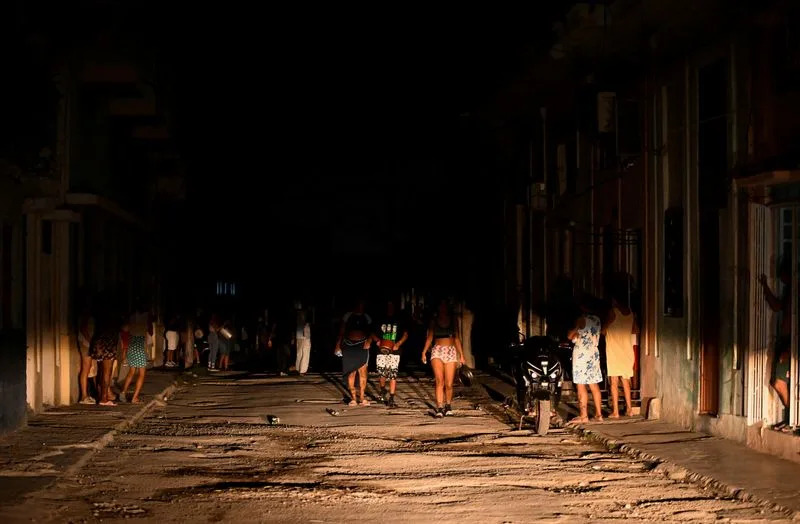
Millions in Cuba have been left without power after the national electric grid collapsed on Monday, the country’s power operator says.
This the latest in a series of widespread power outages to hit the country, whose chronic fuel shortages have been exacerbated by a recent US blockade on oil shipments to the island.
UNE, Cuba’s grid operator, says it is gradually restoring electricity in provinces and cities around the country.
Cuba, an island of around 10 million, has battled widespread blackouts in recent years – a persistent source of public discontent that has triggered rare protests.
Cuba relies heavily on imported fuel, and Venezuela was believed to have sent around 35,000 barrels of oil a day to Cuba – accounting for about half of the island’s oil needs.
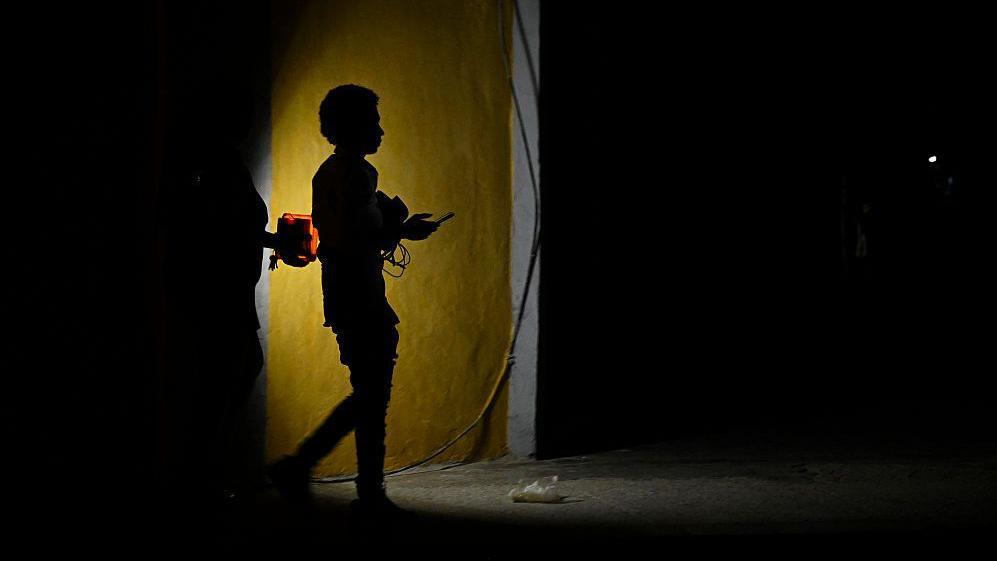
But these shipments have been halted since the US captured Venezuelan president Nicolas Maduro in January.
Since then, the US has ramped up pressure on Cuba by seizing a number of oil shipments bound for the island. US president Donald Trump has also threatened tariffs on any country that supplies oil to Cuba.
No oil shipments have arrived in Cuba in the last three months, according to Cuban president Miguel Diaz-Canel.
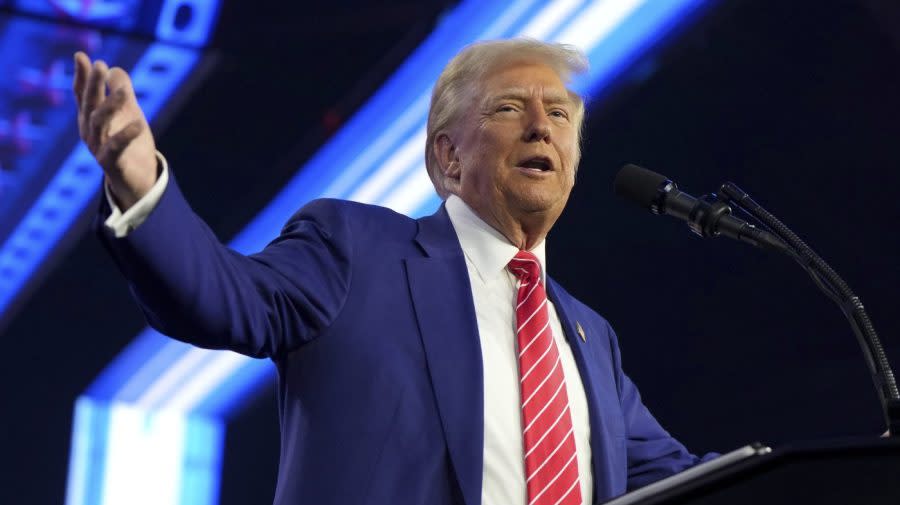
Trump told reporters at the White House on Monday that he believed he would have the “honour of taking Cuba”.
“Whether I free it, take it, I could do anything I want with it, you want to know the truth. They’re a very weakened nation right now.”
He previously threatened a “friendly takeover” of the country, a long-time foe of the US since communist leader Fidel Castro overthrew a US-backed government in Cuba in 1959.
Last week, President Diaz-Canel confirmed his government was in initial stages of talks with Trump administration to resolve differences.
Widespread power outages – caused by the fuel shortages and faults in its power grid – have triggered protests among Cubans in recent years.
Last week, a Communist Party building in the city of Moron was stormed by protesters after a rally over steep food prices and persistent power cuts.
A Havana resident told Reuters that the recent power blackout “didn’t surprise” her. “We’re getting used to living like this,” she said.
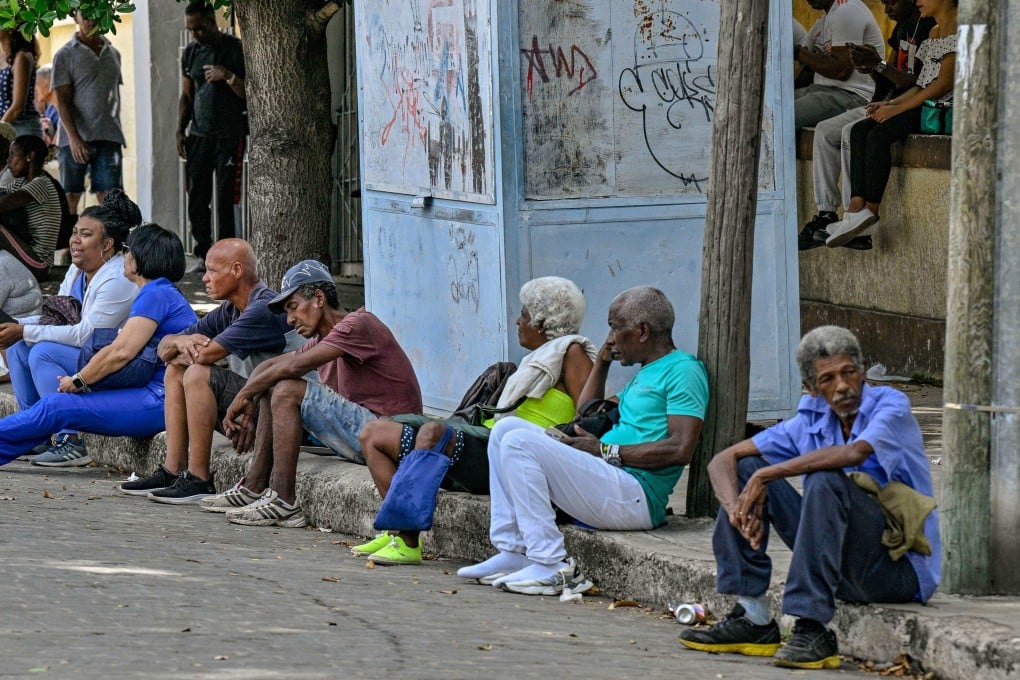
National Blackout in Cuba
Cuba’s power grid has collapsed nationwide, marking the latest widespread blackout in recent years as the island nation faces an energy crisis.
“A total disconnection from the national electrical system has occurred. The reconnection recovery process is underway,” the National Electric Union of Cuba (UNE) announced on March 16.
UNE stated that efforts to restore the grid are being implemented across the country, while asserting that no technical failures were detected in the generating units operating at the time the grid collapsed.
Roberto Morales Ojeda, Secretary of the Organization of the Central Committee of the Communist Party of Cuba, confirmed the information and said efforts to restore the national grid are ongoing. “We have confidence in the selfless workers of the electrical sector,” Morales Ojeda said.
Miguel, a landlord in the beach resort of Varadero, said the city rarely experiences power cuts, but this blackout still affected the area due to its massive scale.
Dayana Machin, a resident of Havana, said she was not surprised by the incident as Cuba faces an energy crisis due to the U.S. oil embargo. According to Machin, people should prepare wood stoves, solar panels if possible, and stockpiles of water and gasoline.
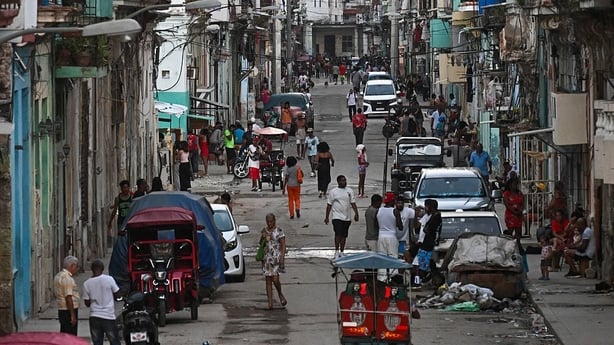
Musician Lazaro Caron said the blackout affects his work, but admitted that there is “no other way but to face it and keep moving forward, to see what happens.”
Cuba relies heavily on oil for electricity production. However, after the U.S. conducted a raid to arrest Venezuelan President Nicolas Maduro on January 3, Washington has strictly controlled the South American nation’s oil exports, meaning the oil supply to Cuba has also been terminated.
According to Cuban officials, Washington’s near-blockade of fuel supplies has exacerbated the energy crisis, causing rolling blackouts, medical supply shortages, and a decline in the tourism industry.
“U.S. government officials must be very satisfied with the damage caused to every Cuban family,” said Cuban Deputy Foreign Minister Carlos Fernandez de Cossío regarding the March 16 blackout.
Cuban President Miguel Diaz-Canel said last weekend that over the past three months, no oil shipments have been delivered to the island nation. He also said that Cuba and the U.S. have engaged in dialogue to identify bilateral issues that need to be resolved.

“The impact of the blockade is enormous, manifesting most brutally in the energy sector, making life very miserable for the people,” he said.
To cope with the energy crisis, the Cuban government has issued emergency measures, such as shortening school hours, postponing major sporting and cultural events, and cutting transportation services. Many public hospitals have had to scale back medical services, and fuel sales at state-run gas stations have also been restricted.





:max_bytes(150000):strip_icc():focal(753x271:755x273):format(webp)/cole-the-deaf-dog-112125-1a-ad248101bd174108a795d88d6afd93d8.jpg?fit=750,500&ssl=1 "Elementary School Throws Deaf Therapy Dog a Surprise Birthday Party as Students Learn Sign Language to Sing ‘Happy Birthday’")







:max_bytes(150000):strip_icc():focal(749x0:751x2)/Mel-Gibson-Fanexpo-Chicago-083126-f90ea0e0e7904853b5fd33a8b889840f.jpg?ssl=1 "Mel Gibson Apologizes for ‘Spontaneous Thoughtless Idiocy’ After Using Mock Sign Language at Toronto Fan Event")