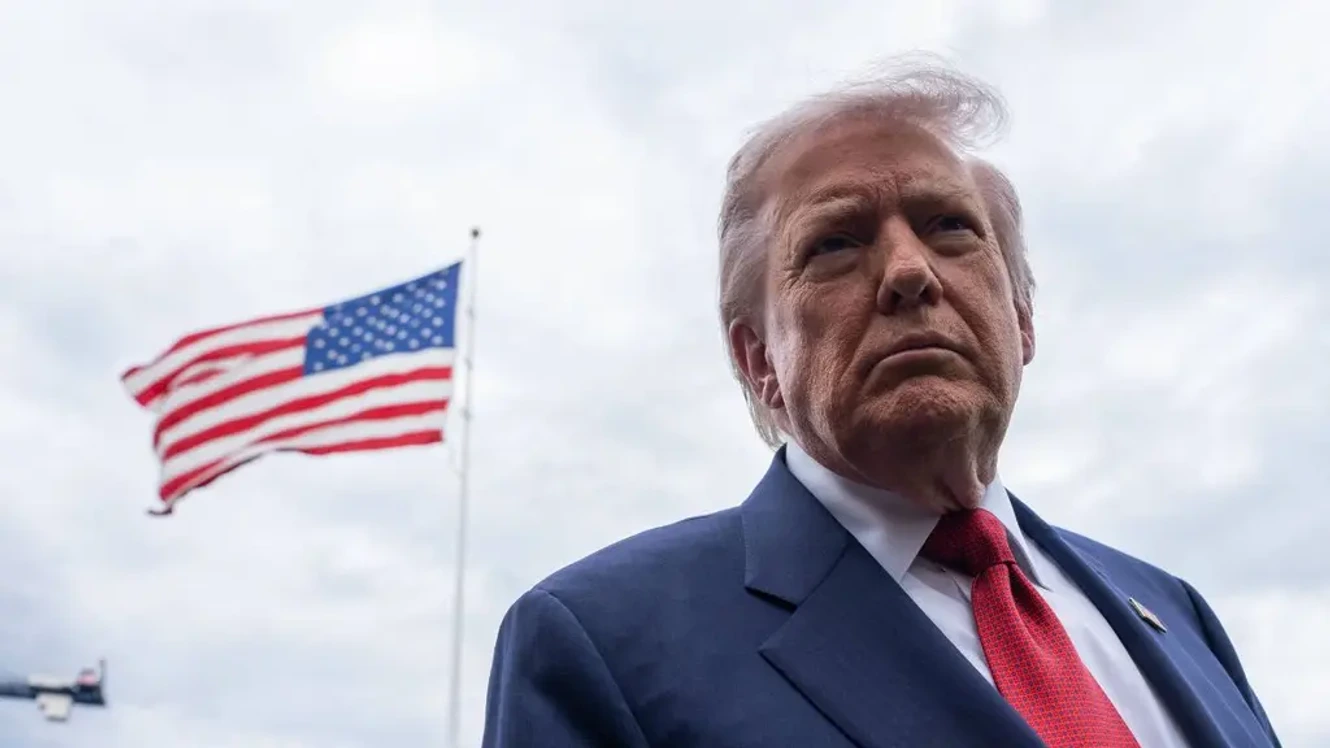
President Donald Trump’s disapproval rating has climbed to the highest level across both of his nonconsecutive terms in office, according to a new CNN poll conducted by SSRS, as public frustration over the economy and inflation continues to mount ahead of the November midterm elections.
Donald Trump’s abysmal approval rating
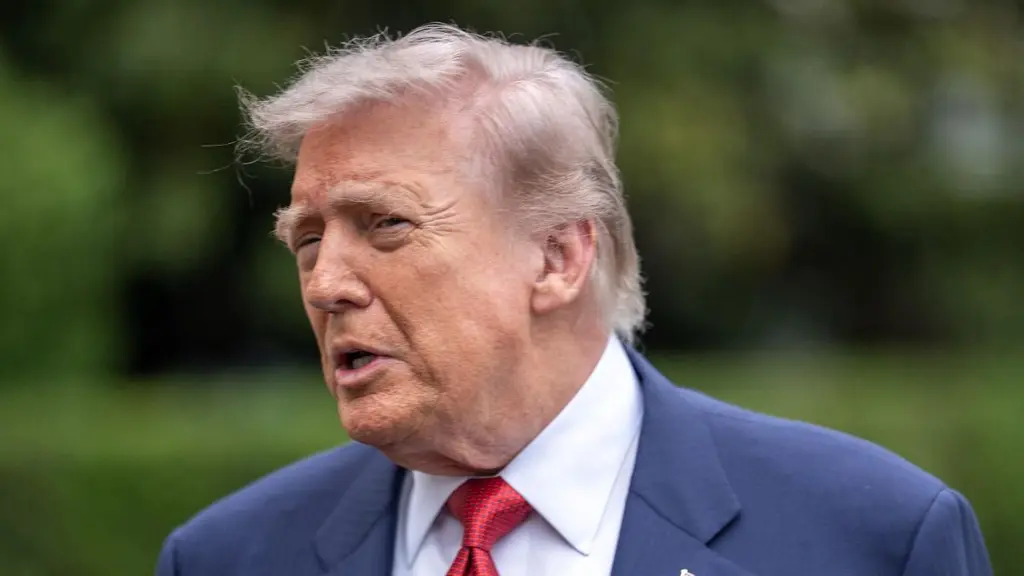
The survey found Trump’s disapproval rating reached 65 percent, the highest recorded during either of his presidencies, while his approval rating stood at 35 percent. The latest numbers continue a steady upward trend in voter dissatisfaction seen throughout the year.
The poll, conducted from April 30 through May 4 among 1,499 respondents, carries a margin of error of 2.8 percentage points.
Trump’s standing on the economy also fell to its lowest point in either term, according to the survey, amid rising concerns over the cost of living and the ongoing war with Iran. Recent polling has shown weakening support among key voting blocs, including Gen Z and independent voters, creating additional political challenges for the White House and Republicans heading into the midterms.
The poll was released alongside a Bureau of Labor Statistics report showing inflation rose to its highest level during Trump’s presidency.
Loss of goodwill with voters
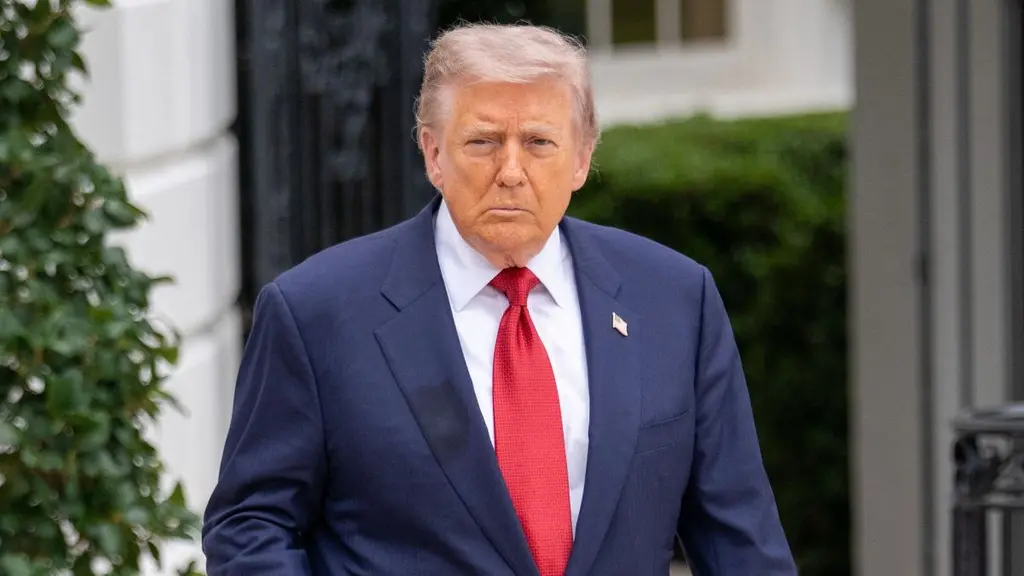
When Trump returned to office following his 2024 election victory, he held a 47 percent approval rating and a 52 percent disapproval rating. Since then, negative views have steadily increased, with disapproval surpassing 60 percent for the first time late last year.
Separate polling from The Economist/YouGov also found Trump’s net approval rating has remained at a record low of -22 for three consecutive weeks. The latest survey showed 36 percent approving of the president’s performance and 58 percent disapproving.
YouGov’s Allen Houston said in an email to Newsweek, “Trump’s average net approval over the past three weeks of -22 is a record low for his two terms. Trump’s average net approval of -22 over the last three weeks also matches the lowest net approval Joe Biden ever averaged over three consecutive weeks in his term in office.”
White House damage control
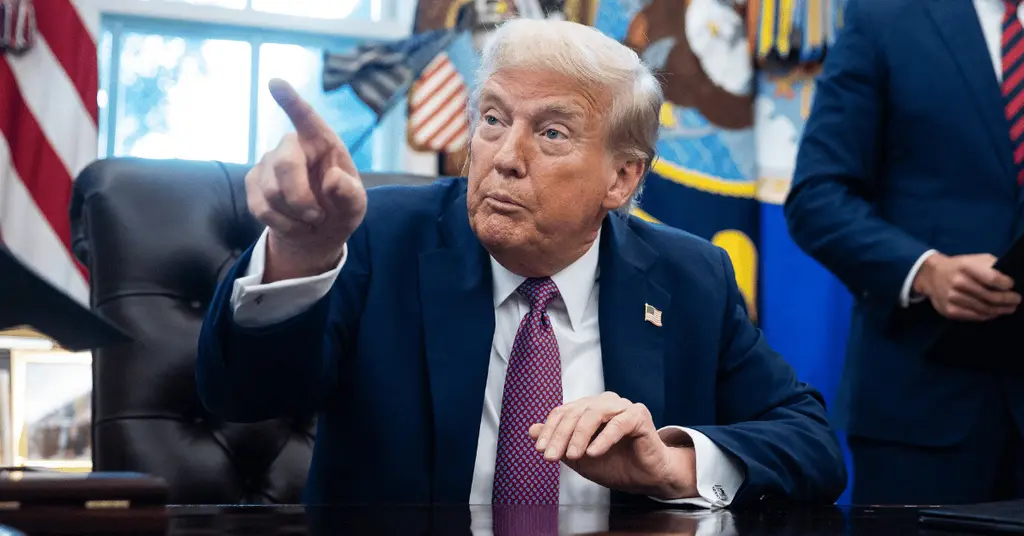
White House spokesperson Kush Desai defended the Trump administration’s economic agenda, saying, “President Trump was resoundingly re-elected to the White House precisely because he understood how Americans were left behind by Joe Biden’s economic disaster and restoring prosperity for everyday Americans has accordingly been a Day One priority for this administration.”
“As traffic in the Strait of Hormuz normalizes again, Americans will again see gas prices plummet, real wages grow, inflation cool and trillions in investments continue pouring in,” Desai added.

Donald Trump praises ‘friend’ Xi Jinping during official meeting in China
President Donald Trump called it an “honor” to be Chinese leader Xi Jinping’s friend on the first night of a two-day state visit to China.
“You and I have known each other now for a long time,” he said on May 14. “In fact, the longest relationship of our two countries that any president and president has had, and that’s, to me, an honor.”
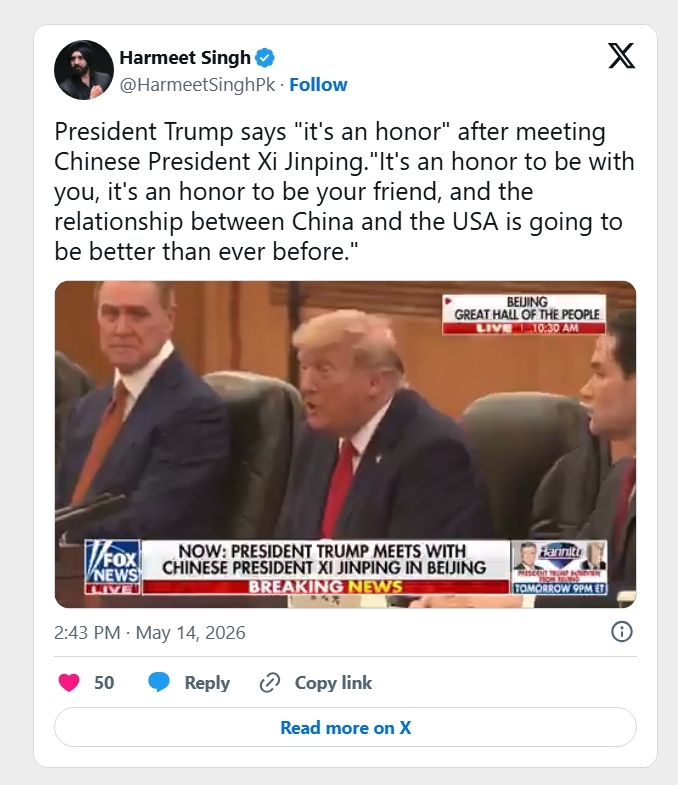
The statement came as part of a dinner where the pair heaped pleasantries on each other, a stark difference from earlier in Trump’s second term when he levied steep tariffs on Chinese goods.
“We’ve had a fantastic relationship,” Trump said to Xi. “We’ve gotten along. When there were difficulties, we worked it out. I would call you, and you would call me. And whenever we had a problem, people don’t know, whenever we had a problem, we worked it out very quickly. And we’re going to have a fantastic future together. Such respect for China, the job you’ve done.”
Trump, 79, then dipped into his typical vague hyperbole to describe his upcoming meeting with Xi.
“I really look very much forward to our discussion. It’s a big discussion,” he said. “There are those that say this is maybe the biggest summit ever. They can never remember anything like it. It’s, I can say in the United States, it’s– people aren’t talking about anything else. But it’s an honor to be with you. It’s an honor to be your friend. And the relationship between China and the USA is going to be better than ever before.”
Xi also was congenial with Trump, though his remarks focused more on the relationship between the two nations rather than the two men.
In his toast, Xi said, “Achieving the great rejuvenation of the Chinese nation and making America great again can go hand in hand. We can help each other succeed and advance the well-being of the whole world… We both believe that the China-US relationship is the most important bilateral relationship in the world. We must make it work and never mess it up.”
Xi outlined the exact issue that could “mess it up” as soon as Trump landed: Taiwan.
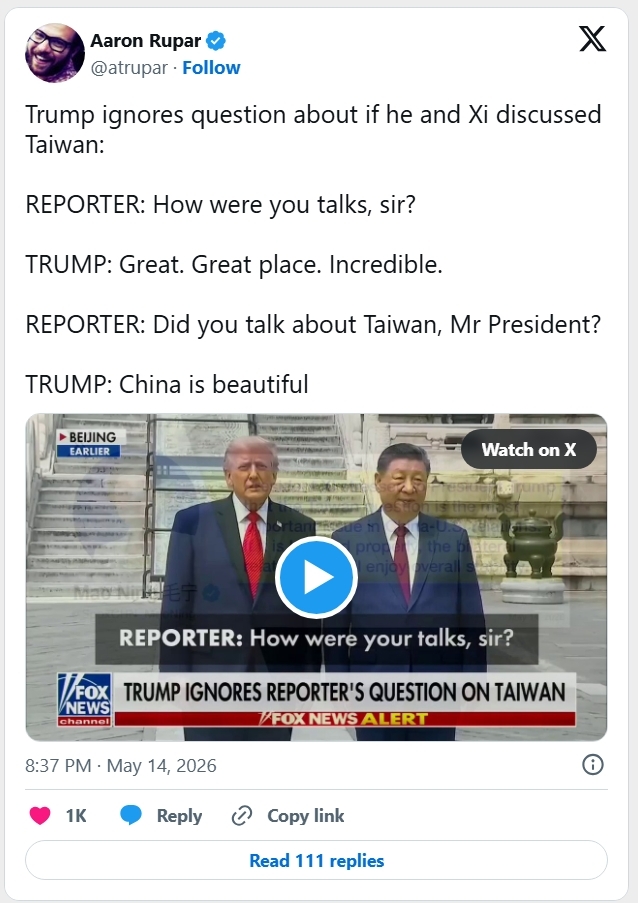
“The Taiwan question is the most important issue in China-US relations,” said Xi. China claims Taiwain as its territory, and the U.S. does not officially recognize Taiwan as a sovereign nation.
“If mishandled, the two nations could collide or even come into conflict, pushing the entire China-US relationship into a highly perilous situation,” said Xi.
The Lawsuit Sending Shockwaves Through American Politics
A nearly $1.8 billion settlement of President Donald Trump’s lawsuit against the U.S. Internal Revenue Service (IRS), aimed at establishing a compensation fund for allies, is alleged to contain numerous legal contradictions.

Settling a $10 Billion Lawsuit
U.S. media reported that on May 18, President Trump’s administration announced the establishment of a fund that will draw nearly $1.8 billion to compensate allies and supporters of Mr. Trump. This is the result of a settlement agreement in Mr. Trump’s lawsuit against the U.S. Internal Revenue Service (IRS).
According to the Associated Press, the IRS lawsuit stems from a former IRS employee leaking Mr. Trump’s tax records to the press back in 2019. Mr. Trump argued that the leak caused severe damage to his family’s reputation and finances, and had demanded $10 billion in compensation.
In exchange for Mr. Trump withdrawing the lawsuit, the U.S. Department of Justice agreed to draw money from the federal judgment fund (a fund specifically used to pay for legal judgments lost by the government) to establish the so-called “Anti-Weaponization Fund.” This fund will spend nearly $1.8 billion to resolve claims for individuals who believe they were investigated or targeted “for political motives” under former President Joe Biden.

A five-member committee appointed by Acting U.S. Attorney General Todd Blanche will directly review which individuals are eligible for the payouts. Speaking to the press on May 18, President Trump said that the aforementioned fund was established to “reimburse those who were treated badly, including legal fees and damages that they had previously suffered.”
“Suing Oneself”?
The Democratic Party reacted fiercely to the intention to establish the $1.8 billion compensation fund. Senator Elizabeth Warren called it “extreme corruption,” while nearly 100 Democratic House representatives submitted legal documents aiming to block the disbursement of this fund.
NBC News cited expert analysis suggesting that this is an unprecedented lawsuit, because Mr. Trump (the plaintiff) currently holds control over the defendant, the IRS, which is an agency under the Department of the Treasury. Therefore, President Trump suing an agency under his own management to demand compensation is akin to “suing oneself.”
According to Article 3 of the U.S. Constitution, federal courts only have jurisdiction to resolve a lawsuit if there is a “real dispute,” meaning the two sides must have opposing interests. Based on this, observers argue that the court may not have jurisdiction to handle or approve the aforementioned settlement agreement when Mr. Trump controls both the plaintiff and the defendant, rendering the adversarial nature of the lawsuit no longer clear.

U.S. District Judge Kathleen Williams, who presided over the lawsuit between Mr. Trump and the IRS, dismissed the case on May 18 after Mr. Trump’s side dropped the charges. In the notice, she reprimanded government agencies for failing to submit documents regarding the settlement agreement. Previously, Judge Williams also questioned the matter, noting that “President Trump is suing agencies whose decisions are subject to his direction.”
Mr. Trump Demands Investigation into Maryland Election Process
In a separate development, President Donald Trump on May 18 called on the U.S. Department of Justice to investigate the Maryland State Board of Elections (SBE), after the agency admitted a printing vendor error caused voters to receive primary ballots for the wrong political party in the state’s gubernatorial primary election, CBS News reported. To rectify this, the state of Maryland had to resend more than 500,000 replacement ballots to voters registered to vote by mail. Mr. Trump accused Maryland Governor Wes Moore of intentionally allowing the incident to happen to secure a victory for the Democratic Party. Governor Moore’s office countered Mr. Trump’s claims as false, asserting that the incident originated from the vendor and is being corrected transparently.
Trump’s Stalemate on the Iran ‘Chessboard’
Iran’s determination not to yield, combined with its ability to control the Strait of Hormuz, is pushing President Trump into a difficult position as he seeks a deal with Tehran, according to experts.
Three months after the U.S. and Israel launched an offensive campaign against Iran, active hostilities have halted thanks to a ceasefire. However, Washington’s naval blockade of ports and Tehran’s control of the Strait of Hormuz have created a total stalemate at this vital maritime artery for global energy.

To date, neither side has been willing to make concessions to reopen the Strait of Hormuz, causing damage to the world economy to worsen and the risk of renewed conflict to increase by the day. U.S. President Donald Trump has repeatedly shown impatience with Iran, and on May 18, he announced he had approved a resumption of the airstrike campaign against Iran, though he agreed to a postponement at the request of Gulf nations to continue allowing room for negotiations.
The question currently facing policymakers is how long this negotiating stalemate can drag on before the parties run out of patience and arrive at a decision to resume hostilities.
Calls to resume military action are mounting within the U.S. and Israel, as some officials argue that escalating pressure through bombardment could weaken Iran’s position and force them to submit at the negotiating table.
“But there is a major flaw in this argument. The U.S. has tested it, repeatedly, and Iran still has not surrendered,” observed Danny Citrinowicz, a senior fellow on Iran at the Israel Institute for National Security Studies.
The Reuters news agency quoted Iranian officials asserting that making concessions regarding their missile program, nuclear capabilities, or control over the Strait of Hormuz is not a compromise but a surrender, as these elements serve as the ideological pillars determining the survival of the Islamic Republic.
Citrinowicz argued that this explains why even a prolonged military confrontation cannot force Tehran to abandon its red lines, and why U.S. efforts to escalate tensions further are unlikely to succeed.
The Leverage of Time
The U.S. wants Iran to cease uranium enrichment for 20 years and transfer all nuclear material out of the country.
Meanwhile, Iran wants the U.S. and Israel to end their attacks, provide security guarantees, pay war reparations, and recognize its sovereignty over the Strait of Hormuz—terms that Washington has so far rejected.
President Trump warned Iran late last week that “time is running out,” while declaring that they “had better move fast, or there will be nothing left.” He threatened that if Tehran fails to reach an agreement with Washington, they will face “a very bad period of time.”

According to Ali Vaez of the International Crisis Group, neither side is willing to blink to reach a deal because “both believe time is on their side and that they hold the upper hand.” “That exact mindset is what is making a deal impossible,” he said.
Consequently, a war of attrition has centered on the Strait of Hormuz. Prior to the conflict, this strait transported approximately 25% of the world’s crude oil and 20% of its liquefied natural gas. Currently, Hormuz is virtually closed, disrupting energy supplies and causing mounting economic damage to the U.S. in particular and the world in general. Gas prices in the U.S. have risen consecutively over the past weeks, while the Trump administration is left with few effective tools to lower energy costs.
Alan Eyre, a former State Department official handling Iran who participated in previous negotiations between Washington and Tehran, assessed that the goal of reaching an agreement between the parties is out of reach.
“The two sides will never reach a consensus. President Trump doesn’t just want to win; he wants to be seen as having crushed Iran,” Eyre stated.
Iran, on the other hand, views its stockpile of enriched uranium and its control over the Strait of Hormuz as core strategic assets determining national survival. “Therefore, Iran is determined to use these assets to secure its interests,” a senior Iranian official declared, while affirming that surrender “is not an option.”
“We fight, we fall, but we do not accept humiliation. Surrender is completely absent from the Iranian identity,” he said.
Mounting Pressure on Iran
Another Iranian official argued that Tehran has effectively won, not by defeating Washington militarily, but by refusing to yield. The fact that the weeks-long airstrike campaign carried out by the U.S. and Israel failed to make Iran back down has reinforced a long-standing view within the country that possessing uranium and controlling the Strait of Hormuz are core elements of their deterrent capability.
“President Trump wants to declare victory, but Iran will not help him do that. Can the global economy withstand this pressure? This is a question Mr. Trump owes the world an answer to,” the Iranian official added.
According to him, more airstrikes will not alter Iran’s calculus but will only accelerate the escalation of tensions. Tehran will never abandon uranium enrichment or bow to ultimatums without a signal of compromise from Washington.
However, behind the rigid stance, Iranian sources close to the administration describe a more contradictory reality. Tehran does not want to prolong this state of “limbo,” especially as soaring inflation, severe unemployment, and airstrikes on key industries leave an already exhausted economy increasingly reeling.
Instead, sources state that Iran is seeking a preliminary agreement to end the conflict and reopen the Strait of Hormuz in exchange for the U.S. lifting its blockade, prior to addressing thornier issues such as removing sanctions or restricting the nuclear program.
On the nuclear issue, Iranian sources said Tehran could dilute 440 kilograms of highly enriched uranium or transfer a portion abroad, ideally to Russia, under the rationale that they could reclaim it if the U.S. violates the agreement. However, the U.S. side has rejected this proposal.
Iran is also pushing to shorten the duration of the uranium enrichment pause below the 20-year level demanded by the U.S., while demanding the return of all $30 billion in assets frozen abroad. However, the U.S. has only agreed to release one-quarter of those assets according to a phased timeline.
No Room for a Military Solution
Iran is seeking a new governance mechanism for Hormuz and refuses to return to the pre-conflict status quo, while the U.S. adamantly demands the unconditional reopening of the strait. This is believed to be an issue even more difficult to bridge than the nuclear dispute.
Aaron David Miller, a former U.S. Middle East negotiator and official, assessed that controlling the Strait of Hormuz will be the primary metric of success or failure for Washington.
“The outcome of this issue could shape Trump’s foreign policy,” Miller said, adding that the U.S. President is “particularly sensitive to the risk of being perceived as the losing side.”
If the U.S. wants to reopen Hormuz without a political agreement, it would have to deploy ground troops to “permanently control Iranian territory,” which could pose a massive risk to American soldiers, Miller stated.
Concurring with this view, Ali Vaez argued that there is no military solution to the Strait of Hormuz issue outside of an incredibly costly option that President Trump may be unwilling to execute, as Miller noted. Therefore, negotiations remain the only viable path forward.
Even though the U.S. and Israeli airstrike campaign achieved certain tactical results, American fighter jets still could not deliver a decisive strategic blow, Citrinowicz observed.
“The U.S. cannot cause the Iranian regime to collapse; it has only caused them to harden their stance. The U.S. military has not wiped out Iran’s missile capabilities, while Tehran still holds highly enriched uranium in its hands,” he said.

Citrinowicz believes that overestimating military pressure and underestimating Tehran’s resilience carries its own inherent risks for the U.S.
“This increases the risk that Washington will once again enter a confrontation with the expectation that if pressure is increased, the adversary will have to surrender, only to realize that the Iranian regime is willing to endure far more damage than anticipated,” he said.
That pushes President Trump into a stalemate on a strategic chessboard where he can neither reverse nor control the consequences of the war with Iran, concluded Robert Kagan, a senior fellow at the Brookings Institution.








:max_bytes(150000):strip_icc():focal(753x271:755x273):format(webp)/cole-the-deaf-dog-112125-1a-ad248101bd174108a795d88d6afd93d8.jpg?fit=750,500&ssl=1 "Elementary School Throws Deaf Therapy Dog a Surprise Birthday Party as Students Learn Sign Language to Sing ‘Happy Birthday’")








:max_bytes(150000):strip_icc():focal(999x0:1001x2)/erin-moriarty-quits-social-meida-following-megyn-kelly-bullying-012924-ece0cf2511f7491e8e35072c79639ecc.jpg?fit=1500,1000&ssl=1 "Erin Moriarty Has Graves’ Disease. What to Know About the Condition")