
Buckingham Palace has been the home of British monarchs since Queen Victoria, but when King Charles took the throne, he made the controversial decision not to move out of his longtime residence, Clarence House. The palace has been undergoing a taxpayer-funded £369 million (roughly $491 million USD) refurbishment since 2017, but one royal columnist has claimed that “every penny might as well have gone up in smoke.”
The renovations on Buckingham Palace are due to be completed next year, and in the latest issue of the Daily Mail’s “Palace Confidential” newsletter, diary editor Richard Eden wrote about the “grave mistake” The King is making by not moving into Buck House.
“Buckingham Palace will be used for royal events but the King and Queen won’t sleep there,” a source told Eden, who noted he was “worried for the future of the monarchy.”

Buckingham Palace’s refurbishment is due to be wrapped up in 2027. | Credit: Getty Images

King Charles greets Love Island alumna Tasha Ghouri at a recent Buckingham Palace garden party. | Credit: Getty Images
“Churchill knew the symbolic power of the Queen being at the nation’s home,” he added. “For King Charles to abandon it at a time of peace would be a serious mistake.”
As Eden reported on May 13, Nicky Haslam—an interior decorator and friend of the Royal Family—has spoken out on why The King and Queen should rethink their plans. “Turning Buckingham Palace into an office is wrong. Period,” he said. “It will have no magic.”
“William won’t use it either,” Haslam continued. “It stops Buckingham Palace being the jewel in the crown.”

Prince William and Princess Kate have no plans to move from Windsor Great Park to London. | Credit: Getty Images
When renovations began, a palace spokesperson insisted that rumors of Charles not moving in were untrue, releasing a statement that read “Buckingham Palace will remain the official residence of the monarch.”
However, as Haslam noted, the Prince and Princess of Wales have made it clear they have no intentions of ever moving back to London. The couple relocated to Windsor in 2022 and have since moved to Forest Lodge, a sprawling estate located in Windsor Great Park. Emily Nash, royal editor at Hello!, also emphasized the Wales family’s decision in a recent piece.
“When they left London for Windsor, William and Kate made it clear that they were doing it so their children could have more green space and freedom,” she said. “That won’t change and they have since made it very clear that Forest Lodge will be their ‘forever home’.”
That means that other than the official rooms where state banquets and royal receptions are regularly held, the 775-room palace will be used as office space, rather than a family home. However, Buckingham Palace saw 683,000 visitors in 2025, according to the Royal Collection Trust, and will remain open to the public for tours during select months of the year.

Opinion: All the Signs Pointing to a Secret Alliance Between King Charles and Prince Harry

Richard Eden of the Daily Mail was much ridiculed when he first unveiled his “Project Thaw” narrative—the idea that King Charles III is secretly engaged with a group of civil servants trying to ease Harry back into public life in the United Kingdom.
But the coordinated messages now coming out of Harry’s office and the King’s office have taken this idea out of the realm of fact-free conspiracy theory.
At the state opening of Parliament this week, King Charles read out a speech which included a very specific pledge: “My government will take urgent action to tackle antisemitism and ensure all communities are safe.”

King Charles III delivers the King’s Speech in the House of Lords Chamber during the State Opening of Parliament on May 13, 2026 in London, England. / Chris Jackson / via REUTERS
Also this week, Prince Harry published a lengthy opinion piece in the New Statesman—a famously left-leaning British magazine—warning of the deeply troubling rise in antisemitism in the United Kingdom.
I would point out that Harry has not spoken out about antisemitism in the past, and for very good reason: A man who wore a Nazi uniform to a party is not a good person to lecture the rest of us about the issue, even though, according to his autobiography Spare, the whole outfit thing was all Prince William and Catherine’s fault anyway.
I looked at the article and thought: typical Harry, stealing the thunder from Catherine while she’s off in Italy doing her event. Harry can’t let anyone breathe for 48 hours without getting stuck in.
But there was more.
King Charles appeared in the London neighborhood of Golders Green to meet two Jewish men who were stabbed in an antisemitic terror attack there on April 29. He met the Chief Rabbi, Sir Ephraim Mirvis. He met the Shomrim, the Jewish volunteer patrol who helped detain the attacker. He met the Hatzolah ambulance crew. He told a member of the public: “It’s a dangerous world, isn’t it?”
The Royalist went directly to the Sussex offices for comment, and asked them a simple question: was Harry’s New Statesman piece coordinated with the king’s office?
Team Sussex denied it. They said they never received an operational note about the king’s visit, that it was “coincidence.”
A pretty big coincidence, and one that prompted the Royalist to look again at Harry’s intervention on Ukraine— you know, the one that came just days before King Charles went to America, in which Harry made some very similar comments to what his father said in his joint address to Congress.
Sources told the Royalist after that speech that Harry and Charles were aligned on the issue, and that Harry was very gratified by what his father said in America.
There wasn’t a suggestion of a secret alliance at the time. But that is what I now think is happening.

If you look at the Ukraine episode more cynically, you have to ask: Was this a case of the government wanting to see how a member of the British royal family criticizing America’s actions in Ukraine would go down with the Trump administration? Was it a testing of the waters? Was Harry, in fact, being used as a very useful way for the government to put across a quasi-official position, with plausible deniability—because if it all blows up, Harry’s nothing to do with them!
I now think that, if the Trump administration had reacted really badly to what Harry said, or if there had been an explosion of outrage in the American media, the king’s speech in America might have looked and felt a little bit different.
And of course this all feeds into the bigger point that Harry’s real ambition is to come back to the U.K., to reintegrate, to get his father’s blessing to be some kind of quasi-royal, half-in, half-out. This is what he always wanted.
Everything Harry talks about or does now is about the United Kingdom. Why is a man who claims to be very happy living in California, who hasn’t lived in the U.K. for six years, suddenly weighing in on antisemitism in Britain? I’m not saying it’s not a serious issue. But it seems like a curious cause for someone who doesn’t live here.
Based on a lot of conversations over the past year, I can tell you that Harry does intend, in some shape or form, to move back to the U.K.

Prince Harry and Meghan, Duchess of Sussex, listen as they visit the King Hussein Cancer Center, accompanied by a delegation from the World Health Organization in Amman, Jordan on February 26, 2026. / Alaa Al Sukhni / REUTERS
I think it’s pretty obvious that it hasn’t worked out in America for him.
Even if Meghan has sold a million pots of jam, Harry looks lost. He is unhappy and he wants to come home.
And if he wants to do that, it’s going to be incredibly difficult unless he has significant political support from the establishment and the King.
It’s very hard for Harry to move back in any significant sense without political and institutional support. We know Harry believes his father holds the keys that unlock the whole security issue.
But is his father encouraging him? Is he tacitly endorsing him? Have they, indeed, actually had closer contact than we have been led to believe?
Charles does not want his final years to be defined by estrangement from his son. I have said, repeatedly, that his dearest wish is to be reconciled with Harry, and his second dearest wish is for his sons to be reconciled with each other.

It’s easy to understand the human impulse. Charles has always been at great pains to remind us that he is a person, that he is compassionate, that he has a soul. Any parent would want to reconcile with a child.
Charles and Harry are temperamentally very alike; both impetuous, impatient with the institution.
But I think as King, you have to draw a distinction between what’s good for you as a human and what is good for the nation and good for the institution.
Bringing Harry back into the fold—excusing everything he said in Spare, everything he said in the Netflix documentary, everything he continues to stand by about how awful the British royal family are—is going to be incredibly unpopular.
Charles platforming him in this way, tacitly endorsing him, in this way is incredibly dangerous. I think it makes Charles look weak. I think it’s unpopular.
Charles’s approval is at about 60%. It’s not brilliant. It’s not a disaster. It’s holding up. But a lot of that is down to his position and respect for the institution. If you look at what British people actually think about the best way to deal with Harry (or Prince Andrew), I think the consensus is much closer with Prince William’s view: this guy tried to wreck the monarchy and shouldn’t be allowed anywhere near it.
The Strange Reason King Charles and Prince Philip “Never Completely Trusted One Another” Involves Women, Says Royal Biographer
One source “remembers Philip screaming abuse at his son when he made some minor mistake.”
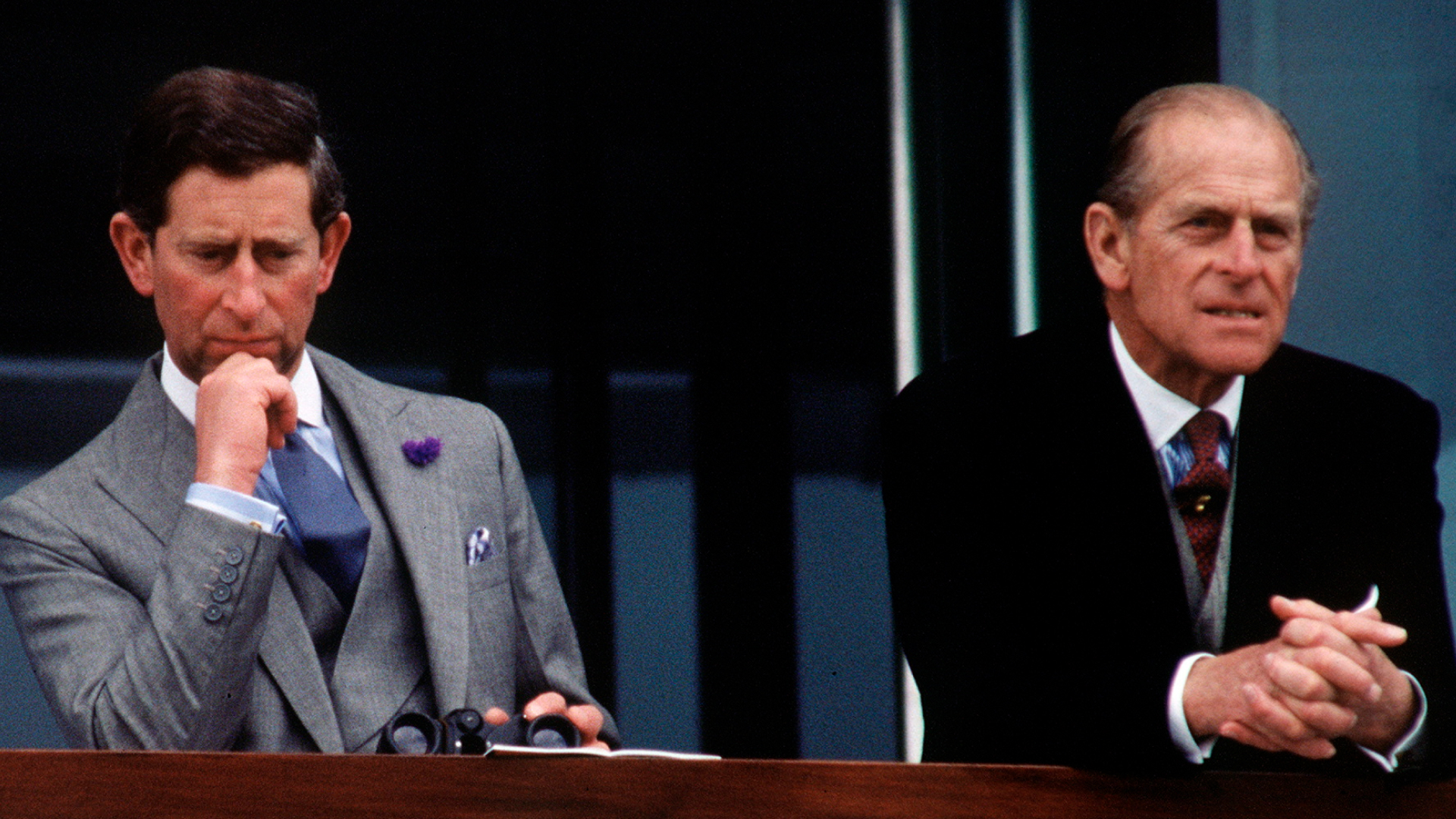
Much has been written about King Charles’s relationship with his father, Prince Philip. According to one royal biographer, there was a specific reason why Charles and Philip didn’t always agree with one another.
In the book My Mother and I, royal expert Ingrid Seward discussed Charles and Philip’s rather differing outlooks on life.
“Charles and his father were so totally opposite that they never completely trusted one another,” Seward wrote. “Prince Philip was brought up in a world run almost entirely by men and Charles was brought up in a world run almost entirely by women.” As a result, the father and son apparently ended up at odds and with different expectations.
Per Seward, “Charles was forever trying to please his father, but had a perverse knack of doing exactly the opposite.”
The royal biographer continued, “On the polo field, Philip would be particularly brutal to Charles when they played together, and polo player Johnny Kidd…remembers Philip screaming abuse at his son when he made some minor mistake or missed a shot.”
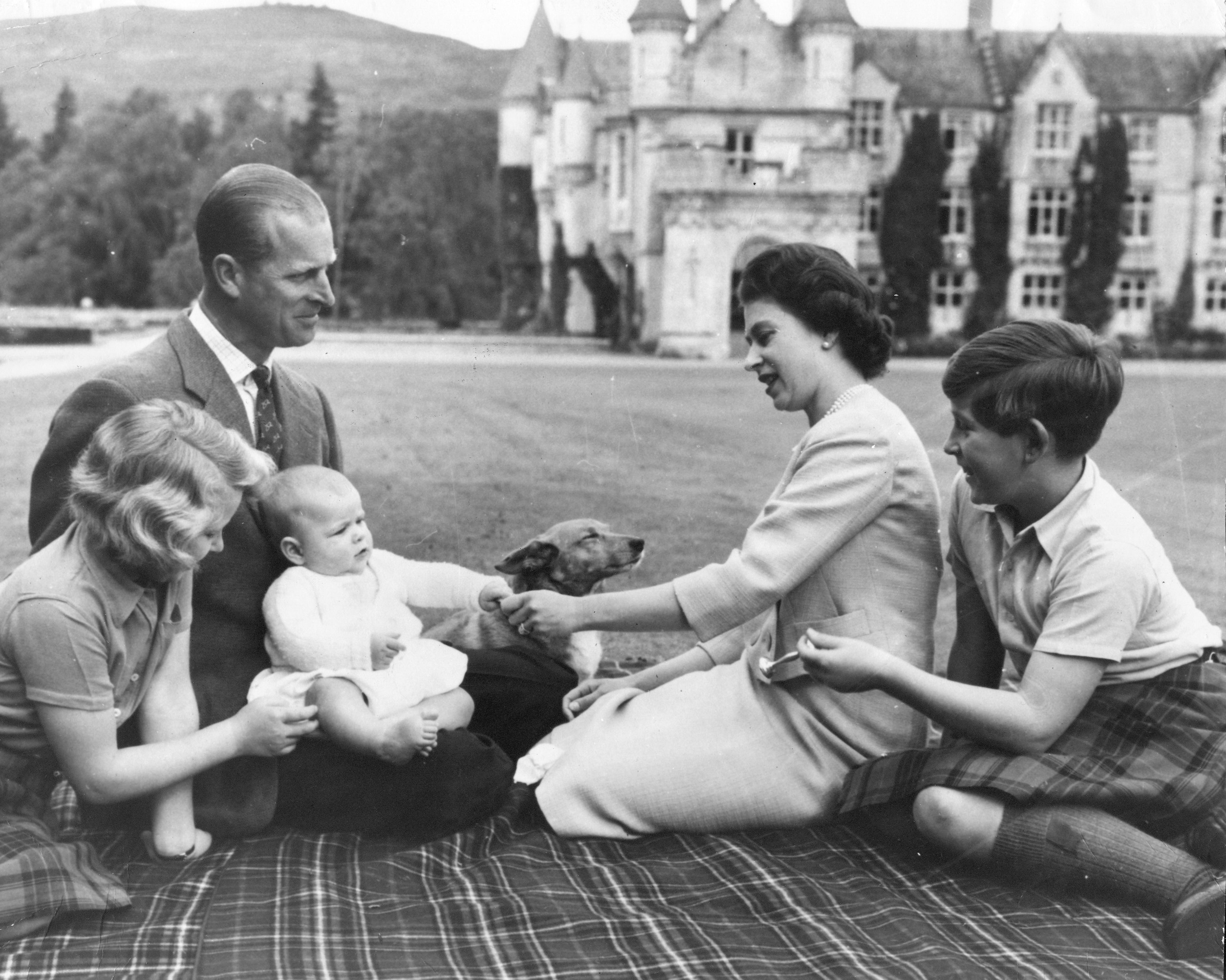
While Philip was known to lose his temper with just about “everyone,” Seward revealed “it was particularly embarrassing for the other players to hear him rant and rave at his son.”
Sadly, Charles and Philip’s relationship was never totally repaired and the pair allegedly found it difficult to talk openly to one another.
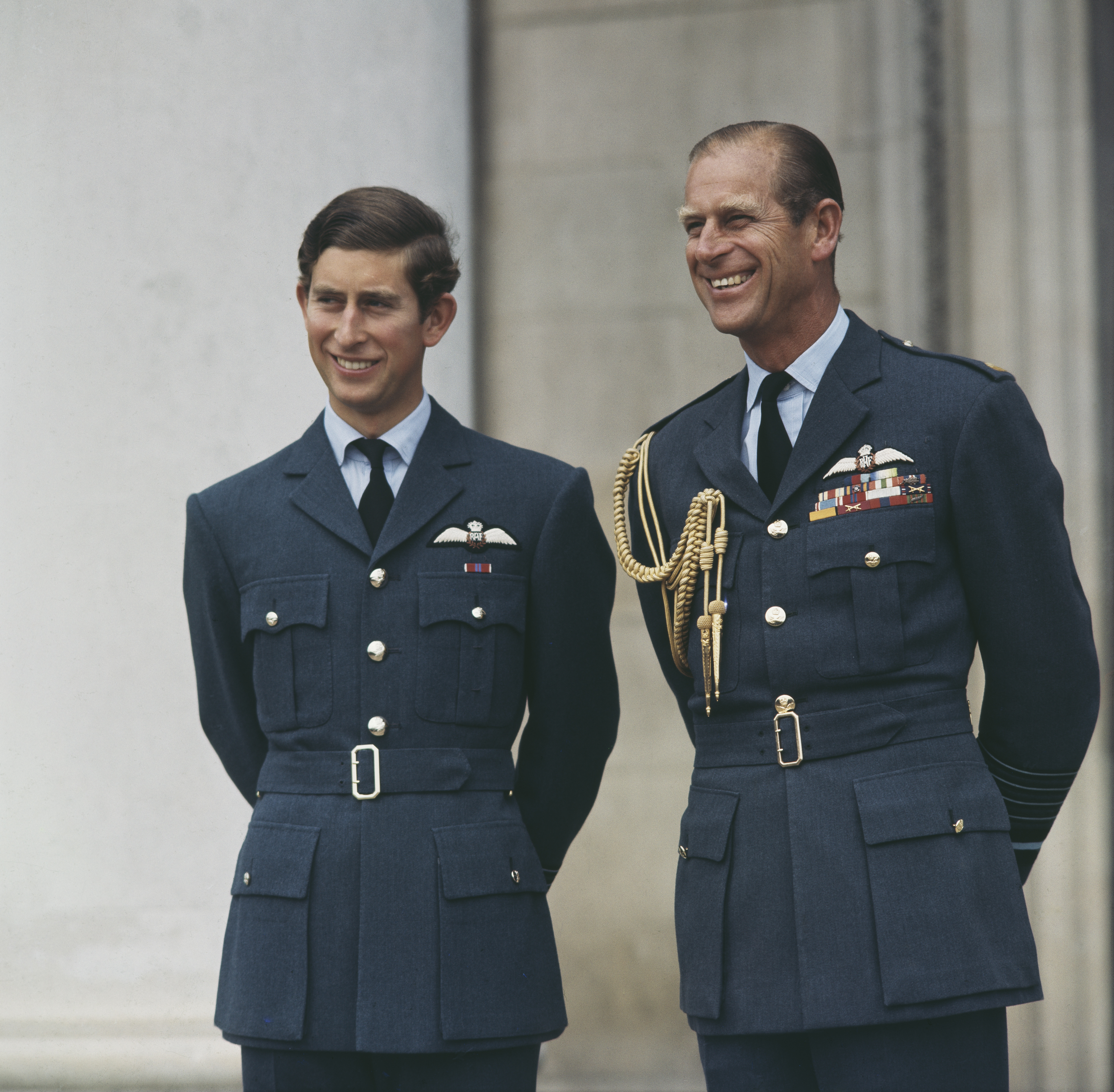
“Unfortunately, Prince Philip was never able to communicate with Charles in the way he was able to with God,” Seward wrote.
The royal author continued, “The lines of communication between them were far too tenuous and they were not used to speaking about their feelings until it was too late. Charles loved his father, but I am not sure he ever liked him.”
King Charles’ subtle but striking warning to America

Vice President JD Vance and House Speaker Mike Johnson applaud as Britain’s King Charles III arrives to address a Joint Meeting of Congress in the House Chamber at the US Capitol in Washington, DC
In a new age of revolt, it took a king to remind America of its republican values: the rule of law, democracy and the power of its international example.
King Charles III chooses his words with precision — as did his late mother, Queen Elizabeth II. Royal meaning must often be inferred.
But by regal standards, his speech to a joint meeting of Congress on Tuesday was strikingly direct.
Charles neither rebuked nor criticized the Trump administration. But the monarch implicitly frowned on America’s current political direction and defended pillars of Western democracy: domestic checks and balances, alliances and interfaith tolerance.
Charles further called for the strong defense of Ukraine. And “nature,” he said, must be protected — in a coded call for tackling climate change, which President Donald Trump has called a “con job.”
And the king stressed that friends can disagree without fracturing forever bonds, an occluded reference to the “special relationship,” which has been battered by the UK’s refusal to join the Iran war.

Congress applauds as Britain’s King Charles III speaks to a joint meeting of Congress in the House Chamber at the US Capitol on Tuesday. Jose Luis Magana/AP
“America’s words carry weight and meaning, as they have since independence,” Charles said, in the well of the House of Representatives. “The actions of this great nation matter even more.”
The king’s version of US values probably pleased “No Kings” Democrats more than Vice President JD Vance, who has views about UK and European civilizational decline and who sat behind him in the House of Representatives.
But Charles leavened his critique by showing deep respect for his hosts. He quoted Trump saying that the “bond of kinship” between the US and UK is “priceless and eternal.” And his speech was replete with praise for American historic achievements.
And the harder edges were softened by the choreographed pomp of a state visit that reciprocates a trip by Trump last year. Paraphrasing President Theodore Roosevelt, the king was speaking softly while carrying a big scepter.
The president showed no sign of being offended by Charles’ remarks. Trump prides himself on one-on-one relationships with the world’s most famous leaders. The king also twice condemned the thwarted alleged assassination attempt against the president at a media gala on Saturday.
“The Firm,” as the royal family is often known, has seen it all before. King Charles mentioned at a rare white-tie state dinner at the White House Tuesday evening that his mother had come to Washington in 1957 to mend US-UK divides provoked by the Suez crisis.
“It is hard to imagine anything like that happening today, but it is not hard to see how important the relationship remains, in matters both seen and unseen,” the king said.
And Charles presented the president with a unique gift — the original bell from the conning tower of HMS Trump, a Royal Navy submarine that saw service in the Pacific in World War II.
“Should you ever need to get hold of us, just give us a ring!” Charles said.
This ceremonial way of addressing ideological rifts in a non-ideological way highlighted a paradox: British monarchs are bound by constitutional convention to be apolitical. But their restraint gives them huge symbolic power when they choose, sparingly, to use it.

President Donald Trump and King Charles III during an arrival ceremony on the South Lawn of the White House on Tuesday.
A day of historical irony
Charles’ visit was soaked in political and historical ironies.
This direct descendent of King George III held a seminar in the rights and responsibilities of democratic societies before a body that is a direct descendent of the Continental Congress that met in Philadelphia to declare independence.
Charles invoked the Magna Carta; the US Bill of Rights; “the rule of law, the certainty of stable and accessible rules, and independent judiciary resolving disputes and delivering impartial justice.” He was not so indiscreet as to criticize the current White House. But he also didn’t shirk from stating his own values.
The king had earlier stood side-by-side with the president in a London-style drizzle on the South Lawn of the White House. A band played “God Save the King” and the “Star Spangled Banner,” which evokes the “bombs bursting in air” during the American victory over British forces at Fort McHenry in 1812.
This history was still echoing during his speech in Congress, when a real king rooted in a constitutional, limited monarchy cast an implied contrast with a president who critics warn is seeking his own imperial powers.
The White House embraced the moment, trolling critics by posting a picture of the two men with the caption “TWO KINGS.”

President Donald Trump and King Charles III shake hands during the State Arrival Ceremony on the South Lawn on Tuesday. Chris Jackson/Getty Images
Garret Martin, co-director of the Transatlantic Policy Center at the School of International Service at American University, noted that while Charles filled his speech with material to please his hosts, he made some surprisingly sharp political points.
“I think that was very telling that you could easily interpret those as, at the very least, gentle jabs towards some of the policy that the Trump administration has followed,” Martin said. “It practically sounded like a king telling a president to be less like a king.”
This allusion was sharpened by the Trump administration’s own actions Tuesday, in asserting power in a way critics regard as authoritarian overreach.
The Justice Department indicted yet another of Trump’s political enemies, targeting former FBI chief James Comey for the second time — in this case with a charge of threatening the president’s life with a photo of seashells.
The administration announced another extraordinary step to present Trump as the personification of the American state rather than as a citizen like everyone else: Some new US passports will include his portrait.
And a Federal Communications Commission move to challenge the licenses of local ABC affiliates threatened another value secured by founders who revolted against a king — the right of free speech.
While his primary purpose was to celebrate the 250th anniversary of American independence, Charles had a more immediate mission. Trump is fuming that Britain initially withheld permission for US planes to use its bases in the US-Israeli air attacks on Iran and that it and other allies won’t take part in a war that they regard as illegal. Reported punishments may include a withdrawal of support for UK sovereignty over the Falkland Islands in the South Atlantic. The islands, which are also claimed by Argentina, were the trigger for a war in 1982.
But Charles sought to smooth over the antagonism. He painted disagreement not as a fault of the US-UK relationship but as a feature that deepened it. “With the spirit of 1776 in our minds, we can perhaps agree that we do not always agree — at least in the first instance!” he said.

Britain’s King Charles addresses a joint meeting of Congress in the House Chamber of the US Capitol in Washington, DC, on Tuesday. Elizabeth Frantz/Reuters
A monarch who must defend his own throne
Some Britons, stung by Trump’s insults about the failure of US allies to defend the United States and his disgust for NATO, argued that the king should stay home. So the monarch — commander of the British armed forces — was under pressure to appease his own domestic audience.
He was unequivocal in rejecting Trump’s claim that NATO allies never make sacrifices in return for their US defense umbrella. “In the immediate aftermath of 9/11, when NATO invoked Article 5 for the first time, and the United Nations Security Council was united in the face of terror, we answered the call together — as our people have done so for more than a century, shoulder to shoulder, through two World Wars, the Cold War, Afghanistan and moments that have defined our shared security,” Charles said.
The king also tackled another, more valid Trump complaint by pointing out that Britain had vowed to significantly increase defense spending. And Charles referred fondly to his days as a Cold War naval officer. It was hard at this point not to recall Defense Secretary Pete Hegseth’s quip that Britain’s Royal Navy, which once ruled the waves, is not as “big” or “bad” as before.
While critics see the monarchy as a class system that would have no place in the US, it retains high public support in most of the United Kingdom. But it is a perennially troubled and scandal-tainted institution. What will be a comparatively short reign by Charles, compared with his mother’s 70 years on the throne, will be critical in modernizing the monarchy for the future. The royal family is also under scrutiny over the former Prince Andrew’s friendship with the late accused sex trafficker Jeffrey Epstein.
Against this backdrop, Charles’ journey to the US was an implicit showcase of a constitutional monarchy’s clout in opening doors that might be closed to mere politicians — like British Prime Minister Keir Starmer.
“In the 21st century, what does it mean to be a king or a queen?” Bidisha Mamata, a writer, broadcaster and royal expert, told CNN’s Becky Anderson on Tuesday. “This pageantry that we’re talking about, it’s not just for show. It’s not just a mirage. It is a fantasy. It is an image. It is a form of diplomacy.”

Britain’s King Charles III, Queen Camilla and first lady Melania Trump listen as President Donald Trump speaks during a State Visit arrival ceremony on the South Lawn of the White House, on Tuesday
Trump’s love for the royals
Trump has made no secret of his respect for the royal family. In a speech welcoming the king, he spoke emotionally about his late mother’s roots on a remote Scottish island and her respect for Elizabeth II. The president also referred to the greatest hits of the special relationship, which started with President Franklin Roosevelt and Prime Minister Winston Churchill joining to fight tyranny in World War II.
“If they could see us today, our ancestors would surely be filled with awe and pride that the Anglo-American revolution in human freedom was never, ever extinguished but carried forward across centuries, across oceans, and across history until it became a fire that lit the entire world,” Trump said.
His welcome was meant to replicate the one about which he has often gushed at Windsor Castle last year, and featured marching bands and military flypast.
But there was an important difference between the two heads of state.
A monarch supposedly endowed by divine right epitomizes continuity. The term-limited Trump cannot hope for such permanence because American freedoms won from Britain 250 years ago outlawed kinglike power.
At the end of his speech to Congress, Charles seemed to warn that the fire and fury of Trump’s second term could leave a lasting mark nonetheless. “The world may little note what we say, but will never forget what we do,” he said, in a reference to President Abraham Lincoln’s Gettysburg Address.

:max_bytes(150000):strip_icc():focal(739x219:741x221)/miley-cyrus-maxx-morando-avatar-fire-and-ash-premiere-hollywood-120225-457bff5676734bfcae5b86f66dfdc495.jpg?fit=1500,1000&ssl=1 "Miley Cyrus Is Engaged to Musician Maxx Morando After 4 Years of Dating")



:max_bytes(150000):strip_icc():focal(753x271:755x273):format(webp)/cole-the-deaf-dog-112125-1a-ad248101bd174108a795d88d6afd93d8.jpg?fit=750,500&ssl=1 "Elementary School Throws Deaf Therapy Dog a Surprise Birthday Party as Students Learn Sign Language to Sing ‘Happy Birthday’")



:max_bytes(150000):strip_icc():focal(749x0:751x2)/meghan-markle-prince-harry-time-100-summit-081225-4e4cee9927bf460b918c231fe64196dc.jpg?fit=1500,1000&ssl=1 "Prince Harry and Meghan Markle slammed live on air as TV host makes brutal three-word dig")


:max_bytes(150000):strip_icc():focal(608x271:610x273)/CHER-poses-with-Dolly-Parton-for-a-portrait-in-1978-in-Los-Angeles-082625-6ed6da39310343ba97c5b376375a3cdc.jpg?fit=1500,1000&ssl=1 "Dolly Parton’s niece Danielle Parton opens up about cancer battle, new estate role")


