
Sunday on ABC’s “This Week,” Rep. Nancy Pelosi (D-CA) declared President Donald Trump will “pay a price in history” for wha happened on Capitol Hill on January 6, 2021.
Discussing an HBO documentary, host Jonathan Karl said, “We see what is happening at the Capitol. What is going through your head?”
Pelosi said, “Well, it was clear that the president of the United States had incited an insurrection. And we begged him to send the National Guard. Typical of him, he never represents the truth. He said, ‘Well, I was going to send them.’ Get out of here. Even Mitch McConnell was on the phone with us, saying, ‘Get them here right away.’ But they never sent them.”
.
She continued, “The sorrow of it also springs from the fact that this president is trying to rewrite history, have a different narrative of what happened that day.”
She added, “What happened that day was horrible. It was an assault on the Capitol, the symbol of democracy to the world. It was an assault on the Congress, the day we honored our responsibility under the Constitution to certify the Electoral College, who was elected president, as an assault on the Constitution of the United States. It was horrible.”
Karl asked, “Has he paid a price for it?”
Pelosi said, “No, he’s president of the United States now. But history will, he’ll pay a price in history.”
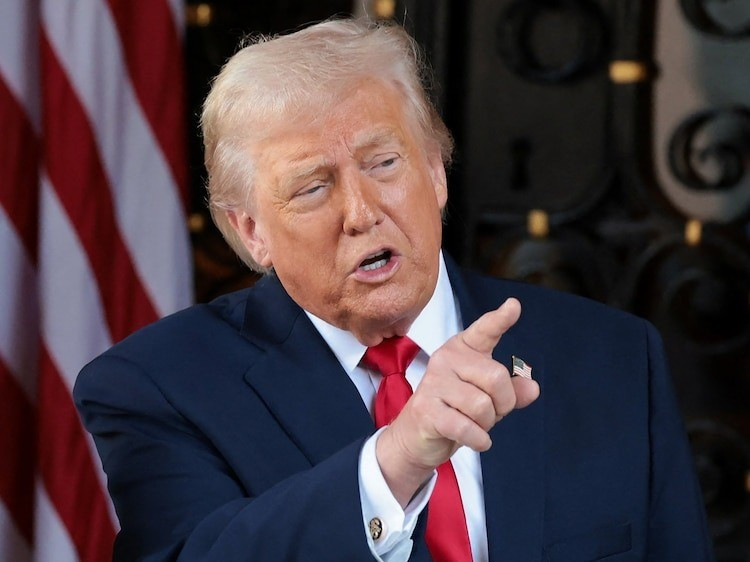

How Trump is trying to MAGAfy the world
Most presidents profess not to interfere in other countries’ domestic politics and elections — despite decades of nefarious US political game-playing abroad.
President Donald Trump doesn’t bother with the pretense.
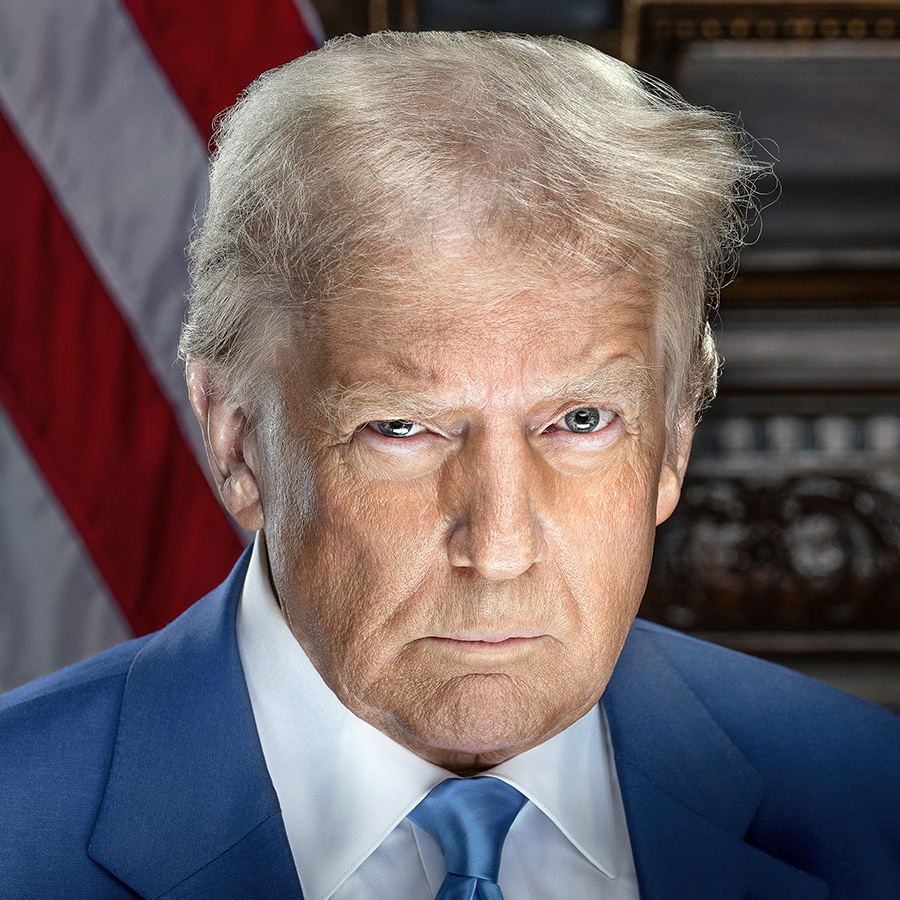
A leader who transformed the Republican Party into a partial personality cult and whose every life experience seems to involve the flexing of leverage doesn’t stop at the water’s edge.
In yet another example of how Trump has broken the mold of the presidency, Trump openly boosts favored candidates and seeks to bend their national political and justice systems in their favor. Just in case no one noticed, the White House committed to paper its support for far-right European populists trying to topple allied leaders in its new national security strategy.
In his second term, Trump is acting as the global head of a nationalist political movement, seeking to shape partisan politics in Argentina, Brazil, Colombia, Honduras, South Korea, Venezuela, South Africa and across the Atlantic.
In most cases, Trump promoted leaders and candidates who favor his populist nationalism, those who flatter him, or who face legal battles that mirror his own.
On Monday, he plunged yet again into the politics of Israel, where he is highly popular and thus enjoys great political influence ahead of a general election expected next year.
Trump told reporters that the pardon he’d previously requested for visiting Israeli Prime Minister Benjamin Netanyahu, who is facing bribery and fraud charges, was “on its way” after he’d spoken to Israeli President Isaac Herzog. Trump added: “He’s a wartime prime minister who’s a hero. How do you not give a pardon?”

Herzog’s office quickly issued a statement denying there’d been any such conversation between the two presidents. It said Herzog had spoken with a Trump representative and that the process would follow standard procedure.
If Trump could deliver Netanyahu from a criminal trial, he’d considerably ease the Israeli leader’s personal anxieties and might enhance his electoral prospects. He’d also leave Netanyahu deeply in his personal debt, a potential clue to Trump’s motivations as he returned Netanyahu’s flattery at his Mar-a-Lago resort Monday with his own lavish praise.
“Thank you for your support. It’s meant from the heart,” Netanyahu told Trump, while announcing his host would be the first foreigner to receive the Israel Prize, the Jewish state’s top cultural award. The Peace category, which the government decided to award Trump, has never been granted before.
It was a clever new spin by Netanyahu on the tradition of arriving to visit Trump bearing gifts. On a previous visit, he nominated the president for the Nobel Peace Prize that he craves.
Despite whispers before the meeting that members of Trump’s entourage are frustrated at Israeli foot-dragging on phase two of the Gaza ceasefire deal — one of the president’s top second-term achievements — Netanyahu basked in a priceless political endorsement.
“If you had 8 out of 10 prime ministers in his position right now …. you wouldn’t have Israel any longer,” Trump said. “You needed a very special man to really carry through and really help Israel through this horrible jam.” In a few sentences, he wrote his visitor’s reelection pitch.

Why presidents pretend they don’t play politics abroad
American presidents have traditionally balked at being seen to overtly interfere in the politics of foreign nations. To start with, it’s bad manners. And few presidents would enjoy the favor being returned to help their political opponents.
It’s also a fundamental principle of democracy that voters get to decide who leads them. (This is one value Trump seems not to share, given his refusal to accept his 2020 election loss). And there’s always the possibility that endorsing a particular leader in a country could backfire — either by creating an anti-American backlash over the perception of meddling or by alienating new presidents and prime ministers before they take office.
The Trump administration, however, rarely stops trying to shape foreign politics for its own gain.
Last week, for instance, Honduras announced that the conservative National Party candidate Nasry Asfura had won a tight presidential election. Trump had warned there’d be “hell to pay” if Asfura didn’t emerge from a prolonged counting process as the winner.

Defeated center-right candidate Salvador Nasralla claimed that Trump’s interventions — which including the pardoning of a former Honduran president serving a 45-year-US jail term for drug trafficking — had damaged his chances of winning.
Trump has repeatedly sought to use US power to shape the politics of the Western Hemisphere in his populist image.
He slapped a 50% tariff on Brazilian imports over the criminal prosecution of his friend and former President Jair Bolsonaro for an alleged coup. The maneuver showed how Trump uses import taxes as a foreign policy weapon in addition to a trade tool.
Trump is currently using massive US power — in the form of a naval armada off Venezuela — to try to prompt the ouster or resignation of President Nicolás Maduro. The ostensible justification is to shut down the narcotics trade.
Millions of Venezuelans could benefit from the exit of leader who has impoverished their nation. But many analysts also believe Trump hopes to enhance his power by installing a more ideologically friendly regime in Caracas. Perhaps he also hopes to trigger a domino effect that ends the communist regime in Cuba.
The president already seems to have an eye on Colombia’s presidential election next year. He warned over the Christmas holiday that President Gustavo Petro needed to “watch his a**.” Petro told CNN this month that he believed Trump’s pressure on Venezuela was about oil, not restoring democracy.
Trump also used America’s economic power to try to dictate politics in Argentina by warning that a $20 billion economic bailout was contingent on his friend Argentine President and MAGA hero Javier Milei remaining in power. “If he doesn’t win, we’re gone,” Trump said.
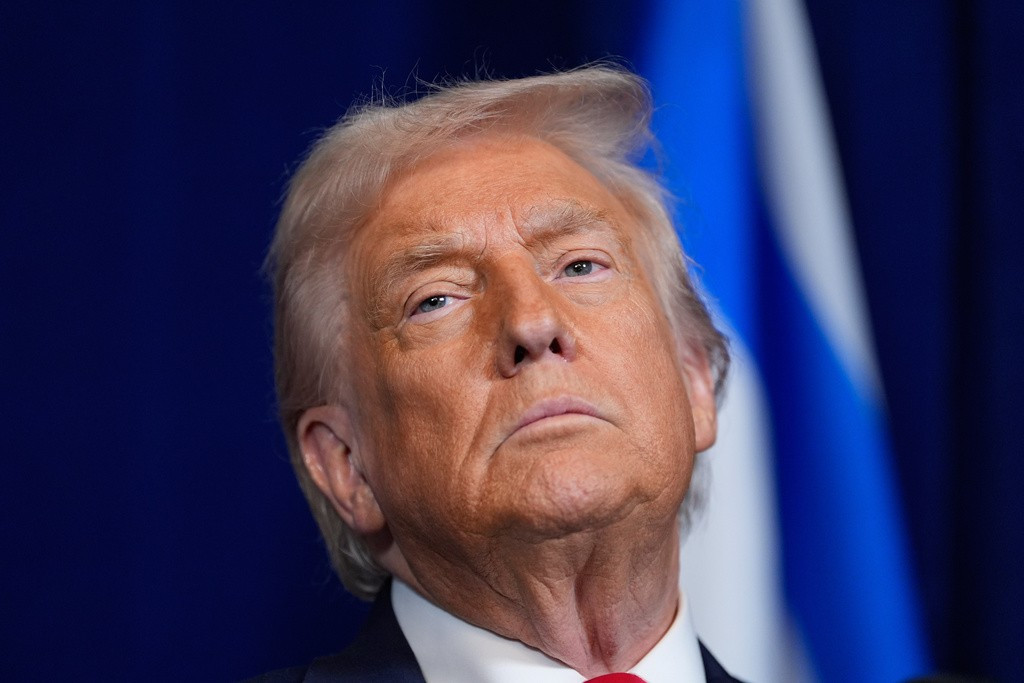
Trump’s global reach
But Trump’s political chess-playing isn’t confined to the Western Hemisphere. When South African President Cyril Ramaphosa visited the Oval Office in May, the president sought to undermine him domestically with a video suggesting that White South Africans were faced genocide.
In August, President Lee Jae Myung faced a curveball just before Oval Office talks when Trump posted an incendiary message on social media about alleged church raids in South Korea. The visiting president smoothed things over by presenting Trump with two “Make America Great Again” cowboy hats and a personalized golf putter. But the episode was a reminder that almost nothing is off-limits for Trump when he’s seeking to knock other leaders off balance.
The Trump administration now seems determined to destabilize centrist and left-of-center governments in Europe. The new national security strategy argues that European culture is threatened by “civilizational erasure” because of waves of Muslim immigration. It endorses “the growing influence of patriotic European parties” and says US policy should prioritize “cultivating resistance to Europe’s current trajectory within European nations.”
Leaders of France, Germany and Britain argue that far-right parties that support Trump, such as the National Rally, Alternative for Germany and Reform UK, respectively, threaten the fabric of liberal democracies. None can have expected the United States, the guarantor of their freedoms for 80 years, to emerge as a direct threat to their political stability.

Of course, Trump is far from the only US president to meddle in foreign politics. It’s been happening for decades, even if such efforts were often covert or took place under another guise. And Trump supporters can point to plenty of friendly relations between Democratic and Republican presidents in Western nations with compatible liberal and conservative leaders in Western nations. President Ronald Reagan and British Prime Minister Margaret Thatcher were seen as joint heralds of a conservative revival in the 1980s, for instance.
There have also been many more sinister US meddling attempts.
A CIA-backed coup in Iran in 1953 set off a cascade of events that led to today’s standoff with the Islamic republic. President John F. Kennedy’s disastrous Bay of Pigs invasion failed to topple Fidel Castro’s Cuban revolution in 1961. Several US administrations staged regime-change operations in Latin America — including Chile, Nicaragua, Panama and Guatemala — over the years, some of which ended in military dictatorships.
And when US forces didn’t find weapons of mass destruction in Iraq, the catastrophic invasion was recast as part of a “Freedom Agenda” to spread democracy around the world.
In one of the clumsiest recent examples of a US president playing politics in another country, Barack Obama warned in 2016 that Britain would find itself at “the back of the queue” in negotiating trade deals with the US if it quit the European Union. The Leave campaign seized on the comment to claim political interference in favor of British Prime Minister David Cameron’s Remain campaign.
Obama’s move backfired when the UK voted for Brexit anyway, in a harbinger of Trump’s shock populist win in the 2016 presidential election a few months later.
Obama was part of a long line of presidents who’ve dabbled in politics overseas with dubious success. But few have been as overt as Trump. As he often does, he’s taken actions pioneered by past presidents to extremes. His everywhere, all at once strategy reflects his domineering character and the global ambitions of his political movement.






:max_bytes(150000):strip_icc():focal(753x271:755x273):format(webp)/cole-the-deaf-dog-112125-1a-ad248101bd174108a795d88d6afd93d8.jpg?fit=750,500&ssl=1 "Elementary School Throws Deaf Therapy Dog a Surprise Birthday Party as Students Learn Sign Language to Sing ‘Happy Birthday’")



:max_bytes(150000):strip_icc():focal(749x0:751x2):format(webp)/Isabel-Klee-122225-43535fbd50104e9e8711da887b91ee58.jpg?fit=750,500&ssl=1 "Woman Adopts Foster Dog Before He’s Put Down So He Can Spend 1 Night as Family: ‘Loved Until His Very Last Breath’")


