He said he and NATO Secretary General Mark Rutte had agreed on a “framework of a future deal with respect to Greenland” and the Arctic.
President Donald Trump said Wednesday that he would not impose tariffs on eight European countries that were set to go into effect Feb. 1 unless those nations allowed the United States to take control of Greenland.
On Saturday, Trump said he would hit Denmark, the United Kingdom and other countries involved in NATO exercises with a 10% tariff starting next month.
“Based upon a very productive meeting that I have had with the Secretary General of NATO, Mark Rutte, we have formed the framework of a future deal with respect to Greenland and, in fact, the entire Arctic Region,” Trump wrote on Truth Social.
“Based upon this understanding, I will not be imposing the Tariffs that were scheduled to go into effect on February 1st,” he added.
Trump had said that if those countries did not comply with his demands by June, the tariff would rise to 25%.
Trump’s comments over the weekend roiled global markets.
Stocks soared to the highs of the day on his announcement that the tariffs were off.
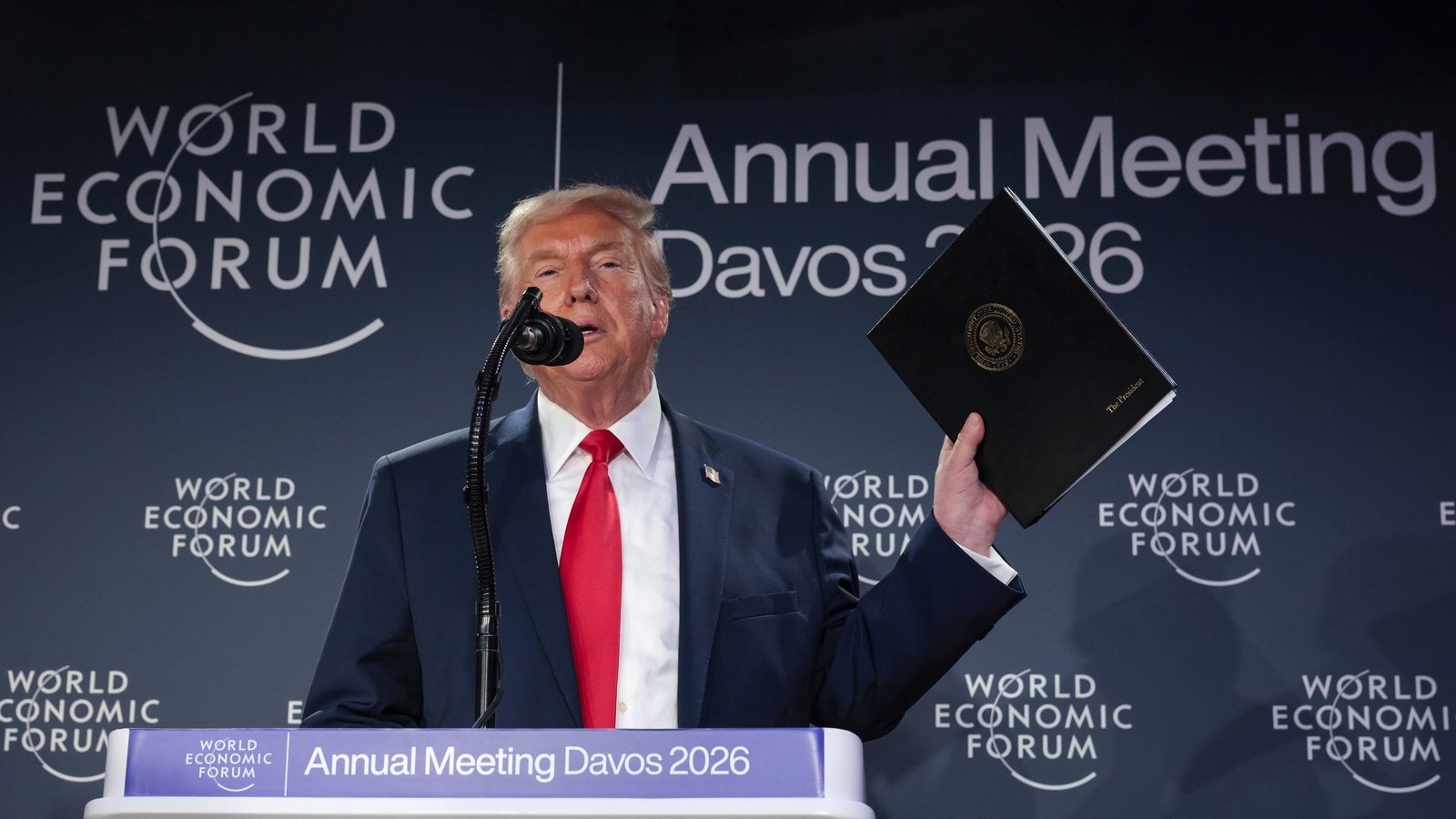
Further details of the deal Trump described on social media were not immediately available from the White House. But in an interview with CNBC, Trump said that the deal was “pretty much the concept of a deal” and that it would last “forever.”
NATO spokeswoman Allison Hart said Trump and Rutte had a “productive” meeting.
“The framework the President referenced will focus on ensuring Arctic security through the collective efforts of Allies, especially the seven Arctic Allies,” Hart said in a statement.
“Negotiations between Denmark, Greenland, and the United States will go forward aimed at ensuring that Russia and China never gain a foothold — economically or militarily — in Greenland,” she added.
Trump’s announcement came hours after the possibility of the United States obtaining sovereignty over land for military bases was discussed during separate meetings in Brussels among top military officers from NATO member states, the New York Times reported, citing three senior Western officials familiar with the talks.
Asked about the reporting by NBC News, Hart stressed that Rutte did not propose any compromise to sovereignty during his meeting with Trump in Davos on Wednesday.
The Danish government welcomed Trump’s announcement.
“The day is ending on a better note than it began,” foreign minister Lars Løkke Rasmussen said. “We welcome that President Trump has ruled out to take Greenland by force and paused the trade war with Europe.”
“Now, let’s sit down and find out how we can address the American security concerns in the Arctic while respecting the red lines of the Kingdom of Denmark,” said Rasmussen.
Hours before Trump’s announcement, the European Union’s parliament halted final approval of a critical trade deal that Trump reached with the bloc last summer.
E.U. leaders were also scheduled to hold an emergency summit Thursday to coordinate a response to Trump’s threats.
On Wednesday morning, Trump told an audience of leaders gathered at the World Economic Forum in Davos, Switzerland, that he still wanted the U.S. to control Greenland, but that he would not use force to seize the semi-autonomous Danish territory.
Instead, he said, he wanted “immediate negotiations” with Denmark.
“We will not enter into any negotiations on the basis of giving up fundamental principles,” Denmark’s foreign minister told reporters in Copenhagen.
In his Truth Social post, Trump said “additional discussions” related to Greenland would be led by Vice President JD Vance, Secretary of State Marco Rubio and Trump’s special envoy for peace, Steve Witkoff.
Those officials are also simultaneously leading discussions with Ukraine and Russia, as well as managing a host of other pressing foreign policy issues.
Rubio is the interim national security adviser and the acting national archivist, in addition to head of the State Department.
The Trump Family Strikes a New ‘Gold Mine’
Crypto ventures are reshaping the Trump family’s wealth structure as traditional business segments face ongoing volatility.
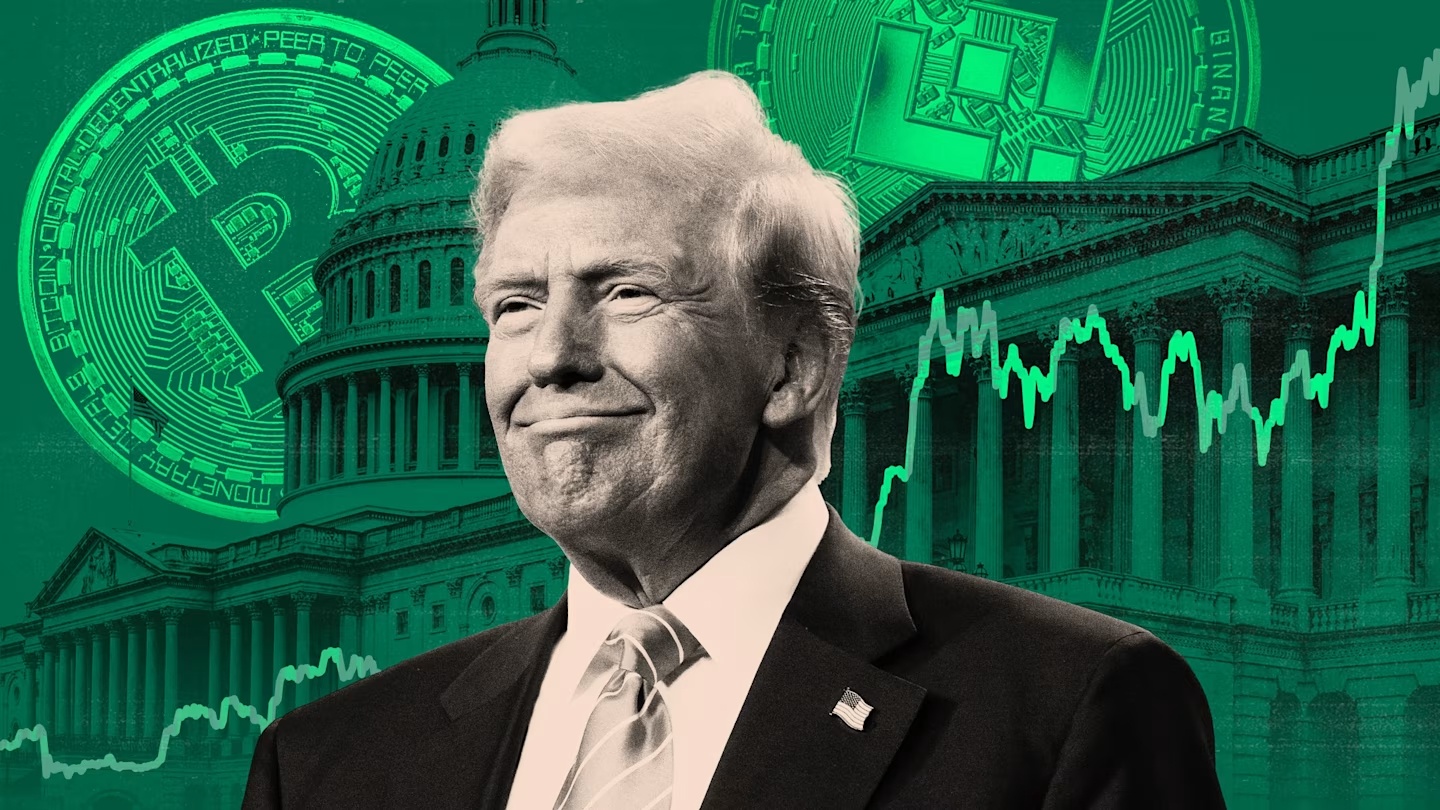
The $6.8 billion fortune of President Donald Trump’s family is becoming increasingly tied to digital assets, a shift that has bolstered their net worth by $1.4 billion. According to a Bloomberg analysis, this marks the first time cryptocurrency has accounted for approximately 20% of the Trump family’s total wealth.
As Mr. Trump enters his second term, the family’s financial landscape looks starkly different from his first inauguration. Rather than relying primarily on real estate and brand licensing deals, the Trumps now control a social media conglomerate and a burgeoning crypto enterprise.
Over a year into his return to the White House, the First Family has continued to diversify into sectors including defense, rare earth minerals, AI, and derivatives markets.
A Shift in Asset Structure
Bloomberg estimates the Trump family has netted roughly $1.4 billion from crypto-related projects. This trend has been largely fueled by policy shifts, including executive orders signed by the President and the appointment of pro-crypto officials to key regulatory positions.
Nevertheless, the family’s total net income remains comparable to last year’s figures, according to the Bloomberg Billionaires Index. Gains from crypto have primarily served to offset a sharp decline in the valuation of Trump Media & Technology Group. Shares of the social media firm have plunged 66% over the past 12 months, despite efforts to pivot into fintech and fusion energy.
The pivot toward digital assets signals a significant evolution in the family’s revenue-generating strategy for the coming years. Despite this, Eric Trump, son of the President and CEO of the Trump Organization, maintains that real estate remains the bedrock of their operations.
“We own the world’s premier hotel brand, and I am incredibly proud of the Trump Organization’s world-class portfolio,” Eric Trump stated.
Meanwhile, White House Press Secretary Karoline Leavitt noted that executive actions aimed at making the U.S. the “crypto capital of the world” are designed to drive innovation and economic opportunity for all citizens.
A Massive Profit Engine
Cryptocurrency has emerged as the primary engine compensating for losses in other business areas over the past year. Eric Trump and Donald Trump Jr. have headlined major crypto conferences in Singapore, Dubai, and Las Vegas. The brothers have frequently accused traditional banks of “debanking” the Trump Organization, citing those experiences as the catalyst for their move into decentralized finance.
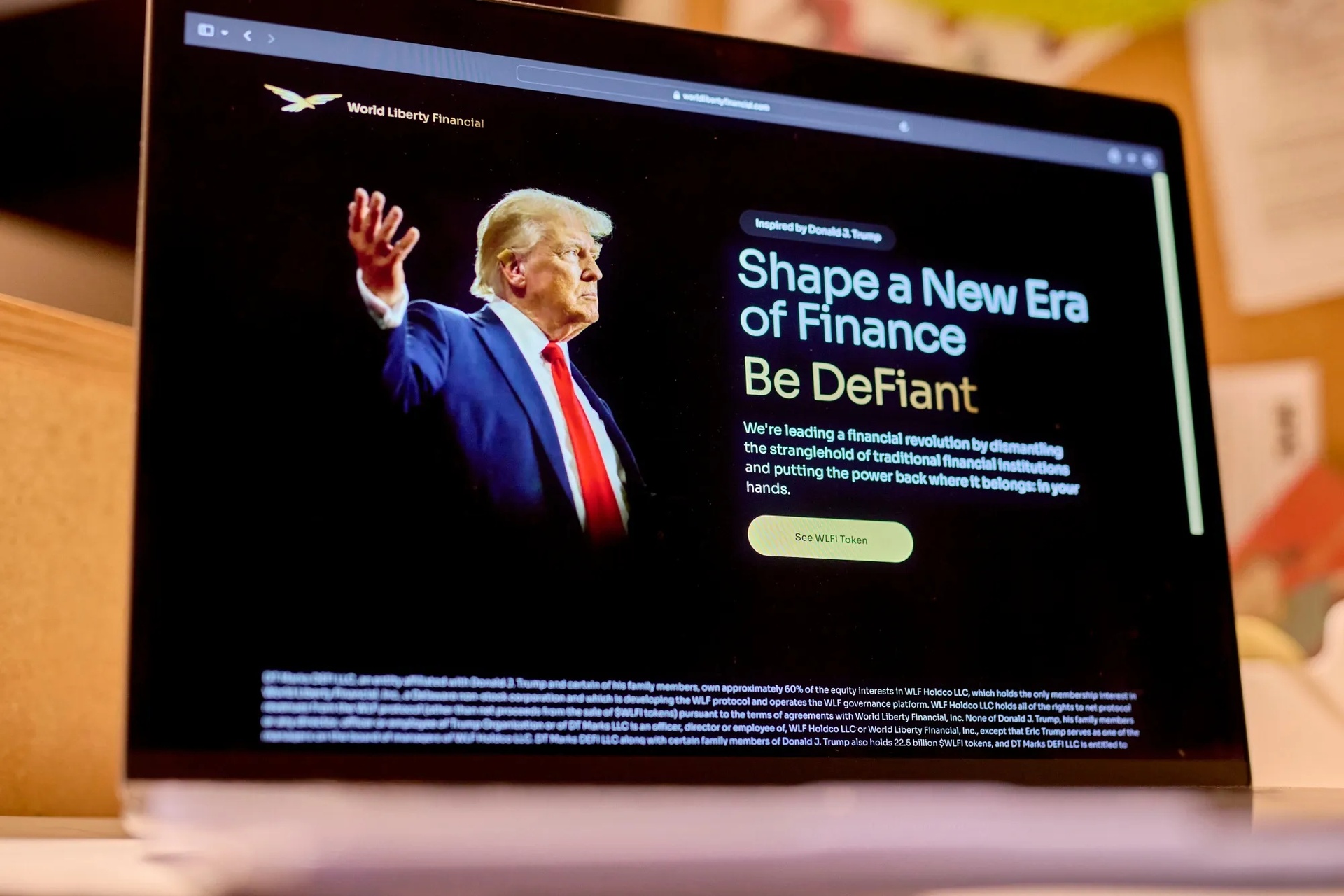
According to Bloomberg, the family monetizes digital assets through various channels, ranging from tokens to equity in crypto-native firms. Over the past year, three major projects—World Liberty Financial, the “Trump” memecoin, and American Bitcoin—have generated substantial windfalls.
As of March 2025, World Liberty Financial had sold approximately $550 million worth of tokens, netting the family about $390 million. In August 2025, they secured another $500 million in a transaction with Alt5 Sigma. Furthermore, family members still hold token tranches valued at roughly $3.8 billion at current market prices.
World Liberty also launched a stablecoin, USD1, pegged to the U.S. dollar, which has seen its circulating supply climb past $3 billion. The “Trump” memecoin, released shortly before the second inauguration, brought in an estimated $280 million, despite the token losing much of its value since its peak in January last year.
Eric and Donald Trump Jr. also partnered with Hut 8 to launch American Bitcoin, an asset management firm, two months after their father’s inauguration. Eric Trump holds a 7.4% stake in the company, while Donald Jr.’s stake remains undisclosed. Despite an 82% drop in share price from its September peak, Eric’s holding is still valued at approximately $114 million.
New Growth Drivers
In the real estate sector, the Trump Organization continues to pursue global management deals for hotels, golf courses, and luxury estates.
A recent venture, the Trump International Hotel Maldives, allows investors to purchase tokens tied to the project’s development. The family is also expanding into new territories, including the construction of Trump Tower Bucharest in the Romanian capital.
On the crypto front, the family is poised to further monetize existing projects. Specifically, leadership at World Liberty Financial is currently seeking approval from the Office of the Comptroller of the Currency (OCC) to charter a new trust bank.
Trump Media is also pursuing ambitious new ventures, most notably a partnership with TAE Technologies to develop nuclear power plants. The company is currently scouting locations, and CEO Devin Nunes told the New York Post that they intend to build only in “red states.”
Looking ahead, the Trump family appears set to scale their current portfolio. The convergence of Trump Media’s expansion and tokenized real estate deals suggests that crypto has become an integral pillar of the President’s family business strategy.

Where Trump stands in the polls one year in: From the Politics Desk
Plus, the key numbers to know from the first year of Trump’s second term.
On the one-year anniversary of President Donald Trump’s second inauguration, Steve Kornacki compares his poll numbers to those of his recent predecessors at similar points in their tenures. And our White House team runs through some other key numbers from Trump’s first year back in office.
Where Trump stands in the polls one year in
Exactly one year after his inauguration, President Donald Trump’s standing with the public is about as low as it’s been during this second term.
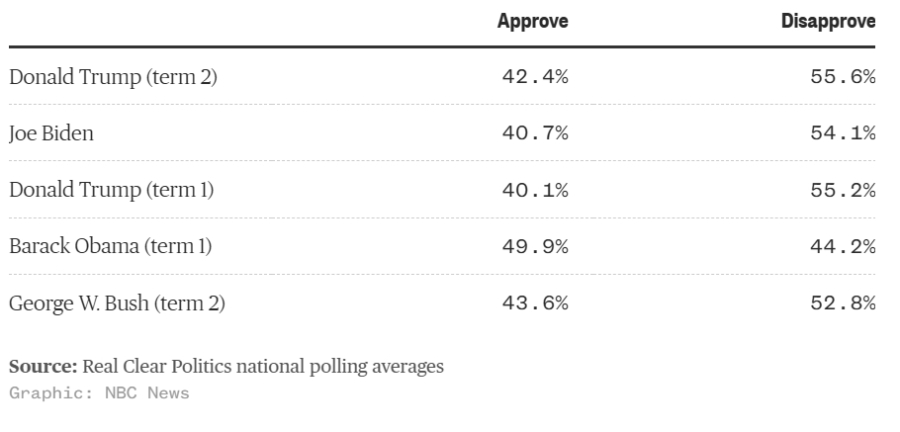
According to the Real Clear Politics national polling average, Trump’s approval rating sits at 42.4%. That’s barely above the 42.3% mark that he sank to at one point last November. And it’s a far cry from the early months of last year, when Trump actually enjoyed a net-positive rating. Now, with his disapproval at 55.6%, his popularity is well underwater.
This puts him in similar territory to where he was a year into his first term at the start of 2018. That year would end with Trump and his party suffering a midterm drubbing that flipped control of the House back to Democrats. His approval rating now is in range with other recent presidents who saw their party lose the House as well.
Presidential approval ratings one year into their terms
Meager numbers, of course, were a feature of Trump’s first term as well. He’s a polarizing figure who has never amassed broad popularity; only rarely across both terms has his approval average ticked above 50%. A large segment of the electorate — well over 40% — seems locked in against Trump, while another large chunk is locked in for him.
But there are some voters who fall between these two camps. And with them, Trump appears to have taken two significant hits during his second term.
The first came last fall. Just after Labor Day, Trump’s average approval hovered around 46%, but by the end of October it was closer to 42%. Given how much of the public is dug in one way or the other when it comes to Trump, that four-point drop was significant. And it came amid the government shutdown that Democrats precipitated — but that swing voters clearly held Trump and Republicans responsible for. The Democratic election victories in Virginia and New Jersey last November further confirmed this.
By the turn of the calendar, Trump’s approval had ticked back up a bit. But in the last two weeks, with the news dominated by the ICE controversy in Minnesota and Trump’s renewed push to annex Greenland, it has returned to that low level.
Trump’s first year back in office by the numbers
Courtesy of our White House producers Sarah Dean and Megan Shannon, here are a few notable numbers that help tell the story of the first year of President Donald Trump’s second term.
229: Trump signed 229 executive orders over the past year — far more than his recent predecessors and the first year of his first term, when he signed 55 orders. Joe Biden signed 77 executive orders during his first year in office, and Barack Obama signed 40 executive orders in the first year of his first term and 20 executive orders in the first year of his second term.
The only modern president to have signed more executive orders in the first year of a term was Franklin D. Roosevelt, who signed 381 orders during the first year of his third term.
88: Trump issued 88 individual pardons aside from the group of roughly 1,500 convicted Jan. 6 rioters he pardoned on his first day back in office. Over half of those 88 pardons were for white-collar offenses.
8: Trump took eight trips out of the country, visiting 13 countries: Italy, Saudi Arabia, Qatar, United Arab Emirates, Canada, Netherlands, Scotland, United Kingdom, Israel, Egypt, Malaysia, Japan and South Korea.
56: Trump also made 56 domestic trips outside of the Washington, D.C., area, including 18 trips to Mar-a-Lago in Palm Beach, Fla., and 9 trips to Trump National Golf Club Bedminster in New Jersey.
106: Trump paid 106 visits to his various golf properties.
100: Trump participated in more than 100 news interviews. By comparison, Biden participated in five interviews during his first year in office.
13: Trump attended 13 professional or collegiate sporting events, including last night’s college football national championship game between Indiana and Miami.







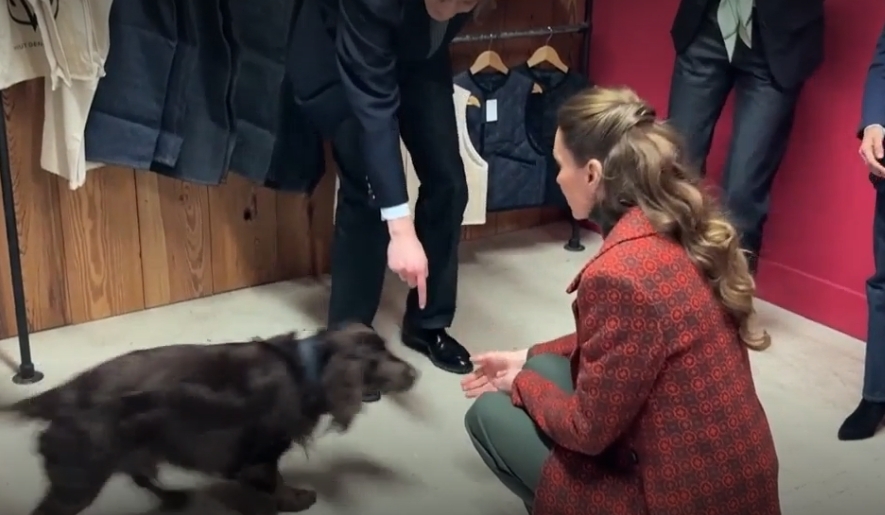

:max_bytes(150000):strip_icc():focal(753x271:755x273):format(webp)/cole-the-deaf-dog-112125-1a-ad248101bd174108a795d88d6afd93d8.jpg?fit=750,500&ssl=1 "Elementary School Throws Deaf Therapy Dog a Surprise Birthday Party as Students Learn Sign Language to Sing ‘Happy Birthday’")