
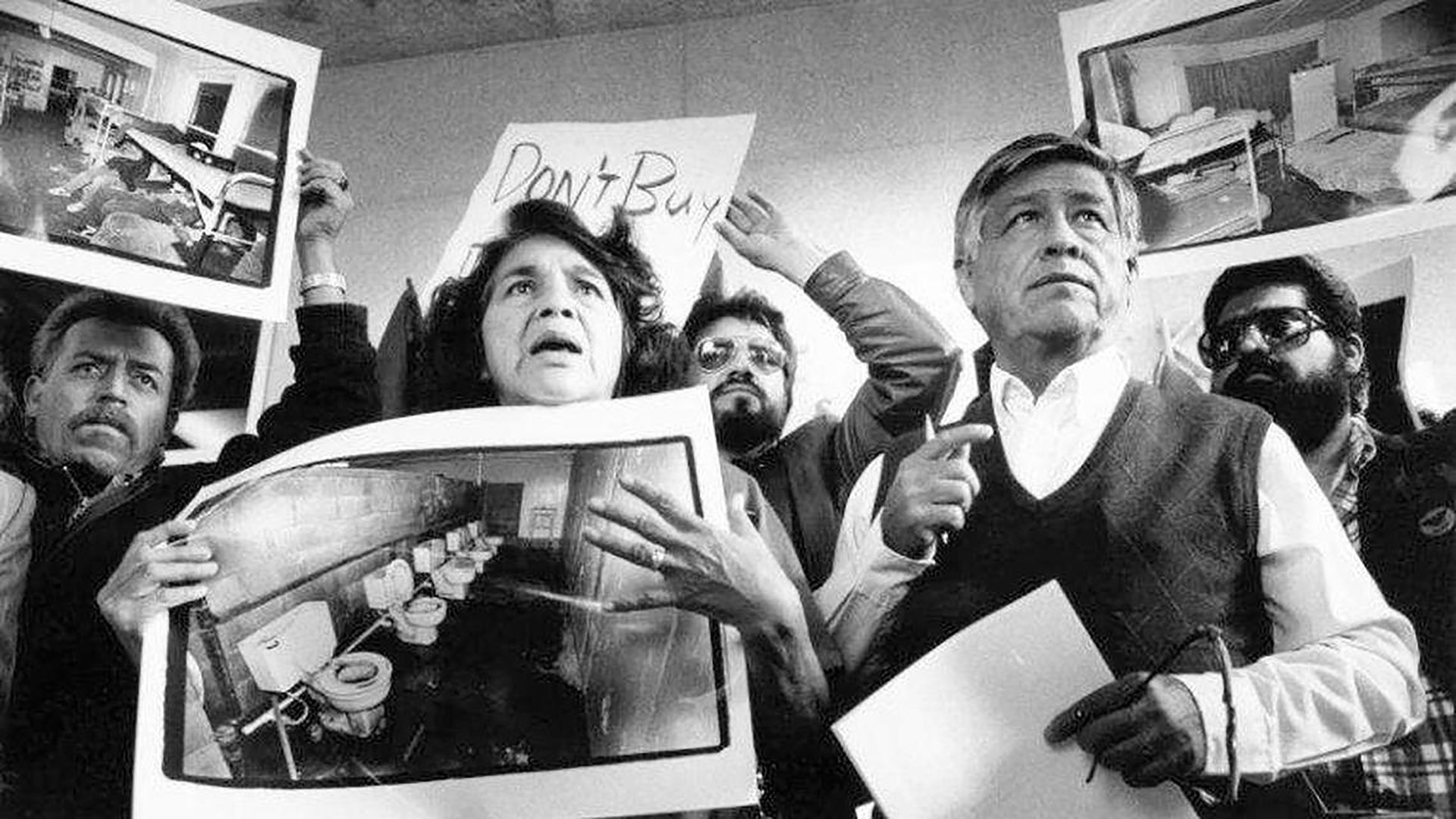
Minnesota officials are reckoning with local ties to César Chávez in light of explosive new sexual abuse allegations against the late labor leader.
Why it matters: Chávez’s role as a central figure in the fight for farmworker rights prompted local officials to name schools, streets and holidays in his honor.
- That legacy is now in question following accusations from several minors and women, including fellow civil rights icon Dolores Huerta.
Driving the news: Top state lawmakers from both parties said Thursday that they’ll act to repeal a state law designating the labor leader’s March 31 birthday as César Chávez Day.
What they’re saying: “The pain and trauma survivors carry is a weight that can’t be erased by replacing signs and names on buildings or repealing this state holiday, but it’s a step forward for healing,” said Rep. Maria Pérez-Vega (DFL-St. Paul), who plans to introduce a bill to make the change.
- A spokesperson for House Republicans said the caucus is “absolutely in support of renaming the day” and looks forward to passing the legislation “as soon as possible.”
Gov. Tim Walz told WCCO Radio’s Vineeta Sawkar that he supports the effort and will not issue a proclamation recognizing the day in light of the “horrific” allegations.
- “There has got to be accountability,” Walz said. “It does not matter who you are, it does not matter what political party you’re from.”
Context: A blockbuster New York Times investigation published this week found extensive evidence that Chávez groomed multiple little girls while leading the farmworkers movement, including a child he had known since she was 8.

- Huerta, who worked alongside Chávez for decades, for the first time alleged years of physical and emotional abuse, including sexual assaults that she said resulted in her carrying two of his children.
- Chávez died in 1993, and his family told Axios that they are “devastated” by the NYT’s reporting, which is “deeply painful” to the family.
Zoom in: Chávez’s namesakes in the Twin Cities include a busy thoroughfare on St. Paul’s West Side, a one-block street that runs through the Minneapolis Farmers Market, and an East Side St. Paul charter school, per the Star Tribune.
What we’re hearing: The board of directors of Academia Cesar Chavez told the Star Tribune that the allegations are “deeply troubling” and said they are “taking time to fully understand the information that is emerging.”
City leaders stopped short of calling for an immediate change.
- A spokesperson for St. Paul Mayor Kaohly Her told Axios that any push to rename the city’s Chávez street would go through the established process, which includes administrative action, community input and consideration by the City Council.
- “Like everyone, we are just learning about this issue,” he said.
Minneapolis would need to follow a similar process, a city spokesperson said.
The bottom line: Similar conversations are playing out around the country, with leaders in cities ranging from San Francisco to San Antonio grappling with how to address the issue.
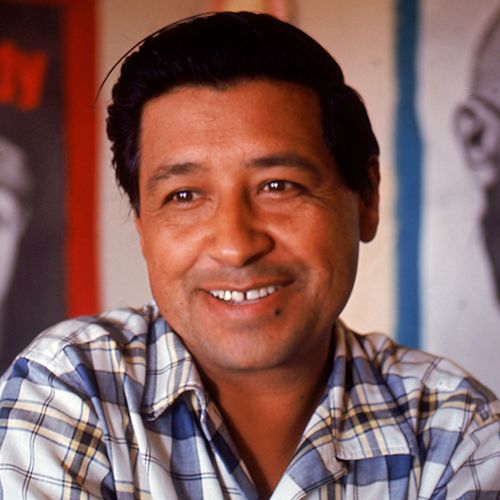
The years I spent defending César Chávez make me feel like a fool
Dolores Huerta and I shared the stage in November at a Chicago event honoring Latino leaders and journalists from the United States. What I remember most about that day was seeing the ballroom of mostly Latina women lining up to thank the co-founder of United Farm Workers and get her thoughts on how to respond to the way our communities have been targeted.
ICE was continuing its raids in Chicago, but here was Huerta, 95 years old, buoying us all.
I remember the servers, too, some of whom stopped after the event to take photos with Huerta and share that their local union uses the same labor-organizing tactics she did with the UFW. Immigration and Customs Enforcement was continuing its raids in Chicago, but here was Huerta, 95 years old, buoying us all. Here was our elder, imploring us to never give up, to keep organizing and fighting. Sí se puede. Not as a slogan, but as something living and breathing in that room.
The New York Times on Wednesday published a multiyear investigation into allegations of sexual abuse of minors and rape against the other co-founder of the UFW: César Chávez. In part because I grew up with such a deep admiration of Chávez, reading Ana Murguia and Debra Rojas, both 66 years old, describe the pain they said Chávez inflicted upon them stopped me cold.
Then Huerta revealed that she had two unwelcome encounters with Chávez, one of which she described as rape. The two encounters, she said, resulted in two babies, whom she gave away to others to raise.

“I carried this secret for as long as I did,” she wrote, “because building the movement and securing farmworker rights was my life’s work.”
I sat with that for a long time.
In the 1970s, when I was a young boy who had just moved from Puerto Rico to the Bronx, Chávez was one of the first brown faces I saw on television. Few Latino men seemed to be fighting for something on television, but he was. I will forever argue that U.S. Latinos are not a monolith, but at a time when this country painted us as one, Chávez felt like our sole political leader.
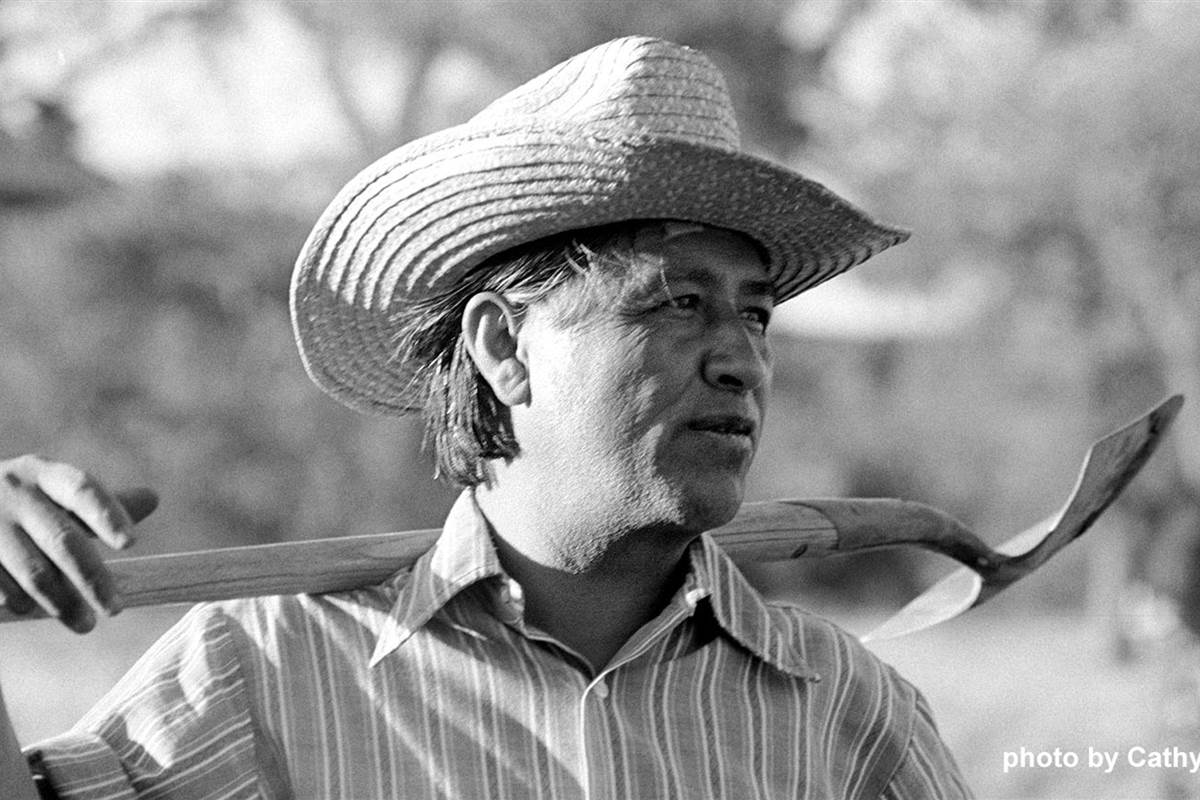
“He represented the best of us — and by us, I mean Latino America,” said Manny Fernandez, the Times’ California editor and co-writer of Wednesday’s bombshell of a story. “And to discover that Chavez had this dark side is disturbing. But we do need to know who our heroes are.”
To discover that Chavez had this dark side is disturbing. But we do need to know who our heroes are.”
the new york times’ manny fernandez
Chávez eventually reached the pinnacle of being the most famous Latino in the U.S. He passed away in 1993 and was posthumously awarded the Medal of Honor by former President Bill Clinton in 1994, and his bust graced the Biden Oval Office. His quotes about community and the fight for social justice were part of the U.S. Latino lexicon. And the Times story about him being a predator and Huerta’s confirmation of it have sent shockwaves throughout the community.
Those of us who have studied his life in detail already know he was incredibly complicated. Biographers have documented his extramarital affairs, his authoritarian leadership and purges of his staff. Chávez once thought of undocumented workers as union scabs, a fact that right-wingers love to cite. But nothing prepared me for what Murguia, Rojas and Huerta revealed. They did not describe a complicated man. They described a rapist — a rapist of minors.
As Gustavo Arellano wrote in his column for the Los Angeles Times: “Much of the Latino civil rights, political and educational ecosystem will have to grapple with why they held up Chávez as a paragon of virtue for too long above others just as deserving and, as it turns out, nowhere near as compromised. In any event, the myth has been punctured.”
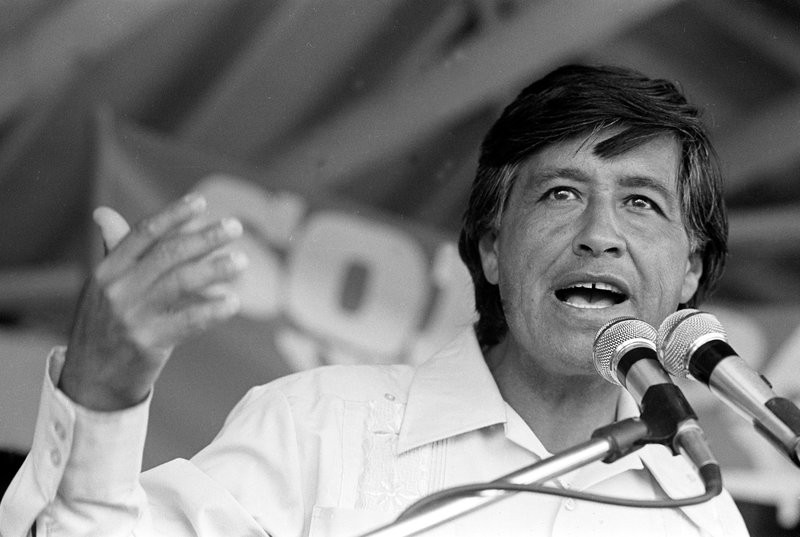
Chávez’s complexity was something I explored in the past and at times, defended. Regarding his immigration views, in 2021, I finally found a 1974 letter proving that he shifted his position and was not the anti-immigrant hard-liner the right tried to make him. I spent years making sure that history was accurate. And even though I was defending his views on immigration, and not defending him against allegations of rape, reading the three women’s accounts Wednesday still left me feeling like a fool.

The Chávez family released a statement that said, in part: “Our family is shocked and saddened to learn of news that our father, Cesar Chavez, engaged in sexual impropriety with women and minors nearly 50 years ago. As a family steeped in the values of equity and justice, we honor the voices of those who feel unheard and who report sexual abuse. This is deeply painful to our family.”
After an acknowledgement that his family has its own good memories of him, the statement said, “We hope these matters are approached thoughtfully and fairly.”
Chávez’s name adorns an untold number of streets, schools and parks in this country. His name should be removed from all of those places: every one.
“Everything should be named for the martyrs of the farm workers movement,” Huerta told Latino USA. “Every name should be named after them.”
By Thursday, California had already begun the process of changing César Chávez Day, March 31, to Farmworkers Day.
In that same Latino USA interview, Huerta said it was the courage of women such as Murguia and Rojas who gave her the courage to speak out now.
I used to see Chávez as a hero, but now I realize that our greatest heroes are the ones who speak out even if it means revealing their own pain. What Huerta did was brave, and it is no surprise that she has received an outpouring of love and support. She did not have to say a word. She could have kept her silence, and she would still be loved and admired. Instead, at 95 years old, she chose truth over mythology. That’s the most radical act of love for a community there is.
.wp-element-caption {width: 100% !important; text-transform: none !important; line-height: 1.2 !important; position: relative !important;}.credits {font-style: italic;}
The post The years I spent defending César Chávez make me feel like a fool appeared first on MS NOW.
Schools move to minimize Chavez’s role in civil rights movement: ‘We stand with survivors of violence’

César Chávez is woven throughout California’s social studies curriculum — as a labor leader, civil rights hero and practitioner of nonviolent protest.
That’s about to change.
State education officials on Wednesday urged teachers to minimize the role of Chávez when teaching about the farm labor movement. The labor rights icon and namesake of at least 43 schools in California, Chávez was accused Wednesday of a long pattern of sexually abusing women and girls.
“The civil rights struggle of farm workers and immigrant communities is larger than one person and continues to be highly relevant today,” said Elizabeth Sanders, spokeswoman for the California Department of Education. “We stand with survivors of violence, including and especially gender-based violence, which has no place in our society.”
The state will also be updating its history and social studies curriculum, an 800-page document that details lesson topics for all K-12 public school students. Students typically learn about Chávez in fourth, ninth and eleventh grade, according to state guidelines, often as a role model and important figure in history. He’s also covered in ethnic studies courses.
School districts have latitude as to how to teach particular topics, and districts across California on Wednesday were mulling how to approach the new information about Chávez, who died in 1993. With César Chávez Day approaching March 31, countless teachers are now rewriting their lesson plans.
Los Angeles Unified, the state’s largest district, said it was going to review its curriculum related to Chávez. Latino students make up nearly 75% of the district enrollment.
“(The district wants) to ensure the emphasis remains on the important work of the farmworker movement, not on any one individual,” said district spokesman Britt Vaughan. “It is important to recognize the collective work of thousands who have advanced social justice, labor rights, and community empowerment.”
‘We need to pause’
James Aguilar, a social studies teacher at San Lorenzo High in Alameda County, said he discussed the news with his students on Wednesday. Like him, they were shocked. The students had a lot of questions, but mostly they just wanted to talk about their emotions. Most had grown up revering Chávez.
Aguilar was straightforward with them.
“I feel very personally about this issue,” Aguilar said. “I believe survivors, and that’s where I lean.”
This is not the first time he’s had to rethink curriculum based on new allegations about historical figures. Social studies happens in real time, and the historical record constantly evolves, he said.
“I’ve known César Chávez as nothing but a hero, an essential leader in the union movement,” said Aguilar, who’s active in his local teachers union. “We don’t want to invalidate his work, but we need to pause. There are people who’ve done good things for our country but have not-so-great records in other aspects of their lives. We just need to acknowledge that.”
A complicated legacy
Finding that balance will be tough — but essential — for social studies teachers, especially as they prepare to commemorate César Chávez Day, said Morgan Polikoff, an education professor at the University of Southern California.
Teachers should also consider the age of their students, and what’s an appropriate topic for classroom discussions, he said. Guidance from the state and districts should help teachers know how to approach the topic in a way that acknowledges the allegations but doesn’t detract from the farm workers’ movement generally.
“There are a lot of historical figures who are deeply problematic,” Polikoff said. “The real challenge is to find a way to teach about them that doesn’t ignore the allegations but reflects the complexities of their legacy.”





:max_bytes(150000):strip_icc():focal(753x271:755x273):format(webp)/cole-the-deaf-dog-112125-1a-ad248101bd174108a795d88d6afd93d8.jpg?fit=750,500&ssl=1 "Elementary School Throws Deaf Therapy Dog a Surprise Birthday Party as Students Learn Sign Language to Sing ‘Happy Birthday’")



:max_bytes(150000):strip_icc()/sharon-ozzy-osbourne-23rd-Annual-Elton-John-AIDS-Foundation-Academy-Awards-Viewing-Party-2015-100925-ace92e7fd9b848c4a71a6eac52c3ac9b.jpg?fit=2000,1333&ssl=1 "Sharon Osbourne says Ozzy’s infidelity didn’t faze her until he brought another woman into their home")


