It was just like watching television.
Huddled in a draped-off room at Mar-a-Lago around screens set up for his viewing pleasure — including, according to photos released by the White House, a live feed of social media messages on X — President Donald Trump watched and listened as highly trained American Delta Force soldiers rushed into Nicolás Maduro’s home in Caracas, where the Venezuelan leader was sleeping alongside his wife.
Maduro was quickly dragged into custody as he tried to flee to his steel-enforced safe room.
It was the dramatic culmination of a monthslong campaign whose ultimate goal has long been clear to those involved in its planning: to oust Maduro from power. Trump, who at points along the way voiced misgivings about the potential for unintended consequences and the chances the US could be drawn into a prolonged war, put aside any reservations and gave a green light to the operation in the days before Christmas.
It wasn’t until more than a week later that the weather cleared and conditions were right for the heavily-guarded mission. At 10:46 p.m. ET, after making a shopping excursion for marble and onyx and enjoying dinner on the Mar-a-Lago patio, the president gave the final go-ahead.
“Good luck,” Trump told the assemblage of national security officials who had convened at his gilded private club in South Florida, “and Godspeed.”
American helicopters were soon gliding across the sea, 100 feet above the dark water, toward Caracas. A couple of hours later, Maduro was in US custody, handcuffed, dressed in gray sweatpants and wearing blackout goggles, according to a picture Trump posted on Truth Social on Saturday morning.

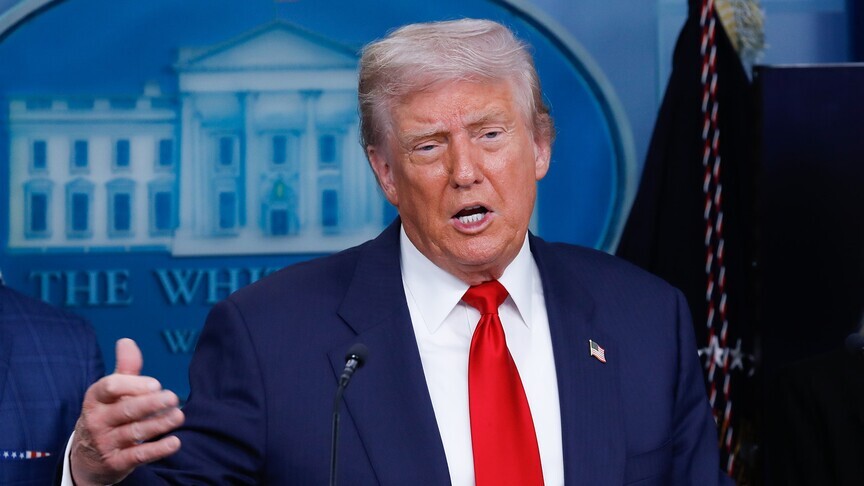
Trump emerged Saturday to declare the United States would now “run” the country for an indeterminate future, offering strikingly little detail and claiming he wasn’t afraid of “boots on the ground.”
For a president whose political movement was fueled, in part, by resentments over two decades of bloody American foreign intervention, it was a remarkable turnabout. The president mostly glossed over the work that may lie ahead, focusing instead on obtaining access to Venezuela’s vast oil reserves and repeatedly declining to rule out a more robust US military presence if Maduro’s allies refuse to cede power.
In the hours after the strike, sources around Washington, including congressional staffers and allies of the president, privately voiced concerns about the long-term consequences of the action — both in terms of US national security and the potential political fallout for a president with low-approval ratings whose base has shown little appetite for American intervention abroad.
A strike months in the making
At Trump’s side this week in Florida have been the chief architects of the escalating pressure campaign on Maduro, Secretary of State Marco Rubio and senior adviser Stephen Miller, who were seen at dinner with the president hours before the operation began. They joined him again as he proclaimed victory on Saturday.
Preparations for the raid began in mid-December, people familiar with the plans told CNN. But the vision had been planted months earlier. Even before the first US military strike on an alleged drug-carrying boat from Venezuela in early September, the plan to remove Maduro from power was already in motion.

While the US was visibly building up its military assets in the Caribbean, moving warships and other materiel to the region, another buildup was happening in secret. In August, the CIA covertly installed a small team inside Venezuela to track Maduro’s patterns, locations and movements, which helped bolster Saturday’s operation as to his exact whereabouts, including where he would be sleeping, sources familiar with the plans told CNN.
The team found out “how he moved, where he lived, where he traveled, what he ate, what he wore, what were his pets,” Gen. Dan Caine, the chairman of the Joint Chiefs of Staff, said Saturday.
The assets included a CIA source operating within the Venezuelan government who assisted the United States with tracking Maduro’s location and movements ahead of his capture, one source briefed on the operation told CNN.
The detailed timeline and the revelation that a CIA team has been operating inside Venezuela for so long sheds new light on the administration’s pressure campaign on Maduro for the past several months, even as senior officials publicly stated their goal was not regime change.
Several Democratic members of Congress on Saturday accused Rubio and Hegseth of lying to lawmakers during a Senate briefing last month.
Sen. Andy Kim of New Jersey wrote in a post on X that “Secretaries Rubio and Hegseth looked every Senator in the eye a few weeks ago and said this wasn’t about regime change. I didn’t trust them then and we see now that they blatantly lied to Congress.”
In October, Trump said he authorized the CIA to operate inside Venezuela to clamp down on illegal flows of migrants and drugs from the South American nation. The CIA declined to comment.
‘Pretty much an ultimatum’
Late last month, the CIA carried out a drone strike on a port facility on the coast of Venezuela, sources familiar with the matter previously told CNN, marking the first known US attack inside that country. The strike targeted a remote dock on the Venezuelan coast that the US government believed was being used by the Venezuelan gang Tren de Aragua to store drugs and move them onto boats for shipping, the sources said.
No one was present at the facility at the time it was struck, so there were no casualties, according to the sources.
Despite the plans being drafted to oust Maduro, many White House officials had continued to hold out hope in recent weeks that the Venezuelan president would voluntarily step down, two senior White House officials told CNN.
During a phone call between Trump and Maduro in November, the American president repeatedly stressed to the Venezuelan leader that “it would be in his best interest” to step down and leave the country, one official said, calling the conversation “pretty much an ultimatum.”

“I want to be clear about one thing: Nicolas Maduro had multiple opportunities to avoid this,” Rubio said Saturday. “He was provided multiple, very, very, very generous offers and chose instead to act like a wild man, chose instead to play around, and the result is what we saw tonight.”
As recently as the beginning of December, the administration believed it was beginning to see cracks in Maduro’s support system, one of the officials told CNN. As time went by, however, that belief began to dissipate, and planning for the operation began.
Once Trump gave the go-ahead in late December, the operation was disrupted by several factors, including the weather in Venezuela and the president’s decision to strike Nigeria on Christmas, one official said.
Conditions ripen for a strike
Caine said Saturday that “Operation Absolute Resolve” was the culmination of “months” of planning and rehearsals involving 150 aircraft and personnel across military and intelligence agencies.
The troops tapped to participate then had to wait for the ideal conditions, Caine said, and were on standby through the holidays as weather delayed the operation.
“Last night, the weather broke just enough, clearing a path that only the most skilled aviators in the world could maneuver through,” Caine said.
Once Trump gave the go-ahead just before 11 p.m. ET, US military aircraft began taking off from 20 bases in the Western Hemisphere, Caine said. Those aircraft would deliver precision strikes on Venezuelan ground targets, such as air defense systems, and provide cover for the helicopters carrying the extraction team to Caracas. The US also deployed cyberwarfare tactics to help clear a path for its teams operating in the sky and on the ground, Caine said.
The helicopters with the extraction team reached Maduro’s compound at 2 a.m. local time in Caracas, the general said. Upon arrival, the helicopters came under fire and one was hit but remained flyable. The US returned fire in defense, Caine added.
“As the operation unfolded at the compound, our air and ground intelligence teams provided real-time updates to the ground force, ensuring those forces could safely navigate the complex environment without unnecessary risk,” he said.
Caine said Maduro and his wife “gave up” to the US military personnel before being flown out of the country. Maduro and Flores were placed aboard the USS Iwo Jima, which stopped at the US military base in Guantanamo Bay, two sources familiar with the plans told CNN.
The base, sometimes referred to as “Gitmo,” is in southeastern Cuba and is home to the notorious detention camp. There, Maduro and his wife were transferred to a plane, which landed at Stewart Air National Guard Base in New York on Saturday evening.

In Venezuela, people were unsure how to react.
Numerous streets in Caracas, where the smell of gunpowder lingered, appeared deserted in the early hours of Saturday. Some people who went out in search of basic necessities, such as diapers, found that most businesses were closed, including pharmacies, supermarkets and gas stations.
‘The speed, the violence’
Trump, vacationing for a long stretch in South Florida, offered little indication he was planning one of the most consequential actions of either of his presidencies. Instead, he went about his usual rhythms: days at the golf course, dinners on the Mar-a-Lago patio, and hosting a New Year’s Eve gala that featured a performance by Vanilla Ice.
In the hours before he gave the final go-ahead, the president met at his golf club with Vice President JD Vance to discuss the strikes, but Vance returned home to Cincinnati after the operation began. Vance joined several late-night meetings via secure video conference with top national security officials leading up to the operation.
A Vance spokesperson said the Trump national security team “was concerned a late-night motorcade movement by the Vice President while the operation was getting underway may tip off the Venezuelans.”
Trump, meanwhile, watched the complex capture play out in real time from a room in Mar-a-Lago alongside military generals.
“If you would have seen what happened, I mean, I watched it literally, like I was watching a television show,” he mused later, calling into Fox News.

“If you would have seen the, the speed, the violence … it was an amazing thing, amazing job that these people did. There’s nobody else could have done anything like it,” Trump added.
He had much less to say about what it might look like for the US to “run” Venezuela, offering vague allusions to a “group” that would govern the 31 million people who live there. And while he seemed confident Venezuela’s Vice President Delcy Rodríguez would “do what we think is necessary to make Venezuela great again,” Rodriguez came out two hours afterword to insist her country had been “savagely attacked” by the operation.
It all made for a startlingly unclear picture of what might come next, despite the months of planning that got Trump to Saturday.
Asked by CNN whether he’d taken into consideration the mixed track record of American efforts to oust dictators, the president set himself apart.
“That’s when we had different presidents. But with me that’s not true,” he said. “With me, we’ve had a perfect track record of winning.”
America’s strongman places a huge Venezuela wager but evokes nightmares of regime change disasters

Millions of Americans woke up with the same question on the first Saturday of a new year: Are we at war with Venezuela?
President Donald Trump’s ouster of President Nicolás Maduro has stunning implications for Venezuela, American global power, and the shattered remnants of constitutional curbs on US presidents and international law.
The ostensible justification is that Maduro was the pinnacle of a cartel state that threatens America’s security and the well-being of its citizens with narcotics trafficking. But Trump’s claims overplay Venezuela’s role, and his transparent relish at wielding a big stick in his geopolitical backyard highlights more ambitious motives.
Few of Venezuela’s repressed citizens will lament the removal of a dictator who wrecked lives and ruined economic opportunity.
But the swoop against Maduro was a stunner, and not just because the overthrow of a foreign leader is considered an act of war.
Trump’s entire political philosophy was rooted in avoiding any more US shock-and-awe operations to enforce overseas regime change after two decades of quagmires.
What happened to the plan to stop meddling in intractable foreign politics that the US doesn’t understand? Is “America First” over?
Probably not. Instead, it’s on steroids.

Trump is still acting in the hard-eyed pursuit of what he perceives to be vital US national interests. It’s just that his definition of the concept has expanded massively since 2016. So has his appetite for wielding unchecked power, which has burst US borders and is racing through the Americas and beyond.
“America will never allow foreign powers to rob our people or drive us back into and out of our own hemisphere,” Trump warned at a remarkable news conference Saturday at his Mar-a-Lago resort. “Under our new national security strategy, American dominance in the Western Hemisphere will never be questioned again.”
Saturday proves that the United States has reverted to days when presidents and intelligence agencies sought to topple autocratic or inconvenient leaders in favor of puppet governments. It also conjures dark reminders of CIA political meddling, including in Latin America, which has often backfired.
How the Venezuela swoop could succeed
If upside projections of Trump’s bet play out, his domestic political exposure could be limited. He might ease the torment of the Venezuelan people; create stability in the northern part of South America; allow a return home of Venezuelan refugees; and blunt efforts by US foes China and Russia to gain a foothold that could threaten US security and interests.
An apparently well executed military operation without US combat deaths to grab Maduro will only enhance Trump’s reputation for orchestrating thunderclaps of military power after his strikes on Iran’s nuclear installations last year.
His recharged strongman’s personality cult will please some Republican voters, as will his defiance of constitutional limits and liberal critics. This may discourage rebellions from GOP dissidents who understand that the Constitution stipulates that Congress and not presidents declare war.
But the president is taking a risk with many in his fraying political base already chafing at his strikes in Iran, Nigeria, Syria and now Venezuela and apparent obliviousness to grinding economic conditions at home. Democrats are already hammering the theme as a bedrock of their campaign ahead of November’s midterm elections.
It’s critical to GOP political prospects that the US does not get sucked into Venezuela in vast ground troop deployments that mirror the chaos of the post-9/11 wars. But if the initial shock ouster of Maduro degenerates into violence — as it did with earlier US regime change operations in Iraq, Afghanistan and Libya, he will slide into deep political trouble.
Was this Trump’s ‘Mission Accomplished’ moment?
Trump’s triumphant morning news conference at Mar-a-Lago, as Maduro was transported into US custody in New York, dripped with hubris. It was hard not to recall President George W. Bush’s “Mission Accomplished” victory lap on an aircraft carrier in 2003, shortly before a bloody insurgency rocked Iraq.
“No other president has ever shown this kind of leadership, courage, and resolve, the most powerful combination the world has ever seen,” Defense Secretary Pete Hegseth gushed, ignoring Abraham Lincoln’s Civil War heroism, Franklin Roosevelt’s daring oversight of the D-Day Normandy landings and John F. Kennedy’s steely resolve preventing nuclear war in the Cuban Missile Crisis.
The administration’s hagiography could be especially dangerous for the mindset of a president who already thinks he’s infallible and omnipotent.
Disasters in Iraq and Afghanistan, as well Libya after the ouster of Moammer Gadhafi in 2011, cut deep into Americans’ psyche because they were born from Washington’s negligence after an initial triumph. Venezuela — with its 28 million people; brutal security forces; criminal and gang culture; and fractured governance and economy — looks a prime candidate for the societal implosion that often results when tyrants are suddenly deposed.
Trump was glib on what exactly comes next, but his candor was shocking. And his true motives appear to add up to a modern form of colonialism.

“We are going to run the country until such time as we can do a safe, proper, and judicious transition,” Trump said, seemingly playing into every regime change trope. “We’re not afraid of boots on the ground if we have to have,” he said, apparently raising the possibility of sending American forces into a volatile semi-failed state where government thugs and militia run rampant.
And remember the incessant complaint of anti-Iraq war campaigners that the war there was “really about the oil”? There’s no confusion this time.
“The oil companies are going to go in. They’re going to spend money. We’re going to take back the oil that, frankly, we should have taken back a long time ago,” Trump said.
But he had no answers on how the United States would “run” Venezuela, although he suggested at one point that Secretary of State Marco Rubio, Chairman of the Joint Chiefs of Staff Dan Caine and Hegseth would be involved.
Any attempt to revive the oil industry wrecked by Maduro and his predecessor Hugo Chávez will take years and require a huge US security footprint. So this is no quick in-and-out operation by the US. Trump will own the aftermath, whether there’s peace, civil disintegration, or a new tyrant to replace Maduro.
Still, no one can comfortably predict what will happen.
The first wave of criticism of regime change Trump-style carried the whiff of critics rhetorically fighting the last war. The Iraq template may not fit Venezuela. Although the latter is often seen as a vast criminal enterprise, the country lacks the religious and tribal schisms and the belligerent neighbors such as Iran that helped push Iraq into hell in 2003. And the Trump administration has not so far dismantled the state apparatus, as Bush’s viceroys did in Baghdad to disastrous results.
Trump seemed to imply that his administration was talking to Venezuelan Vice President Delcy Rodríguez. He said she was “essentially willing to do what we think is necessary to make Venezuela great again.”
The vice president, however, seemed defiant in an address from Caracas, saying that the US was guilty of “kidnapping” Maduro and demanding his return. And while calling for a “judicious” transition, Trump didn’t commit to a return to democracy, leaving open the implication that a pliant regime in Caracas is his preference.
Democrats are irate, but Republicans fold behind Trump as usual
The president’s actions have already ignited a political firestorm at home.
While officials initially tried to portray Maduro’s capture as a law enforcement operation to fulfill a narcotics indictment he faces, Trump’s expansive new claims about running the Western hemisphere and taking Venezuelan oil put the operation onto even shakier legal and constitutional grounds.
Attacks on air and land in Venezuela seem to clearly meet the definition of US combat action that requires the prior authorization of Congress — as was sought and received by Bush before the war on terrorism and the invasion of Iraq.
“Last night, President Trump waged war on a foreign nation without authorization, without notification, and without any explanation to the American people,” Sen. Jack Reed, the top Democrat on the Senate Armed Services Committee, said in a statement. “Whatever comes next, President Trump will own the consequences.”
Reed added: “This has been a profound constitutional failure. Congress – not the President – has the sole power to authorize war. Pursuing regime change without the consent of the American people is a reckless overreach and an abuse of power.”
Virginia Democratic Sen. Tim Kaine, who has long sought to narrow presidential discretion in taking the US to war following White House overreach in the post-9/11 years, said, “Congress must reassert our critical constitutional role in matters of war, peace, diplomacy, and trade.”
But in the short term, at least, Trump appears immune from pressure on Capitol Hill. Leaders of the GOP Senate and House majorities expressed support and said they expected briefings in the coming week. Kentucky Sen. Rand Paul, who has questioned the legality of Trump’s boat strikes against alleged drug traffickers off Venezuela, said he supported Maduro’s removal, while noting that the founders limited the president’s power to wage war.

But Trump’s political foundation is still thin. Before he acted, the prospect of US adventures in Venezuela was deeply unpopular. A CBS poll in November found 70% of Americans would oppose military action. The disaffected include members of his already-cracking MAGA coalition. Georgia Rep. Marjorie Taylor Greene wrote on X that never-ending military aggression and costly foreign wars were “what many in MAGA thought they voted to end.”
Abroad, Trump’s strike against Maduro confirmed that his contentious US national security strategy — which calls for US dominance in its own sphere of influence and a narrowed focus elsewhere — is for real. When Russia and China get over the shock of losing an ally in Maduro, they’ll work out how to use this new global organizing principle of the strong over the weak to their advantage.
“The 47th president of the United States is not a game player,” Rubio said. “When he tells you he’s going to address a problem, he means it. He actions it.”
The big question about Trump is now more acute than ever.
How far will he go? And who is going to stop him?





:max_bytes(150000):strip_icc():focal(753x271:755x273):format(webp)/cole-the-deaf-dog-112125-1a-ad248101bd174108a795d88d6afd93d8.jpg?fit=750,500&ssl=1 "Elementary School Throws Deaf Therapy Dog a Surprise Birthday Party as Students Learn Sign Language to Sing ‘Happy Birthday’")



:max_bytes(150000):strip_icc():focal(739x219:741x221)/miley-cyrus-maxx-morando-avatar-fire-and-ash-premiere-hollywood-120225-457bff5676734bfcae5b86f66dfdc495.jpg?fit=1500,1000&ssl=1 "Miley Cyrus Is Engaged to Musician Maxx Morando After 4 Years of Dating")