A former Trump official reacted to the president’s strange excuse for posting a meme that depicted him as Jesus by calling for his immediate removal from office.
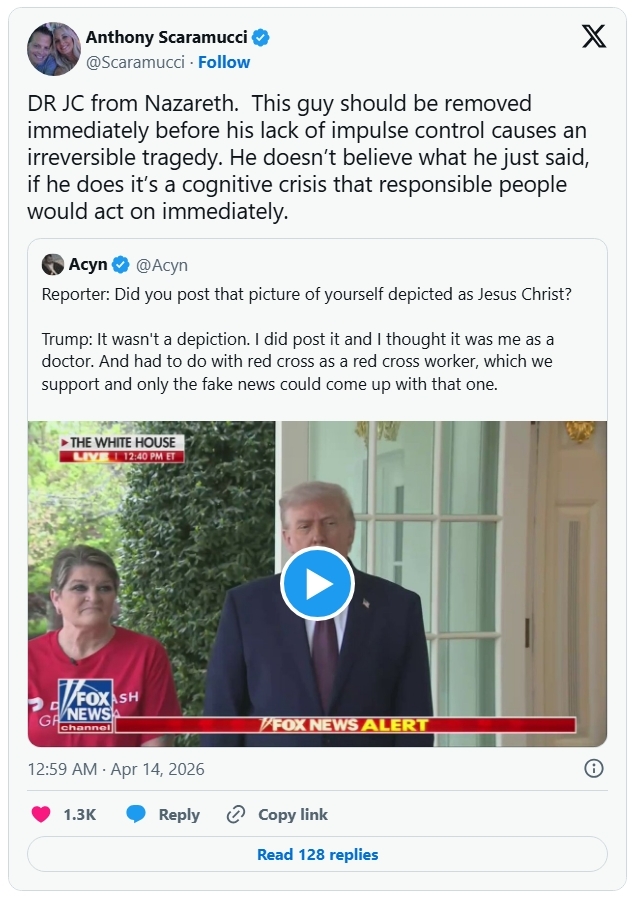
On Sunday, Donald Trump posted the AI-generated image showing him as a Christ-like figure, and, after lots of criticism, including some people who suggested he just might be the Antichrist, dubiously claimed he thought the image “was me as a doctor.”
Many people were skeptical of Trump’s frankly lame excuse for posting the meme, including former White House press secretary Anthony Scaramucci, who suggested on Monday it was time to kick Trump out of office for good.
“This guy should be removed immediately before his lack of impulse control causes an irreversible tragedy,” Scaramucci said on X. “He doesn’t believe what he just said, if he does it’s a cognitive crisis that responsible people would act on immediately.”
Trump, 79, Hides Out for Three Days Amid Fears of Unraveling
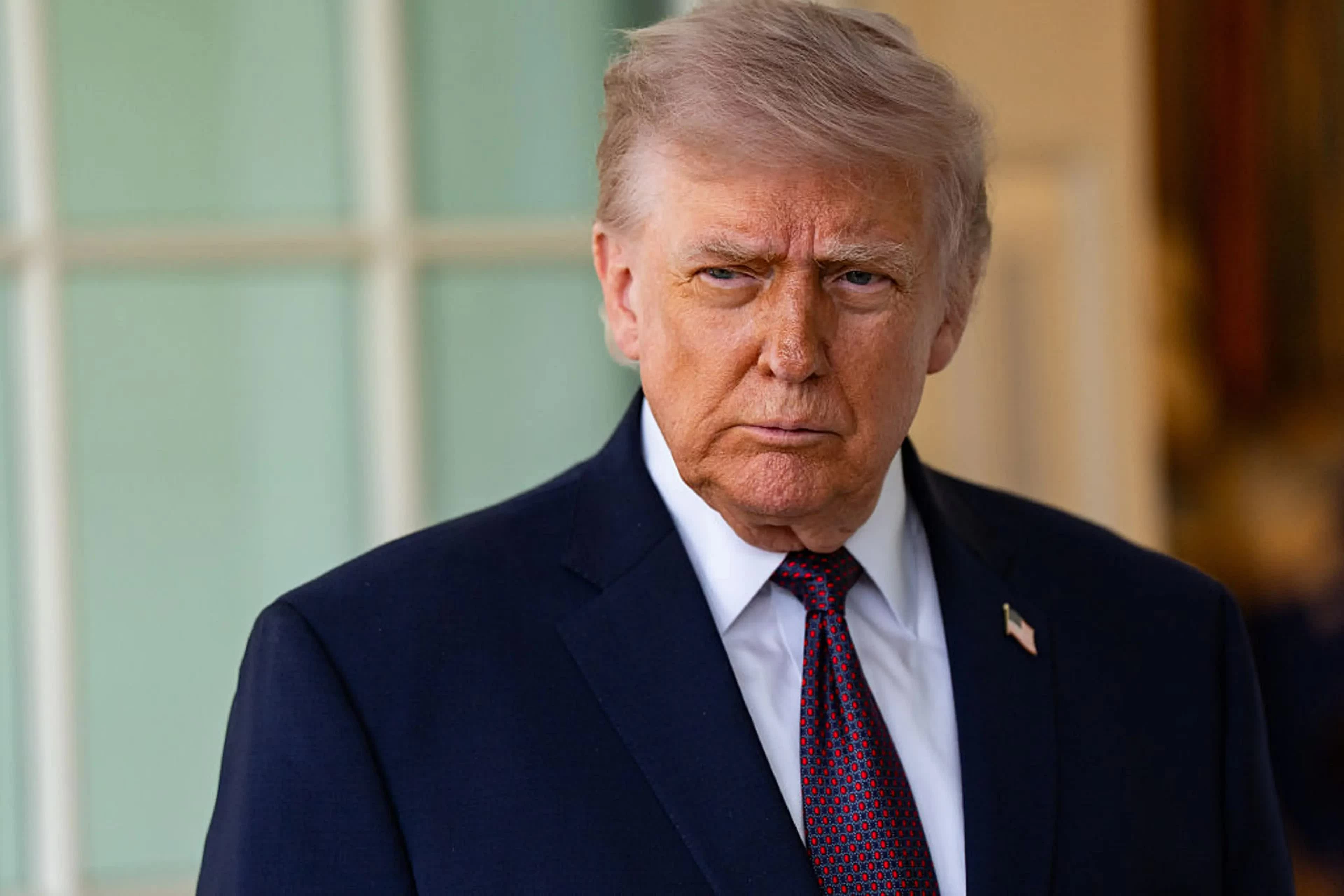
During the first Trump administration, Scaramucci, who mainly worked as a financier, served as White House press decretary for a whopping 10 days.
He has since spent a lot more time than that criticizing his former boss.
Last month, he put a spin on the definition of “Trump Derangement Syndrome,” a so-called condition that the MAGA crowd claims affects the millions of people who don’t support the president.
He told Don Lemon the real people suffering from “TDS” are the folks “that are with him still.”
“Those are the people that are deranged,” he said. “Those are the people that have lost touch with reality in terms of how much damage he and his cronies are causing the country and the world.”
In November, Scaramucci told “The Daily Beast Podcast” the truth about Trump’s popularity with donors, aides and GOP officials: He’s not.
Trump, 79, Hides Out for Three Days Amid Fears of Unraveling
“Anybody who thinks the party likes him doesn’t understand the party,” Scaramucci explained. “And that could be the donors who hold their nose and give him money, or that could be the political class that lives with them in Washington.”
He added that “if you’re inside Trump’s inner orbit, you hate the guy’s guts,” but said “there’s a dance because you’re afraid of him, because he’s intimidating you, because of his political prowess and his media presence.”
“He’s sort of the big furry, he’s sasquatch of social media. And you don’t want him bigfooting your ***, right? So you’re afraid of him, but you hate his guts,” Scaramucci said.

The Fears of President Trump
President Donald Trump is pursuing the war in Iran in an untraditional style, oscillating between aggression and conciliation. As the conflict drags on, he appears increasingly fearful of the risks.
According to The Wall Street Journal, on the afternoon of April 3, after learning that a U.S. plane had been shot down over Iran, President Donald Trump screamed at his aides for hours. He repeatedly complained that Europe was providing no support at all, while the average gas price stood at $4.09. Images of the 1979 Iran hostage crisis—one of the biggest foreign policy failures of a modern U.S. president—haunted his mind.
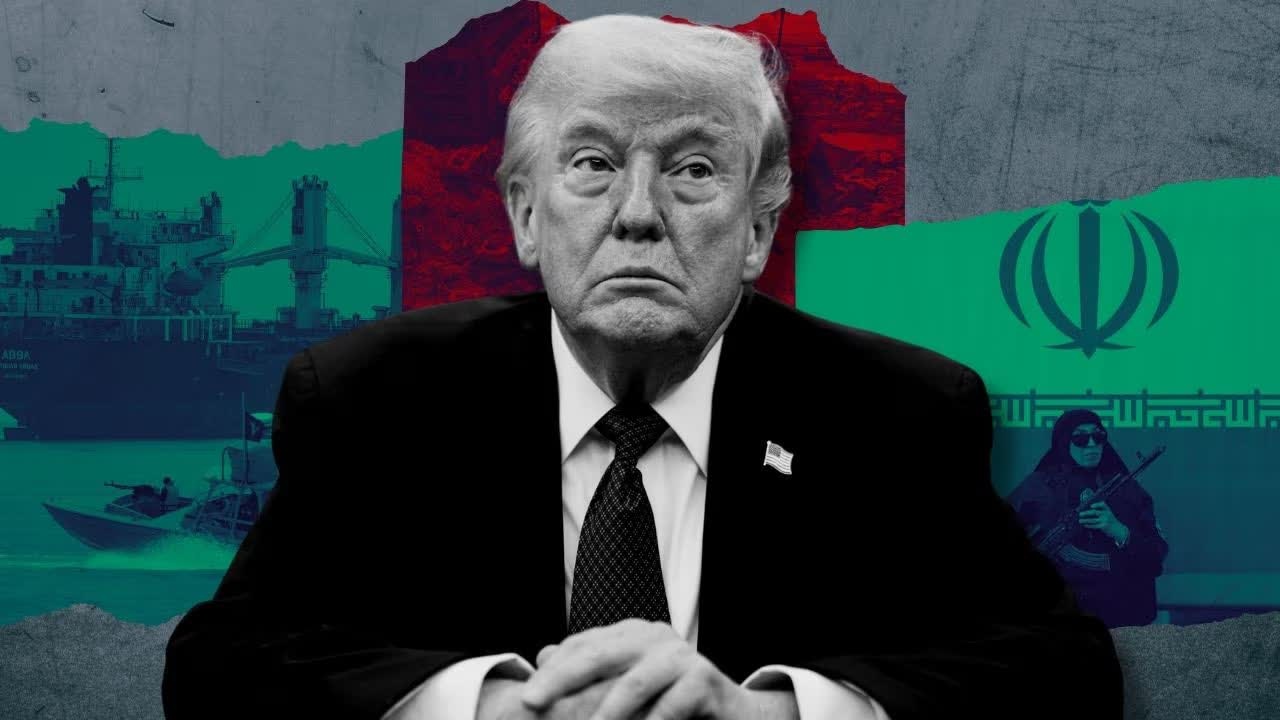
Trump demanded that the military immediately rescue the pilot. One official said aides received minute-by-minute updates in the Situation Room because Trump was not calm. The president was only informed at key moments.
One pilot was quickly rescued. It was not until the end of April 4 that Trump received news about the second pilot. The worst-case scenario for his second term had not materialized. At 2 a.m. on April 5, Trump went to bed.
Just six hours later, he returned with tremendous anger on social media. “Open up that goddamn strait right now, you crazy bastards, or you will live in hell,” he wrote on Truth Social.
A president with an untraditional “all-or-nothing” style now finds himself in a completely new situation: war. He constantly wavers between hawkish and concessional attitudes while struggling with fears of the worst possible scenarios.
At the same time, the president sometimes loses focus. He spends time on trivial details such as plans to decorate the White House ballroom or preparing for a midterm fundraising event.
Trump, 79, Hides Out for Three Days Amid Fears of Unraveling
Frustrations and shock
Trump ran for office promising to end U.S. military interventions abroad, but he was also confident that he could resolve a national security issue that had troubled seven previous U.S. presidents simply through air and naval power. Now, the ceasefire is fragile, a vital trade route has been closed for weeks, and Iranian leaders are becoming increasingly hardline. All of this risks prolonging the conflict far beyond the 4-6 week timeline Washington had set.
The decision to engage in the war surprised even those who know Trump best. “Blood and sand,” he said during his first term to describe the Middle East, explaining why he did not want to get drawn into any conflicts.
After a February meeting with Israeli Prime Minister Benjamin Netanyahu in the Situation Room, along with many conversations with a group of allies, Trump believed the military would complete the mission. He spoke of a “swift victory” in Venezuela, where the U.S. captured the president within hours and partnered with a more moderate vice president.
In Iran, the war began with the assassination of Supreme Leader Ayatollah Ali Khamenei and other senior officials. Every morning, Trump watched footage of explosions across Iranian territory. Officials said Trump closely monitored the war, measuring the number of Iranian targets destroyed as an important indicator of success.
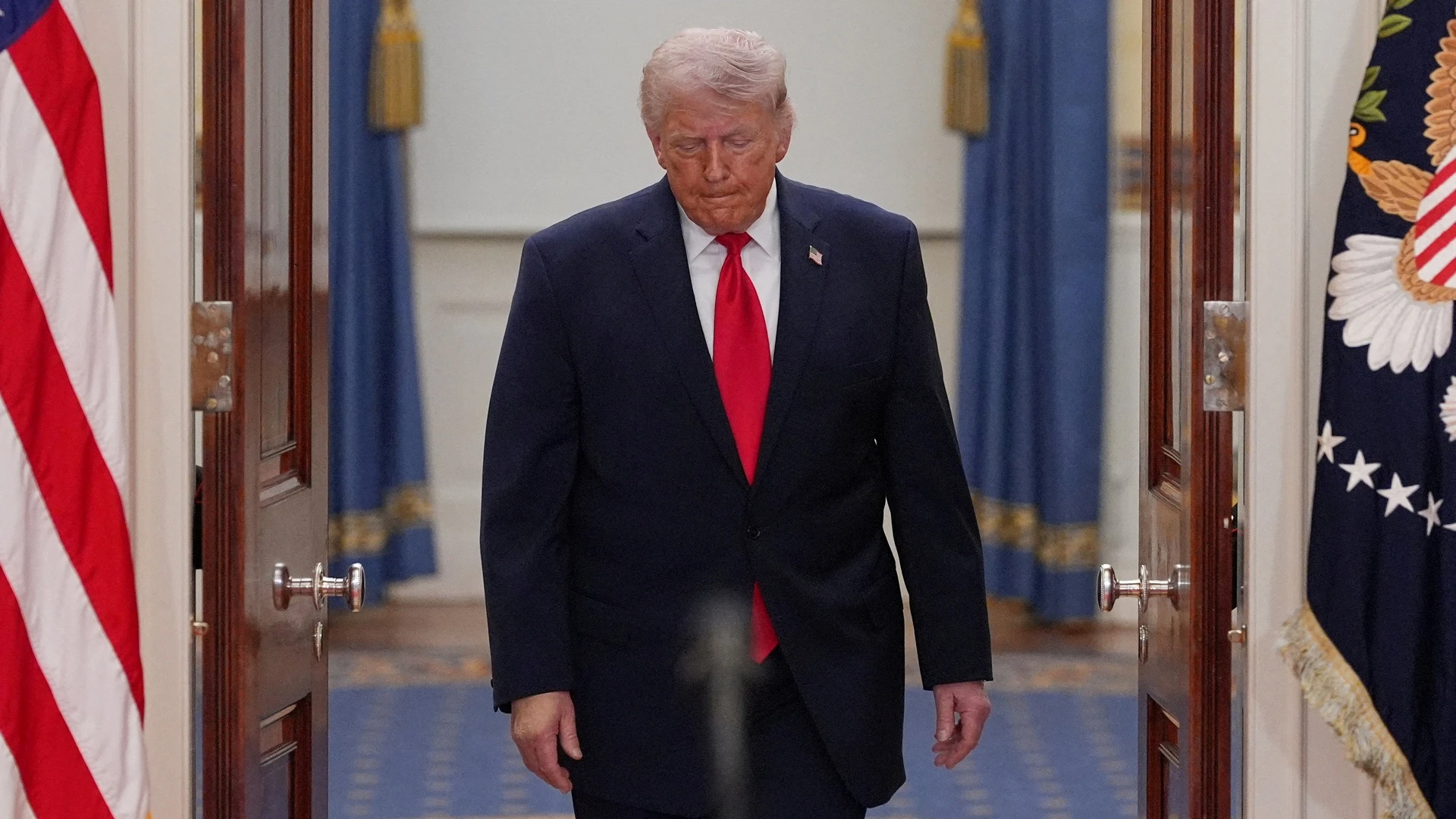
However, Trump made little effort to persuade the American public about the reasons for going to war, and he soon became disappointed that neither the people nor the media praised him as he had expected. Midterm election polls showed that the war was hurting Republican candidates’ approval ratings.
Trump is no longer running for election and believes that victory over Iran creates an opportunity to reshape the global order in ways he could not during his first term.
Yet he began to think about how military action could veer into disaster.
He was furious with Europe and NATO for refusing to help reopen the Strait of Hormuz. He was angry with UK Prime Minister Keir Starmer for delaying permission for the U.S. to use British bases, mocked French President Emmanuel Macron, and called his meeting with NATO Secretary General Mark Rutte a “waste of time” because Rutte could not pressure member states to help the U.S.
The Strait of Hormuz was a particular source of frustration. Before the U.S. launched the war, Trump thought Iran would surrender before closing the strait, and that the U.S. military could handle any situation. Reality proved otherwise.
Some advisors were surprised at how quickly maritime traffic came to a standstill, while Trump was astonished that “just drones could control the strait.” He expressed belated frustration that this vital waterway was so vulnerable.
Trump, 79, Hides Out for Three Days Amid Fears of Unraveling
At the end of March, Trump ordered advisors to find ways to negotiate. By early April, gas prices had risen more than $1 per gallon. The contradictions in the president’s thinking made aides increasingly worried that the war was becoming a political burden.
Crisis after crisis
He continuously received calls from reporters, saying the U.S. was “almost out of targets” in Iran or complaining about Italian Prime Minister Giorgia Meloni. In another interview, he said he could attack “every power plant” in Iran.
Aides repeatedly advised the president to limit impromptu interviews because the public would see the White House as inconsistent in its messaging. At times, Trump joked with Press Secretary Karoline Leavitt that he had spoken to a reporter and there was explosive news, but she would have to wait until it was published. Sometimes Trump agreed to limit media conversations, but soon reverted to his old habits.
White House Chief of Staff Susie Wiles encouraged Trump to address the nation to reassure America. Initially, he was uninterested because he did not know what to say and could not declare victory. In the end, the April 1 speech failed to clarify how the U.S. would exit the war, leaving the public even more skeptical.
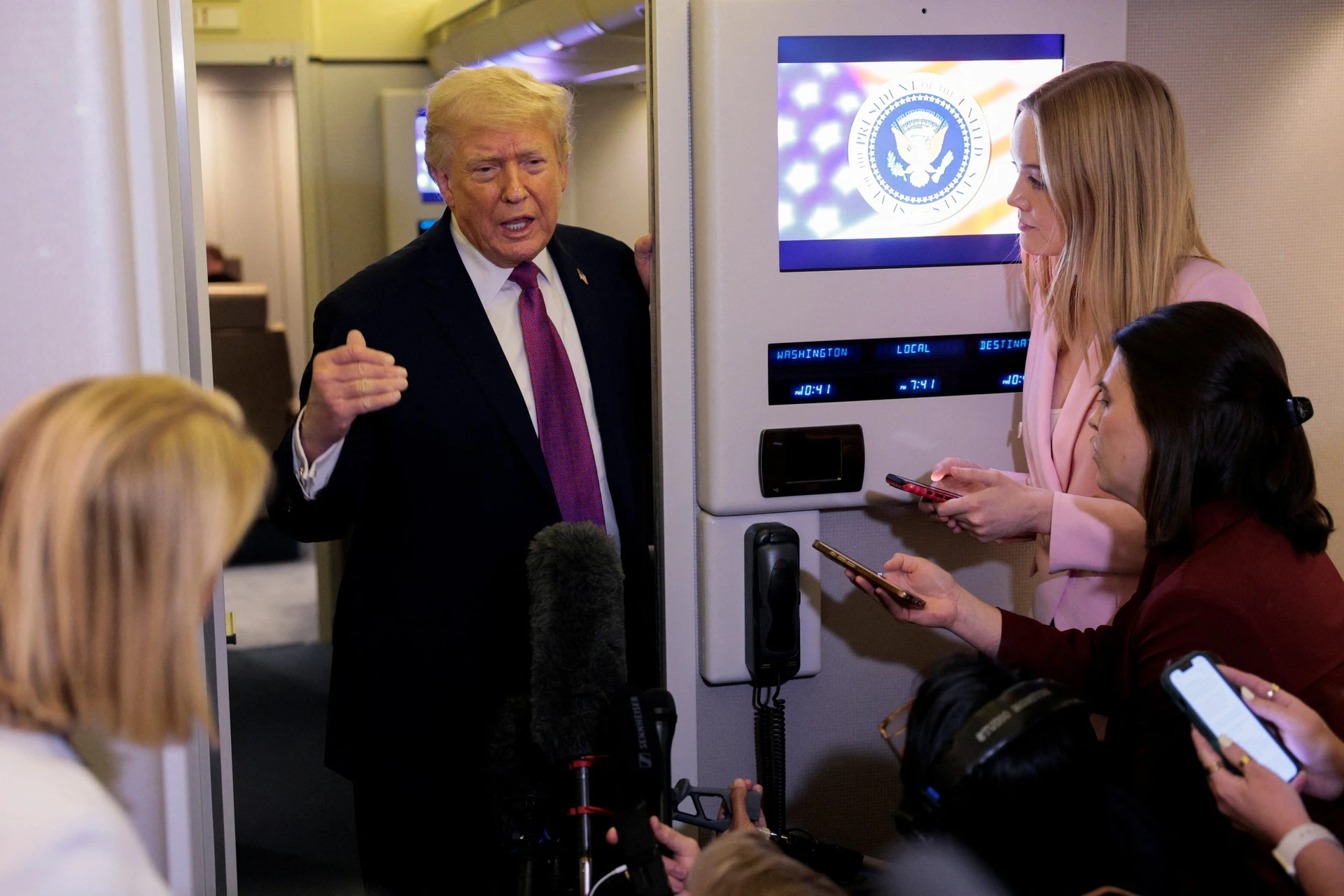
According to sources, Trump fears having to order troops into dangerous areas, where some may be injured and others may never return home.
For example, Trump opposed sending U.S. soldiers to seize Kharg Island, the center of 90% of Iran’s oil exports. Although the U.S. would likely succeed and get closer to controlling the Strait of Hormuz, Trump worried that American casualties would be unacceptably high.
The successive crises have kept the White House in turmoil for the past seven weeks. Trump has made risky statements without consulting his national security team. The White House chief believes threats and uncertainty could push Tehran to negotiate.
Right after Trump’s April 5 post, many Republican lawmakers and Christian leaders called the White House. They asked why the president had “praised Allah” on Easter morning and why he had used profanity.
AP Poll: Trump Approval At 33%
After the post threatening to “destroy Iranian civilization,” the White House spoke with Pakistan about mediating a ceasefire. Trump was so angry with Europe that he did not want anyone else to take on the role.
While the world counted down to the 8 p.m. deadline, Trump kept switching topics—from supporting a candidate in a state race in Indiana, preparing for midterms, to discussing cryptocurrency and artificial intelligence policy. Despite moments of extreme pressure, Trump said he wanted to discuss other topics and wanted the media to cover more than just Iran.
Additionally, the White House has increased attention to security threats. For example, in recent weeks, guests at the Mar-a-Lago resort noticed that umbrellas were arranged unusually to limit drone visibility.
Middle East Issue
The World section introduces the book “Africa – Middle East: Outstanding Political and Economic Issues.” The book introduces institutional political and economic reforms in Africa and the Middle East since the end of the Cold War. It covers many issues related to ethnicity, the ability to resolve ethnic and religious conflicts, policies of major powers, oil and gas in these two regions,…
Iran’s Supreme Leader warns of new strike against U.S., Israel On April 19, Iran’s Supreme Leader Mojtaba Khamenei warned of a “new bitter failure” for the U.S. and Israel as tensions escalate in the Strait of Hormuz, where at least two merchant ships reported being fired upon.
President Trump Gives Iran a “Final Opportunity,” Iran Vows to Fight to the End
Iran declares it will make no concessions, despite U.S. President Donald Trump’s harsh warnings about reaching a peace agreement.
President Donald Trump of the United States (Photo: Reuters).*
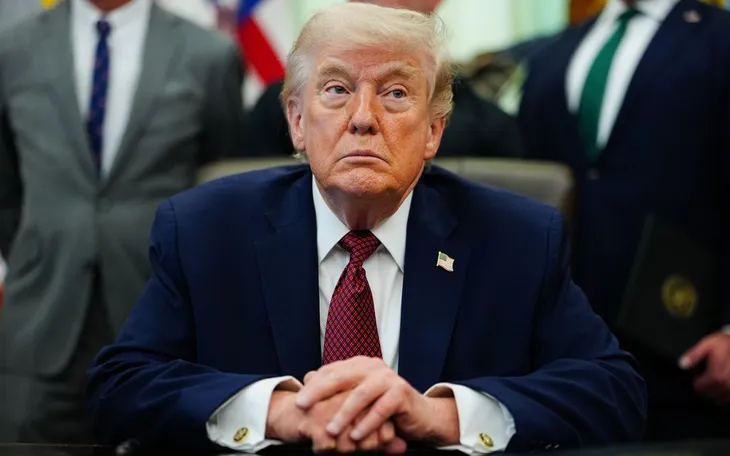
Trump, 79, Hides Out for Three Days Amid Fears of Unraveling
Mohammad Bagher Ghalibaf, Speaker of the Iranian Parliament and Iran’s chief negotiator, stated that Iran will not yield to U.S. pressure. He noted that there has been some progress in the talks, although fundamental issues remain unresolved.
“We will stand firm until the end,” Mr. Ghalibaf said in a televised speech on April 19.
He reiterated that the Iranian delegation went to Pakistan for negotiations with the U.S. “with goodwill but deep suspicion.” He affirmed that Tehran is still prepared for war if necessary.
“We are still very far from a final agreement,” Mr. Ghalibaf said, calling on the U.S. to earn the trust of the Iranian people.
“Overall, I can say there has been progress in the negotiations, but the differences remain significant and some fundamental issues have not yet been resolved,” he added.
The Iranian official also accused the U.S. of planning to infiltrate Iran through waves of instability from the western and eastern borders. He declared that efforts to change the regime and “Venezuela-ize” Iran — with the aim of selling its oil — have failed.
“It is clear that the enemy has been defeated, but that is different from claiming we have crushed their military,” Mr. Ghalibaf assessed.
Earlier, U.S. President Donald Trump told reporters that negotiations with Iran were going “very well,” but emphasized that he would not allow Iran to pressure the U.S. in the Strait of Hormuz.
In an interview with Fox News released on April 19, President Trump declared that any negotiations in Pakistan — taking place before the two-week ceasefire agreement expires on April 22 — represent Iran’s “final opportunity” to agree to a peace deal.
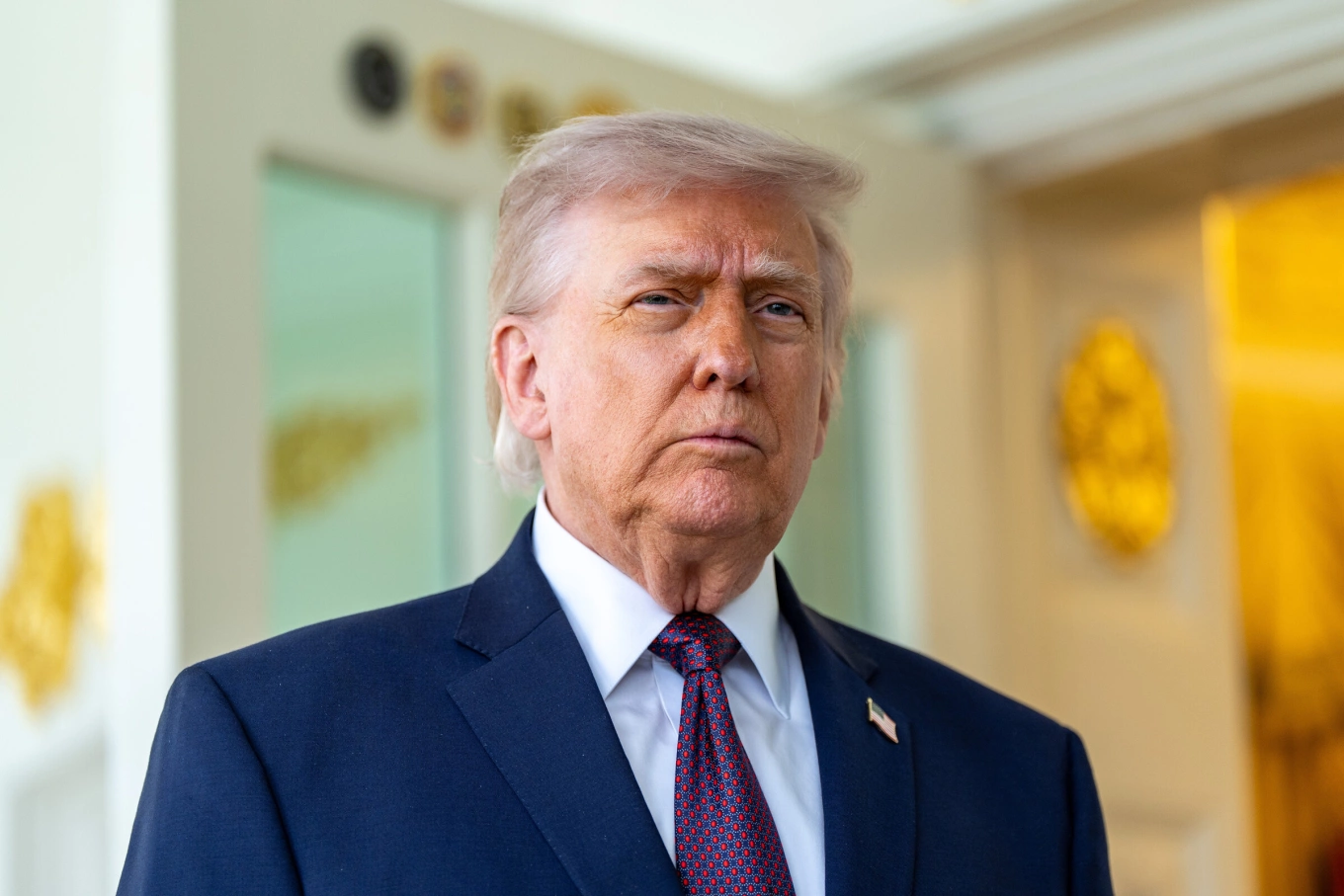
“If Iran does not sign this agreement, the entire country will be blown up,” Trump warned.
He repeated his earlier threat that the U.S. would specifically destroy Iran’s power plants and bridges if the country does not sign the agreement.
The White House chief stated that the deal the U.S. is offering Iran — which includes reopening the Strait of Hormuz and ensuring Iran does not possess enriched uranium — is a “very fair and reasonable agreement.” If Iran does not accept it, “every power plant” and “every bridge” in the country will be destroyed by the U.S.
The first round of talks between the U.S. and Iran took place in Pakistan but yielded no agreement. Iran’s nuclear program remains the core issue in the negotiations.
President Trump demands that Tehran dismantle its infrastructure and hand over enriched uranium to eliminate its nuclear program — proposals that Iran considers “unacceptable.” Iranian President Masoud Pezeshkian said President Trump has no reason to “deprive Iran of its nuclear rights.”
After the talks, President Trump announced a blockade of Iranian ports and shipping activities through the Strait of Hormuz, which handles about 25% of the world’s traded crude oil.
On April 17, Iran announced it had reopened the Strait of Hormuz to all commercial vessels, considering the move part of a ceasefire agreement between Israel and Lebanon as well as regional de-escalation efforts.
However, the Strait of Hormuz was closed again the next day after President Trump stated that the U.S. blockade of Iranian ports would remain in effect until a peace agreement is reached.
Tehran has not confirmed the next round of negotiations with the U.S. Tasnim news agency reported that Iran will not return to the negotiating table unless Washington drops its “excessive demands.”
According to RT, Fox
President Trump’s Approval Rating Plummets Amid Economic Concerns and Iran Conflict
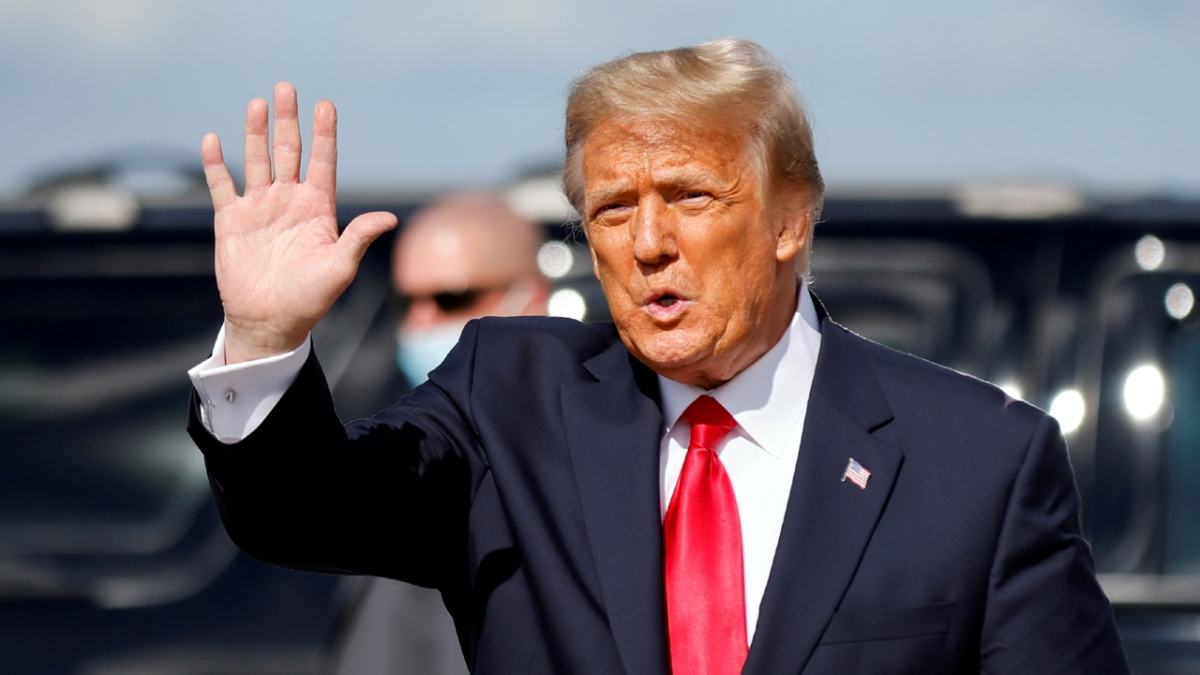
According to a recent poll, the approval rating for President Donald Trump has dropped significantly as the American public grows increasingly concerned about the risk of an escalating conflict with Iran and its negative impact on the domestic economy.
The survey, conducted by Reuters/Ipsos and released in early April, shows that only 39% of Americans approve of President Trump’s performance, a sharp decline compared to previous months. This is the lowest approval rating the president has faced since the beginning of his second term.
The primary cause for this decline is believed to be the rising tension in the Middle East. Many respondents expressed fear that the “tit-for-tat” military actions between the U.S. and Iran could lead to a full-scale war. Approximately 62% of those surveyed said they oppose a preemptive strike against Iran, while only 15% supported such an action.
Beyond security concerns, economic factors are weighing heavily on the public’s mind. The closure of the Strait of Hormuz and the ensuing instability have caused gas prices to spike across the United States. Many Americans fear that a prolonged conflict will erase the economic gains achieved over the past few years and lead the country into a recession.
Notably, the president is also losing support among his core voter base. Some Republican voters have expressed fatigue with the administration’s “maximum pressure” policy, which they feel lacks a clear exit strategy. Meanwhile, Independent voters are increasingly leaning away from the president, citing a lack of stability in his foreign policy.
In response to the poll numbers, White House officials argued that the president’s tough stance is necessary to protect U.S. national interests and that the economy remains fundamentally strong. However, political analysts suggest that if gas prices continue to rise and the situation in Iran remains unresolved, Mr. Trump may face significant challenges in maintaining his political influence ahead of the upcoming mid-term elections.
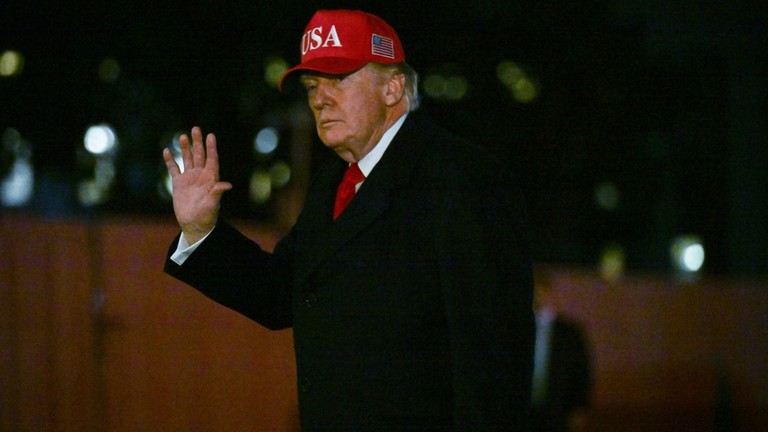
Trump and the Iranian Mire: When Fear Overwhelms Arrogance
President Donald Trump is navigating the conflict with Iran in an unorthodox manner, characterized by a mix of bellicosity and a desire for reconciliation. However, as the crisis drags on, he appears increasingly haunted by the risk of failure.
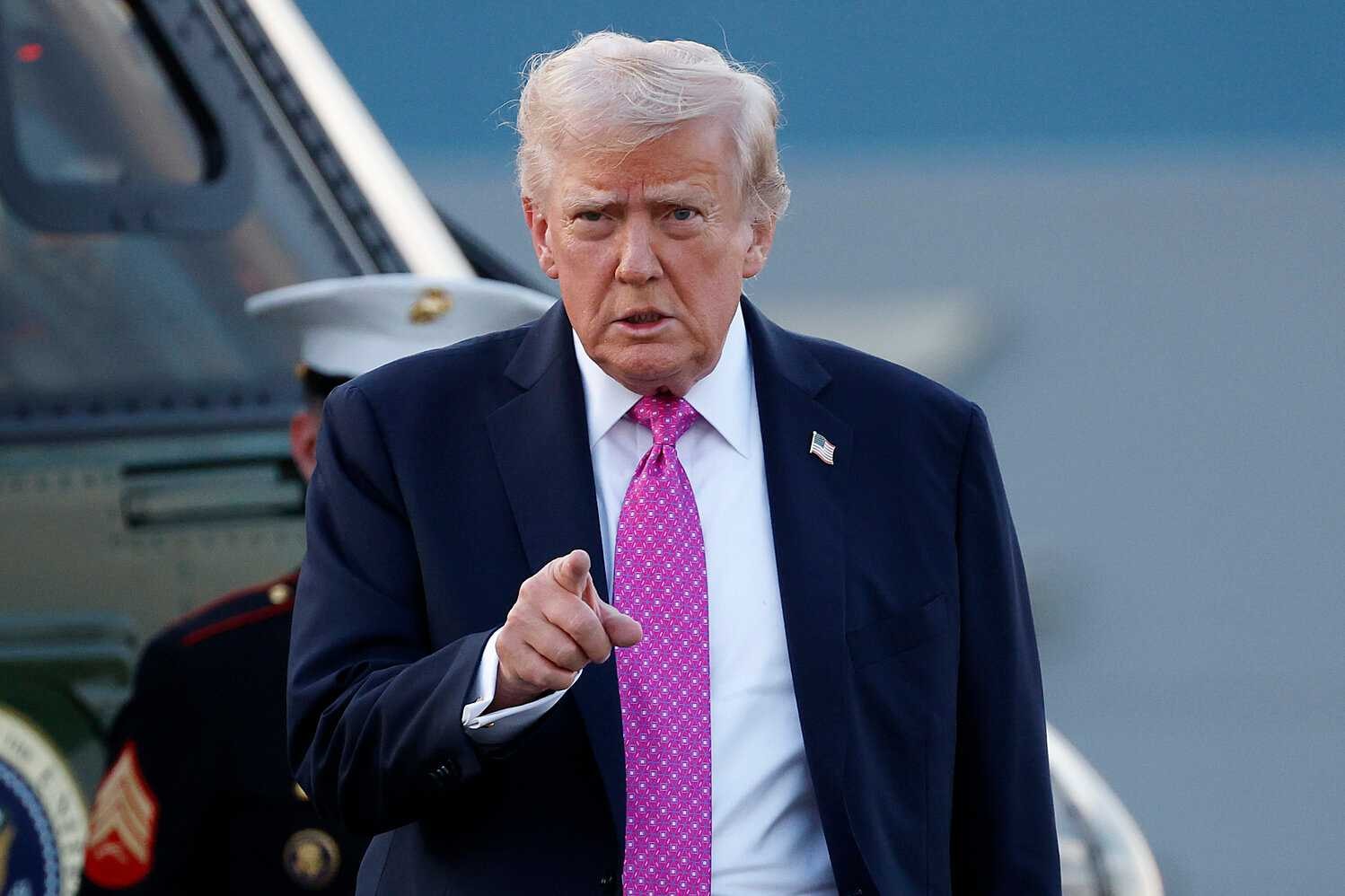
The Midnight Anxiety
According to sources familiar with the matter, during the peak of the tensions, President Trump demanded that the military rescue missing pilots immediately. One official noted that aides received minute-by-minute updates from the Situation Room on his behalf because the president was losing his composure.
While the first pilot was quickly recovered, it was not until the early hours of the following day that news regarding the second pilot arrived. This period was described as the “worst-case scenario” of his second term. It was only at 2:00 a.m. that Mr. Trump finally went to bed, only to return to social media six hours later with a furious warning to Tehran: “Open that damn strait immediately… or you will live in hell.”
Political Burdens and Economic Pressure
In late March, Mr. Trump reportedly ordered his advisors to find a path toward negotiations. By early April, the domestic situation had soured as gas prices surged by more than $1 per gallon. The contradictions in the president’s thinking have increasingly worried his aides, who fear the war is shifting from a strategic maneuver into a significant political burden.
White House advisors have urged Mr. Trump to limit his spontaneous interviews to avoid further market volatility. The continuous crises over the past seven weeks have kept the West Wing in a state of constant upheaval. Critics argue that the “master of the White House” believes intimidation and uncertainty will force Tehran to the table, but so far, the strategy has only yielded economic instability at home.

The Ghost of 1979
The current atmosphere in the West Wing is reportedly somber. During private moments, Mr. Trump has repeatedly complained that “Europe is doing nothing to help,” while expressing frustration over the national average gas price hitting $4.09 per gallon.
According to the Wall Street Journal, the president is haunted by the historical ghost of the 1979 Iran hostage crisis—a failure that defined the Jimmy Carter presidency. Although Mr. Trump is reportedly “impressed” by videos of military strikes, he is increasingly frustrated by the lack of public praise and the decline in his approval ratings.
Fractured Alliances
The President has not spared his allies from his frustrations, recently criticizing British Prime Minister Keir Starmer and mocking French President Emmanuel Macron for their perceived inaction. The closure of the Strait of Hormuz remains his greatest source of irritation. Mr. Trump once believed Iran would never dare to close this vital maritime artery, but the reality of the blockade has forced him to confront the limits of American leverage.
As the situation remains unresolved, the president continues to waver between his “maximum pressure” instincts and the growing fear of an economic catastrophe that could define his legacy.










:max_bytes(150000):strip_icc():focal(753x271:755x273):format(webp)/cole-the-deaf-dog-112125-1a-ad248101bd174108a795d88d6afd93d8.jpg?fit=750,500&ssl=1 "Elementary School Throws Deaf Therapy Dog a Surprise Birthday Party as Students Learn Sign Language to Sing ‘Happy Birthday’")





:max_bytes(150000):strip_icc():focal(742x348:744x350)/Blake-Shelton-Ole-Red-Las-Vegas-110423-05-3ac9944f6ace49e49681a6214550c063.jpg?fit=1500,1000&ssl=1 "Blake Shelton’s Second Act: The Country Star Who Finally Learned to Slow Down")


:max_bytes(150000):strip_icc():focal(999x0:1001x2)/nicole-kidman-keith-urban-7-9e08ef6d3f684b16a980fbf45686aa84.jpg?fit=2000,1500&ssl=1 "Where Nicole Kidman and Keith Urban Stand 8 Months After Finalizing Their Divorce")