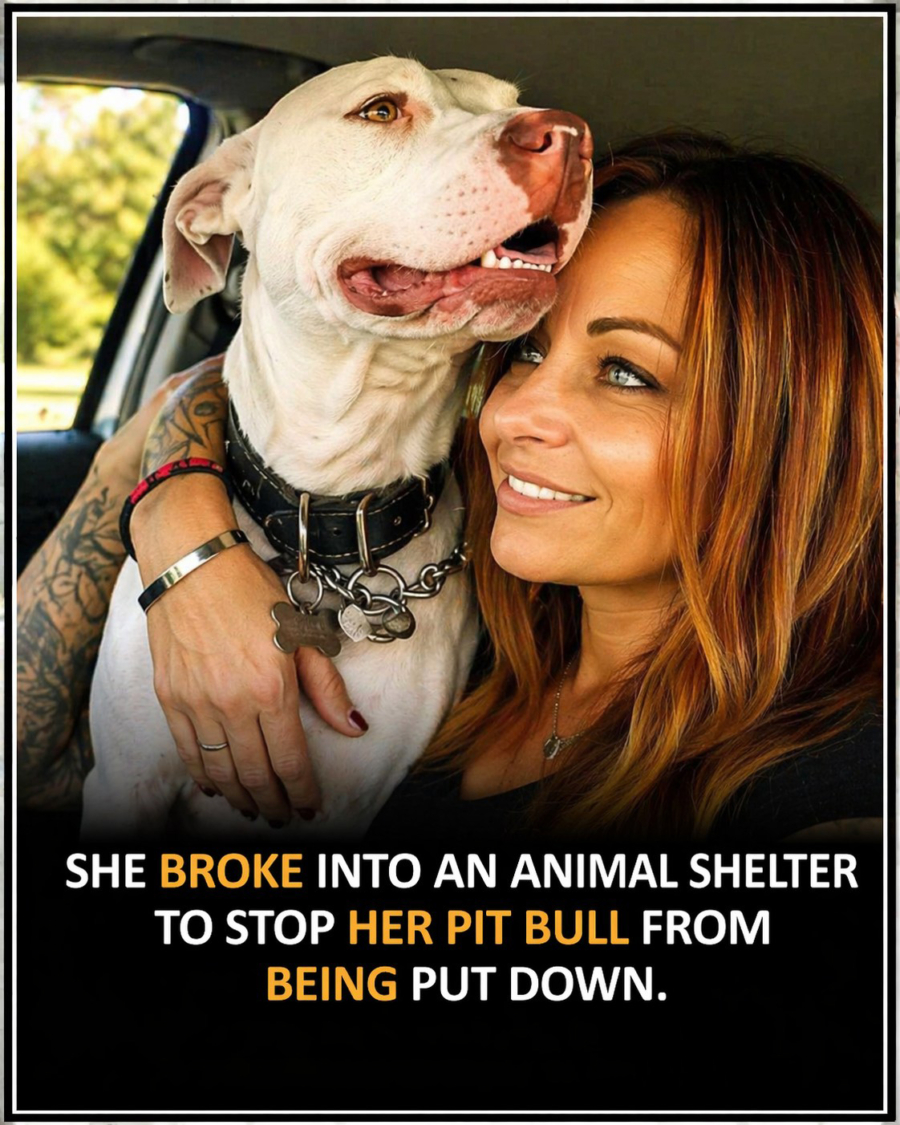
Oklahoma City Case Involving Hazel Sparks Debate About Shelter Decisions, Public Safety, and How Dogs Are Evaluated
Cases involving dogs that enter the shelter system after serious concerns are raised often leave no one feeling fully at peace. They can involve fear, heartbreak, legal rulings, public safety concerns, and the painful reality that once a situation reaches a certain point, every outcome feels heavy. That appears to be exactly what happened in the case of Hazel, a pit bull from Oklahoma City whose story has prompted strong emotions and a wider conversation about how dogs are assessed, especially when behavior in one setting may not fully reflect who they are in another.
Hazel was placed in shelter care after a series of troubling incidents that led officials to determine she could not return to her neighborhood. Once that decision was made, the case moved into a far more serious phase. A euthanasia date was scheduled, and what may once have been viewed as a difficult local animal control matter became something much more emotional for Hazel’s owner, Toya Stewart. From her perspective, Hazel behaved more calmly at home than she did in crowded, stressful, or unfamiliar environments. That belief sat at the center of the heartbreak that followed.
For many dog owners, one of the hardest realities to accept is that behavior can change dramatically depending on the setting. A dog that seems affectionate, manageable, and even gentle in a familiar home may appear fearful, reactive, or unstable in a shelter or after repeated stressful events. Shelters, by nature, are overwhelming places for many animals. The noise, constant movement, unfamiliar people, smells, other dogs, and the general lack of routine can push even relatively stable animals into visible distress. In Hazel’s case, that larger question seems to have become especially important, whether the environment in which a dog is evaluated can shape the outcome as much as the dog’s history itself.
As the scheduled plan moved forward, Stewart faced what was clearly an emotionally devastating reality. During one highly emotional moment, she took Hazel home from the shelter, hoping to give her dog a little more time in a place that felt familiar and safe. By her account, that short period at home offered comfort to both of them. It gave Hazel a chance to be with her family again, and it gave Stewart time she may have felt she desperately needed. Even for people who might believe the final decision had already been set in motion appropriately, it is difficult not to understand the pain behind that act. The desire to keep a beloved dog close for a little longer is deeply human, even in circumstances where the legal and safety issues surrounding the case are far more complicated.
Authorities later met with Stewart, reunited Hazel with the shelter, and continued with the original court-directed plan. Stewart reportedly cooperated and expressed profound sadness over the situation. That detail matters because it underscores how emotionally layered these cases can be. This was not a simple story of defiance or indifference. It was a story shaped by grief, attachment, and the sense of powerlessness that comes when an owner feels there is no longer any path forward for an animal they love.
The case has since fueled a broader discussion that extends well beyond Hazel alone. One major issue people continue raising is how dogs are evaluated in different environments. Animal welfare advocates often point out that crowded shelters can intensify fear, reactivity, and confusion, especially for larger breeds that may already face public assumptions or added scrutiny. A dog that is tense in a kennel, startled by noise, or reactive in a high-pressure setting may not behave the same way in a stable home with familiar people and a predictable routine. That does not automatically erase legitimate safety concerns, but it does complicate the picture.
This is particularly true for breeds like pit bulls and other bully-type dogs, which often face an added burden of perception before individual temperament is even fully understood. Many advocates argue that breed labels can influence how behavior is interpreted, how much grace a dog receives, and how quickly a case escalates once concerns are raised. In a high-stakes setting, those pressures can narrow the available options faster than many people realize. For supporters of shelter reform and behavioral nuance, Hazel’s story has become another example of why clearer standards, more comprehensive evaluation methods, and strong communication between families and shelters matter so much.
At the same time, others emphasize an equally serious truth. Shelters and local authorities are not tasked only with protecting animals. They also have a duty to protect the public. When officials review incidents and determine that a dog cannot safely return to a community, that judgment is usually made under significant responsibility and scrutiny. People who support strict intervention in such cases argue that community safety cannot be treated as secondary and that once courts or authorities reach certain conclusions, those findings must carry weight. From that perspective, the emotional bond between an owner and a dog, while real and important, cannot be the only factor considered.
That is what makes this case so difficult and why it has resonated with so many people. It sits at the intersection of love, fear, legal authority, behavioral uncertainty, and public responsibility. There is grief on one side and concern on the other. There are people who see Hazel as a dog whose behavior may have been shaped by stress and circumstance, and there are people who believe the priority must remain firmly on preventing any future harm. Both sides are responding to something serious. Both sides are trying, in their own way, to protect what they believe matters most.
What Hazel’s case seems to reveal most clearly is how important communication and process are in emotionally charged shelter decisions. Families need clarity. Shelters need strong evaluation systems. Communities need safety. Dogs need fair and informed handling that takes both behavior and context into account. When any one of those elements breaks down or feels incomplete, cases like this become even more painful because trust in the process starts to erode.
It also highlights how emotionally isolating these decisions can be for the people directly involved. For an owner, a dog is not a case file or a set of incident notes. It is a companion, a daily presence, and often a beloved member of the family. For authorities and shelter staff, however, difficult cases must be approached through policy, evidence, and risk assessment. Those two realities often collide in heartbreaking ways, and Hazel’s story appears to be one of those moments where the distance between personal love and institutional judgment became painfully visible.
In the end, Hazel’s case is not easy to frame as a simple lesson with a simple answer. It is a reminder that some shelter cases involve far more than adoption or rescue alone. They involve law, accountability, behavior, public safety, and the limits of what can be resolved once a situation has escalated. Most of all, it is a reminder that these decisions affect real people and real animals, which is why they deserve clear standards, careful evaluation, and as much compassion and transparency as possible from everyone involved.






:max_bytes(150000):strip_icc():focal(753x271:755x273):format(webp)/cole-the-deaf-dog-112125-1a-ad248101bd174108a795d88d6afd93d8.jpg?fit=750,500&ssl=1 "Elementary School Throws Deaf Therapy Dog a Surprise Birthday Party as Students Learn Sign Language to Sing ‘Happy Birthday’")