
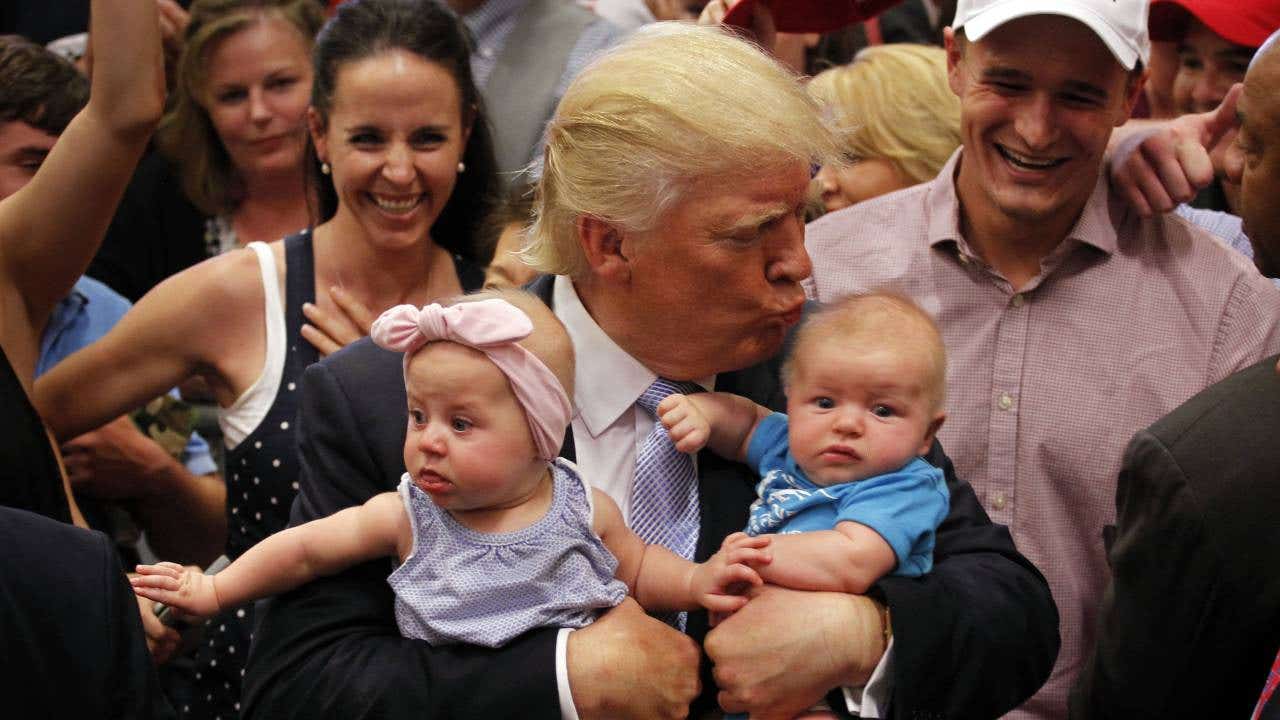
To qualify for an account, a baby must be a U.S. citizen, have a Social Security number and be born between Jan. 1, 2025, and Dec. 31, 2028.
When the children of wealthy households leave the nest, they often benefit from their parents’ largesse in the form of a trust fund. Less affluent peers may receive nothing at all — or even be expected to support their families when they become adults.
But what if all children, regardless of their family’s circumstances, could get a financial boost when they turn 18?
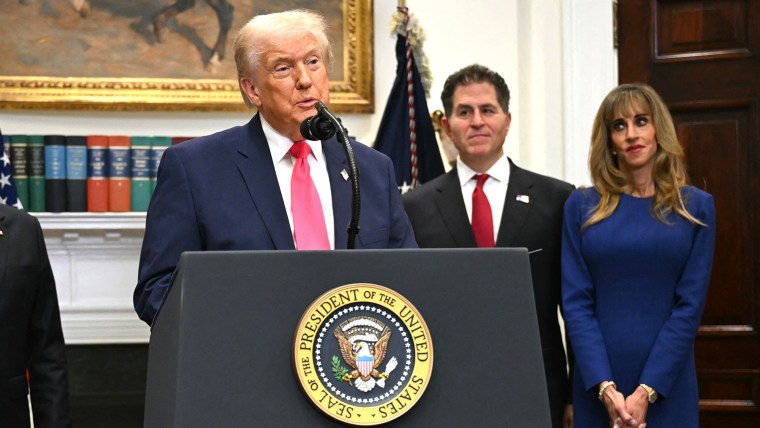
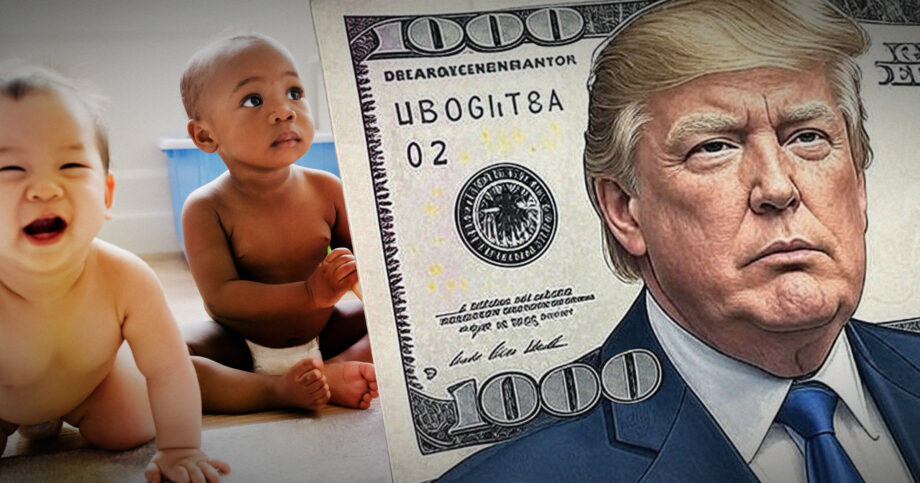
That’s the idea behind “Trump Accounts,” a lesser-known provision of President Donald Trump’s tax legislation. The bill, signed into law earlier this year, gives $1,000 to every newborn, so long as their parents open an account. That money is invested in the stock market by private firms, and the child can access the funds when they turn 18. The parents of older children can also open accounts, but they won’t get the $1,000 bonus.
Backers say it’s a way to bolster capitalism and help children from low-income households build wealth at a time when openly socialist candidates are growing more popular.
The new program gives the $1,000 bonus only to babies born during the calendar years of the Trump administration. Thanks to a historic donation announced Tuesday by billionaires Michael and Susan Dell, some children 10 and under could receive $250 in seed money if their parents open an account. That money is reserved for kids who live in ZIP codes with a median family income of $150,000 or less and who won’t get the $1,000 seed money from the Treasury.
Here’s what you need to know about Trump Accounts and how to claim them.

What is a Trump Account?
It’s new savings tool where money is invested in the stock market on behalf of a child. The child can’t access the money until they turn 18 and can only use it for specific purposes, such as paying tuition, starting a business or making a down payment on a home.
After a parent opens an account, the U.S. Treasury will contribute $1,000 for newborns. Private banks and brokerages will manage the money, which must be invested in U.S. equity index funds that track the stock market and charge the accounts no more than 0.10% in annual fees.
Parents can contribute up to $2,500 annually in pretax income, much like they do for retirement accounts. Parents’ employers, relatives, friends, local governments and philanthropic groups can also pitch in. Yearly contributions are capped at $5,000, but contributions from governments and charities don’t count toward that total.
Who gets $1,000?
To qualify for the $1,000 seed money, a baby must be a U.S. citizen, have a Social Security number and be born between Jan. 1, 2025, and Dec. 31, 2028. Any parent can open an account for a qualifying child, regardless of the parent’s immigration status.
It’s important to note that the child won’t be able to access the money until they turn 18, except in rare circumstances, so it can’t help with immediate expenses. And disbursements from the accounts will be subject to taxes.
What about older children?
Children born before 2025 won’t qualify for the $1,000 incentive, but parents can still open accounts for them as long as they’re under 18. Parents can still invest up to $2,500 pretax for those kids, and they may benefit from the Dells’ donation, giving $250 to children 10 and under in certain ZIP codes.
How do I open a Trump Account for my kids?
The accounts won’t be open for contributions until July 2026. But parents of eligible kids can sign up now by filling out Form 4547 from the Internal Revenue Service. As of Tuesday afternoon, that form was not yet available on the Trump Accounts website.
In May, parents who sign up will get information about how to finish opening the accounts. Beginning in July, the White House says it will have a website where parents can register for the accounts.
What’s the idea behind the accounts?
Backers of the accounts say they want to introduce more people to the stock market and give even children born into poverty a chance to benefit from it. They believe that giving every newborn $1,000 will help combat the rising popularity of socialism and offer more people the opportunity to build wealth. About 58% of U.S. households held stocks or bonds in 2022, according to the U.S. Securities and Exchange Commission, though the wealthiest 1% owned almost half the value of stocks in that same year.

Before Trump created the accounts, California, Connecticut and the District of Columbia were piloting “baby bonds” programs that are similar to Trump Accounts in some ways. Several other states, including Maryland, are weighing programs.
But those programs are targeted for youth growing up in poverty or foster care, plus children who lost a parent to COVID-19. Wealthier children don’t benefit.
They’re also managed by the state, not private investment firms.
What do critics say?
Critics point out the accounts do little to help children in their early years, when they’re most vulnerable and most likely to be in poverty. They also say the accounts do little to offset the cuts the Trump administration and congressional Republicans have made to other programs that benefit young people and their families, including food assistance and Medicaid. Republicans created the accounts in the same Trump tax bill that reduced spending for some of those programs.
And even with the contribution from the government, critics say the Trump Accounts will widen the wealth gap. Affluent families that can afford to make the maximum pretax contribution to the accounts will realize the greatest benefits. Poor families who can’t afford to set aside money for the accounts will benefit the least. Assuming a 7% return, the $1,000 in seed money would grow to roughly $3,570 over 18 years.
Trump accounts just got a massive promised donation. Here’s what to know about who qualifies
Parents, you’re going to need a bigger piggy bank.
An announcement by Michael and Susan Dell that they will donate more than $6 billion in the form of contributions to soon-to-be-opened Trump accounts is a “super exciting” development for American children, experts say.

Ray Boshara, senior policy advisor at the Center for Social Development at Washington University in St. Louis, said that the donation is “a remarkable sum in any philanthropic endeavor.”
Contributions to the investment accounts, which were signed into law on July 4 as part of President Donald Trump’s massive spending bill, can be made beginning next Independence Day. Already, children born between Jan. 1, 2025, and Dec. 31, 2028, will receive $1,000 in seed money contributed by the federal government.
With the Michael & Susan Dell Foundation’s donation, children 10 and younger born before 2025 will receive $250 in their Trump accounts. The children also must live in ZIP codes where the median family income is below $150,000.
Based on his conversations after Tuesday’s announcement, Boshara said he senses other organizations will be inspired to follow in the Dells’ footsteps. That’s because the accounts are constructed with a unique feature allowing organizations, such as cities, state and nonprofits, to contribute to all children in a “qualified class,” like those born in a certain year or state.
How will Trump accounts work?
Trump accounts will function similar to retirement accounts. Children will not be able to withdraw from the accounts before they turn 18. Withdrawals will incur a penalty unless the funds are used for qualifying reasons, such as higher education expenses or the purchase of a first home.
The accounts will be managed by the Treasury Department’s “designated financial agent,” according to the government, but parents will be able to transfer the accounts to their own brokerage, if they have one, “at a later date.” And the money will be invested in stock market indexes like the S&P 500.
Parents will be able to open accounts by filing IRS Form 4547 once the draft form is finalized, and the government says that online enrollment will be available next year.
What families need to do to open an account, and other caveats
Since Trump signed the accounts into law, the government has clarified some of the concerns experts had initially. For instance, the balance of the accounts will not count against a family’s asset limit, the threshold that determines eligibility for government support like nutrition assistance, Boshara said.
Still, other concerns remain, said Madeline Brown, senior policy associate at the Urban Institute.
Chief among them is that parents can only open accounts by filling out a tax form, rather than being automatically enrolled.
“We’re worried that millions of families, especially lower- and moderate-income families, won’t go through all of those steps to actually have the account created,” Boshara said.
For now, the government says IRS Form 4547 will be able to be filled out whenever parents choose, though the form isn’t available yet. By mid-next year, parents are expected to be able to enroll online.
Brown noted that children must have a Social Security number to open a Trump account, so the Social Security Administration has a database of everyone who is eligible.
“The administration has been very clear that they want this to be a program for everybody,” Brown said. “Why add this extra step?”
The withdrawal penalties also limit the functionality of the accounts for some families, Brown said. While $1,000 — or even $250 — is useful seed money, parents might decide that a 529 plan is a better choice given its wider range of options for withdrawals. A high-yield savings account would be even less restrictive.
“If you come up against an expense that was unexpected and you have some money sitting in an account, even if you’re going to get penalized, you might still withdraw,” Brown said.
Boshara also wants to see progressive deposits – contributions that increase as families’ incomes decrease – for kids in low-wealth households.
“It’s great that the Dells, and potentially others, will contribute money to these accounts for low-income kids. However, that’s no substitute for the government itself actually doing progressive deposits for all kids, ideally at birth and beyond,” he said.
These concerns don’t outweigh his hopes for the accounts, though.
“Not enough Americans are benefiting from the stock market, and I think Trump accounts have that potential,” Boshara said. “That potential will be realized once all kids have accounts, and there’s real money in those accounts.”
$6 billion Dell investment in ‘Trump accounts’ to provide 25 million kids with free money: Here’s how to claim it
- Michael and Susan Dell announced on Giving Tuesday that they have committed $6.25 billion to fund Trump accounts for some 25 million American children.
- The move is intended to expand access to seed money for children too old to qualify for the initial deposit of $1,000 from the federal government.
- The grant could encourage lower-income households to enroll and benefit from the new savings plans.
Tech CEO Michael Dell and his wife Susan pledged Tuesday to contribute $6.25 billion to so-called Trump accounts, a type of tax-advantaged savings account for children.
The commitment will expand access to seed money for eligible children too old to qualify for the $1,000 grants that are set to come from the Department of the Treasury.
With the additional funds, some 25 million American children born before Jan. 1, 2025, who are 10 or under could each receive a $250 grant in a Trump account, according to Invest America, a nonprofit advocacy group partnered with the Dells.
“It’s designed to help families feel supported from the start and encourage them to keep saving as their children grow,” Michael Dell, founder and CEO of Dell Technologies
, told CNBC.
To qualify for the $250 Dell contribution, children must live in a zip code where the median income is $150,000 or less.
The $6.25 billion contribution came on Giving Tuesday, which is historically a major day for charitable gifts in the U.S.
Some 36.1 million U.S. adults participated in Giving Tuesday last year, with donations totaling $3.6 billion, up from $3.1 billion the previous year, according to estimates from GivingTuesday Data Commons.
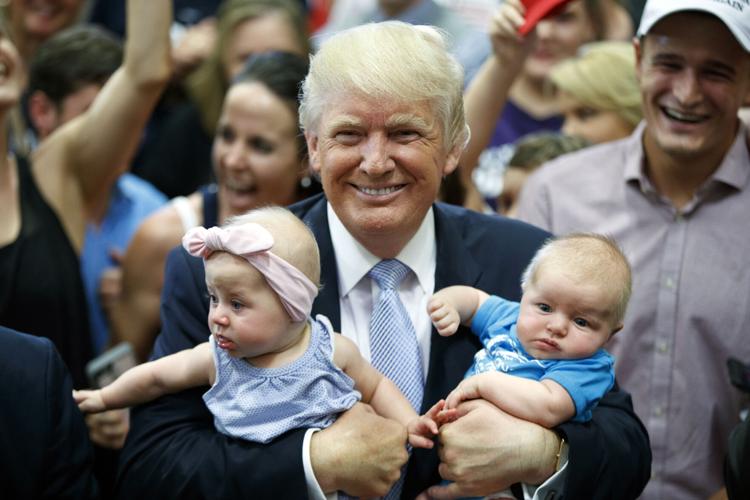
Donald Trump’s “big beautiful bill,” which Congress passed in July, anyone can open a Trump account on behalf of a child age 18 or younger. Babies born in 2025 through 2028 will each receive a one-time $1,000 deposit in their account. There are no income requirements, and everyone is eligible for the government’s seed money, as long as the child is a U.S. citizen.
The grants stand to benefit millions of young Americans: For perspective, there were roughly 3.6 million U.S. births in 2024, up by about 1% from 2023, according to provisional data released in April by the Centers for Disease Control and Prevention’s National Center for Health Statistics.
Not unlike a 529 college savings plan, Trump accounts are meant to encourage early savings opportunities, with the potential for annual employer contributions as well as donations from state and local governments and nonprofit organizations.
Dell previously vowed to match the government’s seed money “dollar for dollar” for his employees’ kids during the “Invest America” roundtable event at the White House in June with Trump. Other CEOs at the event also committed to contribute to the savings account plans on behalf of their employees.
Trump account balances will be invested in a low-cost index fund, such as a mutual fund or exchange-traded fund. However, the asset management industry has expressed concerns about the legislation’s language that could limit ETFs and mutual fund options in these accounts. They have asked the Treasury to broaden its interpretation.
Initially, Trump accounts will be created and managed via Treasury’s “designated financial agent,” according to details released by the Treasury Department on Tuesday. Later, parents or guardians can transfer the full balance to a brokerage firm, Treasury said.
“We are creating a private prosperity account for every child,” Brad Gerstner, CEO of Altimeter Capital, who helped spearhead the effort, said Tuesday morning on “Squawk Box.”
White House website instruct families make elections via Form 4547 to open a Trump account and to receive the $1,000 contribution. By mid-2026, the election can also be made via Trumpaccounts.gov, according to the IRS.
Withdrawals are not permitted until the beneficiary turns 18. At that point, the assets will be rolled into an individual retirement account. The beneficiary can use the funds for education expenses, job training, the down payment on a first home, or as capital to start a small business. They can also opt to leave the funds invested for retirement.
From a tax perspective, Trump accounts would function like an IRA. Earnings grow tax-deferred, and since Trump accounts include a mix of after-tax contributions, initial seed money and investment income, distributions are partially taxable.
The Treasury Department and IRS released additional information about Trump accounts on Tuesday afternoon, including how the accounts work and other details. But questions about the program remain. The Treasury and IRS guidance did not include claiming or eligibility details for the Dell family’s grant.






:max_bytes(150000):strip_icc():focal(753x271:755x273):format(webp)/cole-the-deaf-dog-112125-1a-ad248101bd174108a795d88d6afd93d8.jpg?fit=750,500&ssl=1 "Elementary School Throws Deaf Therapy Dog a Surprise Birthday Party as Students Learn Sign Language to Sing ‘Happy Birthday’")











:max_bytes(150000):strip_icc():focal(608x271:610x273)/CHER-poses-with-Dolly-Parton-for-a-portrait-in-1978-in-Los-Angeles-082625-6ed6da39310343ba97c5b376375a3cdc.jpg?fit=1500,1000&ssl=1 "Dolly Parton’s niece Danielle Parton opens up about cancer battle, new estate role")


