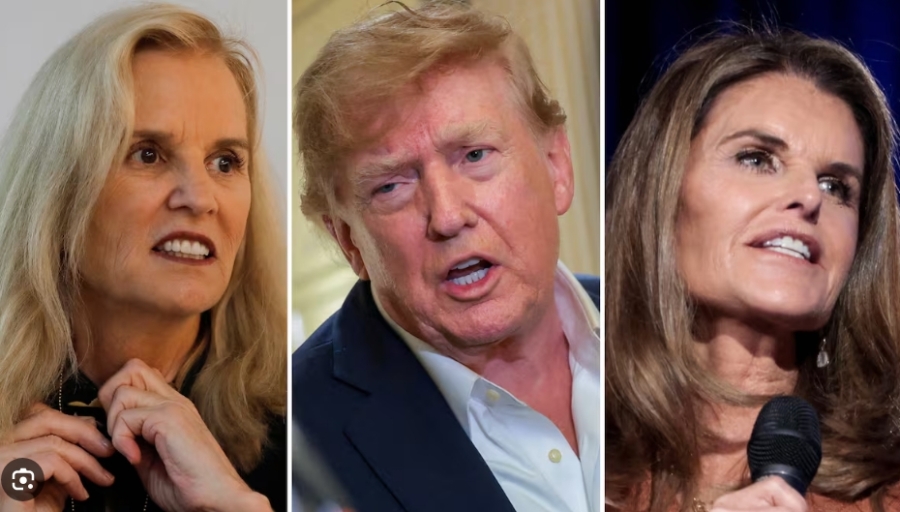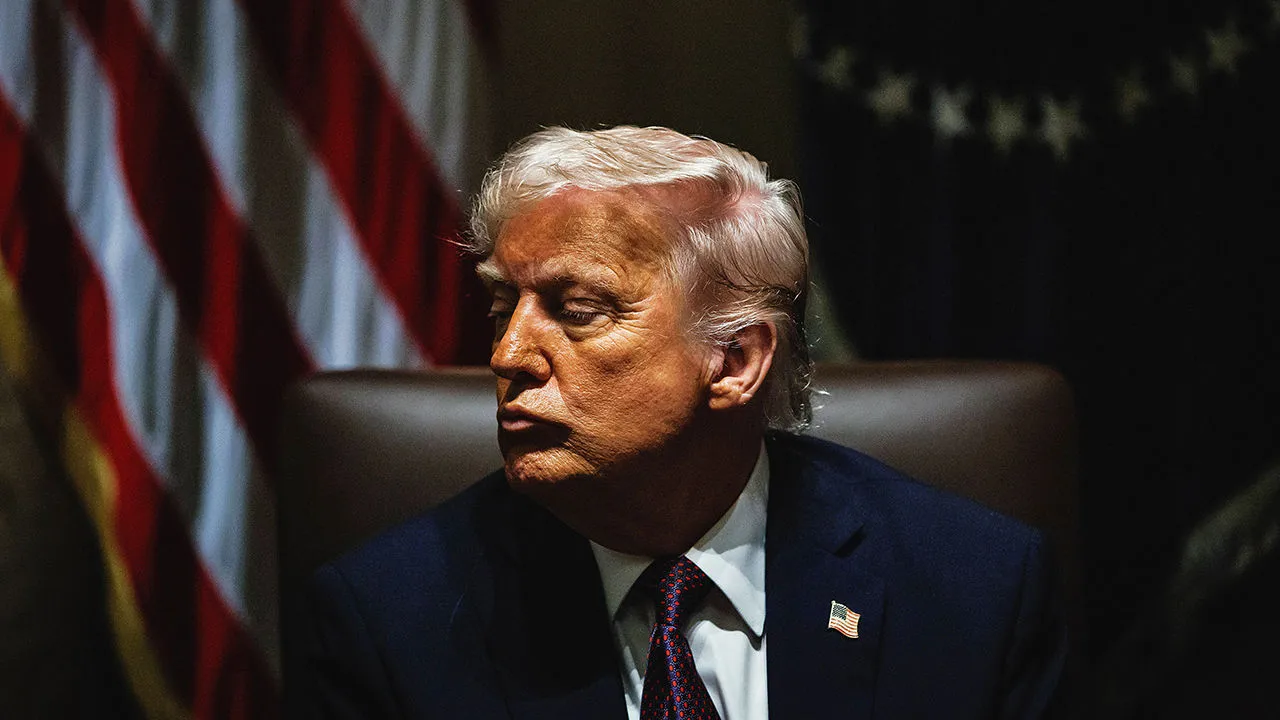
In the United States, confidence in President Donald Trump has plummeted, with his approval rating falling to a record low since he took office.
According to a new national poll published by Newsweek, the net approval rating for President Donald Trump’s economic policies has dropped to a disastrous -29%.
Analysts suggest that this deep crisis of confidence is due to the administration’s inability to curb rising inflation and the escalating cost of living, which has been particularly noticeable for average American families in recent months.
A vast majority of the population is publicly expressing frustration with the government’s performance, threatening domestic political stability and the ruling party’s standing in future elective cycles.
The statistics presented in the study clearly illustrate the extent of public discontent: 67% of respondents disapprove of Mr. Trump’s actions to stabilize prices and reduce daily living costs, while only 26% express support for the President.

The primary factor driving this collapse is the surge in energy and consumer prices, amid escalating military conflict with Iran.
Rebuffed by allies, Trump now says U.S. doesn’t need help defending the Strait of Hormuz
American voters, previously loyal to Washington’s hardline foreign policy, now link their empty wallets and skyrocketing gas prices to the White House’s actions in the Middle East.
Growing dissatisfaction has even spread to states considered strongholds for the incumbent president, indicating the systemic nature of the crisis.
The situation is further aggravated by the Trump administration’s increasingly limited ability to quickly resolve the economic situation without de-escalating foreign policy tensions.
Experts remark that the record-low approval rating is a worrying sign that economic hardships have begun to overshadow all political and ideological arguments put forth by the government.
With two-thirds of the nation’s population negatively assessing the president’s efforts to address the cost of living, the White House is under heavy political pressure.
If the government does not soon reverse the inflationary trend and ease the burden on consumers, the decline in approval ratings could become irreversible, permanently stripping Mr. Trump of broad public support in the face of growing global challenges.
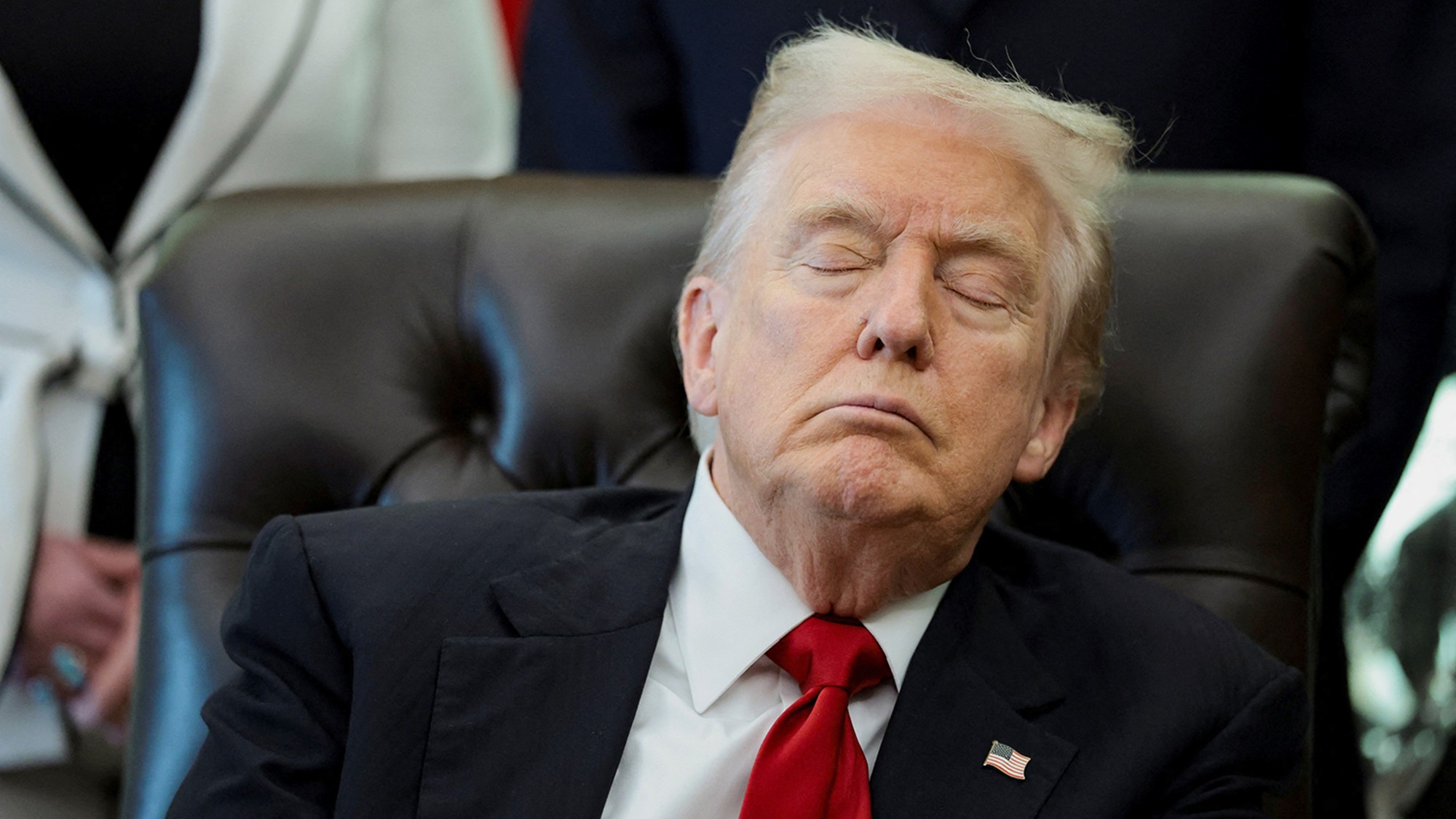

Oil Crisis Spreads: Does Trump Need China’s Help?
Mr. Trump is reportedly in need of support from China to handle the global oil crisis, but the likelihood of Beijing being willing to cooperate is quite low.
Trump more popular than Harris, Newsom: Survey
U.S. President Donald Trump stated that he is seeking to postpone his visit to China, originally scheduled for early April, by about a month due to the war with Iran. Previously, the American leader also unexpectedly set new conditions for negotiations between the U.S. and China, emphasizing that Beijing needs to assist Washington in reopening the Strait of Hormuz.
However, China has few reasons to satisfy this request. Iran’s blockade of the strategic shipping lane has disrupted 20% of the world’s oil supply, driving oil prices skyward and sparking fears of an energy crisis that could shock the global economy.
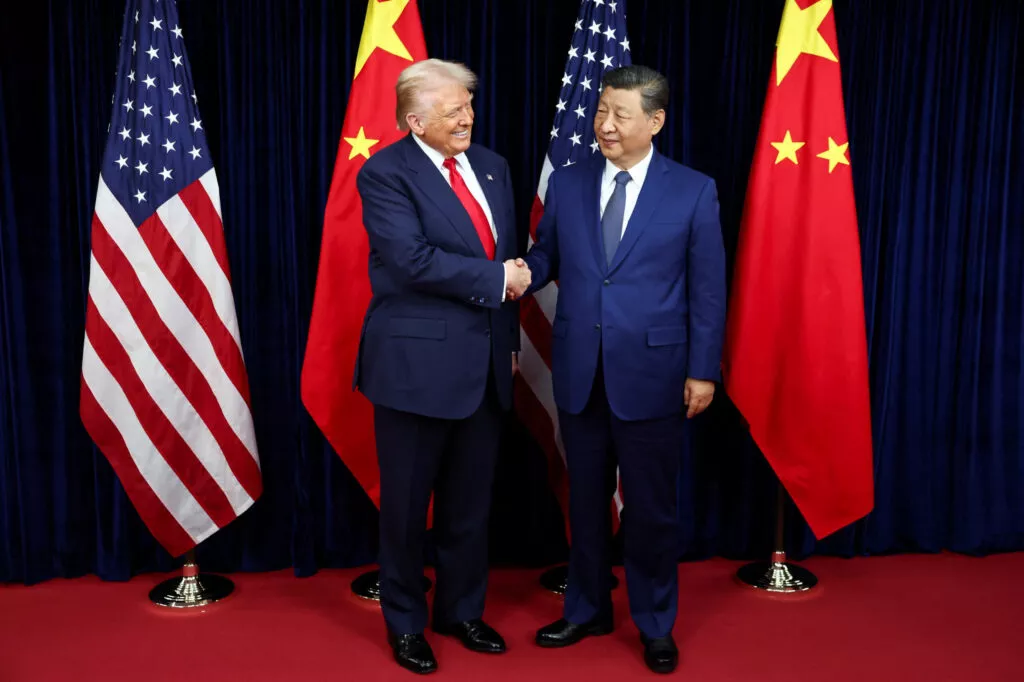
Diplomatic Pressure
Facing the most severe oil crisis to date, Mr. Trump is calling on many nations, such as France, Japan, South Korea, and the United Kingdom, to coordinate in securing this key maritime route.
To persuade China to participate, Mr. Trump has increased diplomatic pressure. In an interview with the Financial Times published on March 15, Mr. Trump wanted to know if Beijing would be willing to assist the U.S. in reopening the Strait of Hormuz before the scheduled summit with Chinese President Xi Jinping. If he does not receive a positive signal, he warned he might consider postponing the visit.
“It is entirely reasonable for those who benefit from this strait to help ensure nothing bad happens there. I think China should also help,” Mr. Trump emphasized.
And now, President Trump has officially requested to postpone the trip scheduled for March 31 to April 2 to meet President Xi Jinping, citing the ongoing war in Iran. “We have asked to push it back about a month or more,” Mr. Trump told reporters at the White House..
At first glance, Mr. Trump’s request for China to support the reopening of the Strait of Hormuz appears to be a rather unusual proposal, but Washington is essentially calling on Beijing to accept the risk of deploying its military resources in a conflict initiated by the U.S. against a nation friendly to China. At the same time, the White House is signaling that diplomatic efforts could be cast aside if Beijing does not participate.

However, China is believed to be in a much more favorable position than many other Asian economies in responding to a prolonged energy crisis. In recent years, Beijing has proactively mitigated the impact of oil shocks by stockpiling large amounts of crude oil, diversifying import sources, and pouring billions of dollars into the clean energy sector, such as wind power, solar power, and the electric vehicle industry.
According to CNN, Iran is also considering the possibility of allowing some tankers to continue passing through the Strait of Hormuz on the condition that oil transactions are settled in Chinese yuan.
“The Chinese could say, ‘Okay, let’s just wait and see.’ Because their strategic position is quite solid, they will have enough room to maneuver,” said Professor Bert Hofman of the East Asian Institute at the National University of Singapore.
President Trump’s Approval Rating Drops to Record Low
Who is More Important?
The conflict, which U.S. and Israeli officials predict could last for many weeks, has somewhat overshadowed the summit in Beijing—the event Mr. Trump first announced. Currently, the American leader is facing growing domestic pressure as fuel prices rise sharply as a consequence of escalating attacks on Iran’s energy infrastructure.

In China, information surrounding the conflict has created a somewhat triumphant atmosphere. “In recent days, Mr. Trump seems to be alone in the world; truly no one supports him. The war with Iran has made the world situation chaotic, and he himself is falling into a quite difficult position,” emphasized Henry Huiyao Wang, founder and president of the Center for China and Globalization.
At a press conference on March 16, Chinese Foreign Ministry spokesperson Lin Jian also did not offer a clear commitment regarding President Trump’s call for assistance in reopening the Strait of Hormuz.
“Head-of-state diplomacy plays an indispensable role in providing strategic direction for China-U.S. relations. Both sides are still continuing to communicate regarding President Trump’s visit to China,” Mr. Jian stated before information emerged that President Trump had postponed the visit.
According to Reuters, the proposal to postpone Mr. Trump’s trip comes as U.S. and Chinese economic officials held several rounds of talks in Paris regarding potential trade deals in the sectors of agriculture and critical minerals.
Notably, Mr. Trump’s leverage in negotiations with China took a heavy blow earlier this year when the Supreme Court ruled that he exceeded his authority by unilaterally imposing tariffs on all trade partners. The Trump administration is currently seeking other mechanisms to impose similar tariff levels.
“The U.S. needs China more than China needs the U.S.,” Mr. Wang said.
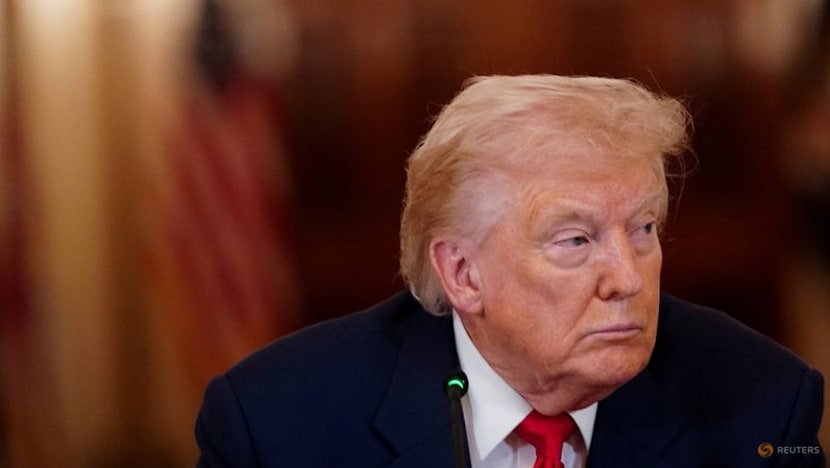
America Alone in the War
President Trump once warned that NATO could face a “very bad” prospect if member nations did not respond to his call to deploy warships. Meanwhile, several key U.S. allies, including Japan and Australia, have so far not accepted taking this step.
According to CNN, China—one of Iran’s most important strategic partners and also its largest oil customer—has even less reason to side with President Trump in the current crisis.
Many Chinese officials have spoken out to criticize the attacks targeting Iran and called for an immediate ceasefire among all parties. However, Beijing expressed concern and condemned Iran’s strike on a neighboring country, including Saudi Arabia.
Although the likelihood of China directly intervening in the Strait of Hormuz is not high, Beijing still has a clear interest in restoring stability to the entire region. China’s economy is less affected by the oil crisis, but it still cannot avoid the widespread impact on global energy prices.
“This will still cause difficulties. They really want to maintain the momentum of economic development,” observed Chong Ja Ian, an associate professor of political science at the National University of Singapore (NUS).
Beijing is also striving to assert its role as an influential diplomatic mediator in the Gulf region and among the Global South community. Clear evidence of this was China’s role in mediating the historic agreement between Iran and Saudi Arabia in 2023, helping the two long-time rivals resume diplomatic relations after years of tension.
“The Middle East is essentially a region where Beijing has invested a lot of political capital. They want the situation to be stable and to assert their role in the region, but what is happening now is casting a shadow over those efforts,” Mr. Chong said.
——————————–
Trump Receives Takaichi, Praises Japan for ‘Not Being Like NATO,’ Surprises with Pearl Harbor Reference
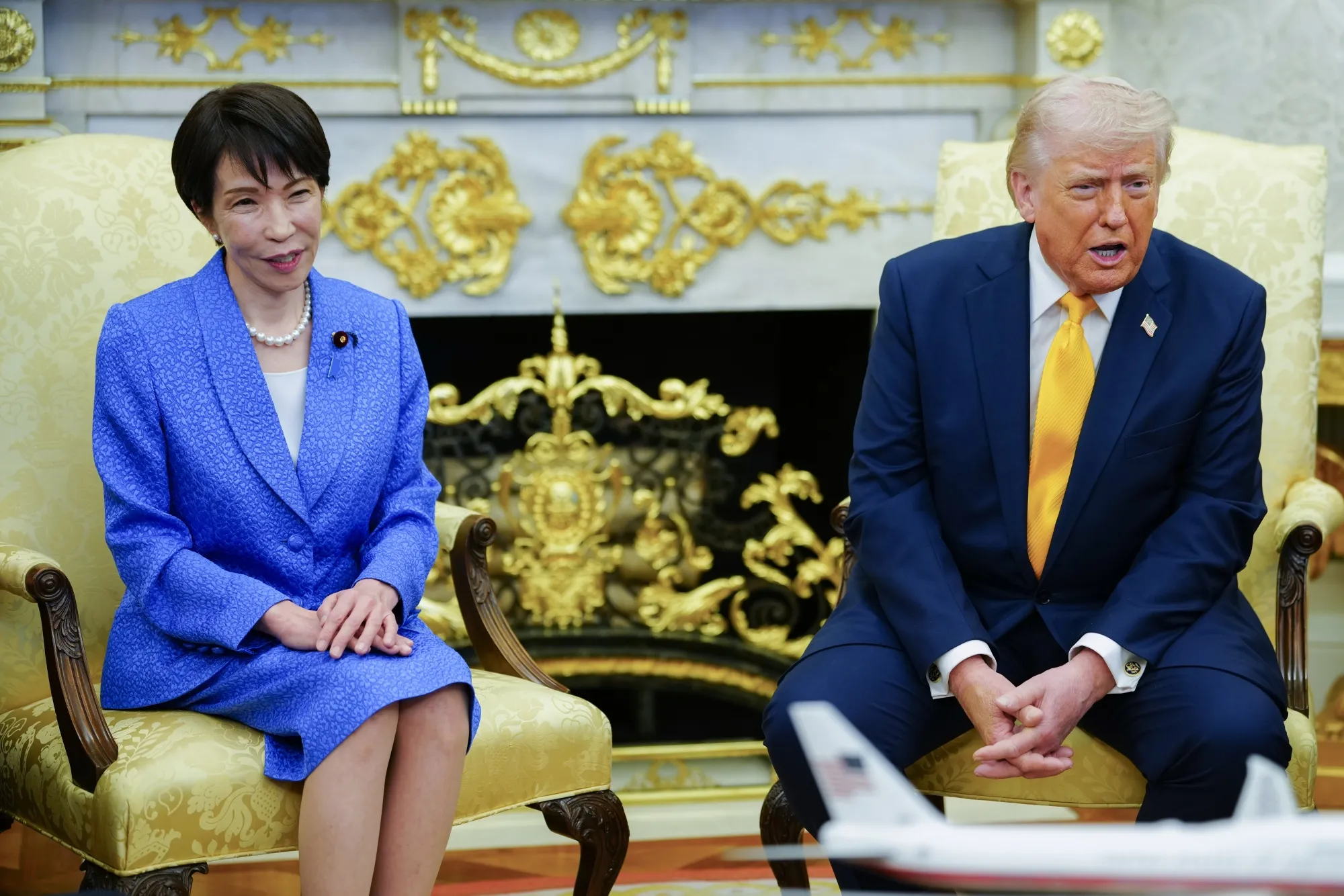
U.S. President Donald Trump held talks with Japanese Prime Minister Sanae Takaichi at the White House, praising Tokyo’s proactive stance on the Strait of Hormuz unlike NATO, and referenced the Pearl Harbor attack, which reportedly caused Takaichi to “wide-eyed.”
On March 19, U.S. President Donald Trump held a meeting with Japanese Prime Minister Sanae Takaichi at the White House, according to Reuters.
During the talks, Mr. Trump stated that the relationship between the two countries, the U.S. and Japan, is “very good” and offered many words of praise for Ms. Takaichi.
The American leader also expressed satisfaction with Japan’s actions regarding his calls in recent days concerning the conflict in the Middle East, suggesting that Tokyo is “stepping up its role.”
“I believe, based on the statements we received yesterday and the day before from Japan, they are really getting active. Unlike the North Atlantic Treaty Organization (NATO),” Mr. Trump said.
“I expect Japan to do more, and we are also always standing by Japan. We don’t need much, or even anything, from Japan or anyone else. But I think it is appropriate for countries to step up and provide support,” Mr. Trump added.
:max_bytes(150000):strip_icc()/donald-trump-Sanae-Takaichi-031926-3323a2e804484de9809aaa6bcbfba707.jpg)
When asked why he did not provide advance notice of military plans in Iran, Mr. Trump cited the December 7, 1941, Japanese attack on the U.S. naval base in Hawaii, the event that pulled Washington into World War II.
“We want to create the element of surprise. Who understands surprise better than Japan? Why didn’t you guys tell me about Pearl Harbor?” Mr. Trump said to a Japanese journalist.
Following these words from Mr. Trump, according to Reuters, Ms. Takaichi was noted to have wide eyes, her smile vanished, and she slightly adjusted her posture while sitting next to Mr. Trump.
For her part, Ms. Takaichi stated she had prepared specific proposals aimed at cooling global energy markets.
The female Japanese Prime Minister called for a de-escalation of tensions, condemned Iranian attacks in the Strait of Hormuz, asserted that Tehran must not be allowed to possess nuclear weapons, and suggested that only Mr. Trump could achieve peace.

She also warned that the global economy is about to suffer the impact of Middle East instability.
Following the meeting, the two countries announced a $40 billion project to build nuclear reactors in the states of Tennessee and Alabama (USA), along with a $33 billion investment in natural gas power generation facilities in the states of Pennsylvania and Texas, according to AFP.
This agreement comes after Tokyo agreed last year to invest $550 billion in the U.S. through 2029, in exchange for Washington reducing reciprocal tariffs from 25% to 15%.
Speaking to the press after the meeting, Ms. Takaichi said she had discussed with Mr. Trump what Japan could and could not support in the Strait of Hormuz under legal regulations, but did not provide details.
Prior to the meeting, Japan, along with several European countries, issued a joint statement pledging to take steps to stabilize energy markets and expressing readiness to participate in “appropriate efforts” to ensure freedom of navigation through the Strait of Hormuz.
However, it remains unclear whether Tokyo is ready to deploy minesweepers, as doing so could draw the pacifist nation into the conflict in the Middle East.
The Marines: A Potential Key for Trump to Open Hormuz
The U.S. Marine Corps could seize control of Iran’s strategic islands in the Persian Gulf, helping Mr. Trump pressure Tehran to reopen the Strait of Hormuz.
President Donald Trump is urging aides and allies to find options to reopen the Strait of Hormuz amid gasoline prices that remain pegged at high levels. The most feasible solution currently may lie with the U.S. Marine Corps.

According to the Wall Street Journal, the Pentagon has deployed the 31st Marine Expeditionary Unit (31st MEU), a force of approximately 2,200 troops, to the Middle East. This is a rapid-response unit stationed aboard the amphibious assault ship USS Tripoli, which was originally based in Okinawa, Japan.
Satellite imagery shows the USS Tripoli, along with two escort warships, moved south from Japan through the South China Sea on March 15. This group of ships appeared off the coast of Singapore a day later and could take more than another week to reach the Middle East.
A Marine Expeditionary Unit (MEU) is an independent operational force that uses amphibious ships as mobile bases, specializing in conducting sea and air raids into enemy territory.
An MEU possesses a ground combat element equipped with armored vehicles and artillery, and an air combat element equipped with attack helicopters, MV-22 Osprey tiltrotor aircraft, and F-35B stealth fighters.
The 31st MEU is being deployed to the Middle East in a context where U.S. and Israeli airstrike options have proven ineffective in efforts to clear the Strait of Hormuz, which is currently facing a near-total blockade by Iran.

The U.S. military has sought to target Iran’s long-range strike capabilities, such as launchers, production plants, and storage facilities for missiles, drones (UAVs), and naval mines. According to U.S. Central Command (CENTCOM), American fighter jets on March 17 dropped deep-penetration bombs weighing over two tons on fortified bases along the Iranian coast, where anti-ship cruise missiles capable of attacking vessels passing through the Strait of Hormuz are believed to be stored.
But despite continuous U.S. and Israeli airstrikes over the past three weeks, Iran still maintains the ability to continue targeting Washington’s forces and allies in the Middle East as well as the waters surrounding Hormuz. A seagoing vessel caught fire on the morning of March 19 after being struck by an unidentified object in the Gulf of Oman, near the strait.
“We still cannot say for certain whether Iran’s entire military capability has been decimated,” noted Caitlin Talmadge, a senior scholar at the Brookings Institution and professor at the Massachusetts Institute of Technology. “That raises the question of whether we can truly neutralize them.”
Experts assess that deploying Marine forces to the region will provide Mr. Trump with more options to exert pressure on Tehran.
Iran controls several small islands off its southern coast, where it has built critical oil and gas infrastructure as well as missile bases. The most important is Kharg Island, located in the northern Persian Gulf, about 480 km from the Strait of Hormuz, which serves as Iran’s main oil export hub.

President Trump earlier this week threatened to attack oil pipelines on this island, after a U.S. military airstrike last week destroyed key military facilities there.
According to experts and former U.S. officials, instead of destroying the oil infrastructure on Kharg Island, U.S. Marines could land, take control of the island, and turn it into a vital bargaining chip to reopen the strait.
“Kharg Island is where 90% of Iran’s oil is transshipped; therefore, realistically there are only two choices: destroy the oil infrastructure, causing irreparable damage to the Iranian and global economies, or take control of Kharg and use it as negotiating leverage without negatively impacting the world economy,” remarked General Frank McKenzie, former commander of CENTCOM.
In such an island-seizure amphibious operation, the USS Tripoli could deploy boats to bring Marines and equipment ashore. Additionally, the operation could be launched by using helicopters to drop troops onto the island, supported by fighter jet fire.
Marines could also be deployed to raid any other islands located directly within the strait. From there, the U.S. would gain a strategic position to intercept Iranian fast-attack boats and shoot down missiles threatening vessels passing through Hormuz, according to Vice Admiral John Miller, former commander of U.S. naval forces at CENTCOM.

Another potential strategic target is Qeshm Island. This island sits right at the gateway to the Strait of Hormuz and is a base for Iranian naval vessels. It is also the site of a large desalination plant that Iran previously accused the U.S. of attacking. The large area and prime location of Qeshm Island allow Tehran to control the entire flow of vessels entering and exiting the strait.
U.S. Marines could also be deployed to control Kish Island, a small economic hub west of Qeshm that possesses an airport, or the rocky Hormuz Island east of Qeshm, where Tehran moors small attack craft.
“Many of these islands have fortified defense systems, but some are just sites that have been abandoned for years,” observed Nicole Grajewski, an associate professor at the Center for International Studies at Sciences Po and a fellow at the Carnegie Endowment for International Peace, headquartered in Washington.
Stationing Marines on offshore islands rather than sending troops into mainland Iranian territory is an option that helps Mr. Trump assert that he is keeping his promise not to deploy troops for direct combat on Iranian soil, while still holding significant bargaining leverage.
“I don’t see the possibility of them moving into the Iranian interior,” Miller stated. “I think if the U.S. is going to deploy troops somewhere, the islands around Iran in the Gulf would be the appropriate choice, helping to provide a tactical advantage for a certain period of time.”

President Trump Claims He Can Resolve Iran Conflict “In Seconds”
U.S. President Donald Trump believes he could resolve the conflict with Iran in just seconds amid escalating tensions.
During a meeting with Japanese Prime Minister Sanae Takaichi at the White House on March 19, President Donald Trump declared that the U.S. possesses weapons of “unimaginable” power.
Mr. Trump stated that the U.S. could resolve the Iran conflict in just “two seconds” if it wanted to.
“We could end this in two seconds if we wanted to. But we are being very careful,” the American leader emphasized.
President Trump also noted that he had spoken with Israeli Prime Minister Benjamin Netanyahu and requested that the Israeli leader stop attacks on Iranian oil and gas facilities.
“I told him, don’t do that. He’s not going to do that,” Mr. Trump added.
Previously, President Trump stated that the U.S. was “unaware” of the Israeli attack on facilities at Iran’s South Pars gas field, which holds the world’s largest natural gas reserves.
However, an Israeli source revealed to American media that Israel had coordinated with the U.S. when carrying out the attack on the Iranian gas field.
President Trump affirmed that the U.S. and Israel act “independently” but “cooperate very well.”
“There is still coordination. But sometimes he will do something, and if I don’t like it, we won’t do it anymore,” Mr. Trump added.
President Trump confirmed he might request an increase to the Pentagon’s budget by $200 billion, calling it a “small price to pay” to ensure the military has everything necessary during the military campaign with Iran.
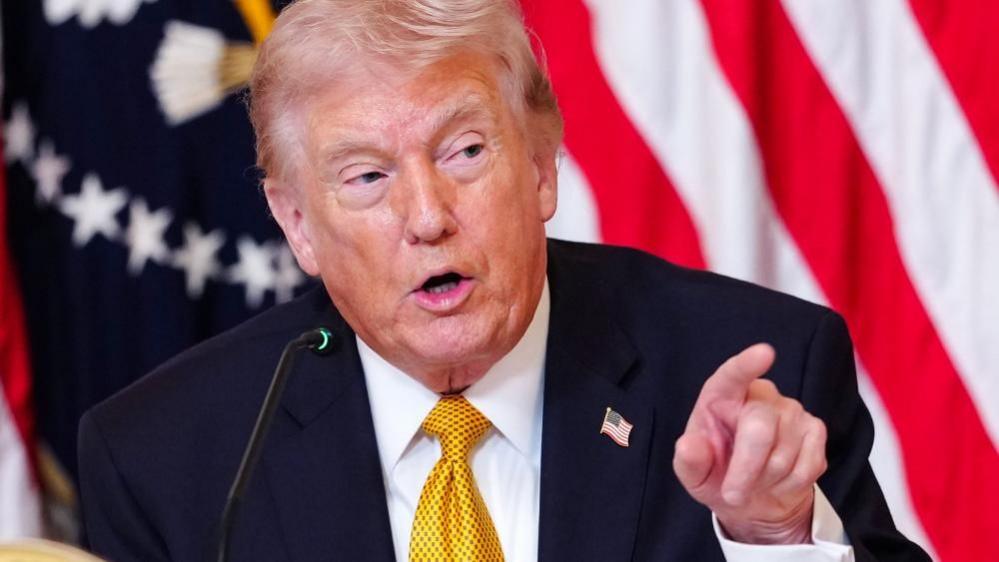
“We want to be in the best shape, the best we’ve ever been. It’s a small price to pay to ensure we are always in the top position,” the master of the White House emphasized.
Mr. Trump did not specify what the Pentagon needs the funds for, saying only that he wants to ensure the military has a “massive amount of ammunition.” However, he denied that the U.S. is lacking any type of weapon, asserting that the administration is being “prudent” in its spending.
According to President Trump, continuing the war for a while longer will help ensure that the Iran issue is not handed back to the next U.S. president.
On March 17, President Trump declared that although the U.S. is not yet ready to end the conflict with Iran, it “will withdraw troops in the near future.” Mr. Trump believes the U.S. has caused enough damage that it will take Iran a decade to rebuild.
The U.S. and Israel coordinated to launch an airstrike campaign against Iran starting February 28, citing concerns over a direct threat from Iran and claiming that Tehran was on the verge of building a nuclear bomb.
Iran immediately retaliated by attacking Israel and U.S. military bases and diplomatic infrastructure in the region, such as in Kuwait, Bahrain, Qatar, and the United Arab Emirates (UAE).
The war has lasted nearly three weeks with no signs of subsiding, as all parties have announced plans to be ready for a prolonged conflict.
Israeli officials stated the airstrike campaign could last several more weeks, while President Trump declared it would continue for as long as necessary.
Iran emphasized that the country is not seeking negotiations while Washington and Tel Aviv continue their airstrikes. Iran also stated it does not want a ceasefire, but rather a complete end to the war in the Middle East.




:max_bytes(150000):strip_icc():focal(753x271:755x273):format(webp)/cole-the-deaf-dog-112125-1a-ad248101bd174108a795d88d6afd93d8.jpg?fit=750,500&ssl=1 "Elementary School Throws Deaf Therapy Dog a Surprise Birthday Party as Students Learn Sign Language to Sing ‘Happy Birthday’")