
If Republicans aren’t victorious, “I’ll get impeached,” Trump said.
WASHINGTON — President Donald Trump had a warning for Republicans on Tuesday: If they don’t keep control of Congress in this year’s midterm elections, Democrats will impeach him again.
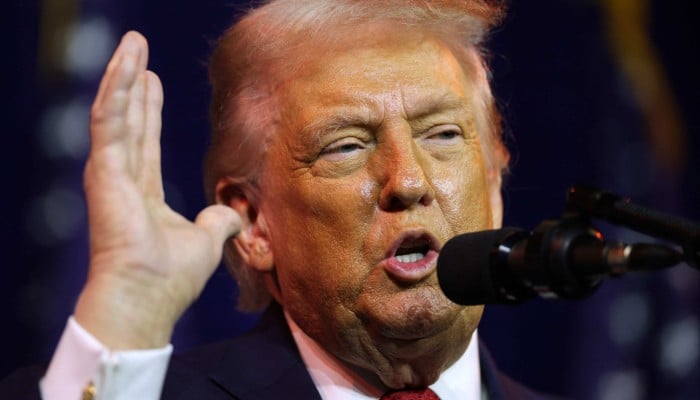
“You got to win the midterms, because if we don’t win the midterms, it’s just going to be — I mean, they’ll find a reason to impeach me,” Trump said in a speech at a House Republican policy retreat. “I’ll get impeached.”
Polling indicates that most voters feel the country is on the wrong track, with the economy a top concern, less than a year before the midterm elections. All members of the House and a third of senators are up for re-election in November, which could determine whether Republicans are able to continue carrying out their agenda in the final two years of Trump’s second term.
Trump is the only president to have been impeached twice in the House; supporters of the move in the Senate didn’t have the necessary two-thirds supermajority of votes to convict him in either of the cases.
Trump was first impeached in 2019 on charges stemming from accusations that he tried to pressure Ukraine to announce investigations into then-Democratic presidential candidate Joe Biden, in part by withholding hundreds of millions of dollars in congressionally approved military aid, as a way to damage Biden’s election chances. Trump was impeached a second time, in 2021, for his role in the events surrounding the Jan. 6 attack on the Capitol as he tried to overturn his loss to Biden.
Trump has repeatedly proclaimed his innocence and tried to paint the impeachments as politically motivated attacks.
In the aftermath of the U.S. operation in Venezuela to capture that country’s president, Nicolás Maduro, Rep. Maxine Waters, D-Calif., suggested Trump’s actions could warrant impeachment.
“Today, many Democrats have understandably questioned whether impeachment is possible again under the current political reality,” she said in a statement. “I am reconsidering that view. Even if Republicans refuse to act, Democrats cannot remain silent or passive in the face of actions this extreme from this Administration.”

Trump spoke to House Republicans at the retreat at the newly renamed Trump-Kennedy Center on the fifth anniversary of the attack on the Capitol, when rioters broke into the building, attacked law enforcement officers and called for Trump to be installed as president for another term.
On the first day of his second term, he a blanket pardon for the hundreds of people involved in the riot, including those accused or convicted of violent crimes.
NBC News reported in July that Republican operatives planned to use the threat of another Trump impeachment as a way to increase turnout in the midterm elections despite Trump’s not being on the ballot.
Midterm elections historically favor the party that doesn’t hold the presidency. An NBC News poll in October found that 50% of registered voters prefer that Democrats control Congress, while 42% prefer Republican control, a difference greater than the margin of error of 3.1 percentage points.
In the 2018 midterm elections, Democrats surged to the majority in the House, winning 235 seats, while Republicans kept control of the Senate. The 2018 margins dwarfed those in 2016, a presidential election year, when Democrats won only 194 seats. The 2018 blue surge ultimately paved the way for Democrats to push for two impeachments of Trump.

Trump’s ‘ammunition’ for House GOP to win the midterms involves lots of grievances

House Republicans crowded into the Kennedy Center on Tuesday to hear President Donald Trump lay out his vision for the consequential midterm year ahead.
Instead, they got plenty of grievances — and little sense of a plan.
Trump, in a meandering speech that stretched for over an hour, recounted a range of personal slights, attacked lawmakers in both parties and complained repeatedly about not getting the credit he feels he’s owed for orchestrating “the most successful first year of any president in history.”
He celebrated the decision to take charge of Venezuela without offering details for how the administration will “run” the country long term, ordered lawmakers to “figure it out” when it comes to spikes in health care premiums, and never once uttered the word “affordability” despite widespread acknowledgement that control of Congress will hinge on the cost-of-living crisis.
Already, the White House’s fresh entanglement in Venezuela and talk of expanding its reach throughout the Western Hemisphere has threatened to complicate a promised pivot by Trump to core domestic priorities.

And while Trump insisted that the GOP could still pull off a stunning victory in November and overcome the historical trend of presidents losing seats in midterm elections, he indicated at times that he nevertheless fears voters will ultimately let him down.
“I wish you could explain to me what the hell’s going on with the mind of the public,” he said, later musing gloomily that “it’s almost like ‘What have you done lately’ is the way you have to run your life.”
The freewheeling address underscored the steep challenges facing House Republicans as they kicked off an all-day retreat aimed at coalescing behind their next legislative priorities and salvaging their midterm fortunes.
Notably, Trump reiterated his support for House Speaker Mike Johnson despite a rocky tenure in recent months, offering a sign of much-needed cohesion at the top for the GOP. But even so, the speech confirmed that Trump – after a year spent asserting his influence over the GOP-controlled Congress – would not soon be the one delivering them answers.
The president instead lamented the party’s struggle to gain traction with voters after a year filled with policy overhauls that have reshaped broad swaths of American life, blaming poor GOP messaging and an uncooperative mainstream press.
He urged Republicans to promote their sweeping tax and spending cuts law more enthusiastically and talk up the administration’s efforts to cut drug prices, insisting the pair of initiatives had given them “so much ammunition.”

“I think I gave you something,” Trump said, while acknowledging he hadn’t read anything off his teleprompter. “It’s a roadmap to victory. You have so many good nuggets, you have to use them.”
The one new pitch that Trump did make risks further complicating dynamics in the GOP: to be more flexible about the party’s insistence on a policy that prevents federal dollars from paying for abortions.
The so-called Hyde amendment has been a sticking point in negotiations over a health care compromise, but abandoning it would likely spark heavy blowback from anti-abortion groups and social conservatives. Trump also encouraged the GOP to embrace his 2024 campaign promise around in vitro fertilization, a move that could generate similar opposition from that faction.
Yet Trump has remained vague on how Republicans should seek to turn around voters’ opinions of the centerpiece tax-and-spending bill that united the GOP but that polling shows most Americans view negatively, or bolster awareness of his complicated drug price deals that have yet to make any sizable impact.
And perhaps most importantly for Republican lawmakers facing an increasingly tough electoral map, Trump offered little guidance on how to address the affordability issues now dominating the political landscape.
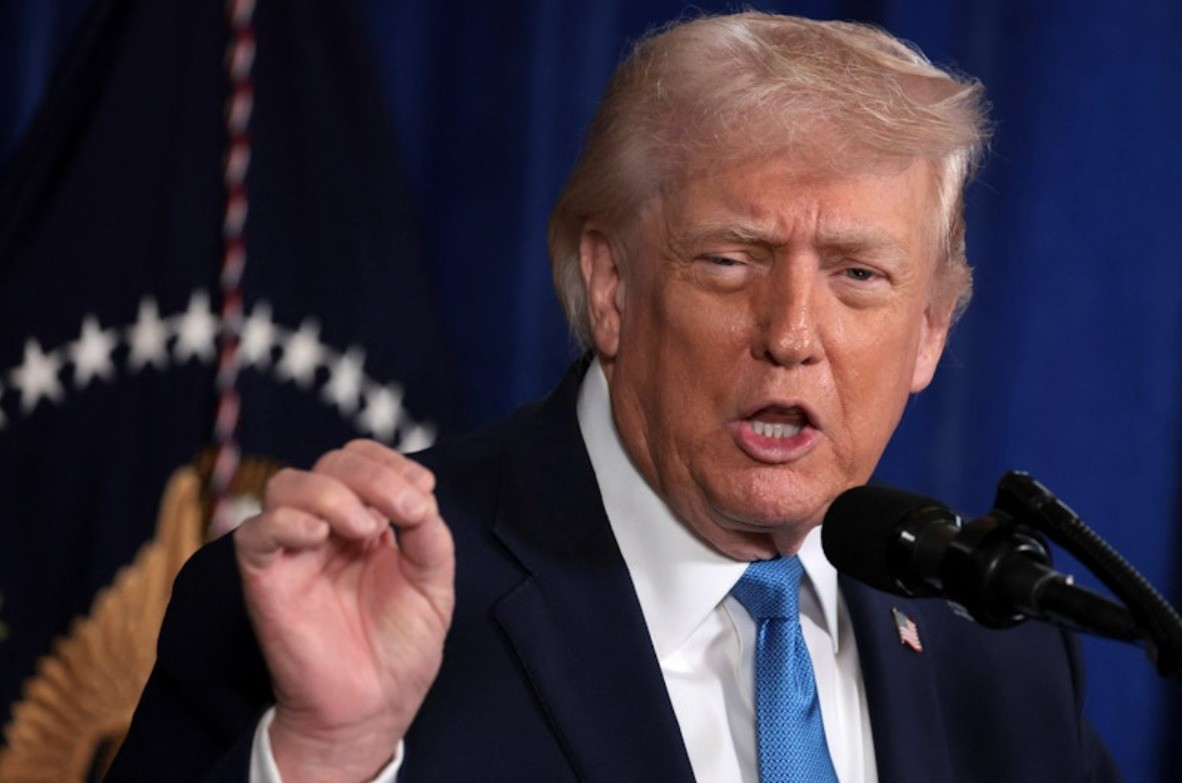
“You’ve got to work something, you’ve got to use ingenuity,” he told lawmakers Tuesday of their failed efforts to avoid rising Affordable Care Act premiums. “You can own health care. Let’s figure it out.”
Those deepening cost-of-living dilemmas pose a major obstacle to the GOP’s hopes of defying political gravity and hanging onto control of the House.
Further complicating their fate is the need to govern over the next several months with one of the thinnest-ever House majorities. That’ll include contentious votes on government funding and whether to restore the lapsed Obamacare subsidies – all while Johnson faces a discontent within his ranks that’s led to a historic number of discharge petitions intended to bypass the speaker’s powers to control the floor.
In any floor vote, Johnson can only lose two of his own party’s votes after the sudden death of GOP Rep. Doug LaMalfa. That precarious position is likely to be more dire since Trump critic Rep. Thomas Massie – whom the president blasted in his Tuesday remarks – is considered an unreliable vote, meaning Johnson in many cases will only be able to afford one Republican defection.
And that’s only if there is perfect GOP attendance – a rarity in a chamber where dozens of members are running statewide races back home, in addition to the usual ebbs and flows of attendance due to sickness or injuries. (Hours after the news of LaMalfa’s death, GOP leaders confirmed that another GOP congressman, Rep. Jim Baird, had been hospitalized in a car accident. It’s not clear how soon he’ll be able to vote again, according to a leadership source.)
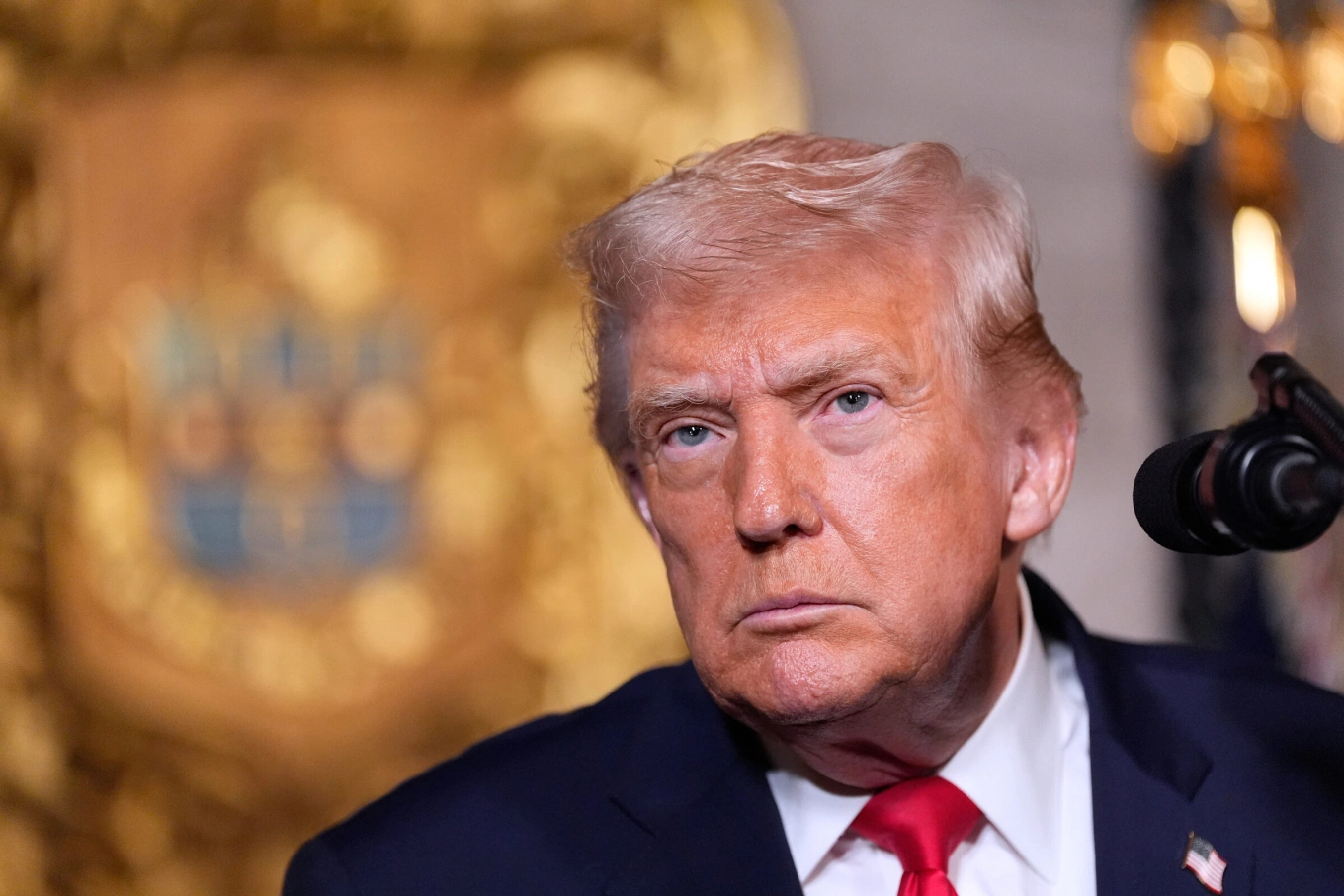
Trump acknowledged the slimming House margin on Tuesday, characterizing LaMalfa as a reliable vote and pressing Republicans to stick together in the coming months.
But he betrayed no willingness to drop his own feuds with a handful of Republicans in the name of party solidarity, repeatedly insulting those who have opposed Trump on some key votes.
“No matter how good, he won’t vote for us,” Trump said of Massie, without naming the Kentucky Republican. “There’s a sickness. There’s something wrong.”
He later complained that centrist Republican Sens. Susan Collins and Lisa Murkowski, as well as the late John McCain, had opposed his first-term effort to repeal the ACA, calling it a “nasty vote from a couple of people.”
“On health care, it’s never been our issue,” Trump said, arguing that they’d stood between him and a major legislative success. “It should be our issue.”
The lament was just one of several as Trump wound his way through the unlikely political career that had put him, some 10 years later, in front of House Republicans eager to hear what would come next.
“Nobody ever had to suffer like I did,” he said at one point, while recounting his first-term impeachment and suggesting he’d face a similar fate if Republicans lose the midterms.
Toward the end of his 80-minute speech, at the performing arts venue that now bears his name, Trump turned to the future, reassuring lawmakers that they have “so much ammunition. All you have to do is sell it.”
Yet as the GOP faces down sagging approval ratings and historical headwinds, even he couldn’t help but express some lingering doubts.
“Whether it’s a Republican or Democrat, whoever wins the presidency, the other party wins the midterm. And it doesn’t make sense,” he said. “We’ve had the most successful first year of any president in history. And it should be a positive.”
Trump’s new imperialism recalls a dark period of US-led regime change

President Donald Trump is ringing in 2026 with a new form of American imperialism.
► The US Army’s Delta Force was dispatched to depose Venezuelan leader Nicolás Maduro in a snatch-and-grab operation Saturday. Now Trump says Secretary of State Marco Rubio will be part of “running” that oil-rich country, whatever that ends up meaning.
► Leaders of neighboring countries, including Colombia and Mexico, were put on notice by Trump that he could take some kind of action against them, too — a clear warning to fall in line.
► Trump on Sunday expressed a renewed desire to take over Greenland, claiming the US needs it for security purposes. Both Greenland and Denmark, a NATO ally of the US, are staunchly opposed to the idea.
► The president also threatened to take new action against Iran on behalf of protesters there, suggesting the US could revisit the Middle East with its military might.
All of this suggests a new era of violent American influence in the rest of the world. And Trump’s decision to turn the American arsenal back on the Western Hemisphere recalls the very long, frequently dark history of American-led regime change closer to home.
Whether to intimidate European powers; to protect American-allied businesses such as banana exporters; to dominate shipping routes or to guard against the specter of communism, the US has been either toppling or propping up various governments for generations.
“This is one of the oldest stories in American history,” said Stephen Kinzer, a senior fellow at Brown University’s Watson School of International and Public Affairs.
.

Defiance is a shared trait of deposed leaders
Maduro shares an important trait with other deposed Central and South American leaders over the past 100 years or so, Kinzer said.
“These are leaders who do not accept the right of the United States to dominate their countries and their region,” said Kinzer, author of the book “Overthrow: America’s Century of Regime Change from Hawaii to Iraq.”
“The United States finds this intolerable,” Kinzer said, “so it’s back to the future.”

With us or against us
Maduro, Kinzer acknowledged, is a far-from-sympathetic character — a brutal dictator leading an undemocratic government. But that’s true of some who are US allies.
“Mohammed bin Salman (the crown prince of Saudi Arabia) has never won an election and chopped up his main critic into little pieces, but that’s fine with us, because he’s on our side,” Kinzer said with irony.
The snatch-and-grab arrest is something new
A unique feature of the Maduro toppling — which may end up being more a decapitation of his regime than a full-scale regime change — is that he was essentially taken rendition-style from Caracas, according to Alexander Downes, director of the Institute for Security and Conflict Studies at George Washington University.
“Foreign leaders do get indicted in the U.S. That’s fine,” Downes said in an email. See Trump’s recent pardon of former Honduras President Juan Orlando Hernández, who was actually convicted of trafficking drugs into the US.
“Kidnapping (rival world leaders) while in office, however, strikes me as a bad idea if not illegal,” said Downes, author of the book “Catastrophic Success: Why Foreign-Imposed Regime Change Goes Wrong.”
Downes added that the move may create a new precedent for other countries. How will the US react if China or Russia now simply kidnaps a rival leader?
The idea that Trump thinks the US is now running Venezuela — something disputed by the country’s acting president — is not likely to endear him to anyone in the region.
Not quite like Panama, which the US invaded in 1989
The most obvious corollary to Trump’s Venezuelan operation may seem to be Panama, where 36 years ago this month, the strongman military leader Manuel Noriega surrendered to US custody. He had been seeking refuge in the Vatican embassy in Panama City after US forces, including paratroopers, invaded his small country en masse.

Noriega was later tried and convicted in US court, although he won the concession of being treated as a prisoner of war rather than a garden-variety drug trafficker.
Kinzer noted there are many differences between Panama and Venezuela that also complicate comparisons between 1990 and 2026. Venezuela is a much larger country with more rugged terrain. And back in 1990, the US already had a large military presence garrisoned in Panama. There’s no US military base inside Venezuela.
A successful operation that has not aged well
The US invasion of Panama may not be remembered by many Americans, but it cost hundreds of lives in the small country, and its anniversary is now treated as a national day of mourning.
Views of the Panama invasion may have turned over time, but it remains among the most successful US regime change operations because it allowed the US to topple Noriega and a democratic government to take over.
Trump isn’t even talking about democracy
Defending democracy has long been a stated, if sometimes unbelievable, goal of recent US-led regime change, but Trump does not appear particularly interested in it.
In that regard, Trump is recalling the first part of the 20th century, when presidents such as William McKinley, Theodore Roosevelt and William Howard Taft were swinging “big stick” or “gunboat” diplomacy around the Caribbean.
“We invaded Cuba in 1898 with the promise that once we helped the Cubans chase out the Spanish overlords, we would turn Cuba over to its people. As soon as the Spanish were gone, we changed our minds and decided we wanted to rule Cuba,” Kinzer said.
He then ticked through other US interventions at the behest of business that led to the overthrow, ouster or resignation of governments during the early 20th century, including in Nicaragua and Honduras. The US military also occupied Nicaragua, Haiti and the Dominican Republic at various points for years during this period.

The communist threat
Later, as the Red Scare and Cold War consumed the US, administrations from both parties meddled abroad for more ideological reasons, such as fighting socialism and the spread of communism — but these moves also helped US businesses.
The CIA, at the urging of the United Fruit Company, helped engineer a coup in Guatemala in 1954 that achieved the goal of toppling the democratically elected government. Subsequent decades saw military juntas and mass killings.
Unintended consequences are guaranteed
That’s about the same time the US and the United Kingdom were colluding to help overthrow the democratically elected government in Iran.
“What looks like an immediate success can turn into a long term failure,” Downes said, pointing to Iran as Exhibit A. “Washington has been dealing with the fallout, including the Iran hostage crisis, Iran’s bid for nuclear weapons, and its hostility to Israel for almost 50 years.”
The same could be said of the unintended consequences of more recent US actions in Iraq, Afghanistan and Libya.
Decades later, in 1973, the US helped overthrow the democratically elected Chilean President Salvador Allende, who died in a coup. His successor, Gen. Augusto Pinochet, led a repressive right-wing regime.

What does Trump want to accomplish?
For Trump, who has variously cited drug trafficking, immigration and other justifications for going after Maduro, the end goal may just be power.
“This is not about values. This is simply about maximizing US security and prosperity,” said Alan Kuperman, a professor of public affairs at the University of Texas at Austin, who has written about regime change.
“What he wants is to make the US the dominant power in Latin America, and he wants for the resources of Latin America to benefit the US more than they have,” Kuperman surmised.
Not changing the government — at least not yet
That helps explain why, for now, Maduro’s regime has been left intact, just without Maduro. Trump has said he doesn’t think opposition leaders can rule.
Setting aside values like democracy and human rights, Kuperman said US-led regime change accomplishes its goals about half the time.
It does not take much of a leap to see that while Trump mostly talks about drugs, his administration is also very much interested in opening more of Venezuela’s oil fields to US companies.
The regime the US could never topple still looms
Secretary of State Marco Rubio, the Cuban American who Trump said will be part of “running” Venezuela for the time being, seems to have some of his own motivations. Rubio’s family fled Cuba, the country where the US failed to depose or take out communist leader Fidel Castro.
Castro is dead, but Cuba is still communist and relies heavily on Venezuela for support. Taking out Maduro could be a step to regime change in Cuba.
“It’s amazing how Cuba has had such a hold on the United States and on the American imagination for so long. This little island has distorted our foreign policy over generations, and it’s happening again. I think, without the fact that Venezuela is the lifeline for Cuba, this might never have happened,” Kinzer said.

White House says U.S. military is an option to acquire Greenland
President Donald Trump’s renewed interest in Greenland comes days after the U.S. arrest and extraction of Venezuela’s Nicolás Maduro.
The White House said Tuesday that acquiring Greenland is a “national security priority” and that using the U.S. military to achieve that goal is under consideration.
“President Trump has made it well known that acquiring Greenland is a national security priority of the United States, and it’s vital to deter our adversaries in the Arctic region,” White House press secretary Karoline Leavitt said in a statement.
“The President and his team are discussing a range of options to pursue this important foreign policy goal, and of course, utilizing the U.S. Military is always an option at the Commander in Chief’s disposal,” it said.

The White House statement was issued shortly after major European allies, including Denmark, said in a joint statement that they would “not stop defending” the values of sovereignty and Greenland’s territorial integrity.
“Greenland belongs to its people,” they said.
A senior White House official told NBC News that other options under consideration include purchasing the territory from Denmark or forming what’s known as a compact of free association with the island.
The U.S. government has similar agreements with the Republic of the Marshall Islands, the Federated States of Micronesia and the Republic of Palau. Those deals include financial assistance in exchange for allowing the U.S. to have security presences there.
The U.S. has had a military base in Greenland for decades.

President Donald Trump and his team have expressed their desire to take over the semi-autonomous territory for months, citing its strategic importance and vast mineral wealth. The pronouncements have ramped up in recent days, with Trump telling NBC News on Monday that he was “very serious” about acquiring the territory.
U.S. allies in NATO have begun to take the threats more seriously in the wake of last weekend’s attack against Venezuela and the ouster of its president, Nicolás Maduro.
“The Kingdom of Denmark — including Greenland — is part of NATO,” the leaders of France, Germany, Britain, Italy, Poland, Spain and Denmark said in their joint statement.
“Security in the Arctic must therefore be achieved collectively, in conjunction with NATO allies including the United States, by upholding the principles of the U.N. Charter, including sovereignty, territorial integrity and the inviolability of borders,” they added. “It is for Denmark and Greenland, and them only, to decide on matters concerning Denmark and Greenland.”
Stephen Miller, Trump’s deputy chief of staff for policy, told CNN on Monday that it’s the formal position of the Trump administration that “Greenland should be part of the United States.”
Asked whether military action was off the table, Miller said, “It wouldn’t be military action against Greenland.”
“The real question is, what right does Denmark assert control over Greenland? What is the basis of their territorial claim?” he said.
The U.S. signed an agreement in 1916 saying it “will not object to the Danish Government extending their political and economic interests to the whole of Greenland” as part of a deal to buy what is now called the U.S. Virgin Islands.
Trump alarmed Danish officials last month when he named Louisiana Gov. Jeff Landry as his special envoy to Greenland. The Republican governor has publicly supported Trump’s proposal to incorporate Greenland into the U.S. In a post on X thanking Trump, Landry called the appointment a “volunteer position to make Greenland a part of the U.S.”
Using the military to acquire Greenland would not have the support of House Speaker Mike Johnson, R-La.
“No, I don’t think that’s appropriate,” Johnson said in response to a question Tuesday night from NBC News.
“I think Greenland is viewed by a lot of people as something that would be a strategic position for the U.S.,” Johnson told reporters as he left the Capitol. “I don’t know how it develops from there.”
Asked if Secretary of State Marco Rubio told lawmakers in Monday’s classified briefing that Trump preferred to buy Greenland, Johnson said, “I don’t remember that. He might have said it in jest or something. I’m not sure.”
Trump has spoken more about taking over Greenland following the 2024 presidential election. Last January, before taking office, Trump suggested he could use military force to acquire Greenland and the Panama Canal.
Danish Prime Minister Mette Frederiksen told her country’s TV2 on Monday that “if the United States chooses to attack another NATO country militarily, then everything stops.”


:max_bytes(150000):strip_icc():focal(749x0:751x2)/Shillington-Police-Department-111325-c65821925fbf4f959879c38a06d24fa6.jpg?fit=1500,1000&ssl=1 "Dog shoots owner in the back after jumping on shotgun left on bed: Police")



:max_bytes(150000):strip_icc():focal(753x271:755x273):format(webp)/cole-the-deaf-dog-112125-1a-ad248101bd174108a795d88d6afd93d8.jpg?fit=750,500&ssl=1 "Elementary School Throws Deaf Therapy Dog a Surprise Birthday Party as Students Learn Sign Language to Sing ‘Happy Birthday’")





:max_bytes(150000):strip_icc():focal(749x0:751x2)/meghan-markle-prince-harry-time-100-summit-081225-4e4cee9927bf460b918c231fe64196dc.jpg?fit=1500,1000&ssl=1 "Prince Harry and Meghan Markle slammed live on air as TV host makes brutal three-word dig")


:max_bytes(150000):strip_icc():focal(749x0:751x2):format(webp)/Mary-B-Premature-Baby-121925-8be6c0dca6784de0879dbeab3aab0038.jpg?fit=750,500&ssl=1 "Mom Brings Home 1 Lb. Baby After 146 Days in NICU. Now 11 Months, the ‘Tough Little Cookie’ Has More to Overcome (Exclusive)")


