Congressional Republicans are running out of powers to give Trump

The Trump administration may have notified oil companies that it was preparing to nab Venezuela’s leader, at least according to statements made Sunday by President Donald Trump.
But congressional leaders were kept in the dark about the early morning Saturday raid.
That disconnect might stick a thumb in the eye of lawmakers, who are meant to jealously guard their constitutional powers over the federal government.
But the feeling from many Republicans on Capitol Hill is that it’s no big deal for a variety of reasons:
Argument: We can’t be trusted
“Notification of Congress in advance of really critical and hypersensitive missions, to me, seems ill-advised anyway,” Senate Majority Leader John Thune told CNN’s Manu Raju on Monday.
Thune is a member of the “Gang of Eight,” the heads of key committees and members of party leadership on both sides of the aisle who typically would be briefed before a significant US military engagement.
A few Republicans, such as Sen. James Lankford of Oklahoma, say the Gang of Eight should have been notified, but this is not a loudly expressed view.
There is precedent for keeping information about military action from lawmakers — such as when President Barack Obama ordered the raid that killed Osama bin Laden in Pakistan.
The War Powers Resolution of 1973 was passed in response to the Vietnam War by a united Congress over Richard Nixon’s veto as a way to force presidents to consult lawmakers before and after military action. It does require a notification within 48 hours after an action. But it also stipulates that the president should consult with Congress before launching a military attack “in every possible instance.”
The Gang of Eight got together for an after-that-fact briefing about the Venezuela operation on Capitol Hill Monday, which is in line with the War Powers Act. Not everyone was satisfied. Key lawmakers who were excluded from that briefing — including Senate Judiciary Committee Chairman Charles Grassley, an Iowa Republican — demanded to know why they were kept in the dark, since Nicolás Maduro was captured in order to face an American courtroom.
The entire operation has blended US military power with the justice system in a novel way, which has also provided another justification for lawmakers being kept in the dark before it happened — though it undercuts Trump’s rhetoric that the US is in an undeclared war over drugs.
Argument: This was more of a law enforcement action
Sen. Tom Cotton, the Arkansas Republican who chairs the Senate Intelligence Committee, said over the weekend that there was no need for the administration to consult Congress in advance because this action, although it utilized the US military, was more like a law enforcement action.

“Congress isn’t notified when the FBI is going to arrest a drug trafficker or cyber criminal here in the United States, nor should Congress be notified when the executive branch is executing arrests on indicted persons,” Cotton said on Fox News.
There’s another argument floating around that everyone who reads the news should have known something was up.
Argument: It was pretty obvious Trump was going to do something
Sen. Bernie Moreno of Ohio told CNN’s Jake Tapper that everyone should have known what Trump was about to do.
“When you mobilize that kind of military in the Caribbean, it’s pretty obvious,” Moreno said. “It was obvious to everybody, except for maybe Maduro.”
In fact, White House officials said in public that Trump was not planning to use the military inside Venezuela without congressional approval. But that distinction could have to do with viewing the attack — which is not known to have cost American lives, but did kill numerous people inside Venezuela — as a law enforcement action.

This argument also doesn’t deal with the fact that the administration should be telling Congress about still-unknown details like how much operations will cost and what’s the plan for Venezuela in the future.
But the White House has leaned heavily into emergency powers as a way around sharing these kinds of details.
Argument: Presidents have powers not spelled out in the Constitution
Sen. Mike Lee styles himself as a lawmaker with a deep respect for the Constitution. During the first Trump administration, the Utah Republican supported a bipartisan resolution to bar the president from offensive military action in Iran without congressional approval. Trump ultimately vetoed that resolution. (Lee hasn’t yet supported something similar to constrain Trump in his second term.)
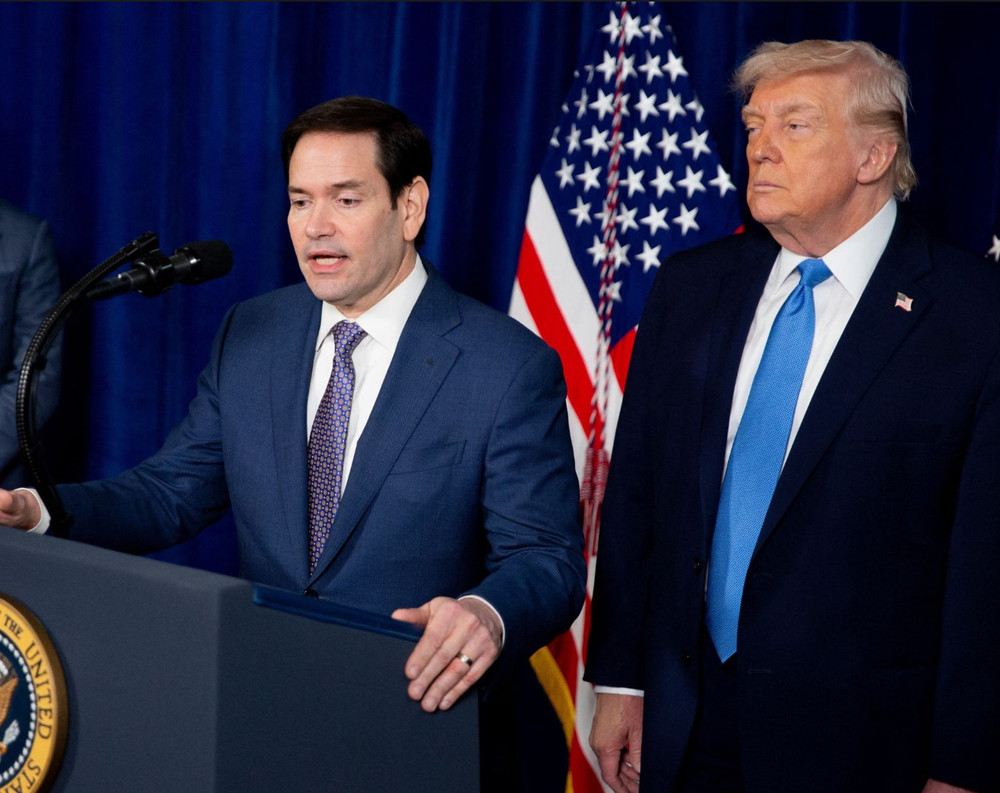
Lee initially questioned the legality of the Venezuela raid in social media posts Saturday. But after a phone conversation with Secretary of State Marco Rubio, he posted that the raid was likely justified because the deadly force utilized by the military was to protect people executing an arrest warrant.
“This action likely falls within the president’s inherent authority under Article II of the Constitution to protect U.S. personnel from an actual or imminent attack,” Lee said in a follow-up post.
“Inherent power” is a fancy way of saying the power to do this type of thing doesn’t appear in the Constitution or law, but it’s basically implied that the president should have the power to protect the country.
How did capturing Maduro avoid an attack?
To argue for the risk of an imminent attack, you have to agree with the idea that Maduro is a “narco-terrorist,” as the Trump administration alleges, and that the drug trade represents an imminent attack on the US. That stance is debatable since Americans choose to buy the drugs. And the drugs causing the most American deaths are opioids — not cocaine.
The War Powers Resolution requires the cessation of military action by the US after 60 days without congressional approval, but since the military does not appear to have placed any long-term troops on the ground in Venezuela, that may not apply here. A Navy armada does remain in the Caribbean.
A resolution under the War Powers Act to demand congressional approval for military action in Venezuela was filed by Democratic Sen. Tim Kaine and Republican Sen. Rand Paul last month. It should see a vote this week. A similar vote failed in October despite support from two Republicans: Paul and Sen. Lisa Murkowski of Alaska. Three more Republican votes would be required to pass the resolution.

The surprising US plan in Venezuela comes with huge risks for Trump

President Donald Trump’s defenders had it half right.
The US overthrow of Venezuelan President Nicolás Maduro isn’t an exact copy of the haunted regime change that gutted Iraq’s government and civil society.
The emerging White House strategy instead looks more like a regime decapitation that is evolving into coercion of Maduro’s left-behind lieutenants. The administration is demanding acquiescence to Trump’s dream of an obedient, MAGAfied Western Hemisphere.
The focal point of the effort is Venezuelan Vice President Delcy Rodríguez, the interim leader in Caracas since a spectacular US special forces operation spirited Maduro out of his bed and to New York, where he’ll appear in court Monday.
Trump declared Sunday evening that the US was running Venezuela through its pressure on Rodríguez, now the acting president. “Don’t ask me who’s in charge, because I’ll give you an answer, and it’ll be very controversial,” he told reporters. “It means we’re in charge. We’re in charge.”
The spectacle of an American president claiming to be “in charge” of a sovereign nation around 1,000 miles from the US mainland — even if it is not strictly true — shows just how fundamentally Trump has hardened the country’s posture to the rest of the world and reveals his ambition to wield expansive power. And Trump apparently feels emboldened by the Venezuela raid, telling reporters Sunday that Colombia is “very sick” and that “Mexico has to get their act together.”
Co-opting Maduro’s remnant regime would require less US blood and treasure than failed nation-building efforts in the post-9/11 wars. But that route brings its own complications and has uncertain odds given the volatile political landscape. And it could create an unexpected and immediate consequence of Maduro’s fall: a counterintuitive US turn away from Venezuela’s democracy movement.
Hurried efforts in Washington to piece together a viable path forward in Venezuela coincided Sunday with rising fury among Democrats over Trump’s failure to seek congressional authorization for what looked like an act of war. Early signs indicate that Republicans are standing firm behind a president they’ve rarely challenged. But it will take time to gauge whether yet another foreign policy adventure will widen splits in Trump’s MAGA movement.
What the policy is supposed to do

The Trump administration is now wrestling with the complex aftermath of their boss’s headline-grabbing order of a daring military raid. It is walking a fine line in seeking to secure a stable source of authority in Caracas. And it’s looking to avoid the kind of purges of top officials that could bring the government crashing down and lead to civil strife, which could turn Trump’s latest triumph into a political disaster in a midterm election year in the United States.
Trump created a storm Saturday when he said the US would “run” Venezuela ahead of a political transition. He also fueled fears of 21st century imperialism by fixating on getting the US a piece of Venezuela’s vast oil reserves.
Secretary of State Marco Rubio appeared on Sunday news shows to dispel comparisons to Iraq from what he called “clown-hour” analysts.
He said the US would maintain its “quarantine” oil embargo to force Venezuela’s remaining leaders to obey Trump’s orders. The freshly demonstrated might of the US military is also supposed to concentrate minds in the Venezuelan capital.
“We want drug trafficking to stop. We want no more gang members to come our way. We don’t want to see the Iranian and, by the way, Cuban presence in the past,” Rubio said on CBS’ “Face the Nation”
“We want the oil industry in that country not to go to the benefit of pirates and adversaries of the United States, but for the benefit of the people. … We insist on seeing that happen,” Rubio said.
Republican Sen. Tom Cotton, a key Trump ally, summed up the thrust of the strategy on CNN’s “State of the Union.” He told Dana Bash, “When the president said that the United States is going to be running Venezuela, it means that the new leaders of Venezuela need to meet our demands.”
In short, Trump’s plan for Venezuela is to coerce its acting president to become a vessel for his power inside her own country. As Defense Secretary Pete Hegseth told CBS News on Saturday, “President Trump sets the terms. … (He) has shown American leadership and he will be able to dictate where we go next.”
Washington wants ‘deals’ in Caracas

The spectacular special forces smash-and-grab raid that captured Maduro and his wife looks in the immediate aftermath like one of the more successful CIA and US military attempts to shape the geopolitics of America’s backyard — a preoccupation of presidents for more than 200 years.
If Trump succeeds after years of Washington neglecting Latin America, he may turn an enemy into a pliant state and advance his effort to shape the Western Hemisphere into a region of pro-US powers. He might ease deprivation in the Venezuelan economy by getting oil revenues flowing; disrupt drug cartels; and drive out Russian and Chinese influences that threaten US national security.
Washington wants a partner in Caracas to do the deals at which Maduro balked. “We just could not work with him. He is not a person that had ever kept any of the deals he made,” Rubio told CBS.
The assumption that Rodríguez or another regime survivor will help the US is fine in theory. Outsiders are not privy to conversations and behind-the-scenes work from American diplomats and intelligence agencies with regime figures. Sources told CNN that Rodríguez had been identified as potentially providing more stable governance than Maduro.
Yet the vice president has been publicly scathing about Maduro’s ouster, and other key figures have vowed to stand behind the regime. Rodríguez may need to avoid any public show of betrayal to keep herself safe in Venezuela. But after portraying her as cooperative on Saturday, Trump issued a dark threat on Sunday. “If she doesn’t do what’s right, she is going to pay a very big price, probably bigger than Maduro,” he told The Atlantic.
On Sunday evening, Rodríguez issued a more conciliatory statement offering an “agenda of cooperation” with the US.
Trump and several key members of his administration have warned that if Venezuelan officials don’t play ball, they could court another, bigger US attack. But their threats raise a key question: Can Washington really force Venezuelan leaders to comply through the leverage of an offshore naval armada, special forces raids, intelligence operations or the threat of air attacks?
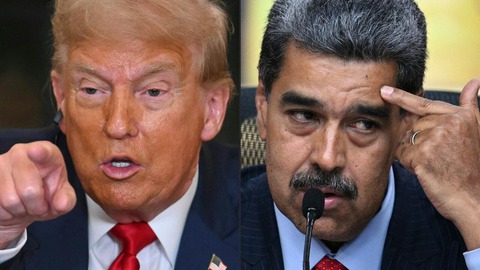
Ivo Daalder, a former US ambassador to NATO, told CNN on Sunday that it was impossible for the Trump administration to “run” Venezuela without committing the resources needed to properly govern it.
“This disconnect between the means that we have deployed and the goals that we have set is going to come and bite us in the back,” Daalder said.
It already looks like the US risks falling yet again into one of the recurring traps of its modern foreign policy — creating plans that seem sound in Washington but that dissolve on contact with the reality of a foreign nation.
Rodríguez might seem like a stabilizing force to US officials. As a former diplomat, she has good contacts abroad and in the oil industry.
But she’s long been a key face of the Maduro regime and that of his predecessor Hugo Chávez. There’s been no sign that she’s renounced the far-left ideology of the revolution. And Rodríguez herself may have limited room for maneuver or cooperation with the US in the snake pit of competing currents and strongmen that characterize the inner sanctums of the regime in Caracas.
“She doesn’t have the support among the various armed actors,” Daniel Lansberg-Rodriguez, a geopolitical risk consultant, told CNN’s Boris Sanchez on Sunday. “She’s going to have to straddle keeping the people who do have good contacts there, keeping them balanced with whatever instructions she is supposedly getting from DC.”
The acting president’s emerging importance to the administration means she risks becoming a fragile platform for Trump’s entire gamble in Venezuela.
“Delcy Rodríguez is a very powerful figure in her own right, handpicked by Maduro,” Democratic Sen. Chris Murphy said on “State of the Union.”
“There’s really no explanation for how American interests are changed at all with a Rodríguez administration that right now seems to be intent on carrying through and carrying forward the policies of Nicolás Maduro,” Murphy said.
Even Cotton will wait and see. “I don’t think that we can count on Delcy Rodríguez to be friendly to the United States until she proves it,” he told CNN’s Bash.
The US turn away from Venezuela’s democrats

Perhaps the most shocking moment in Trump’s Saturday news conference at Mar-a-Lago was the president’s dismissal of María Corina Machado. The Nobel Peace laureate is credited with masterminding the campaign of opposition candidate Edmundo González, who is regarded as the winner of last year’s election — a result Maduro refused to recognize.
The US government has consistently said that González is the rightful president of Venezuela. Many people assumed that any US ouster of Maduro would swiftly lead to González’s installation as president.
But Trump said Machado “doesn’t have the support within or the respect within the country. She’s a very nice woman, but she doesn’t have the respect.”
The administration’s shift away from the democratic movement and engagement with regime remnants is a blow to Venezuelans hoping their long political torment would end.
Rubio, who has long supported Machado and democratic movements across Latin America, tried to square a politically uncomfortable circle. “There has to be a little realism here,” he told CBS.
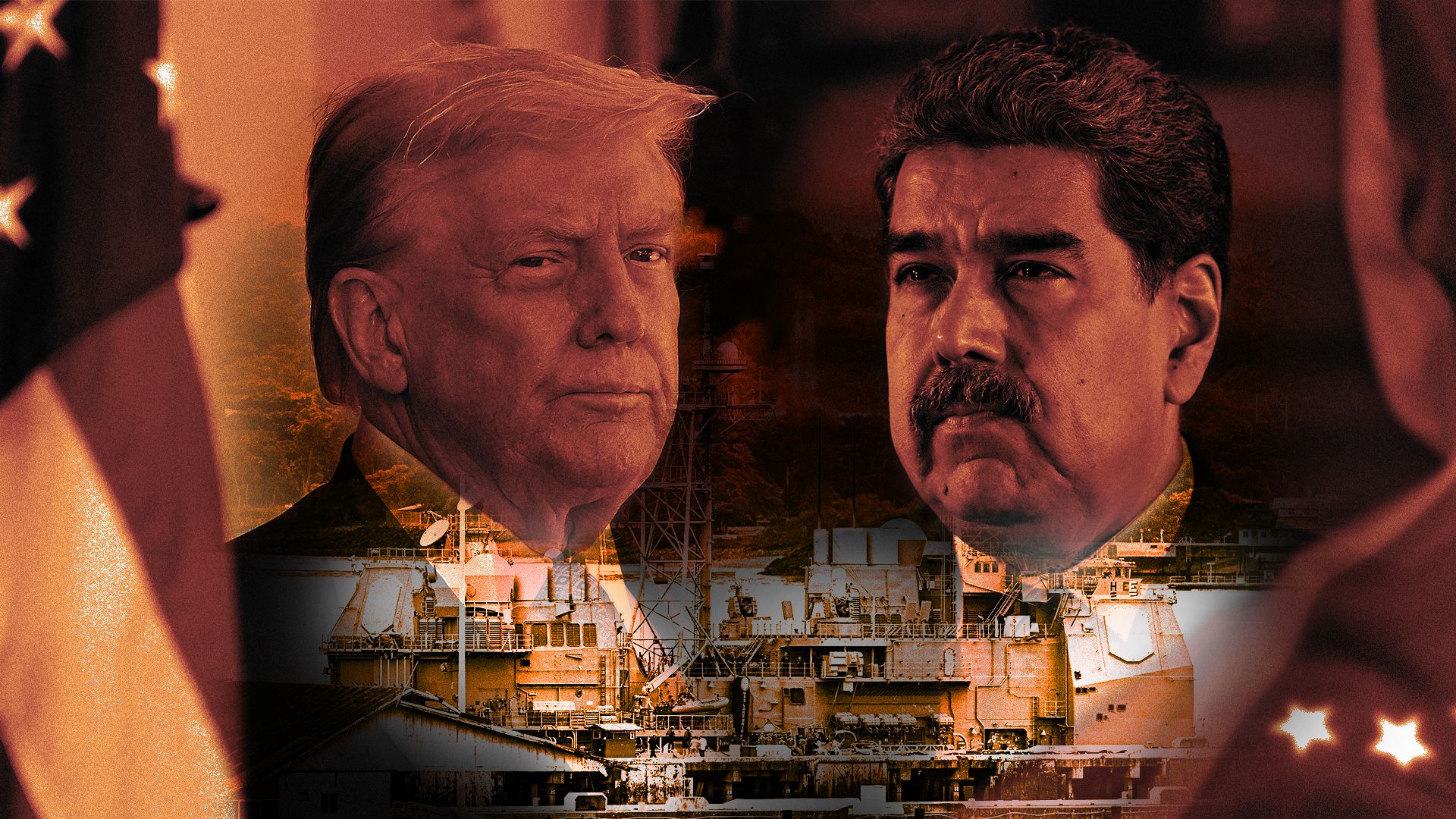
“They’ve had this regime … in place for 15 or 16 years and everyone’s asking why 24 hours after Nicolás Maduro was arrested there isn’t an election scheduled for tomorrow. That’s absurd,” Rubio said.
Rubio argued that “these things take time” and that while he hoped to see Venezuela transition to a democracy, US national interests were the immediate concern.
This Trump administration pragmatism is fueling anger on Capitol Hill.
“My God, we’re the United States of America, right?” Rep. Jim Himes, the top Democrat on the House Intelligence Committee, said on “State of the Union.”
“We care — or at least we used to care — about democratic norms. We used to care about the idea that the people ought to have a little something to say about who governs them,” Himes said.
Trump is clearly rushing for Venezuelan oil — and he wants to dominate the Western Hemisphere. But in courting Maduro’s regime remnants, the US risks becoming complicit in the repression imposed by a government it has long reviled.
Trump’s new imperialism recalls a dark period of US-led regime change

President Donald Trump is ringing in 2026 with a new form of American imperialism.
► The US Army’s Delta Force was dispatched to depose Venezuelan leader Nicolás Maduro in a snatch-and-grab operation Saturday. Now Trump says Secretary of State Marco Rubio will be part of “running” that oil-rich country, whatever that ends up meaning.
► Leaders of neighboring countries, including Colombia and Mexico, were put on notice by Trump that he could take some kind of action against them, too — a clear warning to fall in line.
► Trump on Sunday expressed a renewed desire to take over Greenland, claiming the US needs it for security purposes. Both Greenland and Denmark, a NATO ally of the US, are staunchly opposed to the idea.
► The president also threatened to take new action against Iran on behalf of protesters there, suggesting the US could revisit the Middle East with its military might.
All of this suggests a new era of violent American influence in the rest of the world. And Trump’s decision to turn the American arsenal back on the Western Hemisphere recalls the very long, frequently dark history of American-led regime change closer to home.
Whether to intimidate European powers; to protect American-allied businesses such as banana exporters; to dominate shipping routes or to guard against the specter of communism, the US has been either toppling or propping up various governments for generations.
“This is one of the oldest stories in American history,” said Stephen Kinzer, a senior fellow at Brown University’s Watson School of International and Public Affairs.
Defiance is a shared trait of deposed leaders
Maduro shares an important trait with other deposed Central and South American leaders over the past 100 years or so, Kinzer said.
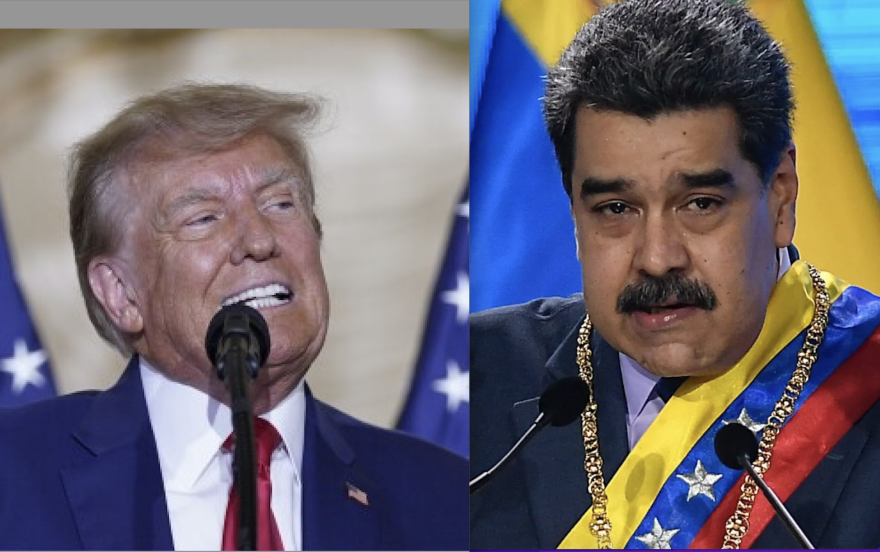
“These are leaders who do not accept the right of the United States to dominate their countries and their region,” said Kinzer, author of the book “Overthrow: America’s Century of Regime Change from Hawaii to Iraq.”
“The United States finds this intolerable,” Kinzer said, “so it’s back to the future.”
With us or against us
Maduro, Kinzer acknowledged, is a far-from-sympathetic character — a brutal dictator leading an undemocratic government. But that’s true of some who are US allies.
“Mohammed bin Salman (the crown prince of Saudi Arabia) has never won an election and chopped up his main critic into little pieces, but that’s fine with us, because he’s on our side,” Kinzer said with irony.
The snatch-and-grab arrest is something new
A unique feature of the Maduro toppling — which may end up being more a decapitation of his regime than a full-scale regime change — is that he was essentially taken rendition-style from Caracas, according to Alexander Downes, director of the Institute for Security and Conflict Studies at George Washington University.
“Foreign leaders do get indicted in the U.S. That’s fine,” Downes said in an email. See Trump’s recent pardon of former Honduras President Juan Orlando Hernández, who was actually convicted of trafficking drugs into the US.
“Kidnapping (rival world leaders) while in office, however, strikes me as a bad idea if not illegal,” said Downes, author of the book “Catastrophic Success: Why Foreign-Imposed Regime Change Goes Wrong.”
Downes added that the move may create a new precedent for other countries. How will the US react if China or Russia now simply kidnaps a rival leader?
The idea that Trump thinks the US is now running Venezuela — something disputed by the country’s acting president — is not likely to endear him to anyone in the region.
Not quite like Panama, which the US invaded in 1989
The most obvious corollary to Trump’s Venezuelan operation may seem to be Panama, where 36 years ago this month, the strongman military leader Manuel Noriega surrendered to US custody. He had been seeking refuge in the Vatican embassy in Panama City after US forces, including paratroopers, invaded his small country en masse.

Noriega was later tried and convicted in US court, although he won the concession of being treated as a prisoner of war rather than a garden-variety drug trafficker.
Kinzer noted there are many differences between Panama and Venezuela that also complicate comparisons between 1990 and 2026. Venezuela is a much larger country with more rugged terrain. And back in 1990, the US already had a large military presence garrisoned in Panama. There’s no US military base inside Venezuela.
A successful operation that has not aged well
The US invasion of Panama may not be remembered by many Americans, but it cost hundreds of lives in the small country, and its anniversary is now treated as a national day of mourning.
Views of the Panama invasion may have turned over time, but it remains among the most successful US regime change operations because it allowed the US to topple Noriega and a democratic government to take over.
Trump isn’t even talking about democracy
Defending democracy has long been a stated, if sometimes unbelievable, goal of recent US-led regime change, but Trump does not appear particularly interested in it.
In that regard, Trump is recalling the first part of the 20th century, when presidents such as William McKinley, Theodore Roosevelt and William Howard Taft were swinging “big stick” or “gunboat” diplomacy around the Caribbean.
“We invaded Cuba in 1898 with the promise that once we helped the Cubans chase out the Spanish overlords, we would turn Cuba over to its people. As soon as the Spanish were gone, we changed our minds and decided we wanted to rule Cuba,” Kinzer said.
He then ticked through other US interventions at the behest of business that led to the overthrow, ouster or resignation of governments during the early 20th century, including in Nicaragua and Honduras. The US military also occupied Nicaragua, Haiti and the Dominican Republic at various points for years during this period.
The communist threat
Later, as the Red Scare and Cold War consumed the US, administrations from both parties meddled abroad for more ideological reasons, such as fighting socialism and the spread of communism — but these moves also helped US businesses.
The CIA, at the urging of the United Fruit Company, helped engineer a coup in Guatemala in 1954 that achieved the goal of toppling the democratically elected government. Subsequent decades saw military juntas and mass killings.
Unintended consequences are guaranteed
That’s about the same time the US and the United Kingdom were colluding to help overthrow the democratically elected government in Iran.
“What looks like an immediate success can turn into a long term failure,” Downes said, pointing to Iran as Exhibit A. “Washington has been dealing with the fallout, including the Iran hostage crisis, Iran’s bid for nuclear weapons, and its hostility to Israel for almost 50 years.”
The same could be said of the unintended consequences of more recent US actions in Iraq, Afghanistan and Libya.
Decades later, in 1973, the US helped overthrow the democratically elected Chilean President Salvador Allende, who died in a coup. His successor, Gen. Augusto Pinochet, led a repressive right-wing regime.

What does Trump want to accomplish?
For Trump, who has variously cited drug trafficking, immigration and other justifications for going after Maduro, the end goal may just be power.
“This is not about values. This is simply about maximizing US security and prosperity,” said Alan Kuperman, a professor of public affairs at the University of Texas at Austin, who has written about regime change.
“What he wants is to make the US the dominant power in Latin America, and he wants for the resources of Latin America to benefit the US more than they have,” Kuperman surmised.
Not changing the government — at least not yet
That helps explain why, for now, Maduro’s regime has been left intact, just without Maduro. Trump has said he doesn’t think opposition leaders can rule.
Setting aside values like democracy and human rights, Kuperman said US-led regime change accomplishes its goals about half the time.
It does not take much of a leap to see that while Trump mostly talks about drugs, his administration is also very much interested in opening more of Venezuela’s oil fields to US companies.
The regime the US could never topple still looms
Secretary of State Marco Rubio, the Cuban American who Trump said will be part of “running” Venezuela for the time being, seems to have some of his own motivations. Rubio’s family fled Cuba, the country where the US failed to depose or take out communist leader Fidel Castro.
Castro is dead, but Cuba is still communist and relies heavily on Venezuela for support. Taking out Maduro could be a step to regime change in Cuba.
“It’s amazing how Cuba has had such a hold on the United States and on the American imagination for so long. This little island has distorted our foreign policy over generations, and it’s happening again. I think, without the fact that Venezuela is the lifeline for Cuba, this might never have happened,” Kinzer said.
2026 is a hinge in history that will define Trump’s second term and legacy

2026 will be a defining year for President Donald Trump’s political standing and for the ultimate substance and legacy of his second term.
The new year will also unfold as a story of resistance to Trump.
Democrats hope to brake his imperial presidency by winning at least one chamber of Congress in November’s midterm elections. The coming months will also test how far the Constitution and centers of power like the courts, business, the media and cultural institutions can bear his strongman’s zeal.
From his first hours back in the White House last year, Trump administered unprecedented shock treatment to US and international systems.
He destroyed agencies such as the US Agency for International Development; fired thousands of federal workers; set government prosecutors on his enemies; and mocked justice with pardons for January 6 rioters and supplicants. He demolished the White House’s East Wing just because he could.
Trump sent masked agents into US cities to grab undocumented migrants (sometimes in error) and transported some to a dictator’s prison in El Salvador. He ordered the National Guard into cities and cut funding for killer diseases like cancer to push Ivy League universities to toe his ideological line. His Health and Human Services Secretary Robert F. Kennedy Jr. is looking to mess with childhood vaccine schedules, even as the US has seen its highest rate of measles cases in 30 years.
Yet for Trump supporters, this crescendo of disruption represents a winning streak that is shaking up the country. Trump also brandishes new tax cuts as a huge victory, although some analysts argue that Americans will pay more in costs raised by tariffs than they get back from the IRS. And despite White House claims to be lifting up workers, the tax cuts mostly benefit the wealthiest Americans. But Trump was also as good as his word to shut down migrant crossings on the southern border, a key concern of voters in 2024.
Abroad, Trump upended the global trading system with a tariff war. He snubbed allies, lionized tyrants and demanded Canada become the 51st state. He is hankering after Greenland while the US Navy’s gunboat diplomacy off Venezuela also highlights his bid for Western Hemisphere dominance.
Another year of disruption to come
There’s no sign normalcy will return in 2026. Last month, in Pennsylvania, Trump promised the storm is far from blowing itself out. “We have three years and two months to go. And you know what that is in Trump time? Three years and two months is called eternity.”
Whether Trump enshrines many of his wins of his torrid first year back in office into American life more permanently will depend on major events in 2026.
The Supreme Court is expected to rule on whether Trump’s reciprocal tariffs are constitutional after justices seemed skeptical during a November hearing. A defeat would throw his trade policy into chaos and could curtail his use of emergency powers in a way that could define the presidency itself.
Trump has also asked the high court to wipe out birthright citizenship — another huge constitutional leap — to reinforce his deportation drive. The case could create doubts over the status of potentially millions of people who were born Americans.

The courts will again be the primary domestic constraint on Trump for most of 2026. The website Just Security is currently tracking 552 cases, of which 153 resulted in permanent or temporary blocks on government action. Another 28 are held up pending appeal. The administration has recorded wins in 113 cases, with 214 awaiting court rulings.
The hallmark of Trump’s second term is the fast and vast use of executive authority power to outrace resistance and to create a sense of his inevitable and overwhelming power.
But he may not have everything his way in 2026.
As the year turned, there were signs that, for all his reality-defying spectacle, the trends that often turn presidencies that begin in a blitz of action into crumbling monuments to arrogance and overreach are setting in.
Trump’s approval rating has plunged to the lowest levels of his second term and is currently just 38% in the CNN Poll of Polls average. Republican lawmakers are rushing to retire, fearing a Democratic rout in the midterms. The public has concluded Trump has flouted his campaign promises to lower prices. And 10 years in, fractures are tearing at Trump’s far-right movement, including over whether an Adolf Hitler enthusiast has a place in it. MAGA dissidents like Georgia Rep. Marjorie Taylor Greene are blasting Trump’s extensive global power plays as a betrayal of “America First.”
Growing defiance
Trump might be unmatched as an outside crusader against the “deep state.” But he now represents an increasingly ragged status quo. This year, he’ll need to accomplish a mission at which he failed in his first term — rebuilding his political capital in office. The next year may decide whether a president who has defied every other norm in his office can plug the leaks of power that turn second-term presidents into lame ducks.
People now seem less scared of Trump after a year in which craven tech oligarchs genuflected and top law firms caved to his pressure. An unprecedented Republican revolt led Congress to demand the release of the Jeffrey Epstein files, reigniting a damaging intrigue about Trump’s past friendship with the accused sex trafficker. Local GOP lawmakers in Indiana thwarted Trump’s bid to fiddle their state’s congressional map to boost GOP midterm hopes. Voters used their first big chance to judge his presidency by choosing Democratic governors in New Jersey and Virginia. And Trump was forced into a climbdown on one major issue after a Supreme Court rebuke, announcing on New Year’s Eve that he’d withdraw National Guard troops from Los Angeles, Portland and Chicago.
A Democratic triumph in the midterm elections would inflict a devastating regime of investigations on Trump in the last years of his term. But he’s hardly helping beleaguered Republicans on Capitol Hill. His lack of interest is depriving them of new laws to run on. He’d rather rule by decree than legislate after passing his One Big Beautiful Bill Act. “We don’t need anything more from Congress,” the president said in Tokyo in October.
But Trump may already be courting a New Year political disaster. The expiration of enhanced Affordable Care Act subsidies landed millions of voters with massive price hikes for insurance plans. And his promised better health care at cheaper rates is as much a mirage now as in his first term. And Trump sends his GOP allies deeper into the mire every time he calls the affordability crisis a hoax.

Trump’s political fate will be tied to the economy in 2026. Any spikes in inflation or accelerating job losses could deal the GOP an impossible hand in the midterms. The president’s growing obsession, meanwhile, with vanity projects like his new White House ballroom and a growing habit of slapping his name on everything upon which his eye alights is reinforcing caricatures of an unstable sun king in a gilded palace. So did an unhinged end-of-year prime time address in which he ranted at voters who don’t recognize his “A +++++” economic golden age.
Trump turns 80 in June, so his health will be closely watched, especially since he’s several times appeared to doze in White House events; bruises appeared on the back of his hands; and he struggled to explain why he received an MRI. The president told the Wall Street Journal in an interview published Thursday that he’d had a CT scan and not an MRI as he’d previously stated. Trump’s doctor told the Journal that the scan was done to rule out any cardiovascular issue and revealed no abnormalities. Trump and his aides say he’s in excellent physical condition.
Trump, one of the most significant political figures of the modern age, has repeatedly defied predictions of his eclipse. It’s hard to imagine who else could have pulled off the world’s greatest political comeback in 2024, beset by legal baggage that threatened to send him to jail. The president will hope that a late-year surge in GDP growth and an easing of inflation is a harbinger rather than the statistical noise that some analysts attributed to the government shutdown. Prolonged growth and job creation could blunt the affordability crisis and lift Republicans politically. If Treasury Secretary Scott Bessent’s predictions that tax cuts and deregulation unleash a boom come true, Trump will defy his detractors. And even a Supreme Court knock back on tariffs could be a silver lining if he opts to roll back duties and lower prices revive moribund consumer confidence.
Can Democrats emerge from their slump?
Trump always seeks a foil. And he’s been lucky in his enemies. He may be unpopular, but polls show the public also despairs over Democrats, who often struggle to speak to regular Americans. Republican midterm campaigns will remind voters of unchecked migrant flows and 40-year-high inflation of the Biden administration. Still, the emerging 2028 presidential race could sharpen Democratic messages and show change-hungry voters some younger leaders with new ideas.
A permanent swirl of chaos, vengeance and a scent of corruption surrounds a president who didn’t blink when Qatar gifted him a private jumbo jet and who expects endless tributes and awards from foreign leaders.
But some Trump supporters love that he insults the conventions of his office and offends liberals, media commentators and decorum. Some see the mayhem, threats, social media rage and vulgarity as proof Trump is succeeding. Not everyone judges him by conventional metrics like polls, economic growth and national unity. He’s as much a dominant cultural force as a political one.
A successful year abroad could add genuine weight to his legacy.
He’ll need luck and skill to pull off his big foreign policy bets. But if Trump can move to the second phase of his Gaza peace plan, he would cement the ceasefire between Israel and Hamas that was a triumph in 2025. Should he defy his friend President Vladimir Putin’s bloody intransigence and end the war in Ukraine, he might even deserve the Nobel Peace Prize he covets.


But his growing showdown with Venezuela’s President Nicolás Maduro and apparently illegal US strikes against alleged drug traffickers in the Caribbean and Pacific could undermine his candidacy. So could his threats of new US attacks on Iran’s nuclear and ballistic missile programs. Trump’s handling of the biggest foreign policy challenge — the confrontation with new superpower China — will be critical in 2026. Trump plans to visit Beijing in April for another summit with Chinese President Xi Jinping after his trade war backfired by revealing Beijing’s leverage over rare earth minerals that power 21st-century life.
Americans who oppose Trump fear fresh erosions of democratic accountability in 2026. But the 250th anniversary of independence from a tyrant king will open a fresh debate on a constitutional system meant to thwart monarchical power.
Trump’s name can be stripped from public buildings, and his golden trinkets can be swept from the White House within an hour of the next president’s inauguration. The new year, however, will help define how far he is able to go in imposing irrevocable, transformational change on the nation and the world.








:max_bytes(150000):strip_icc():focal(753x271:755x273):format(webp)/cole-the-deaf-dog-112125-1a-ad248101bd174108a795d88d6afd93d8.jpg?fit=750,500&ssl=1 "Elementary School Throws Deaf Therapy Dog a Surprise Birthday Party as Students Learn Sign Language to Sing ‘Happy Birthday’")