
Today became one of the hardest days Millie and her family have ever faced — a day filled with fear, prayer, and fragile hope.
Millie underwent a critical heart surgery, one doctors hoped would give her small, tired body a chance to keep fighting. The hours stretched endlessly as her parents waited, knowing this procedure could change everything. When word finally came that she had made it out of the operating room, there was relief — but it was cautious, trembling, and incomplete.

During the surgery, Millie’s heart struggled severely. At one point, her condition became so unstable that doctors prepared for ECMO, a life-support machine used when the heart and lungs can no longer sustain the body on their own. For a moment, everything balanced on a razor’s edge. By grace, ECMO wasn’t needed — but the surgery took a heavy toll. Her heart came out weak, exhausted, and fighting just to maintain rhythm.
Now Millie lies in the Cardiovascular Intensive Care Unit, surrounded by machines and soft beeping monitors that track every fragile heartbeat. Tubes and wires cover her tiny body, each one a reminder of how hard she is fighting just to stay here. Every sound from the monitor brings both fear and reassurance — proof that her heart is still beating, still trying.

Her parents remain at her side, watching her chest rise and fall, whispering prayers with every breath she takes. They’ve walked this road before. They’ve seen Millie defy expectations, survive impossible moments, and surprise even the doctors caring for her. And now, once again, they are clinging to that same hope.
The medical team is careful and honest. Millie’s condition is serious, and her recovery is uncertain. There is no clear timeline — only constant monitoring, medication adjustments, and waiting. It is a test of endurance no parent is ever prepared for. Every hour feels heavy. Every small change feels monumental.

Yet through fear and exhaustion, one thing remains unshaken: the love surrounding Millie. It fills her room, wraps around her bed, and follows every whispered lullaby and gentle touch. That love has carried her this far — and her family believes it will carry her further.
To those who know her story, Millie is more than a patient. She is a symbol of strength far greater than her size. She has already fought battles no child should ever face, and she continues to fight with a quiet courage that humbles everyone around her.

Tonight, as the hospital grows quieter and the world slows outside her room, Millie’s family keeps watch — tired, afraid, but full of faith. They ask for prayers — for her heart to grow stronger, for her body to heal, and for her brave spirit to keep holding on.
Millie has beaten the odds before.
And with hope, prayer, and love surrounding her,
they believe she can do it again. 💛
Born With the Odds Against Her: Georgie’s Journey of Strength and Hope
When Whitney and Dylan first learned they were expecting a baby, their hearts filled with the kind of quiet joy every parent imagines. They pictured tiny clothes folded neatly into drawers, soft blankets waiting in a crib, first smiles captured on phones, and a future shaped by ordinary milestones. Nothing about the early days of pregnancy suggested their journey would be different from anyone else’s.
Then came the appointment that changed everything. During what was meant to be a routine ultrasound, doctors noticed something unsettling. Their baby wasn’t moving the way she should. Her arms and legs appeared stiff, almost frozen, held in positions that didn’t change. As technicians grew quieter and more scans were ordered, worry settled heavily into the room.
Further testing brought answers Whitney and Dylan never expected to hear. Their daughter had arthrogryposis, a rare genetic condition that causes severe joint stiffness and muscle weakness, often limiting movement from birth. The diagnosis came with warnings that no parent is prepared for. Doctors told them their baby might not survive birth. And if she did, they said, she might never move on her own. In an instant, pregnancy stopped being about planning and became about bracing for loss. Whitney and Dylan were forced to confront fears no parent should face—questions about survival, pain, and a future filled with uncertainty. Yet beneath the fear, something stronger took root: an unshakable love for a child they had not yet met.

When the day of Georgie’s birth arrived, it was filled with tension rather than celebration. Every breath felt fragile. Every second stretched endlessly. Then, against the expectations laid before them, Georgie entered the world alive.
She was small.
Her body was stiff.
Her movements were limited.
But she was here.
From the very beginning, it was clear her journey would be difficult. Georgie struggled to move her arms and legs, and even the smallest motions most babies make without effort were a challenge. Hospital visits became routine. Specialists filled their calendars. Physical therapy began almost immediately—gentle stretches, repeated exercises, and patient hands working to teach her body what it had never learned to do.
Progress came slowly, sometimes painfully so.

There were days when it felt like nothing changed. Days when hope wavered. But Whitney and Dylan learned to measure progress differently. A slight bend of a knee. A tiny shift of a hand. A moment of control where there had once been none. Each small victory became a reason to keep going.
They also learned how quickly the world can underestimate a child born different. Conversations were filled with careful language—“may never,” “probably won’t,” and expectations designed to soften disappointment. But Georgie never seemed to hear those words.
As the months passed, something remarkable began to happen. Her body started to respond. Slowly, unevenly, but undeniably. Therapy sessions led to breakthroughs. Breakthroughs built momentum. Her muscles grew stronger. Her joints loosened. Her determination became impossible to ignore.
She learned to sit on her own.
Then to crawl.
Then to stand.
Each milestone arrived later than “normal,” but when it came, it carried a weight that left everyone breathless.
By the time Georgie approached her second birthday, it was clear she was no longer just surviving—she was thriving. Today, nearly three years old, Georgie is doing things doctors once said would never happen. She runs through the house chasing her siblings, laughter spilling from her lips. She feeds herself, explores her surroundings, and meets the world with confidence and curiosity.
Perhaps most unexpectedly, Georgie has found freedom on horseback.

What began as therapy became something deeper. Riding allows her body to move in rhythm, strengthening muscles and balance in ways nothing else could. It gave her confidence, joy, and a sense of independence that once felt unimaginable. Watching her ride is overwhelming for Whitney and Dylan—a living answer to the nights they once spent wondering if their daughter would ever move at all.
Arthrogryposis is still part of Georgie’s life. Therapy continues. Challenges remain. There are hard days, moments of frustration, and limits that still require patience and care. But her story is no longer defined by what she cannot do.
Doctors once warned she might never move.
Now, they watch her run.
They once questioned if she would survive.
Now, she lives fully—bold, joyful, and determined.
Georgie’s journey is not about denying hardship. It is about meeting it again and again with courage far greater than her small body suggests. It is about parents who chose hope when fear felt overwhelming. And it is about a child who refused to be defined by her diagnosis.
Her story reminds us that medical charts do not tell the whole truth. That resilience can grow where no one expects it. And that miracles do not always arrive in dramatic moments—they arrive quietly, step by step, in the determination of a little girl who keeps moving forward.

Georgie is not defined by arthrogryposis.
She is defined by strength.
By perseverance.
By love.
And by the beautiful truth that even when the odds are overwhelming, hope can still rewrite the ending.
He Wasn’t Supposed to Survive — But Oliver Rewrote His Destiny
At just two years old, Oliver Staub faced a moment no child — and no family — should ever have to endure.
What was meant to be a joyful family vacation in Mexico turned into a nightmare in an instant. A devastating truck accident left Oliver critically injured, his head nearly completely separated from his spine. The damage was so severe that doctors on the scene delivered a heartbreaking prognosis: he was not expected to survive more than a few days. For his parents, time seemed to stop as they were forced to confront the unthinkable — the possible loss of their little boy.

When Oliver arrived at the hospital, he had already stopped breathing. Medical teams rushed to resuscitate him, working against the clock to stabilize his fragile body. Against all odds, his heartbeat returned. That single moment became the first glimmer of hope in a situation that seemed utterly hopeless.
Because his injuries were so complex, Oliver was urgently flown to Chicago, where a team of world-class specialists prepared for a surgery few had ever attempted. The procedure was extraordinarily risky: surgeons would need to reconnect his skull to his spine and repair extensive spinal damage. Even the slightest misstep could cost him his life. As his parents waited, praying for a miracle, the surgical team worked with precision, courage, and determination to give Oliver a chance no one thought possible.

The surgery was only the beginning.
In the days that followed, Oliver remained in critical condition. His tiny body fought to recover, and at one point, his heart stopped again. His parents prepared themselves for the worst, holding onto hope by a thread. Then, slowly, signs of life began to appear. A finger moved. A small hand squeezed. His legs twitched. Each movement felt like a miracle unfolding in real time.

Day by day, Oliver continued to surprise everyone. He began breathing on his own with the help of a ventilator. He responded to voices. He showed awareness and strength doctors never expected him to have. For 39 long days, he remained hospitalized, surrounded by machines, medical teams, and the unwavering love of his parents, who never left his side.

Leaving the hospital did not mean the journey was over. Recovery required patience, therapy, and constant care. Oliver had to relearn how to move, how to balance, how to interact with the world again. But his spirit remained unbroken. Step by step, he grew stronger. Each small milestone — sitting up, standing, walking — was celebrated as a victory.

Today, Oliver Staub is thriving.
He runs. He laughs. He plays. He sings. He experiences the simple joys of childhood that once seemed forever out of reach. Looking at him now, it’s hard to imagine how close the world came to losing him.

Oliver’s story is more than a medical miracle. It is a powerful reminder of the strength of the human spirit, the unwavering love of family, and the extraordinary impact of dedicated medical care. It shows that even when the odds are overwhelming, hope can survive — and sometimes, the impossible can become reality.
Oliver didn’t just survive.
He rewrote what survival looks like.

🙏 A living miracle. A symbol of resilience. A reminder that hope is never lost.
She Lost Her Arm, Not Her Light: The Courage of Little Bonnie
Some children enter the world with a spark so bright that even life’s darkest moments cannot extinguish it. Five-year-old Bonnie is one of those children — a little girl whose courage has stunned doctors, moved strangers to tears, and reminded the world that strength is not measured by size, age, or circumstance, but by spirit.
Her story began quietly, with symptoms that didn’t seem alarming at first: fatigue, small aches, a swelling her parents tried not to worry about. But the truth behind those signs was devastating. Bonnie was diagnosed with a rare, aggressive form of cancer — the kind that spreads so quickly doctors struggle to stay ahead of it. Within days, her family’s life changed completely. Ordinary routines were replaced by hospital corridors, sleepless nights, and medical terms no parent should ever have to learn.

The tumor was growing.
Her pain was increasing.
And time was running out.
Doctors eventually delivered the unthinkable news. To save Bonnie’s life, they said, there was only one option left.
Her arm would have to be removed.
The words shattered her parents. They feared the pain she would endure, the confusion she might feel, and the loss she would wake up to. They worried about her future — her confidence, her identity, her sense of self. How do you explain something so permanent to a five-year-old? How do you prepare a child for a loss many adults would struggle to accept?
But Bonnie, in her quiet bravery, surprised everyone.
She didn’t ask, “Why me?”
She didn’t scream or hide.
She simply held her mother’s hand and asked, “Will it make me better?”
When the answer was yes, she nodded. She wanted to live.
The surgery was long, complex, and emotionally overwhelming. When Bonnie finally opened her eyes, the room held its breath. Her mother leaned close, tears already falling, bracing herself for confusion or heartbreak.

But Bonnie didn’t cry.
She didn’t panic.
Instead, she looked at her mother with gentle seriousness and whispered,
“It’s okay, Mummy… I can still hug you.”
In that moment, something shifted. Doctors, nurses, and family members stood frozen, tears filling their eyes. Fear and grief were met with a light so pure it silenced the room.
Bonnie was not defined by what she had lost.
She was defined by what she still had — her love, her spirit, and her ability to comfort others even while healing herself.
That moment wasn’t just courage.
It was grace.
The amputation was not the end of Bonnie’s battle — it was only the beginning. Chemotherapy followed. Scans, injections, long nights of nausea and exhaustion became part of her life. Her body was fragile, her immune system weak, yet she continued to show up, appointment after appointment, with a determination that amazed medical teams.

Some days she was too tired to speak.
Other days she laughed, joked, and proudly showed off drawings made with her remaining hand.
Her parents watched her adapt in ways they never imagined possible. She learned to dress herself differently, move differently, play differently. She learned how to hug with one arm, pressing her whole body into the embrace — and somehow, those hugs felt even stronger.
Bonnie’s story is not just about illness.
It is not just about loss.
It is about resilience that outshines pain, love that outlasts fear, and a child who teaches the world what true strength looks like. Strength doesn’t always roar. Sometimes, it whispers softly,
“It’s okay. I can still love. I can still live.”
Bonnie has become a symbol of hope — for her family, her community, and for anyone facing battles that feel too heavy to carry. Her light has reached far beyond hospital walls, reminding others that even in devastation, there can be beauty, courage, and connection.
Her parents say she saved them more than they saved her.
Doctors say she carries a bravery most adults never find.
Nurses say she changed every room she entered.

They’re right.
Some people survive their battles.
Bonnie transformed hers.
Her journey isn’t over. Challenges still lie ahead. But those who know her believe something deeply: Bonnie will not just survive — she will shine.
She lost her arm.
But she never lost her light.
And in a world that often forgets how powerful a child’s courage can be, Bonnie’s story stands as a reminder of what it truly means to fight, to love, and to live with a heart far braver than her years.

:max_bytes(150000):strip_icc():focal(749x0:751x2)/restaurant-with-baby-090225-07eb601fd61540dd81a8beb8ce945434.jpg?fit=1500,1000&ssl=1 "Mom Slams ‘Ridiculous’ Restaurant for Making Her Family Sit in a Kids’ Area, Despite Dining with Her 14-Month-Old Daughter")

:max_bytes(150000):strip_icc():focal(749x0:751x2)/mom-3-kids-111825-dfea36b12e454185ad0fa995ba5bb4d3.jpg?fit=1500,1000&ssl=1 "Mom Shocked When Her In-Laws Want to Take Her Husband on 11-Day Bahamas Vacation — and Leave Her at Home with Their 3 Kids")


:max_bytes(150000):strip_icc():focal(730x301:732x303):format(webp)/brooke-dog-sage-040726-2-fae4e9c12b98499a913a11e10b821a94.jpg?fit=750,500&ssl=1 "The rescue dog with the unique look was adopted right away")



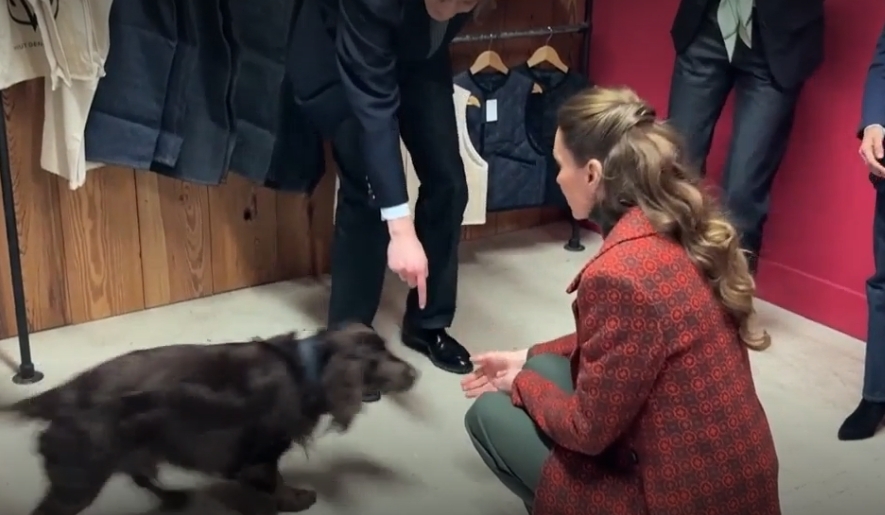

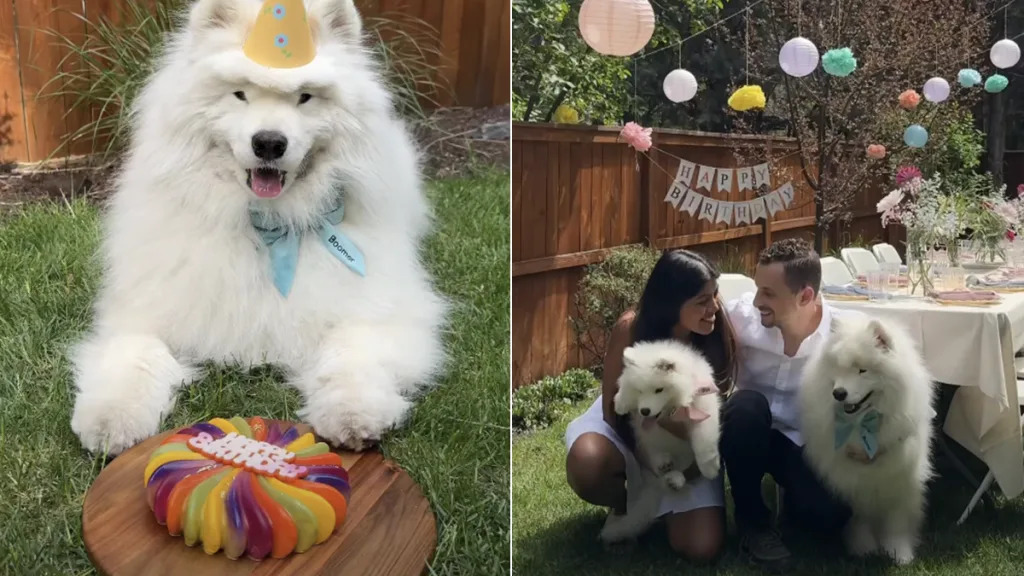
:max_bytes(150000):strip_icc():focal(753x271:755x273):format(webp)/cole-the-deaf-dog-112125-1a-ad248101bd174108a795d88d6afd93d8.jpg?fit=750,500&ssl=1 "Elementary School Throws Deaf Therapy Dog a Surprise Birthday Party as Students Learn Sign Language to Sing ‘Happy Birthday’")










:max_bytes(150000):strip_icc():focal(749x0:751x2)/Mel-Gibson-Fanexpo-Chicago-083126-f90ea0e0e7904853b5fd33a8b889840f.jpg?ssl=1 "Mel Gibson Apologizes for ‘Spontaneous Thoughtless Idiocy’ After Using Mock Sign Language at Toronto Fan Event")





:max_bytes(150000):strip_icc():focal(749x0:751x2):format(webp)/Victoria-Zavakos-7-110725-b4357c6a687249c7978c0f27f6fe23f8.jpg?fit=128,85&ssl=1 "Mom with Limb Difference Shocks the Internet When She Pulls Out a Vacuum to Do Her Daughter’s Hair (Exclusive)")