
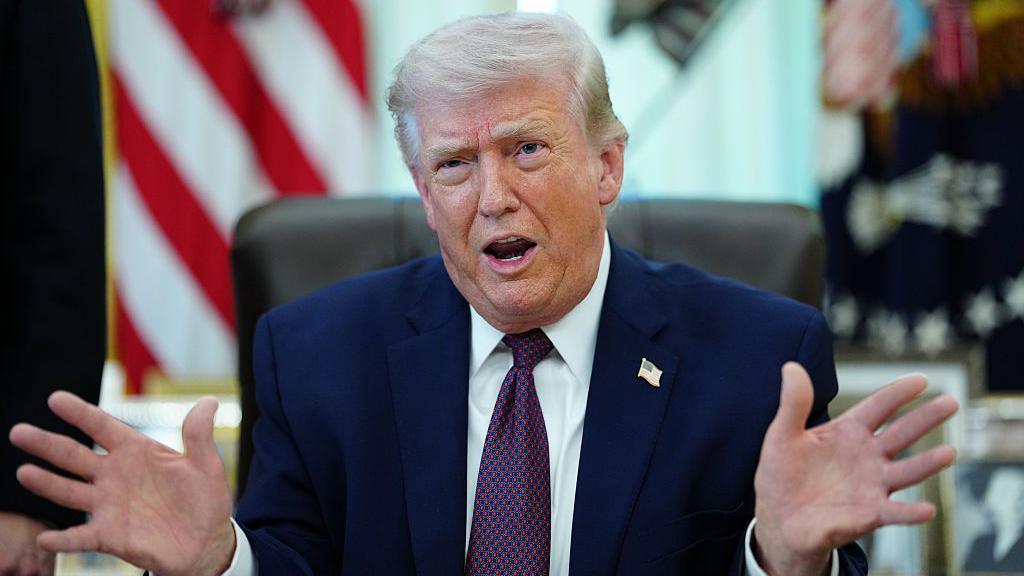
President Donald Trump has acknowledged the possibility of Iranian retaliation on U.S. soil, saying that when the United States goes to war, “some people will die.”
But where in the United States would it be safest to be if World War III broke out? Some experts believe they have the answer.
Fears of a global conflict are rising as geopolitical tensions escalate, with the latest war between the United States and Iran driving much of the concern.
As of Wednesday, March 4, more than 1,000 people were believed to have been killed in the conflict in the Middle East, which has spread to affect neighboring countries.
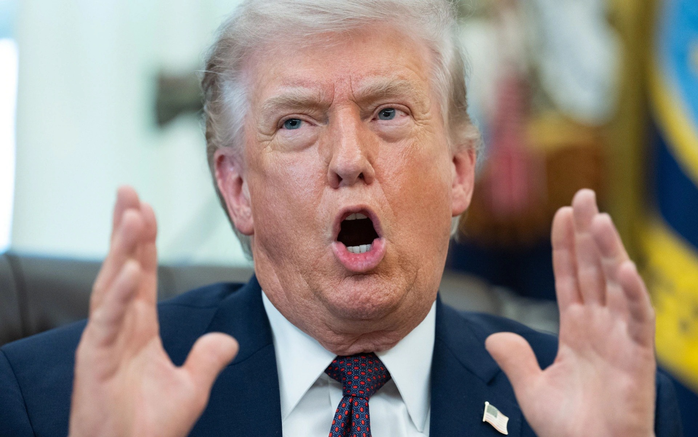
Officials warn that the situation could escalate further, raising fears of a broader regional war with serious global consequences.
When asked whether Americans should be concerned about possible retaliatory attacks on U.S. soil amid the ongoing conflict in the Middle East, Donald Trump acknowledged the possibility during an interview with Time.
“I guess,” he told the outlet.
“But I think they’re worried about that all the time. We think about it all the time. We plan for it. But yeah, you know, we expect some things,” he continued.
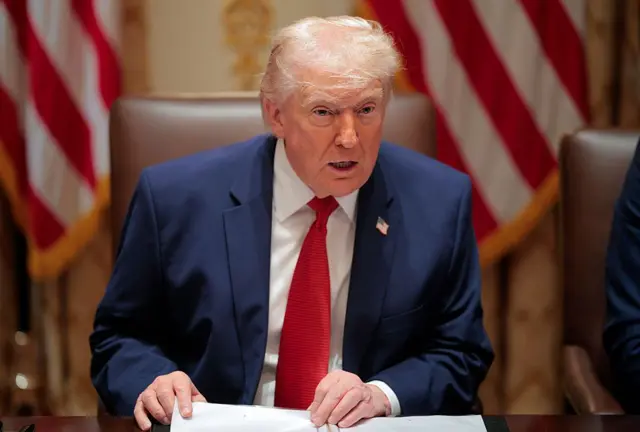
“Like I said, some people will die. When you go to war, some people will die,” the president added.
Closer than many realize, according to some
Some world leaders believe the world may already be closer to a global conflict than many realize. Ukrainian President Volodymyr Zelensky told the BBC he believes the conflict that began with Russia’s invasion of Ukraine could already mark the start of a larger war.
“I believe that Putin has already started it [WW3]. The question is how much territory he will be able to seize and how to stop him.
“Russia wants to impose on the world a different way of life and change the lives people have chosen for themselves.”
Public concern appears to reflect those fears.
A YouGov survey conducted across the UK, France, Germany, Italy and Spain found that between 41 percent and 55 percent of people in each country believe another world war could break out within the next five to ten years. In the United States, around 45 percent of Americans share that view.
Even more worrying, most respondents believe any future global war would likely involve nuclear weapons. According to the survey, between 68 percent and 76 percent of those questioned expect nuclear arms to be used if such a conflict erupts.
Because of that possibility, researchers have also examined which locations might be safer, and which could be at greater risk.
Safest places in US
Outside the United States, several historically neutral countries are often mentioned as relatively safer places during global conflicts. Switzerland, for example, has maintained neutrality for more than two centuries. Ireland and Austria also have long traditions of remaining outside major wars, while Denmark is sometimes included in discussions about stable and defensible nations.
And new analysis suggests that where you live could play a major role in how safe you might be if the unthinkable happened. Within the United States, however, safety could depend heavily on proximity to military targets.
According to research highlighted by Newsweek, many states along the East Coast and Southeast might be less likely to be immediate targets in a nuclear strike. These include Maine, New Hampshire, Vermont, Massachusetts, Rhode Island, Connecticut, New York, New Jersey, Pennsylvania, Delaware, Maryland, Virginia, West Virginia, North Carolina, South Carolina, Georgia and Florida, along with several Midwestern states.
But experts say a number of states in the central United States could face greater risk in a worst-case scenario.
States such as Montana, Wyoming, Colorado, Nebraska, South Dakota, North Dakota, Iowa and Minnesota are believed to be among the most vulnerable because they are located near key U.S. missile silo sites.
In the event of a nuclear war, those silos would likely become priority targets. Destroying them early could prevent the United States from launching retaliatory strikes, making nearby regions more exposed to attack.
Still, analysts stress that geography alone would not guarantee safety.
With thousands of nuclear weapons still in existence worldwide, experts warn that major cities, military bases and critical infrastructure could all become potential targets in a large-scale conflict.
In short, even if some locations appear less vulnerable than others, specialists caution that in a nuclear war “no place is completely safe.”

Iran Launches Salvo of Missiles Following President Trump’s “Powerful Blow” Warning
Iran has continued a new round of attacks on targets in Israel and Gulf nations as U.S. President Donald Trump delivered a major speech regarding the conflict.
The Israeli military stated that its air defense systems responded to three waves of Iranian missile attacks early this morning, April 2. Media outlets reported that several people sustained minor injuries in the Tel Aviv area.
The third wave of attacks was reported to have taken place immediately after President Donald Trump addressed the American public regarding the war in the Middle East.
Following the first wave of Iranian attacks, Israeli police stated they were called to “multiple” locations hit by missiles in the central region.

“Defense systems are operating to intercept the threat,” the Israeli military announced.
According to the Times of Israel, Iran launched additional ballistic missiles into Israel, triggering sirens in the central region, the Jerusalem area, and large swaths of northern Israel.
Meanwhile, the UAE Ministry of Defense also confirmed that its air defense systems “are responding to threats from Iranian missiles and drones.”
According to the RT news agency, Iranian attacks on Gulf nations continued as President Trump spoke in the U.S., with explosions recorded in Bahrain.
A video posted on social media appeared to show a ballistic missile striking a site believed to be a U.S. naval facility.
A statement from the UAE Ministry of Defense said the sounds heard in the sky were caused by air defense systems intercepting missiles and drones.
Iran’s new missile launches occurred immediately after President Donald Trump declared in his speech that Iran’s military capabilities had been “devastated” and its ability to use drones and missiles had been “significantly limited.”
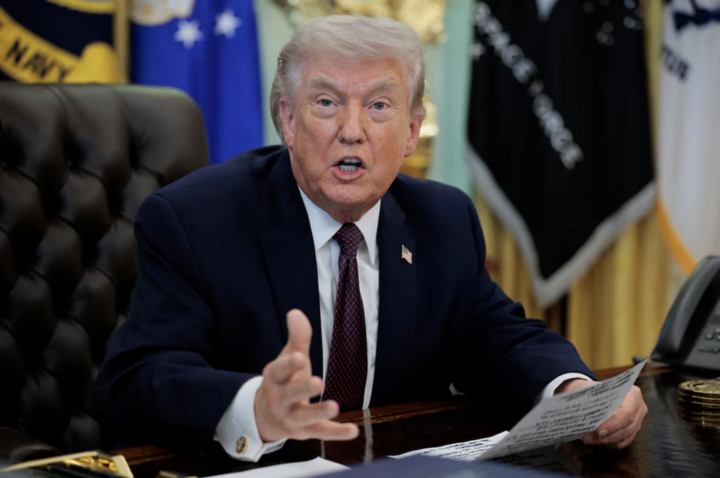
“We are step-by-step destroying their ability to threaten the United States or project power beyond their borders. That means eliminating the Iranian Navy, which is now completely destroyed; damaging their Air Force and missile program to an unprecedented degree; and wiping out their defense industrial base. We have done it all. Their Navy is gone. Their Air Force is gone. Their missiles have mostly been used up or intercepted,” Mr. Trump declared.
President Trump also warned that the U.S. would conduct “extremely intense” airstrikes on Iran over the next 2–3 weeks, adding that Washington would destroy Iran’s power plants and oil facilities if Washington’s demands are not met.
“I can say that we are on track to complete all of the U.S. military objectives in a very short amount of time. We will deal them an extremely powerful blow in the next 2–3 weeks,” the American leader said in a nationally televised address.
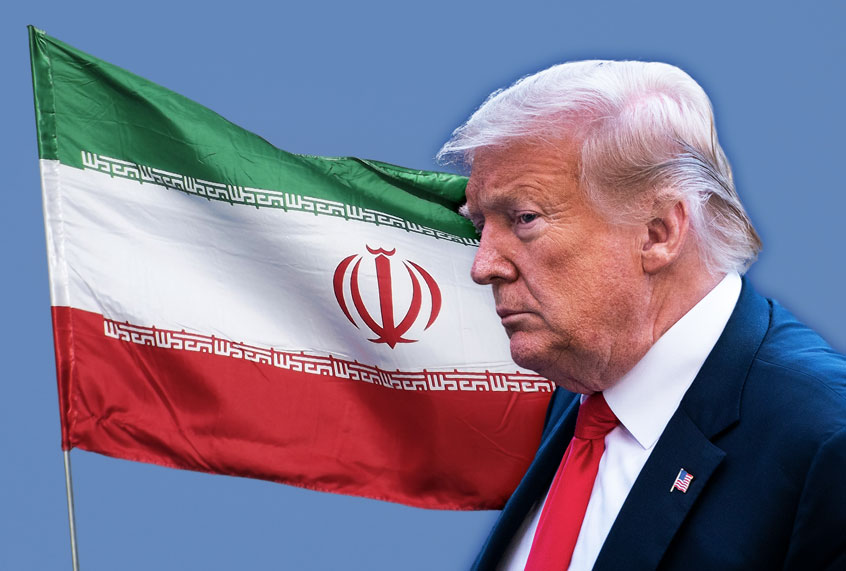
However, Mr. Trump stated that Washington maintains communication with Iranian representatives. He also emphasized that Iran, fundamentally, is no longer a threat to the United States.
Previously, Iranian Foreign Ministry spokesperson Esmaeil Baghaei stated that the country had received proposals from Washington, through Pakistan and other intermediaries, regarding the organization of talks, but there has been no direct contact between the U.S. and Iran.
Trump Vows to ‘Deal a Massive Blow to Iran’ Within Next 2-3 Weeks
In a primetime national address regarding the conflict with Iran on the evening of April 1 (U.S. time), President Donald Trump declared: “We are going to deal them (Iran) a massive blow in the next 2 to 3 weeks. We are going to send them back to the Stone Age, where they belong.”
According to the AP, the 9:00 PM speech on April 1 (8:00 AM today, April 2, Vietnam time) marked President Donald Trump’s first primetime address since he launched a joint military campaign with Israel targeting Iran over a month ago.
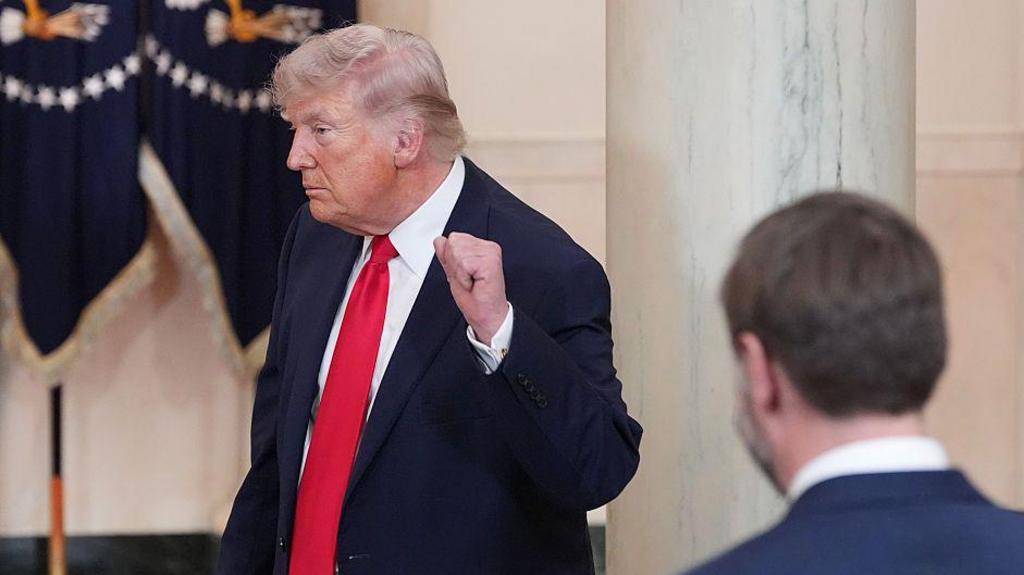
This speech will help Mr. Trump reach a large audience to clearly present his objectives in the conflict, following weeks of shifting goals and delivering sometimes contradictory messages regarding whether he is de-escalating or prepared to escalate military operations.
Vowing to “Deal a Massive Blow to Iran” Within 2-3 Weeks
“We will continue until our objectives are fully met. Because of the progress that has been made, I can say that we are on track to complete all American objectives in a very short time, a very short time indeed,” the U.S. President said.
He declared: “We are going to deal them (Iran) a massive blow in the next 2 to 3 weeks. We are going to send them back to the Stone Age, where they belong.”
He also added that “regime change was never our goal,” but “regime change has happened because their original leader is dead.”
He also warned Iran that he would attack power plants if an agreement is not reached.
“If no agreement is reached during this time, we will target key objectives. If an agreement is not reached, we will hit every one of their power plants hard, and perhaps all at the same time,” he said.
The War Is Nearly Over
The U.S. President concluded his speech by reaffirming that the U.S. has achieved victory and the war is nearly over.
“We are standing on the threshold of ending the dangerous threat from Iran to the United States and the world,” Mr. Trump said.
According to Al Jazeera, immediately after Mr. Trump concluded his speech, the Israeli military stated they had detected missiles launched from Iran. “Defense systems are operating to intercept the threat,” the Israeli military said.

Acknowledging Americans’ Concerns Over Gas Prices
The U.S. President acknowledged the economic hardships many Americans are enduring as gas prices have risen more than 25% compared to the period before the conflict began.
Mr. Trump argued that the price increase is only temporary. “Many Americans have been concerned by the recent rise in domestic gas prices,” he said.
“This short-term increase is entirely the result of the Iranian regime carrying out frantic terrorist attacks against commercial oil tankers in neighboring countries that had nothing to do with the conflict. This further proves that Iran can never be trusted to possess nuclear weapons,” the American leader argued.
Vowing to “Finish the Job” and Thanking Middle Eastern Allies
“We will finish the job. We are getting very close to the goal,” the U.S. President said.
Mr. Trump declared that “America’s strategic objectives are nearing completion.” He said: “These actions, when combined, will paralyze Iran militarily, weaken their ability to support terrorist proxy forces, and deny them the ongoing capability to build a nuclear bomb. Our armed forces have performed magnificently. Tonight, I am pleased to announce that these core strategic objectives are nearing completion.”
He shared: “I want to thank our allies in the Middle East—Israel, Saudi Arabia, Qatar, the UAE, and Bahrain. They are wonderful and we will not let them fail in any way, shape, or form.”
Calling on Nations to “Seize and Protect” the Strait of Hormuz
Although the U.S. and Israel were the ones to launch the war, Mr. Trump called on other nations to join the effort to reopen the Strait of Hormuz, which is currently being blockaded by Iran.
He sent a message to nations that import oil from the Gulf: “Gather a little more courage.”
“They should have done it before, they should have done it with us, as we requested. Go to this strait and just seize it, protect it,” he urged.

Mr. Trump Declares the U.S. Has Won a “Decisive and Overwhelming Victory”
The U.S. President stated that over the past four weeks, the country’s military has achieved “fast, decisive, and overwhelming victories on the battlefield.”
He said that the Iranian navy has vanished, the air force is shattered, most of Iran’s leaders have been killed, and missile launch capabilities are limited. He claimed the U.S. is “winning bigger than ever before.”
The American leader assessed that Iran has “very few” missile launchers left. “Their capability to launch missiles and drones has been significantly limited, and their weapons production factories and missile launchers are being blown to pieces, with very few remaining,” Mr. Trump said.
Calling the War with Iran an “Investment” in the Future of American Children
The U.S. President described this conflict as an effort to secure a better and safer future for America.
“This is truly an investment in the future of your children and grandchildren. The whole world is watching, and they cannot ignore this strength, influence, and excellence. They cannot believe what they are seeing,” Mr. Trump said.
He reiterated that this war was necessary to prevent Iran from possessing nuclear weapons, even though his own intelligence head admitted last year that Tehran was not seeking such weapons.
“Taking Credit” for the U.S. Withdrawal from the Iran Nuclear Deal
President Trump argued that his confrontational approach to Iran, including withdrawing the U.S. from the Iran nuclear deal during his first term, saved the region and Israel from destruction.
He contended that the nuclear deal signed under U.S. President Barack Obama “would have led to Iran possessing a massive nuclear arsenal.”
Under that agreement, Iran was required to significantly scale back its nuclear program under strict international supervision.
“(Possibly) they would have had nuclear weapons years ago and used them already. The world might have been different. There would be no Middle East and no Israel today,” he commented.
Primetime National Address on the Conflict with Iran
President Donald Trump began a “primetime address” on the evening of April 1, local time, to the American people regarding the war with Iran, amid falling approval ratings and a difficult economic situation.
Mr. Trump had previously chosen not to “speak in primetime” earlier, at the time the U.S. and Israel began attacks on Iran on February 28. Observers are now questioning whether a speech at this time still holds enough influence or if it is already too late.
His speech comes against a backdrop of rising oil prices, volatile financial markets, and polls showing many Americans believe the U.S. military has gone too far in Iran.
The White House did not provide many details about the speech in advance. However, Mr. Trump was expected to seek to reassure the public that U.S. goals are being achieved and that he has a plan to end the war, according to AFP.
Earlier on April 1, Mr. Trump claimed a major breakthrough, asserting that the Iranian president was seeking a ceasefire. However, this claim was quickly rejected by the Iranian Foreign Ministry, while Tehran accused Washington of making “excessive and irrational” demands.







:max_bytes(150000):strip_icc():focal(753x271:755x273):format(webp)/cole-the-deaf-dog-112125-1a-ad248101bd174108a795d88d6afd93d8.jpg?fit=750,500&ssl=1 "Elementary School Throws Deaf Therapy Dog a Surprise Birthday Party as Students Learn Sign Language to Sing ‘Happy Birthday’")




:max_bytes(150000):strip_icc():focal(749x0:751x2)/john-mulaney-olivia-munn-baby-mei-tout-092224-2b02a866b7b14047943d6b70fc02f5ae.jpg?fit=1500,1000&ssl=1 "Olivia Munn and John Mulaney Reveal Arrival of Second Baby After Munn’s Cancer Journey: ‘Little Plum, Little Dragon’")


