Iranian crude oil possesses a rare chemical structure that neither U.S. shale oil nor Venezuelan heavy crude possesses, making this fuel type irreplaceable for refineries across Asia.
Experts say that sanctions have never completely eliminated global demand for Iranian crude, due in part to the inherent characteristics of the fuel dubbed “liquid gold” by the Islamic nation.
According to India Today, in recent decades, many engineers have quietly utilized Iranian oil, regardless of whether the commodity was under sanctions. The reason for this has nothing to do with politics, but is purely chemical.
Crude oil is not a uniform liquid. It is a mixture of thousands of hydrocarbon molecules—chains of carbon and hydrogen atoms bonded together. When refined, short, light chains produce gasoline and jet fuel. Long, heavy chains later become asphalt or low-value fuel oil.
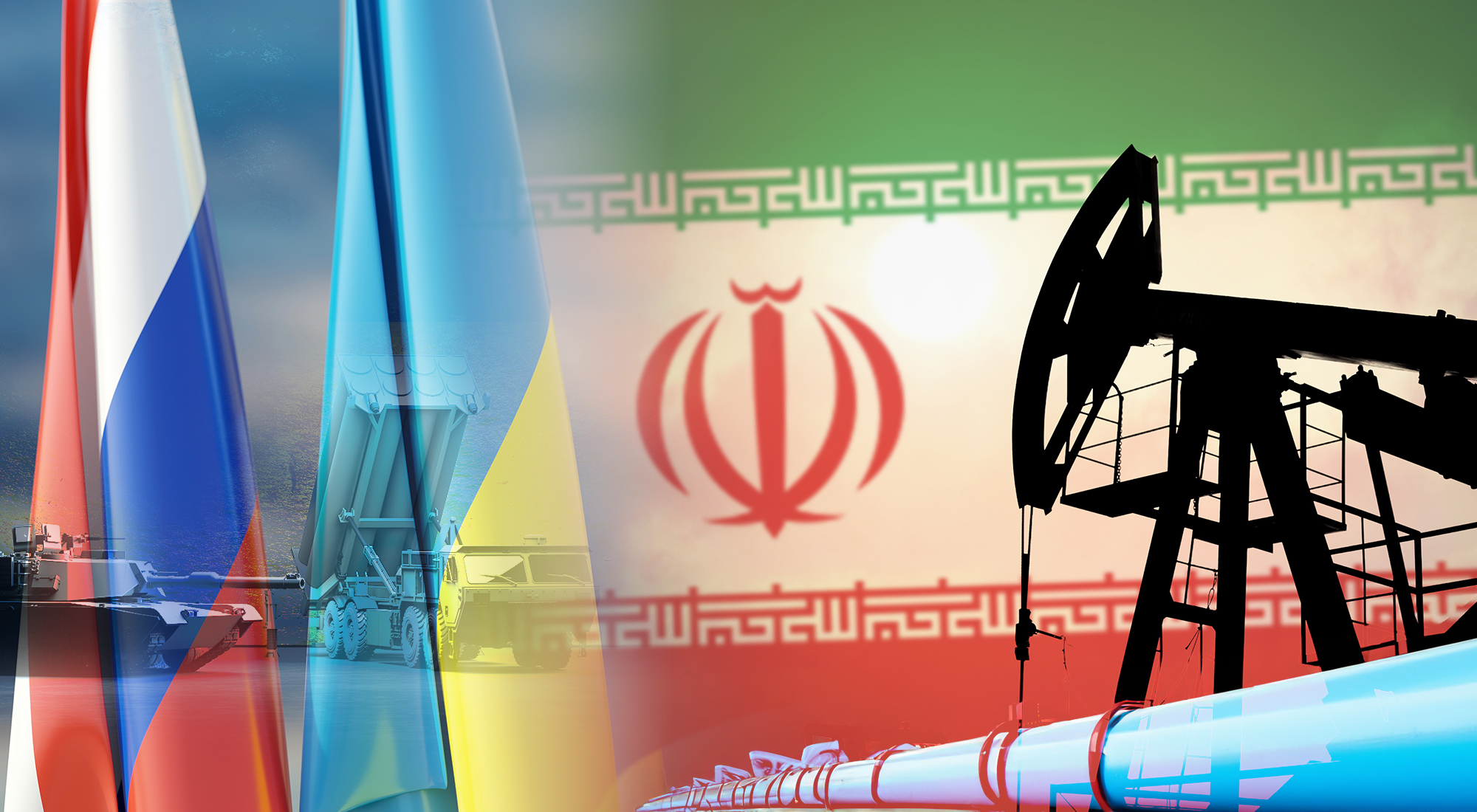
The Uniqueness of Iranian Crude
When crude oil is fed into a refinery, it passes through a tall distillation tower and is categorized by boiling point. Light molecules rise to the top and become premium fuels. Heavier molecules sink. The refinery’s task is to maximize the amount of product obtained at the top. The two most important quality characteristics of any crude oil are density and sulfur content.
Light, sweet crude is a type with low sulfur content and usually commands a higher price because gasoline and diesel can be produced more easily and at a lower cost from this variety. Density is measured by API gravity, a scale created by the American Petroleum Institute.
Experts explain that water has an API of 10, and anything above 10 floats on water and is considered oil. The higher the API gravity above 10, the lighter the crude oil. API gravity ranges from heavy, at levels below 25 degrees—meaning high density—to light, at above 35 degrees—meaning low density. Iranian crude has an API gravity ranging between 33 and 36, right on the boundary between medium and light crude. That is the “sweet spot” that most refineries prefer.

What Makes Iranian Oil Hard to Replace?
Iranian Light crude, Tehran’s flagship export grade, has a sulfur content ranging from 1.36% to 1.5%. Crude oil with low sulfur content is called sweet crude; crude oil with high sulfur content is called sour crude. The distillation yield of Iranian Light crude reaches approximately 20% light fractions and 50% middle distillates.
Middle distillates are products taken from the middle section of the distillation tower: diesel, jet fuel, and heating oil—all of which are the most profitable fuels globally. Adding those figures together, nearly 70% of every barrel becomes premium fuel. That conversion rate is what worries refinery engineers whenever supply from Iran is cut off.
The second reason sulfur content is important is that when sulfur-rich crude is burned without treatment, it releases sulfur dioxide, a gas that causes acid rain and severe respiratory damage. To prevent this, refineries must remove sulfur before the fuel reaches consumers through a process called hydrodesulfurization. In this process, sulfur compounds in the crude oil are removed by reacting the oil with hydrogen gas at high temperatures, up to 450°C, and pressures up to 100 atm, in the presence of a metal catalyst.
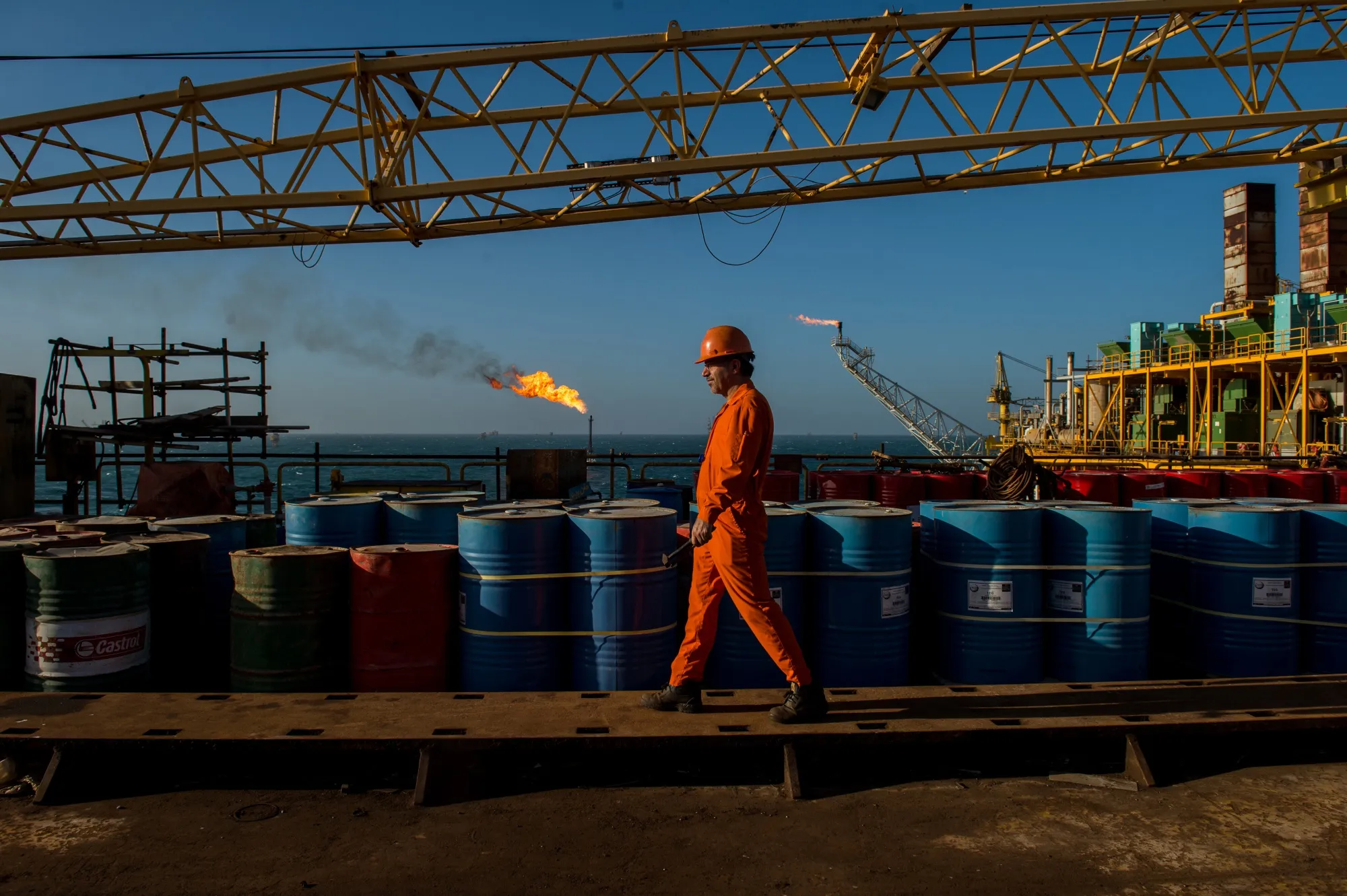
This method is effective but also expensive, consuming significant energy and requiring specialized industrial equipment. The lower the initial sulfur content, the less equipment is required.
With a sulfur content of 1.36% to 1.5%, Iranian light crude falls within a controllable range, suitable for most medium-complexity refineries in Asia without requiring significant additional investment.
Iranian oil sits in an efficient intermediate zone—light enough for inexpensive processing and heavy enough to produce the full range of fuels that large, complex refineries need.
Experts state that Iranian crude is not merely petroleum. The global refining system was built upon this type of oil.

Is the Trump Administration Starting to Panic as Oil Prices Surge?
While President Donald Trump’s aides predicted that oil prices might rise during the early days of the war with Iran, the scale and duration of the market’s reaction have nonetheless left them shocked.
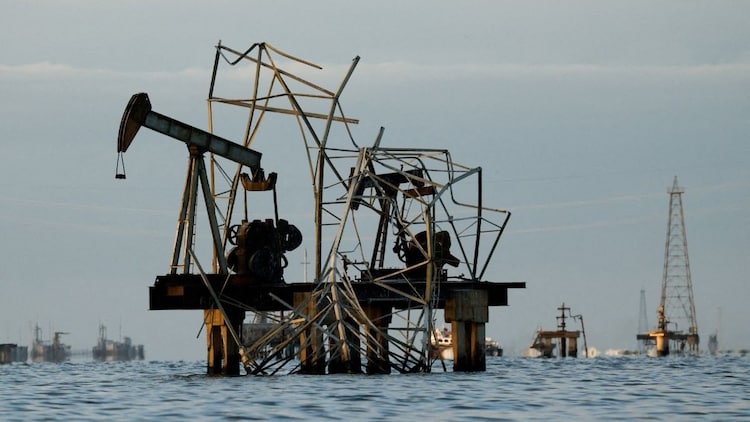
On March 9, global oil prices approached the $120 per barrel mark after more than 10 days of war between the U.S. and Israel against Iran. Gasoline prices simultaneously skyrocketed everywhere, and the U.S. has not been able to avoid this impact, according to CNN.
The surge in fuel prices has forced Washington to scramble for ways to reassure investors and find measures to mitigate the influence. However, the U.S. administration is also facing the limits of its power, as well as being confronted by the reality that Mr. Trump’s decision to attack Iran is threatening to wipe out several of the key domestic economic achievements he has attained.

“It’s hard to see anything other than continued upward pressure,” CNN quoted veteran energy analyst Neil Atkinson, a former official with the International Energy Agency. “People will feel the pain at the gas stations,” he said.
CNN cited several knowledgeable sources revealing that officials spent the weekend and March 9 urgently drafting various options to reassure financial markets and limit the impact of rising oil prices on gasoline prices in the U.S.
The options being developed range from more limited regulatory measures, such as easing rules on domestic oil flows, to direct intervention in global oil trade.
Mr. Trump’s aides are expected to present the list of feasible options to the president as early as March 10.

The Strait of Hormuz Paralyzed
As of now, shipping through the Strait of Hormuz remains in a state of near-paralysis, disrupting approximately 20% of the global oil supply. And the situation shows no signs of improvement as hostilities continue.
Today, Iran declared it could block regional oil exports if the U.S. and Israeli attacks persist.
The Guardian quoted a statement from the Islamic Revolutionary Guard Corps (IRGC) saying the country would not allow “a single liter of oil” to be exported from the region if the attacks continue.
Subsequently, President Trump warned he would intensify attacks on the Islamic Republic if Tehran blocks the flow of oil through the Strait of Hormuz.
In a statement published by state media, the IRGC stated they would “decide when the war ends,” after Mr. Trump previously said that the conflict would end soon.
Global Oil Prices Surpass $100 Per Barrel
WTI oil prices surpassed the $100-per-barrel mark at the market opening on March 8, as investors braced for the next phase of instability following the emergence of a new Supreme Leader in Iran.
West Texas Intermediate (WTI) surged 20% to $109.17 per barrel, a threshold unseen since February 2022, according to AFP today, March 9.
Brent crude also rose 19% to $110.35 per barrel.
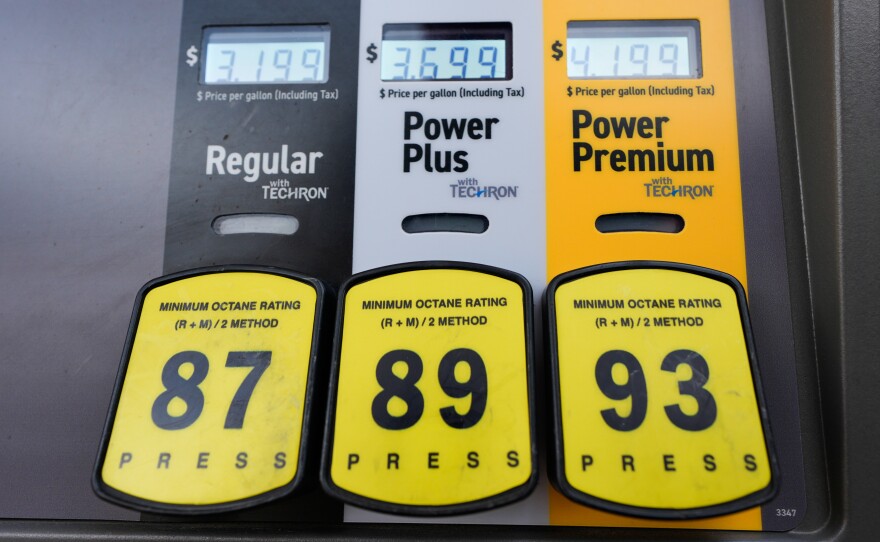
The conflict in Iran has disrupted approximately one-fifth of the global supply of crude oil and natural gas, due to Tehran’s blockade of the Strait of Hormuz and attacks on energy infrastructure across the region.
The Financial Times on March 6 quoted Qatar’s Energy Minister Saad Sherida al-Kaabi forecasting that all Gulf oil producers could be forced to halt exports within the coming weeks—a move that, according to him, could push oil prices to $150 per barrel.
Meanwhile, U.S. President Donald Trump stated on March 8 that the rising oil prices were merely “a small price to pay” to eliminate the Iranian nuclear threat.
Along with oil prices, the U.S. dollar continued to appreciate today, March 9, reaching a three-month high against the euro.
The USD rose 0.8% to $1.1525 per euro, its highest level since November 2025, and climbed nearly 0.4% to 158.48 yen during the early Monday trading session in Asia.
The British pound (GBP), AUD, and NZD fell more than 0.6% against the USD, while Brent and U.S. crude contracts rose above $108 per barrel—a price point expensive enough to negatively impact global economic growth.

Reuters reported today, March 9, quoting Bob Savage, head of market macro strategy at the global financial services firm BNY (headquartered in New York), who said that oil remains the channel through which inflation, interest rates, and currency markets are impacted, while the strengthening of the USD recalls the 2022 energy crisis.
“The coming week will show whether markets continue to view the ongoing conflict as a temporary shock, or begin to price in the risk of a more prolonged supply disruption,” according to Mr. Savage.









:max_bytes(150000):strip_icc():focal(753x271:755x273):format(webp)/cole-the-deaf-dog-112125-1a-ad248101bd174108a795d88d6afd93d8.jpg?fit=750,500&ssl=1 "Elementary School Throws Deaf Therapy Dog a Surprise Birthday Party as Students Learn Sign Language to Sing ‘Happy Birthday’")