Singer Jewel has been open about her difficult childhood with an abusive father and an absent mother. Despite efforts to break the cycle, however, Jewel, 52, ended up homeless with an addiction of her own.
“I grew up in Alaska which was incredible… My parents were musicians and I sang with them in hotels for tourists,” she shared during her June 16 appearance on the No Magic Pill podcast. “When I was about eight, my parents got divorced. My mom left. My dad took over raising us… He started becoming physically abusive and my whole world really turned upside down.”
After leaving home at 15, the “Standing Still” artist graduated high school and moved to San Diego to take care of her ill mother.
“I made a promise really young not to do drugs or drink. I think just because I had such an extreme front row seat to seeing what it did,” she explained. “It didn’t look glamorous, you know, it didn’t look sexy.”
The teenager lost her job and her apartment after her boss made an unwanted pass at her, leaving Jewel to live in her car as her mother moved back to Alaska.
“My panic attacks were getting worse. My agoraphobia was getting worse. I didn’t have food. I didn’t have water. I didn’t have anything. I didn’t have gas for the car,” she recalled. “I started shoplifting. It started with carrots, which apparently are the gateway vegetable.”
She went on to say that shoplifting became “a real addiction.”
“It was compulsive. I couldn’t control it,” Jewel said, explaining that seeing her reflection while stealing a dress was her turning point. “I was a statistic… I’m a homeless kid that is shoplifting and I’m going to end up in jail or dead if this keeps going.”
The mom to son Kase, 14, was able to turn her life around and became a Grammy Award-nominated artist by the end of the 1990s.
Jewel reveals the heartbreaking moment that changed her life: ‘I’m going to end up dead’
Jewel left her abusive home at 15 and was homeless for several years before shooting to fame in the mid-’90s

ewel Kilcher has endured incredible hardship in her life, with everything from homelessness to family issues holding her back until she shot to fame in 1995 following the release of her debut album, Pieces of You.
The 52-year-old opened up about pulling herself out of poverty and homelessness in a candid interview on the No Magic Pill with Blake Mycoskie podcast, and revealed what the turning point was for her escape.
At age 18, Jewel was living in her car, suffering from intense panic attacks and shoplifting to get by, when she realized that something needed to change. “I saw my reflection in the mirror and realized: I’m a statistic. I’m a homeless kid shoplifting, and I’m going to end up dead or in jail if this keeps going,” she said on the podcast.

She added that her experiences on the street motivated her to get out of her situation. “I realized nobody outran pain. I saw people die so broke and alcoholic they couldn’t afford a coffin. I realized my job is just to figure out what to do with pain.”
The “You Were Meant For Me” singer added that she worked on healing herself after her singing career took off in the ’90s. She described healing as “an archeological dig” back to herself. “Healing is gritty work. But being dysfunctional is much harder work.”
Jewel previously shared insight into life on the streets as a young woman, and revealed that she came close to death after being denied treatment at a hospital.

“I almost died in an emergency room parking lot because they didn’t see me because I didn’t have insurance,” she told PBS’ Tell Me More. “Luckily, a doctor had seen me get turned me away, and he went out, and he knocked on my door, and he handed me antibiotics and his card. And he saved my life; it turned out I had sepsis.”
Jewel experienced a tough upbringing in Alaska, with her dad suffering from PTSD from the Vietnam War and subjecting his children to abuse. Her mother left when she was eight, leaving her dad to raise three kids. She moved out of home at 15 and worked hard to make ends meet with any job she could get.

While Jewel has since repaired her relationship with her father, her mother betrayed her when she embezzled her $100 million fortune while working as her manager, leaving the performer with a $3 million debt.
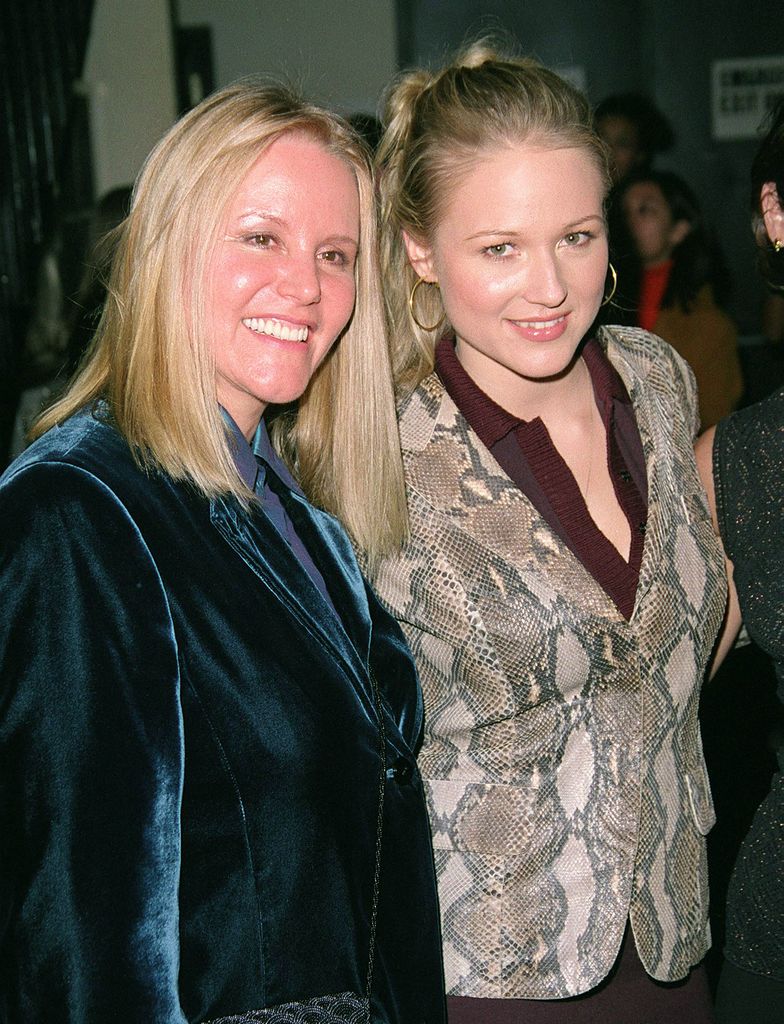
“I realized my mom wasn’t who I thought she was. It was a deep betrayal,” Jewel said on the No Magic Pill with Blake Mycoskie podcast. Despite the major setback, she told herself: “I am not broken. I don’t have to fix myself. I have to uncover myself.”

She has dedicated much of her life to philanthropic efforts, due to her tough upbringing and experiences on the street. She founded the nonprofit Higher Ground for Humanity, which focused on education and sustainable improvements, and the Project Clean Water charity.
The star also served as an ambassador to the ReThink: Why Housing Matters initiative, which asked Americans to consider how public housing can benefit everyone in the community.
New music and art from Jewel, decades after she first rose to fame
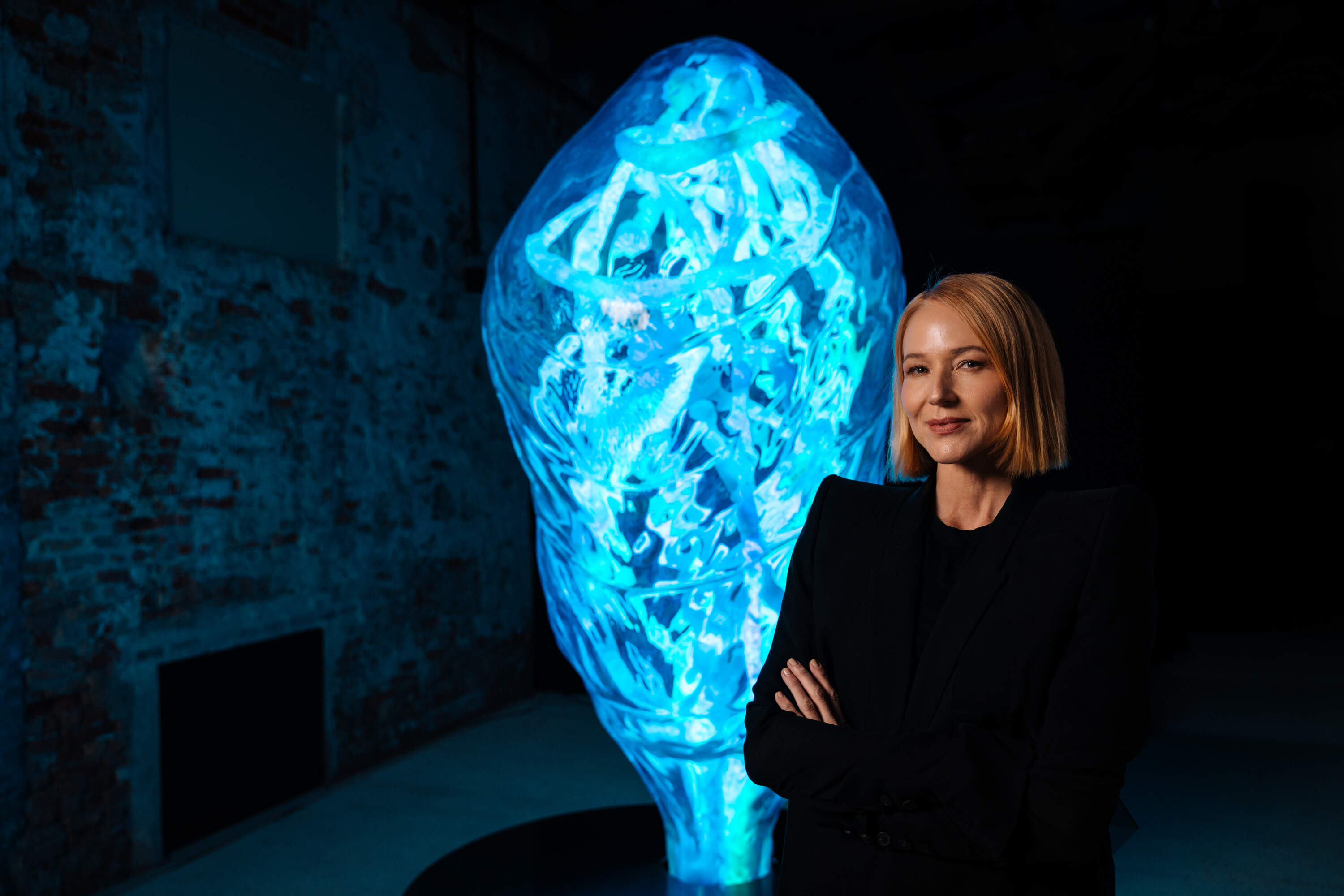
Singer-songwriter Jewel shot to stardom in the 1990s, then stepped away from the spotlight for a couple of years. But now, she’s back with a number of new projects.
Her art exhibit, “Matriclysm: An Archeology of Connections,” just opened in Venice, Italy, this week. She released a new single, “Upon Meeting the Goddess of Love.” And Jewel’s been revisiting her first album, “Pieces of You,” one of the best-selling debuts of all time, with acoustic performances that she’s been posting online.
She said she’s written hundreds of songs, but hasn’t released most of them.
“I think I’m lazy,” she said. “Writing is the fun part. Releasing and promoting and producing, there are like a million things that stop me from doing all that.”
What is it like to put out a new song into the world? Does it feel the same way as it did when you were a teenager trying to make your way as an artist?
“I write hundreds of songs. I have thousands of unreleased songs and I don’t know why I don’t release them more. And it dawned on me when I was doing this little acoustic series on my first album, why don’t I just release it [‘Upon Meeting the Goddess of Love’] acoustic and live?”
Let’s talk about this exhibit in Italy. It includes painting and sculpture, textile design and immersive sound as well. Was that side of you, that type of artist, always there?
“Yes, I started in visual art before I started writing songs. I was trained as a sculptor and then started writing, maybe six months after that. And my music career took off, thankfully, amazingly. And I kept drawing as a private practice and then, of course, got into mental health.
“Finally, about two years ago, I couldn’t keep siloing these aspects and wanted to bring them all together. And this is the result.”
The exhibit is called “Matriclysm: An Archeology of Connections Lost.” Can you explain or translate that for me?
“[Matriclysm] is a made-up word of ‘matriarchy’ and ‘cataclysm.’ It’s an investigation, as my music is, into my own life and my own psychology. And so it speaks in a really personal way about my own relationship to my own femininity, to my mothering, to my mother, and globally.”
Watching your performance of the song “Foolish Games,” you can tell that you’re still feeling that song after all these years. You were just a kid when you wrote that first album. How does it resonate with you today?
“It’s interesting, a lot of those songs, they always hit me. [They’ve] always felt very emotionally intense, which is really my style. If something isn’t hitting me hard, I would tend not to finish the song. And so it is interesting to see those songs all these years later still moving me, at least to perform them.
“I got to really benefit from reading so much Pablo Neruda and Leonard Cohen. It really is lyrically standing on the shoulders of mature lyricists that I think gave me a head start at that young age.”
Bob Dylan was a mentor. What did he teach you?
“He was. You know, my first album was considered a failure, and so I quit touring it and went back in the studio to make a second album. That never [happened] because Bob asked me to go [on tour] with him. And he loved the album. He loved ‘Who Will Save Your Soul.’ And I was like, ‘You know what? If Bob Dylan is the only person that likes this song, I’m okay.’”
You’ve been very open about your life before you signed the record deal and before this sort of fame came to you. You’ve written about growing up with alcoholism in your family, abuse at home, moving out, living in your car, shoplifting and panic attacks. I’m just curious what fame was like for you as a young person.
“When I got discovered, I was homeless. I was offered a million-dollar signing bonus, and I almost didn’t sign the contract because I was very scared. It was like being handed plutonium and being told this was going to be the best thing in the world. And I knew that with my difficult background and with my mental health, it was probably just a recipe for disaster. And even though I was homeless, I had just begun to learn some mental health skills that helped me stop having panic attacks, helped me get a grip on my shoplifting, and I didn’t want to give it away for this pipe dream, possibly, of a record deal. And then, God forbid, what would I do if I got famous?
“So I made myself a promise that I would sign the record contract only if my number-one priority was to learn to be a happy, whole human, not a human full of holes. I wrote [that] down. My number-two job was to be a musician, and under that, I wanted to be an artist more than famous. And I knew that if I made myself that promise, I wouldn’t be stubbornly loyal to that decision-making tree.
“Then [the albums] ‘Spirit’ and ‘Hands’ were successful, and I quit after that because that level of fame, in all honesty, didn’t work for me. I didn’t like it. And that’s a very hard thing to admit when you worked so hard to get it and when everybody else would kill to be you. But I’m a writer that likes watching other people. I didn’t like being watched, and so I quit for two years and decided I could be anything — did I want to be a chef? What else would I do? It turns out that I loved being a musician. I loved learning. I liked experimenting. I just didn’t like being that famous.
“I realized that within two years of quitting after ‘Hands’ that I got unfamous fast. By the end of that two years, I was grocery shopping without a bodyguard, and I was like, ‘OK. Note to self: I love music. I’m going to change genres. I’m going to push myself, I’m going to save my money.’ So it’s not like I have to be liked or I have to have a hit. I’m willing to step off the popularity bandwagon to be an artist and to do this at a pace that works for me. It meant I would have to work more to make the next album a success, but I can work hard. That was no problem.”
Hearing a song like “Hands,” do you feel any nostalgia for those days, looking back?
“I don’t know about nostalgia. I wasn’t proud of myself in real time. My life felt like a fist fight: so much anxiety, so much struggle. It’s nice to be 53 sitting on a rooftop in Venice, Italy, and hear that song and be able to be proud of myself retroactively.”
This interview was edited for clarity.


:max_bytes(150000):strip_icc():focal(750x292:752x294):format(webp)/king-charles-prince-andrew-120125-1a-f46e7b16049c47358276e6a71d8ccd14.jpg?fit=1500,1000&ssl=1 "King Charles Officially Removes Ex-Prince Andrew’s Final Royal Honors: ‘His Name Shall Be Erased’")



:max_bytes(150000):strip_icc():focal(753x271:755x273):format(webp)/cole-the-deaf-dog-112125-1a-ad248101bd174108a795d88d6afd93d8.jpg?fit=750,500&ssl=1 "Elementary School Throws Deaf Therapy Dog a Surprise Birthday Party as Students Learn Sign Language to Sing ‘Happy Birthday’")

:max_bytes(150000):strip_icc():focal(741x293:743x295):format(webp)/mae-plastic-surgery-033026-1-eca19f8c8041443abe3b02437a3c4e1c.jpg?fit=1500,1000&ssl=1 "Woman, 70, Gets Intense Facelift After Life-Threatening Health Scare. Now She Looks 30 Years Younger (Exclusive)")