
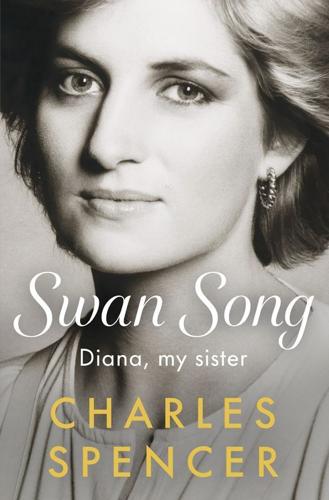
LONDON – “Swan Song” has landed.
The bombshell memoir, penned by Princess Diana’s brother, Earl Charles Spencer, was released Sept. 22, less than a week after Buckingham Palace was forced to issue a rare and blistering statement defending one particular claim within the book’s pages.
“Swan Song: Diana, My Sister,” marks the first time Spencer “has spoken openly and at length” about his older sister, according to its publisher Penguin Michael Joseph (a division of Penguin Random House).
Diana was killed in a car crash in Paris in 1997, leaving behind her two sons Prince William and Prince Harry.
Here are the most shocking claims from the memoir.
Charles said the world would ‘forget’ Diana ‘soon enough’
Days after Diana’s death, a heated phone call took place between Spencer and his former brother-in-law Charles, then the Prince of Wales, according to the book.
Spencer writes that Charles hissed, “Rest assured, we’ll forget her soon enough!” when speaking about Diana. Spencer allegedly responded, “I can’t believe you just said that,” and hung up. The explosive allegation was first published by The Daily Mail.
In an unusually firm statement to the BBC on Sept.16, a Buckingham Palace spokesperson said: “While we do not comment on books as a matter of principle, His Majesty is mindful that the pain of fraternal grief can cloud reason, affect judgment and colour memory in ways others do not recognise, even many years after such a loss.”
:max_bytes(150000):strip_icc():focal(749x0:751x2)/Charles-Spencer-princess-diana-king-charles-091626-98ed830882c3458288e7913274260373.jpg)
Charles ‘sounded giddily elated’ after Diana’s death
In his book, Spencer writes that in a phone call with Charles following Diana’s death, he was struck by his former brother-in law’s tone.
“Unlike my other callers, who were stunned, barely able to articulate their condolences and offers of help, he sounded giddily elated,” the book says. “Like a lottery winner, I remember thinking at the time.”
While the palace did not comment on this specific claim, royal commentators rushed to defend the king.
Dickie Arbiter, who was Queen Elizabeth’s press secretary at the time Diana died, told BBC Newsnight that Charles was “devastated at the time.”
Royal commentator Jennie Bond said Earl Spencer’s “vindictive account” was “extraordinary.”
“I have no reason to disbelieve this is his memory of what happened, but there are usually two sides to a conversation and a story,” Bond told BBC Breakfast.
:max_bytes(150000):strip_icc():focal(749x0:751x2)/charles-spencer-princess-diana-king-charles-091626-61cf83ac1a5b43d984e743180c7dda29.jpg)
There was a ‘lack of obvious care’ for grieving Prince Harry
Prince Harry was just 12 years old when his mother died. In the memoir, Spencer cites the concern he felt for his nephew, who seemed “so very alone in his despair and torment” as he grieved for his mother.
Spencer argues that because of the “lack of obvious care” the young prince was “allowed to spin out of control” and that “a more caring hand” may have helped him “enormously in the future.”
Spencer also makes clear he did not think it was a good idea for Diana’s boys to walk behind her coffin. He attempted to shut down the plan, he writes, branding the suggestion “utterly barbaric” and insisting that his sister would not have wanted her sons to be subjected to such a public spectacle.
But after a heated argument with Charles about the plan, Spencer was later told both boys had stated they wanted to walk behind Diana’s coffin as long as their grandfather Prince Philip walked with them.
When the day of the funeral came, 15-year-old William seemed “more self-possessed” with “greater composure and maturity,” than his brother, making him Spencer’s “secondary concern that day.”
Harry, in contrast, appeared “tiny” and “bereft” as he walked. “Too small to be doing this I thought, and I wondered how on earth this heartbroken child could bear the ordeal of that moment,” Spencer writes, noting that while Harry’s stride was the shortest of the elders walking with him, he moved “as quickly as possible” to “get it all over with.”
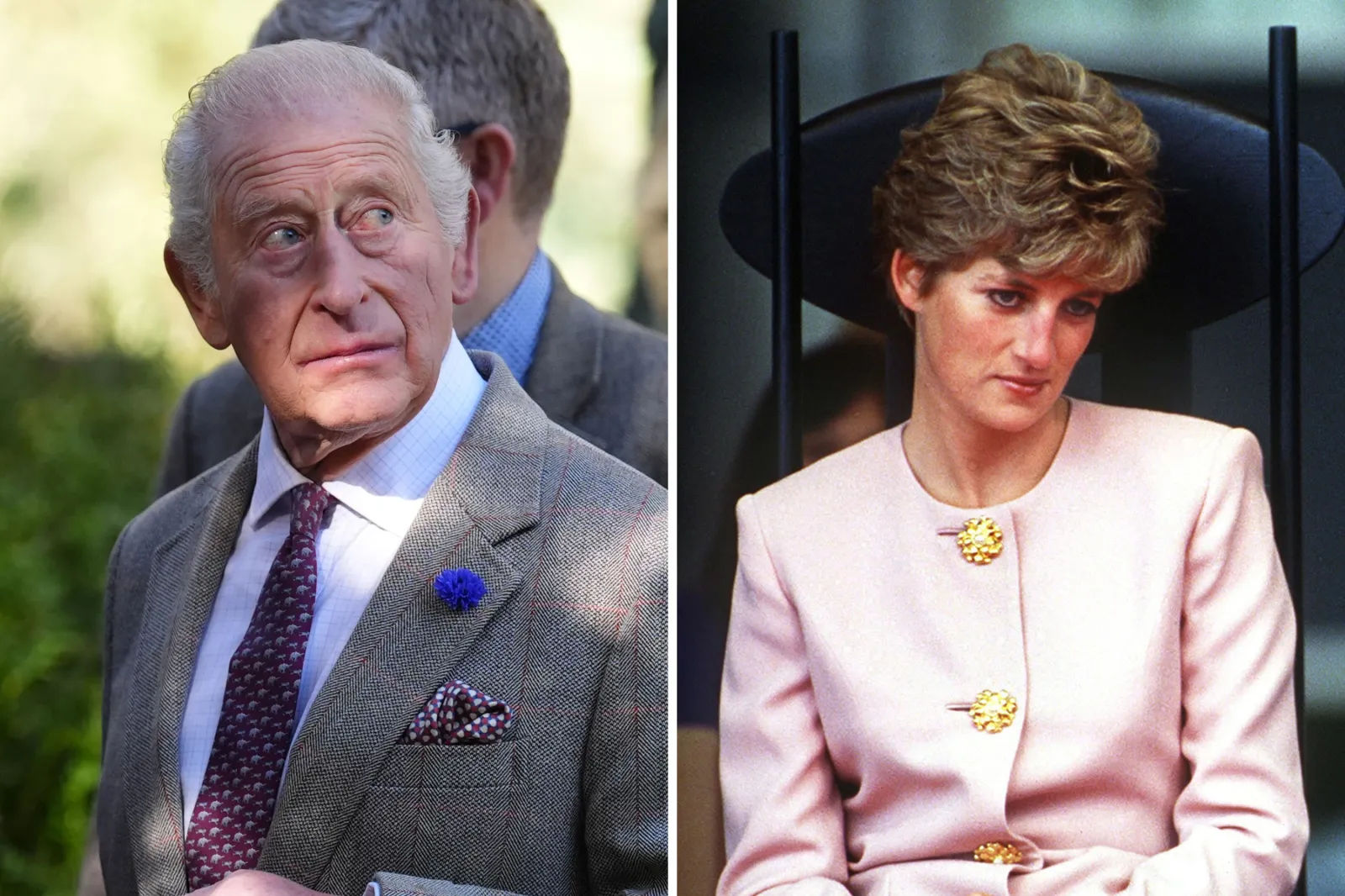
Charles was frustrated about having to wait to take to the throne
Diana’s death, and funeral, came amid rising tensions within the royal family.
“There were very serious tensions between the two principal royal teams: the Queen’s, in Buckingham Palace, and Prince Charles’s, in St James’s Palace,” he writes, adding that the sense of unease was sparked “by the heir to the throne’s growing frustrations at being a middle-aged man still waiting to reign.”
Spencer recalls battling grief and devastation at his father’s funeral, where he was approached by Charles who told him he was “so lucky” to have inherited “so young.” Spencer was stunned; he “really had no idea what to say” to Charles and thought that “seeing the death of a loved one as lucky was perverse and heartless.”
Charles became king at age 73; the late queen was the longest serving monarch in British history.
While Spencer was keen for the “bizarre” conversation to end, he writes that Charles continued on the subject, telling the earl that despite the fact he was 43 and had 50 people in his employ, his parents insisted on treating him “like a child.” “And a petulant one, at that,” Spencer writes, because Charles stamped his foot like a child for emphasis.
Diana asked to end her engagement to Charles
Diana had always wanted to marry for love, her brother writes. And she thought she had found it in Charles.
A month after their engagement, Diana was photographed crying as Charles left on a business trip. Her emotional display seemed to convince the media that she was “lovestruck” and emotional about “being parted from her fiancé.”
In fact, “the truth was very different,” Spencer writes. “Diana was completely at sea having found a bracelet that Prince Charles had bought for Camilla.”
Not long after that, at former Prince Andrew’s 21st birthday party with 650 guests, Charles showed no interest in her, Spencer says.
“Immediately after that evening of escalating heartbreak, Diana went to see my father. She told him she could not go through with marriage to a man who clearly did not love her. My father was appalled and said it was impossible to pull out of such an enormous commitment at that point.”
According to Spencer, their father believed in the Crown, and in duty. “He always adored Diana, but what she was proposing was counter to the code on which he had been brought up, and which he never seemed to question. He could not agree to her breaking her engagement.”
Diana was groped by Dodi Fayed’s father, Mohamed
In the memoir, Spencer writes that Diana’s boyfriend, Dodi Fayed, who died with her in the Paris car crash, was “kind to Diana and they had fun together,” adding that there was a “gentle playfulness between the two of them.”
But Diana disliked Fayed’s billionaire father, Mohamed, an Egyptian businessman who once owned luxury London department store, Harrods, Spencer recalls.
“She told me with revulsion how, early in her romance with Dodi, Mohamed had come up to her, dropped a hand onto her buttocks and squeezed them while saying in a leery, suggestive tone, ‘And in Egypt, father-in-law gets first go…’
Diana laughed as she recalled “the ghastliness of the episode.”
In 2024, a year after Mohamed’s death at 94, the BBC released a documentary outlining allegations of rape and attempted rape titled “Al Fayed: Predator at Harrods.” The alleged incidents took place in a string of countries including London and Abu Dhabi.
Following the allegations, Harrods said it was “utterly appalled by the allegations of abuse perpetrated by Mohamed Al Fayed.” The store promised to ensure “that such behaviour can never be repeated in the future.”
Charles was in love with a member of his royal staff
Spencer was at a London restaurant one day when his sister told him she was going to get a divorce. Spencer recalls thinking that he “had known things were bad,” between the princess and Charles “but not this bad.”
He writes that he encouraged his sister to consider the reaction of the public but reassured her she also had his support.
“They’ve bought into a fairytale, and I reckon they may well – wrongly – blame you for destroying their fantasy,” he warned Diana, who then quietly shared: “My husband is in love with his valet.” Spencer recalls gulping before telling his sibling: “Well, I guess in that case, you really don’t have a choice.”
Spencer writes that the name of the valet was never shared and that he did not press his sister further for details, though he noted the idea seemed “improbable.”
Queen Elizabeth offered to give Diana’s HRH title back after she died
The queen offered to reinstate Diana’s “Her Royal Highness” title following her death, Spencer writes. Queen Elizabeth herself had stripped the Princess of Wales of the title in 1996 after her divorce from Charles.
Spencer claims that Diana was “dreadfully hurt” by the move, which she classed as “an appalling betrayal.” After losing her HRH title, Diana was styled as “Diana, Princess of Wales” instead of “Her Royal Highness.”
In the book, Spencer says he was informed of the queen’s offer by Robert Fellowes, the queen’s private secretary at the time. The earl told Fellowes that while the queen’s gesture may have been “well-meaning,” he felt compelled to reject it.
“I felt that I knew in my bones how she would view this posthumous award,” Spencer writes. He told the secretary: “That’s very kind of the Queen, of course. But what’s the point, Robert? Now? I mean – Diana’s dead.”
“The title should never have been removed during her life, in which case it would not have been necessary to offer it to her in death,” he writes.


:max_bytes(150000):strip_icc()/GettyImages-216767353221-3bc075f308e4475c975ccdcf2c607f25.jpg?fit=1500,750&ssl=1 "Michelle Obama Embraces Moody Glam in a Sheer LBD With a Zipper Running All the Way Down Her Chest")



:max_bytes(150000):strip_icc():focal(753x271:755x273):format(webp)/cole-the-deaf-dog-112125-1a-ad248101bd174108a795d88d6afd93d8.jpg?fit=750,500&ssl=1 "Elementary School Throws Deaf Therapy Dog a Surprise Birthday Party as Students Learn Sign Language to Sing ‘Happy Birthday’")



:max_bytes(150000):strip_icc():focal(743x471:745x473):format(webp)/Abandoned-Dog-at-Airport-022126-d755d65eb323443bade62469ed85c911.jpg?fit=750,500&ssl=1 "Thousands Applied to Adopt Dog Abandoned at Airport Ticket Counter. He Found a Forever Home with One of His Rescuers")
:max_bytes(150000):strip_icc():focal(1405x730:1407x732)/kate-middleton-2023-trooping-the-colour-outfit-lead-8d162e1874e444909014ca3ea465686c.jpg?fit=1500,981&ssl=1 "WHERE HAS KATE MIDDLETON BEEN SINCE HER ABDOMINAL SURGERY?")


