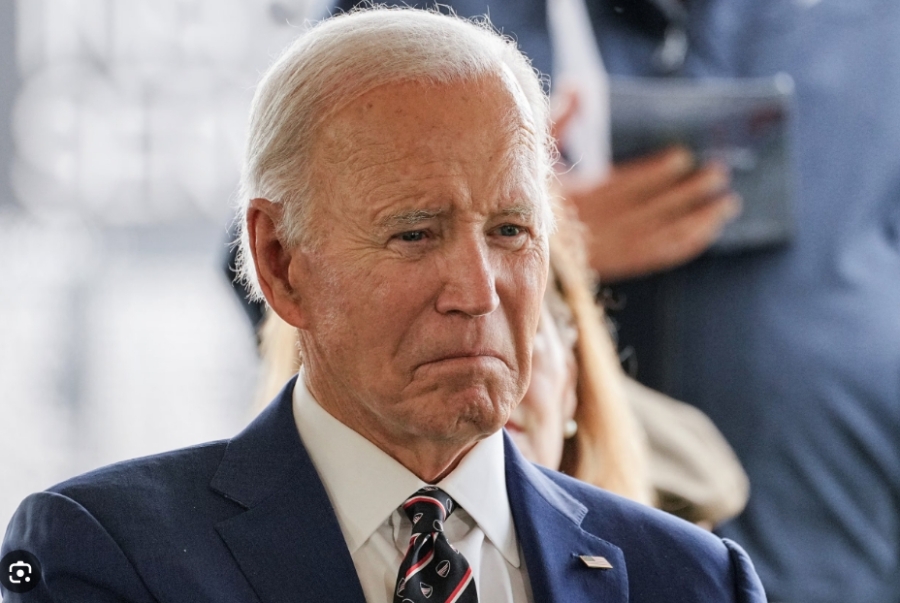
Trump insists that mineral-rich Greenland is vital for US and NATO security against Russia and China as a melting Arctic opens up and the superpowers jostle for strategic advancement.
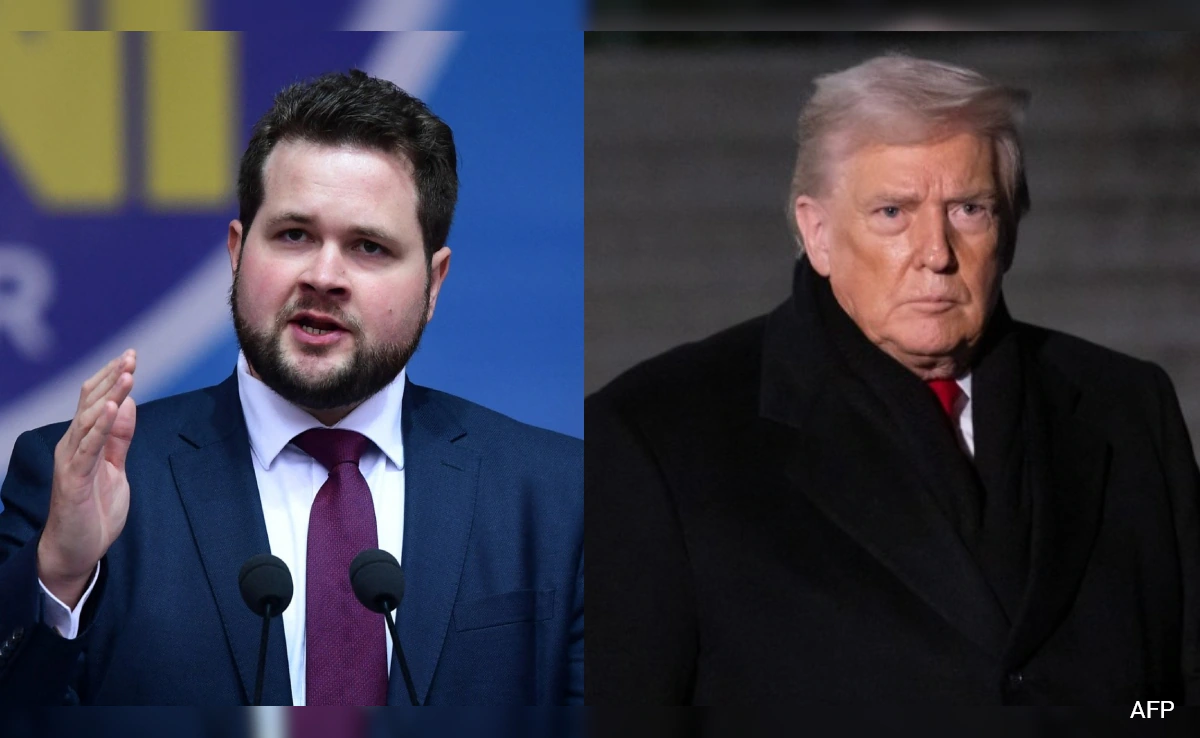
As Donald Trump continues to go mega with his Greenland gambit, a Danish lawmaker has gone viral for making his frustration with the US president crystal clear. During a recent debate at the European Union’s legislative body, European Parliament Member Anders Vistisen addressed Trump directly, asking him to “f*** off” as Greenland was not for sale.
Footage shows Vistisen, 38, addressing a session focused on US interest in Greenland amid Trump’s push to acquire the Arctic territory when he unleashed the rebuke.

What Danish Lawmaker Said
“Dear President Trump, listen very carefully. Greenland has been part of the Danish kingdom for 800 years. It is an integrated country. It is not for sale,” he said.
Vistisen then added, “Let me put this in words you might understand: Mr President, f*** off.”
He then continued his speech in Danish but was soon interrupted by Parliament Vice President Nicolae Stefanuta, who chastised him for his language, warning of consequences.
“I am sorry, colleague, this is against our rules,” Stefanuta told him.
“We have clear rules about curse words and language that is inappropriate in this room. I am sorry to interrupt you. It is unacceptable, even if you might have strong political feelings about this,” he added
Vistisen continued the remainder of his speech in Danish after the rebuke.
Trump’s Greenland Gambit
The incident comes as Trump brutally mocked the Europeans a day before heading to the World Economic Forum, where he will be the star of a dark, self-made drama over the fate of the autonomous Danish territory. Over the past week, the US leader has renewed the public pressure on the issue of acquiring the strategically located Arctic territory.
Trump insists that mineral-rich Greenland is vital for US and NATO security against Russia and China as a melting Arctic opens up and the superpowers jostle for strategic advancement.
He has turned up the pressure by threatening tariffs of up to 25 per cent on eight European countries for backing Denmark, prompting Europe to threaten countermeasures against the United States.
Danish Politician Tells Trump to ‘F*** Off’ Over Greenland Threats
A Danish member of the European Parliament reiterated a stern message to President Donald Trump that he gave a year ago, telling him again to “f— off” over his administration’s repeated claims that the US should acquire Greenland.
Speaking at the European Parliament during a debate on the EU’s response to Trump’s aggression towards the self-governing Danish territory, on Tuesday, January 20, MEP Anders Vistisen said “let me put this in words you might understand, Mr President: f— off.”
Vistisen, a member of the far-right political group Patriots for Europe, is then interrupted by the parliament’s vice president Nicolae Stefanuta who tells the politician it is unacceptable to use offensive language.
“The only language that Trump understands is a direct language, and the only rebuttal Trump understands, is a strong one from the EU,” Vistisen replied.
In January 2025, Vistisen used the same language toward Trump as the US president discussed making Greenland a US territory.
On Monday, Trump told reporters that “we have to have” Greenland and released an AI-generated image showing himself, his Vice President JD Vance, and Secretary of State Marco Rubio holding a US flag on a land marked Greenland on his social media platform Truth Social. Credit: European Parliament via Storyful
Determined to seize Greenland, Trump faces tough reception in Davos

TRUMP TO UNVEIL HOUSING PLAN AT DAVOS
Reporting By Steve Holland and Trevor Hunnicutt; Editing by Cynthia Osterman
Trump set to face a diplomatic intervention on Greenland in Davos

An urgent diplomatic intervention is awaiting President Donald Trump in Davos after days spent hurling threats at US allies over Greenland.
Top European officials are planning to use this week’s annual summit of global elites as their staging ground for averting a fast-blooming crisis that has put the continent on edge — and may now threaten the survival of its seven-decade alliance with the United States, three people familiar with the discussions told CNN.
That push from allies comes as even some in Trump’s orbit have expressed private misgivings over the president’s rhetoric and have sought an off-ramp.
In the near term, the Europeans’ emergency effort aims to de-escalate tensions following Trump’s vow to slap new tariffs on any ally that opposes his push for “complete and total control” of Greenland. But it’s also about trying to divert the president generally from his campaign for the Danish territory.

Among the paths that Trump advisers and Western diplomats have focused on are expanding existing treaties that allow the US to place military bases and other resources on the island, along with adding commercial and economic agreements. Such an outcome would include some type of signing ceremony that would allow the president to showcase an accomplishment, according to people familiar with the matter.
Another option that has been discussed is placing Greenland under a Compact of Free Association, which would allow it to maintain its current status while still providing the US expanded security access in exchange for financial assistance. Palau, the Marshall Islands and Federated States of Micronesia fall under such an agreement with the US.
There have also been early discussions about suggesting the renegotiation of the 1951 agreement between the US, Denmark and Greenland to clearly state there would be no Chinese investments in Greenland, these people said.
And while Denmark has shown little inclination to giving up its territory, some senior Trump administration officials have worked over the past several weeks on a proposal to purchase the island, these people said.

Trump — who arrives in Davos early Wednesday — told reporters before leaving Tuesday that he’ll hold a series of meetings on Greenland while there, predicting he’d strike a deal that’s “very good for everybody.” He claimed NATO would be “very happy” and that Greenlanders, who’ve protested threats of American annexation, will be “thrilled.”
NATO Secretary General Mark Rutte, who has worked to establish a close relationship with Trump, is among those expected to meet with the president one-on-one on the sidelines of the summit, sources familiar with the plans said.
Yet despite Trump’s sunny projections, he has continued to double down on his divisive demands, insisting again Tuesday that “we need” Greenland. Asked how far he was willing to go to gain control of the Arctic island, Trump said only: “You’ll find out,” before suggesting he could look at alternative options if the US Supreme Court rules against his use of tariffs.
In a statement, White House spokesperson Anna Kelly cast the US’ acquisition of Greenland as a potential boon for NATO, arguing it “becomes far more formidable and effective with Greenland in the hands of the United States, and Greenlanders would be better served if protected by the United States from modern threats in the Arctic region.”
European allies search for ways to push back
But among the US’ closest European allies, there’s still no clear consensus for how to push back should the president intensify his aggression.
“They have to respond,” said Ian Bremmer, the president of global risk assessment firm Eurasia Group. “And there’s lots of things they can do, but they have to be willing to do them with sufficient numbers and force that it makes the difference.”
The standoff set to play out over the next 48 hours underscores the seriousness with which European nations are now viewing Trump’s imperial threats amid his sustained attacks on various global leaders.
Tensions over Greenland have also forced a shift in calculation among some in Europe following a year in which most US allies sought to appease Trump rather than resist him — reasoning that in many cases it was worth acceding to his commands rather than risking direct conflict.

Trump has long argued Greenland is critical for US national security and valuable for its vast mineral reserves. But that push hit a new level over the last week with his vow to hit eight European countries with tariffs and his subsequent public missives against the leaders of Norway and France.
The president’s bid to penalize allies economically has prompted alarm across Europe, with officials warning that such a move could fracture the long-standing NATO alliance that encompasses 32 member states across Europe and North America.
During a speech in Davos, French President Emmanuel Macron decried the “endless accumulation of new tariffs that are fundamentally unacceptable — even more so when they are used as leverage against territorial sovereignty.”
European Commission President Ursula von der Leyen used her address at the World Economic Forum, meanwhile, to call for building “a new form of European independence.”
“Threatening to impose economic sanctions means it has moved beyond an abstract issue and a diplomatic crisis into a real economic and political crisis,” said Erik Brattberg, a nonresident senior fellow at the Atlantic Council’s Europe Center. “There’s still a desire to avoid further escalation, but they also feel the need to take a stand and put their foot down.”
Within European diplomatic circles, officials have weighed a range of possible responses, beginning with the imposition of €93 billion ($109 billion) of retaliatory tariffs that the European Union postponed after reaching a trade deal with the US last year, the people familiar with the discussions said.

Yet beyond that initial step, there is far less certainty over how best to deter Trump if he mounts a sustained campaign for Greenland. The nations could seek financial payback by stepping up sales of US treasuries or put additional restrictions on US companies. They could even limit American access to European military bases or pull out of the upcoming World Cup that Trump has frequently touted as a point of personal pride, the people familiar said.
The EU also possesses another set of harsh economic measures designed specifically to punish countries that it determines are trying to coerce the bloc. But wielding that tool — called the Anti-Coercion Instrument — would require unanimous support, and is widely seen as a tactic of last resort.
European officials instead are largely hoping Trump will take an off-ramp before it gets to that point.
Among some people around Trump, there’s a belief that he’s posturing — seeing how far he can go to get what he wants — and that there’s no appetite for military intervention. But that’s still sparked concern that Trump’s aggressive efforts could irreparably harm critical relationships.
And even as officials on both sides of the Atlantic push ahead on diplomatic routes, it remains a delicate matter given Trump’s declaration that outright ownership of Greenland is now of “psychological” importance — and a victory he increasingly craves.
“It’s trepidation,” Bremmer said, summing up the mood among European officials girding themselves for Trump’s arrival in Davos. “Nobody knows what he’s going to say — including, maybe, him.”


:max_bytes(150000):strip_icc():format(webp)/DianaTom-fb2e21a9714147cc974bed072146c3d0.jpg?fit=750,510&ssl=1 "Princess Diana Said She Couldn’t Date Tom Cruise for a Surprisingly Hilarious Reason")



:max_bytes(150000):strip_icc():focal(753x271:755x273):format(webp)/cole-the-deaf-dog-112125-1a-ad248101bd174108a795d88d6afd93d8.jpg?fit=750,500&ssl=1 "Elementary School Throws Deaf Therapy Dog a Surprise Birthday Party as Students Learn Sign Language to Sing ‘Happy Birthday’")