The actress, who played Erica Kane on ‘All My Children’ for more than 40 years, discusses the experience in her new memoir and an exclusive PEOPLE interview
NEED TO KNOW
Susan Lucci and her late husband Helmut Huber are parents to two children, daughter Liza and son Andreas
Their son suffered a life-threatening bout with pneumonia just 36 hours after he was born in 1980
Now 45, Andreas accompanied his mother to the Daytime Emmys in 2023, after his father’s death in 2022
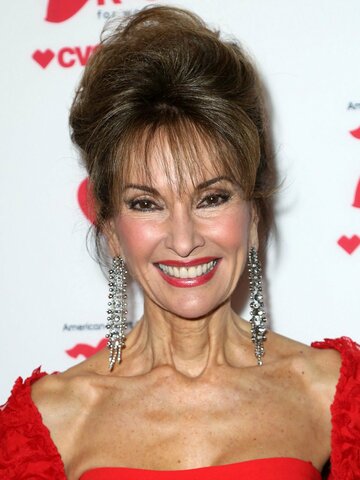
Susan Lucci talks grieving loss of husband of 52 years, 41 years on ‘All My Children’
In 1980, a decade after beginning her run as resident diva Erica Kane on the daytime soap opera All My Children, Susan Lucci experienced every mother’s worst nightmare off screen.
A mere 36 hours after the birth of her son Andreas in 1980, he suffered a life-threatening bout with pneumonia. Lucci, 79, writes about the harrowing experience in her new memoir La Lucci (out Feb. 3 from Blackstone Publishing) and in a PEOPLE cover story in this week’s issue.
:max_bytes(150000):strip_icc():focal(999x0:1001x2):format(webp)/PEOPLE_SusanLucci_4-0a3b0e76adc04a4b91dcef47d2d0ec45.jpg)
“It was hugely impactful on me,” she says of the ordeal. “I was so grateful to God, so grateful to the doctors, the nurses. I have written one fan letter in my life, and it was to the nurses in NICU, [about] how they took care of not just my son, but all the other babies, too.”
Soap Opera Icon Susan Lucci, 78, Stuns Fans With Ageless Fall Photo: ‘Classic Elegance’
Lucci says Winthrop Hospital (now NYU Langone Hospital) in Mineola, N.Y., was way ahead of its time when it came to patient care. “They allowed the parents to visit 24/7 in NICU, and so I did,” she adds. “When Andreas was put into the transitional nursery, meaning that he was on his way to being able to come home, I walked in one morning — it was 5:30 a.m. — and there was a nurse rocking Andreas. He was in swaddling, but his little feet were sticking out at the bottom and she had crocheted cowboy boots for him. She had another baby in an umbrella stroller, and she was singing, ‘Here Comes Peter Cottontail.’ ”
:max_bytes(150000):strip_icc():focal(999x0:1001x2):format(webp)/susan-lucci-helmut-huber-andreas-012726-03bafa27698d4ae29b16645f6207c304.jpg)
Susan Lucci with her son Andreas Huber and her husband Helmut Huber in 2013.
“She didn’t know I was coming,” Lucci continues. “She didn’t know — that’s who those nurses are in NICU. They are so giving and so loving, and parents can’t be there all the time. And so, I wrote that one fan letter. I was so grateful to receive that kind of kindness, to be on the receiving end of that. It woke me up.”
Lucci and her son still share a close bond. Four years ago, in March of 2022, they had to lean into that connection when Lucci’s husband of 52 years, Helmut Huber (the father of Andreas, now 45, and his sister Liza, 50), died at age 84, one month after suffering a stroke.

Lucci writes about the devastating impact of the loss and her difficult journey with grief in La Lucci. “The minute I fell in love like I did with my husband, I knew how vulnerable I was,” Lucci, 79, tells PEOPLE. “I was completely lost [after he died]. And it’s so isolating. You feel so alone, even though I had the most wonderful friends … I am so grateful for the people who stood by me.”
Daytime Diva Susan Lucci: Thriving After Two Near-Fatal Heart Scares
One of those people was Andreas, who was by his mother’s side in 2023 when she received a lifetime achievement Daytime Emmy, 12 years after the cancellation of All My Children. The 21-time nominee was up for best actress 18 times before she finally won in 1999 on her 19th nomination.
“My husband had been with me at every one of the Emmys and so many performances,” Lucci says. “My son flew in to be with me that night and having him there … I love him so much. And he was spectacular through the whole [night].”
:max_bytes(150000):strip_icc():focal(649x0:651x2):format(webp)/susan-lucci-at-home-back-cover-image-012726-b3ffd6a79e05406c83965b7953863d7e.jpg)
“And I write about how he was there the whole time, too, with my husband fighting for his life and beyond and past that,” Lucci continues. “And he’s a great young man, whether he’s my son or not. I’m very proud to be his mother. He’s terrific. And he was there that night, and that was a big help.”
La Lucci will be released by Blackstone Publishing on Feb. 3 and is currently available for preorder, wherever books are sold.

Susan Lucci Shares the Touching Way She Honors Her Late Husband of 52 Years Every Day (Exclusive Excerpt)
The actress, who played Erica Kane on ‘All My Children’ for more than 40 years, writes about her long love story with Helmut Huber in her new memoir ‘La Lucci’
NEED TO KNOW
Susan Lucci played schemer Erica Kane on All My Children from the soap opera’s 1970 debut to its finale in 2011
The actress married Helmut Huber in 1969 after eight months of dating
Huber died in 2022 at age 84, one month after suffering a stroke
Legendary Singer, 82, Reveals ‘Upsetting’ Discovery After Cancer Diagnosis
In her new book La Lucci, soap opera legend Susan Lucci reflects on her life and career as well as her 52-year love story with Helmut Huber, the TV producer she married in 1969 after just eight months of dating. He died in 2022 at age 84, one month after suffering a stroke.
In a PEOPLE interview for this week’s cover story, the actress, 79, who played Erica Kane on All My Children for more than 40 years, discusses her journey with grief and the ongoing healing process. “I had to find my resilience because I thought it was all gone,” Lucci says. “I remembered that I used to be resilient. I always had a survival instinct. And so I chose to find that again. And yes, I have found my resilience again.”
:max_bytes(150000):strip_icc():focal(999x0:1001x2):format(webp)/PEOPLE_SusanLucci_3-2c5ed1b4e58541cdb67ad9596f2a2c64.jpg)
One turning point came through an opportunity to work with a certain Sex and the City/And Just Like That… sidekick. “A couple of months [after Helmut’s death], I had something that I had agreed to do, where celebrities read from other celebrities’ autobiographies,” she recalls. “I knew Mario Cantone [who played Charlotte’s pal Anthony] was going to be there, and he makes me laugh and he’s very sweet. And I thought, ‘I’m lucky I have my career. Maybe that’s going to be what will save me.’ And that was the beginning of my [healing] process.”
Time, Lucci writes in the book, “is a gentle healer when it comes to the loss of joy.”
In the following exclusive excerpt from La Lucci, she writes about a sweet daily ritual that she does every morning to make her feel close to her late husband and a watershed moment that she says “brought me back to reality and made me be able to go forward.”
When Helmut was alive, I would put out two china cups — one for Helmut and one for me — and each of us would have our two servings of coffee in our own cup. Now, I set the breakfast table for one, BUT I still put out two cups near the coffee maker. I have the first cup in my coffee cup, and the second in his. Okay, so it’s still breakfast for one, but visually, it makes me feel so much better, and it still connects us in some way. Look, I get it. Everybody has to do their own thing — grieve in their own way. But I just didn’t want to feel sad all the time.
:max_bytes(150000):strip_icc():focal(624x0:626x2):format(webp)/susan-lucci-helmut-huber-012726-1-9b977f24a6c043d6b20aef1095169978.jpg)
Later that summer [after Huber’s death], I attended a beautiful dinner party in Washington, D.C., with my college roommate and best friend, Patty Johnson, and her husband, David. It was a gorgeous garden party in the loveliest setting. Patty put together a table for us. We were seated with their friends. I was sitting between Patty and her friend, Marjorie, who was delightful. She seemed so happy — so full of joy. In the course of our conversation, though, I learned she had recently lost her twin sister and, years before, her little daughter. As she spoke, I was taken by her warmth and fortitude.
I said to her, “You seem to be such a happy person. You’re dealing with everything so well.”
She looked me in the eyes, paused for just a beat, and then she spoke. “You know, at a certain point, I think it’s a choice. I didn’t want to be so sad all the time, so I choose not to be.”
:max_bytes(150000):strip_icc():focal(624x0:626x2):format(webp)/la-lucci-by-susan-lucci-cover-012726-675549afd98a44d084747429d8388566.jpg)
Susan Lucci talks grieving loss of husband of 52 years, 41 years on ‘All My Children’
Marjorie had such a profound effect on me, lasting far beyond that evening. Her answer blew me away. I needed to figure that out because I was searching for my joy — my light. That conversation was a turning point in my grieving process. Yes, some things are a choice. We can control how we respond to almost every situation. Of course, I have learned that some things, like grief, can show up when we least expect it — when we think we are doing so well — and then the wave takes you by surprise and brings you down. But now I have made that choice. I just don’t want to be sad all the time.
La Lucci will be released by Blackstone Publishing on Feb. 3 and is currently available for preorder, wherever books are sold.
Susan Lucci talks grieving loss of husband of 52 years, 41 years on ‘All My Children’
NEW YORK – After her husband of 52 years died, Susan Lucci didn’t think she’d ever feel joy again.
During her more than 40-year run on the ABC soap opera “All My Children,” Lucci’s character Erica Kane married 11 times. But off-screen, Lucci had a once-in-a-lifetime love. She married Austrian chef and producer Helmut Huber in 1969 when she was 22. They had two children together, Liza and Andreas, who, they raised in Garden City, New York.
When Huber died in 2022, Lucci says, she couldn’t listen to songs with lyrics. She felt “like half a person.” But at some point, she started seeing signs.

First, it was the dimes. Suddenly, Lucci found them everywhere – two of them paired together on a bench, entire bags of them on her bedside table. Huber’s birthday was Oct. 10 and he loved the double 10s in his birthdate, Lucci says. Then feathers started showing up in places where there were no birds or, at an outdoor dinner, landing on her place setting and no one else’s. It was a “tickle” from the man with a great sense of humor, she believes.
Lucci never planned to tell anyone about the signs, let alone write about them. But she felt compelled to put pen to paper. And more than just writing down memories of Huber, she realized she had lessons from her grief journey to share. In “La Lucci,” out now from Blackstone Publishing, Lucci holds her heaviest moments in one hand and joy in the other.

Susan Lucci remembers losing ‘larger than life’ husband in new memoir
There’s a line that stuck with me even after I read Lucci’s memoir. Six weeks after Huber died, a friend of his came up to Lucci at a gathering and said, “There must be a crack in the universe with Helmut gone.”
He was like that, she says: charismatic enough to rip a hole open in the sky.
“It was wonderful to hear such beautiful words said about the love of my life,” Lucci says. “He was larger than life, one of one and very authentic, very comfortable in his own skin. And as our daughter-in-law in Europe said, ‘You just always felt safe with Helmut.’ You always felt like he knew what to do and he would do it and you’d have a great time in his company. You’d be laughing the whole time too.”
It’s evident in one humorous anecdote from before Lucci won her Daytime Emmy after 18 unsuccessful nominations in 1999. The couple got a new dog, and Lucci joked she should name him Emmy so she’d at least have one.
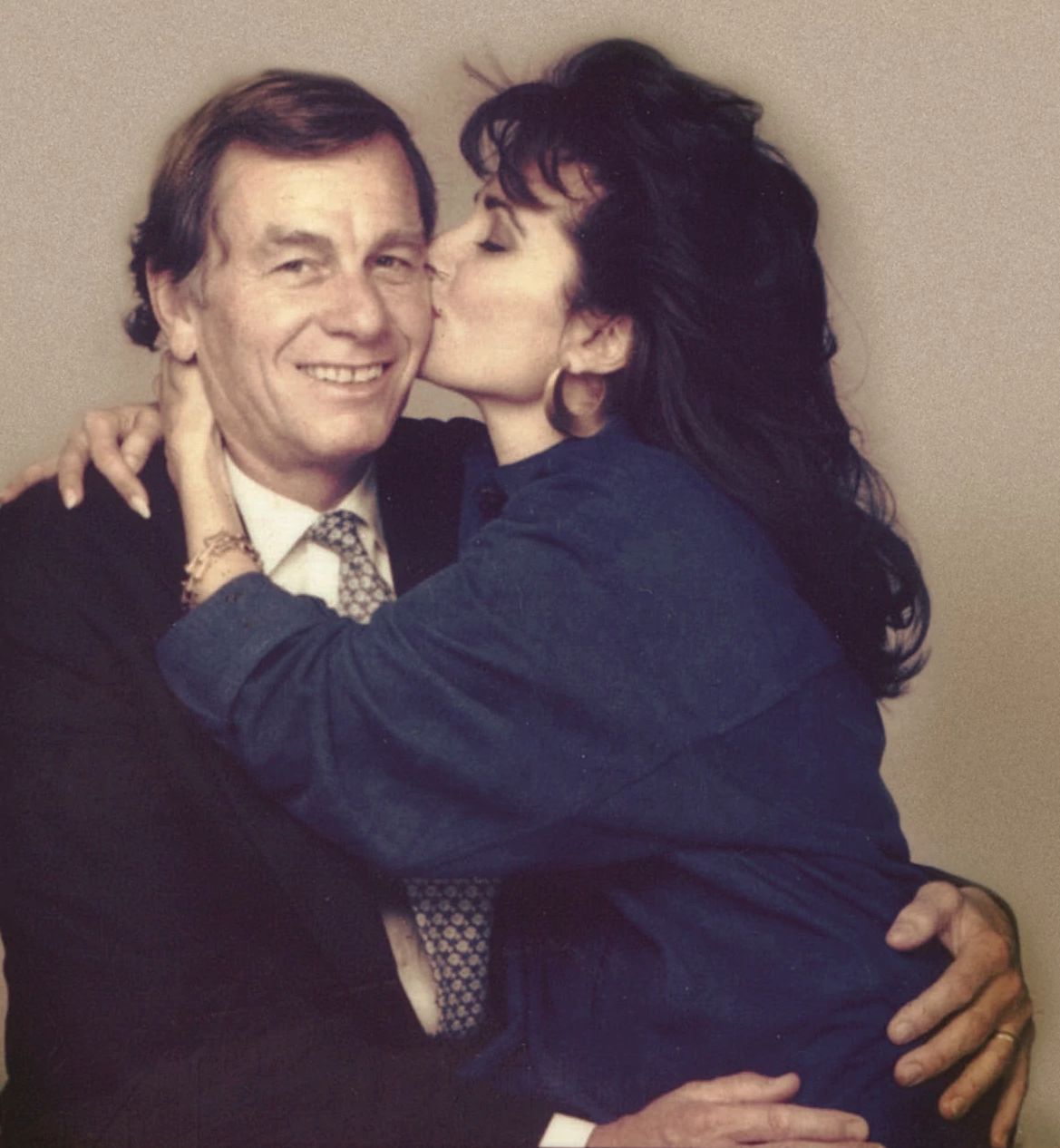
“Forget Emmy. Let’s go to Oscar,” Huber told her, Lucci says. “Let’s just go right to the top. We’ll name him Oscar.”
When he died, she had a difficult time accepting he was gone.
“I’m not somebody who takes no for an answer very easily. I will try to find around the fence, under the fence, through the fence, over the fence, and that of course was something that I couldn’t do anything about – losing my husband,” Lucci says.
Prayer helped, as did her longtime friendships. At some point, a friend told her she had a choice in how she grieved. She was allowed to keep living her life. She was allowed to feel joy again, and she would.
“You don’t know where you’re going to learn your lessons; you don’t know what things are going to be said to you to help you through,” Lucci says. “My husband’s friends stayed with me, my friends, our friends, and I feel so incredibly grateful for them. We have a lot of laughs. We do things together and I’m just so happy to be in their company. They helped me stand up when I didn’t think I could.”
Looking back on ‘All My Children,’ nearly 60 years after its debut
There’s another kind of grief that Lucci writes about in “La Lucci”: mourning the end of “All My Children,” her home for over four decades.
Lucci was cast as Erica Kane after graduating college. Signing a three-year contract felt daunting at that age. She remembers the early days vividly. They all knew “rather quickly” that the show was a hit, especially when press and speaking requests started flooding in.
The final days come back to her with as much clarity. In April 2011, she got a call at 4:30 a.m. from the show creator Agnes Nixon. Nixon didn’t want Lucci to be blindsided. Lucci says she felt “terrible” showing up to work the next day and knowing that her castmates did not. She had just returned from her book tour for her first memoir and spent the time assuring fans that the show was still “in such good shape.”

She pressed Brian Frons, former ABC Daytime president, about the decision.
“He said, without batting an eyelash, because it was 40% less to produce a food show. And he looked very proud of himself,” Lucci says. “Agnes had told me that the fans had actually crashed the whole system at ABC. There was a number you could call, so I did call it … ‘To register you’re upset at “All My Children” being canceled, press one. For all other ABC business, press two.’ The fans were indeed there for us, but the choice of the network was to cancel.”
Lucci was unsure if she’d ever be cast again. She had just moved cross-country to Los Angeles because it was more cost-efficient to shoot “All My Children” there.
“I had been playing Erica my whole adult life and I didn’t know – how will it be to walk around now? I’m not Erica anymore and don’t play Erica anymore. Will I ever work again?” Lucci says.
In the end, it was the fans who helped a new dream come to life for Lucci. They had been campaigning online to get her on “Desperate Housewives.” By the time she met with creator Mark Cherry, the show had already wrapped, but he cast her on “Devious Maids.” La Lucci was back on TV dramas.
Where do soap operas belong today?

Flip the channel during working hours and you’ll still find “Days of Our Lives” and “General Hospital” punching out new storylines. But since Lucci left “All My Children,” our television appetites have largely changed. Streaming rules, limited series are all the rage and long wait times (we’re looking at you, “Stranger Things”) are common.
As daytime’s most famous face, I had to ask Lucci – do soap operas have a place in today’s digital streaming age?
Lucci offers a resounding “yes.” Her favorite these days is “Beyond the Gates,” a new CBS show that follows multiple generations of affluent Black families in the Maryland suburbs.
“I think there is a place for it. I think people like to see other people’s relationships and how they navigate themselves through (life),” Lucci says. “The connection from storytelling is as old as time and as relevant as it ever was. And maybe now, because of these difficult times and these different times and these technology times, to have stories told with human relationships at the core – I think human beings will always want to see that.”
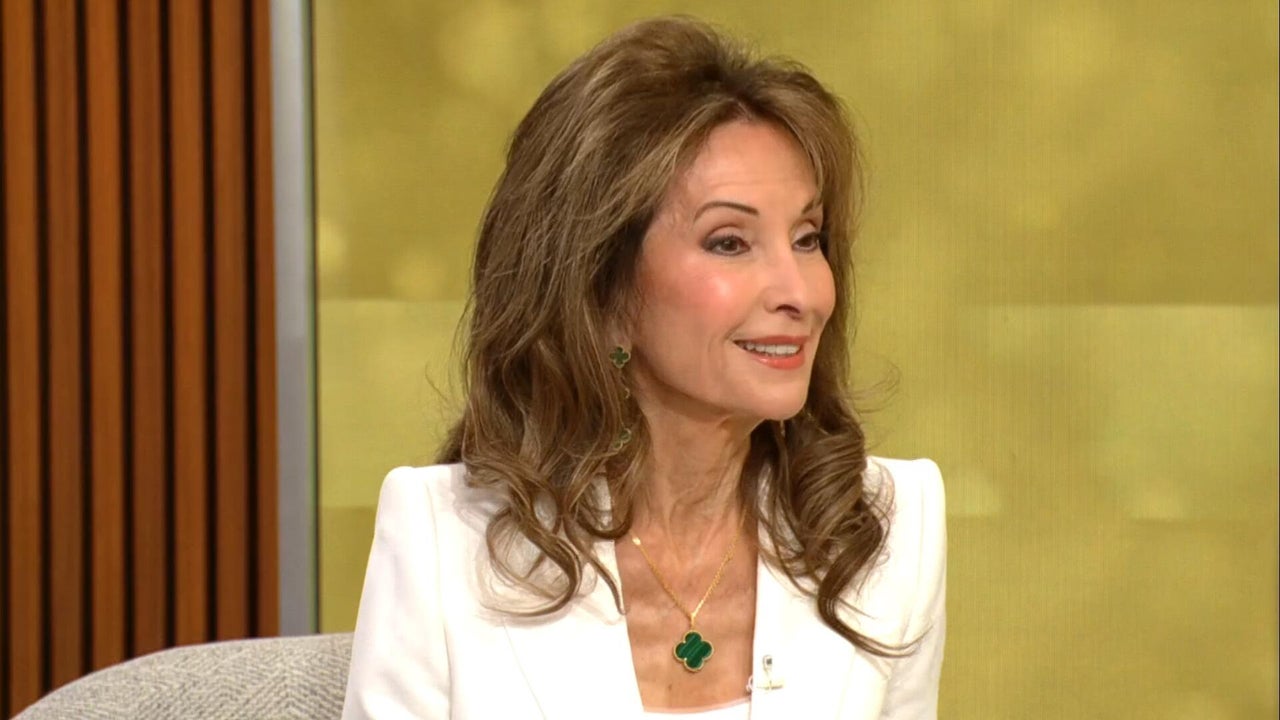
How is Susan Lucci doing? Star shares health update after near-fatal blockages.
Eight years after Susan Lucci suffered her first near-fatal heart incident, the “All My Children” star is doing A-OK.
Lucci, 79, is giving an intimate look at her personal and professional life in her new memoir, “La Lucci” (out now from Blackstone Publishing). And though “La Lucci” is filled with plenty of humorous anecdotes about her “All My Children” days, she also gets candid about grieving her husband Helmut (who died in 2022) and her health.
Best known for playing Erica Kane on ABC’s soap opera for over forty years, Lucci has since adopted a new role as a heart health advocate, urging women to pay attention to symptoms and seek treatment. She’s a national ambassador for the American Heart Association’s Go Red for Women movement.
“I’m doing great,” Lucci tells USA TODAY. “I just had my yearly checkup, actually, and just a couple weeks before that I had the (echocardiogram) and the stress test and my doctor said to me, ‘You’re not just good – it’s perfect.’ So my heart is in very good shape and I’m glad to say that.”
Women’s health advocacy is personal for Susan Lucci
After experiencing symptoms in 2018 and 2022, doctors discovered two blockages in Lucci’s coronary arteries. Left untreated, these blockages can lead to a heart attack or failure, according to the AHA. With quick medical intervention, Lucci had stents placed in her heart to hold open her clogged arteries.

“I was so incredibly lucky, I had a guardian angel on each shoulder: My grandmother on one, my dad on another,” Lucci says. “I just couldn’t keep that good luck for myself, I just had to tell my story … hopefully, even one woman might hear it and save their own life.”
The first time it happened, Lucci felt a slight pressure in her chest and assumed it would go away. “I had never had a health issue,” she writes. But the feeling came back, this time around her rib cage and her back. When it happened a third time, it felt like “there was an elephant pressing on my chest.” A friend drove her to the hospital.
You might not expect a primer on women’s health statistics from a celebrity memoir, but Lucci is careful to include essential facts about cardiovascular disease for readers. Women continue to be left out of cardiovascular research, yet women under 65 are twice as likely to die from a heart attack as their male peers, according to the AHA.
“As women, we take care of our children, our homes, our husbands, our careers, and we are not on that to-do list very often,” Lucci says. “I was out in public. Thank goodness I wasn’t home, because I would have just said, ‘Oh, I bet I need a nap for a little while, 15-minute power nap, have some water, and you’ll be fine.’ So put yourself on your to-do list was the number one takeaway.
“Number two, listen to your body, and if it’s not behaving in a way that’s normal for you, take action, call the doctor. And the third thing is, don’t be afraid to call the doctor. Even on the way to the hospital, I thought, ‘I’m too busy for this. I have so much to do today and I have to do it.’ … I didn’t take my symptoms seriously.”
Susan Lucci Shares Life Lessons In New Memoir

The daytime icon opens up about love, loss, health scares, and her enduring career as she releases her second memoir, La Lucci.
Key Points
- Susan Lucci released her memoir La Lucci on February 3, 2026, detailing her career, personal loss, and resilience.
- Lucci shares her experience with a severe heart condition and advocates for women’s heart health awareness.
- She continues acting post-loss and is open to reprising her role as Erica Kane under strong creative leadership.
For decades, Susan Lucci has been synonymous with daytime drama, captivating millions as the indomitable Erica Kane on All My Children. Now, at 79, the Emmy-winning actress is stepping into the spotlight once more—this time as the author of her candid new memoir, La Lucci, released on February 3, 2026. With this second literary outing, Lucci invites readers to join her on a journey through fame, heartbreak, resilience, and the lessons she’s learned along the way.
According to ABC News, Lucci’s memoir arrives at a poignant moment in her life. The book delves deep into the aftermath of her husband Helmut Huber’s death in March 2022, a loss that left her reeling. “I couldn’t imagine living without Helmut. I … could … not … imagine … it,” she writes, capturing the raw, unfiltered grief that followed more than five decades of marriage. Yet, as she reveals, finding the courage to move forward—one small step at a time—proved to be her lifeline. “It was better than lying on the floor in a puddle, completely destroyed.”
Lucci and Huber’s story began in 1969, blossoming into a partnership that was as much professional as personal. Helmut, who also served as her manager, was a constant presence through her meteoric rise and the everyday joys of family life with their two children, Liza and Andreas. Reflecting on his passing, a spokesperson for the family shared with The Economic Times, “A family man, he was a loyal friend and loved them deeply. Helmut’s passing is a tremendous loss for all who knew and loved him. He was an extraordinary husband, father, grandfather, and friend.”

But loss isn’t the only theme woven through La Lucci. The memoir also chronicles a harrowing health scare that nearly cost Lucci her life. In 2022, she experienced what she calls “a near brush with a widow-maker”—a heart condition involving a 90% blockage in a major artery and a 75% blockage in an adjacent one. “My mom lived to be 104, and I thought I had my mother’s genes. But I wound up with a 90% blockage in a major artery and a 75% blockage in the adjacent artery. It wasn’t cholesterol; it turned out to be calcium, and I inherited that from my dad,” Lucci explained to Woman’s World. Despite her reputation for healthy living, she admits she was slow to seek medical help—a decision she now urges other women to reconsider. “Since then, I’ve been talking about my heart scares and encouraging women to listen to their bodies, and put themselves on their to-do lists which we never do,” she says. “I tell them what my symptoms were and how women’s heart attack symptoms are sometimes different from men’s. Luckily, I’d heard about that many, many years before, so I always say I had an angel on each shoulder.”
Her advocacy work has not gone unnoticed. In 2025, the American Heart Association honored her with the Voice of the Mission Award, recognizing her efforts to raise awareness about women’s heart health. Two chapters of La Lucci are dedicated to sharing her experience, offering practical advice and heartfelt encouragement for readers to prioritize their own well-being.
While Lucci’s personal challenges have been formidable, her professional life remains as vibrant as ever. Since her husband’s passing, she’s returned to both stage and screen, appearing in Joy Behar’s off-Broadway production My First Ex-Husband and taking a role in Jonah Hill’s forthcoming Apple TV+ comedy Outcome. And for fans who can’t imagine Pine Valley without Erica Kane, there’s hope on the horizon: Kelly Ripa and Mark Consuelos, both All My Children alums, are developing two movies for Lifetime through their production company, Milojo. Lucci has made it clear that she’s open to reprising her signature role—provided the creative vision is right. “I will always listen, but I have to know I’m in good hands,” she told TV Line. She emphasized the importance of strong leadership and creative direction, recalling the pivotal roles of All My Children creator Agnes Nixon and longtime head writer Lorraine Broderick during the show’s original run. Still, Lucci expressed confidence in Ripa and Consuelos, calling their involvement “very encouraging.”
:max_bytes(150000):strip_icc():focal(705x382:707x384)/Susan-Lucci-062624-f08e795a08804a95bcf6065f0c3c228f.jpg)
As reported by SoapHub, Lucci’s book tour is in full swing, with stops in cities like Northvale, New Jersey, where she spent over three hours meeting fans, signing copies of La Lucci, and sharing stories. The memoir itself is a blend of behind-the-scenes anecdotes, emotional honesty, and moments of humor and inspiration. A special chapter, “Thank You for Asking,” addresses the questions she’s heard most often from admirers around the world, further cementing her connection with her loyal audience.
Lucci’s reflections on aging are particularly refreshing in an industry often obsessed with youth. “That it’s all over when you hit a certain age as a woman because it’s absolutely not!” she says, challenging stereotypes with characteristic candor. “I’ve never liked the idea of aging gracefully. I always thought I’m going kicking and screaming. I try to live my best life and not give up because I’m a certain age.” She also recalls the impact of labels—like becoming a grandmother and turning 60 on the same day—and her mother’s sage advice: “Well, honey, I just don’t think about it.” For Lucci, forgetting the labels and embracing authenticity has been key to living fully.
In La Lucci, she revisits not only her triumphs but also her most difficult moments: the cancellation of All My Children, surviving a miscarriage, and the process of embracing faith after loss. “I share incredible experiences in my life that were good, bad and very, very challenging,” she mentions in Woman’s World. “I felt alone going through some of these things, so I hope my stories will help others feel not so alone. Maybe my difficult choices can also help others with theirs.”
For those curious about Lucci’s next act, the future remains unwritten but bright. She’s open to new roles, new adventures, and perhaps even a return to the fictional Pine Valley that made her a household name. Above all, she hopes her journey—marked by perseverance, love, and a refusal to be defined by age or adversity—will inspire others to keep moving forward, no matter what life throws their way.
With La Lucci, Susan Lucci doesn’t just revisit her storied past; she offers a heartfelt, sometimes humorous, always honest invitation to live, love, and reinvent oneself at any age.
Carol Burnett Reveals How Lucille Ball Overcame Challenges After Desi Arnaz Divorce

Carol Burnett shared how her friend Lucille Ball overcame a career setback following her divorce from Desi Arnaz.
Burnett, 92, recounted the story about the I Love Lucy stars during the Tuesday, February 3, episode of the “Good Hang With Amy Poehler” podcast. According to Burnett, Ball confided in her when the two were filming one of the late actress’ appearances on The Carol Burnett Show.
“We had a dinner break,” Burnett recalled. “So we went across the way to the farmer’s market, you know, and she’s knocking back a couple of whiskey sours, and she says, ‘You know, kid’—because my husband at the time, Joe [Hamilton], was producing our show—and she said, ‘You’re very fortunate you got Joe to do it for you.’”
Ball then confessed that she had issues with the production of her TV show after she and Arnaz divorced in 1960 because he had handled that aspect of her career during their marriage.
“She said, ‘Because when I was married to the Cuban … Desi did everything. He invented the three-camera system. He took care of the scripts, he took care of the costumes. He took care of the lighting. All I had to do was come in and be silly Lucy on Monday and do the show. Then we got a divorce,’” Burnett remembered.
Everything came to a head when Ball found herself on set without Arnaz.
“So they had a script reading of the new Lucy show,” Burnett added, seemingly referring to The Lucy Show. “And she said, ‘It was terrible, and I thought, Desi wasn’t here to fix it. I called lunch. And I went back and I figured I have to be strong, I have to be not afraid.’”
According to Burnett, Ball did exactly that, managing the situation herself with confidence.
“So she went back, and she said, ‘I told them in no uncertain terms what they had to do, how to fix it, I was just really tough,’” Burnett said. “And then she took another little drink and she said, ‘And kid, that’s when they put the ‘s’ on the end of my last name.’”
Ball and Arnaz tied the knot in November 1940. The couple welcomed daughter Lucie in July 1951 and sonDesi Jr. in January 1953. During their marriage, the pair worked together on the iconic sitcomI Love Lucy, which aired on CBS from 1951 to 1957.
Ball and Arnaz ultimately divorced in May 1960, though they remained friends after their split. Ball went on to marry Gary Morton in November 1961, while Arnaz tied the knot with Edith Mack Hirsch in March 1963.
The exes were close until Arnaz’s death in December 1986 at age 69 following a battle with lung cancer. Less than three years later, Ball died in April 1989 at age 77 after suffering an aneurysm.

:max_bytes(150000):strip_icc():focal(793x436:795x438)/Ozzy-Osbourne-and-Sharon-Osbourne-attend-the-Billy-Morrison-081825-43fe6b87ab6749218aaaebf451e0f16c.jpg?fit=1500,1000&ssl=1 "Ozzy Osbourne Got Emotional About Life with Wife Sharon in Doc Interview Before Death: ‘We’ve Done a Lot of Miles Together’")


:max_bytes(150000):strip_icc():focal(919x464:921x466)/justin-hartley-daughter-isabella-1-35aafe0fd2504a0088387a33b87fccf9.jpg?fit=1500,1125&ssl=1 "Who Is Justin Hartley’s Daughter? All About Isabella Justice Hartley")




:max_bytes(150000):strip_icc():focal(749x0:751x2)/prince-harry-meghan-markle-australia-hospital-visit-3-041326-1b02ae2fb4904774b047a356ae5d71bc.jpg?fit=1500,1000&ssl=1 "Meghan Reportedly Pressuring ‘Snobbish’ Harry to ‘Monetize’ His Royal Status Amid Their Reported ‘Fear of Going Bankrupt’")

:max_bytes(150000):strip_icc():focal(753x271:755x273):format(webp)/cole-the-deaf-dog-112125-1a-ad248101bd174108a795d88d6afd93d8.jpg?fit=750,500&ssl=1 "Elementary School Throws Deaf Therapy Dog a Surprise Birthday Party as Students Learn Sign Language to Sing ‘Happy Birthday’")