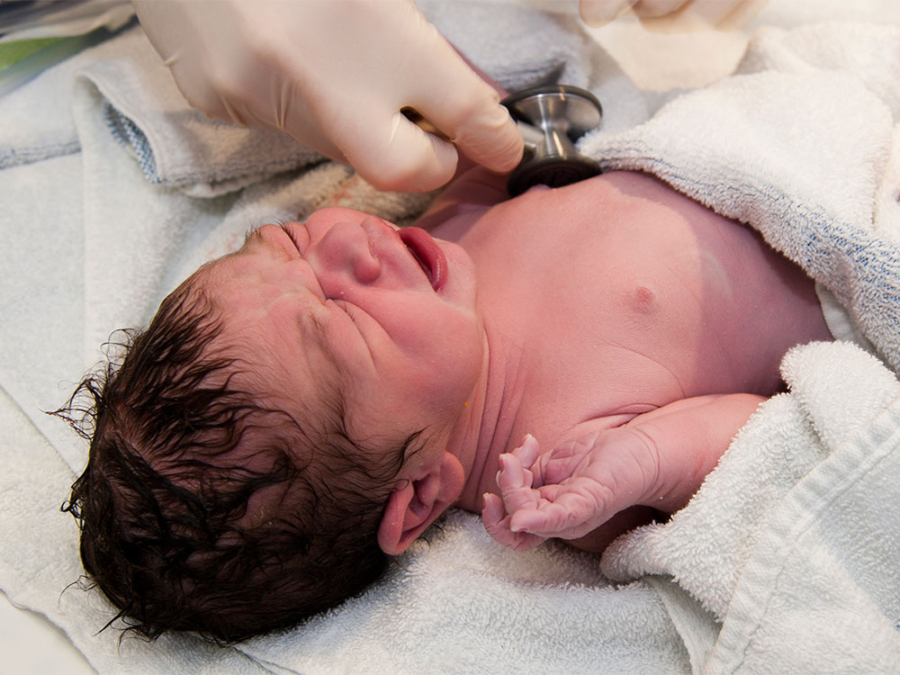
Key points
- What happens after birth depends on pregnancy, labour, birth and the way your baby adapts to life outside the womb.
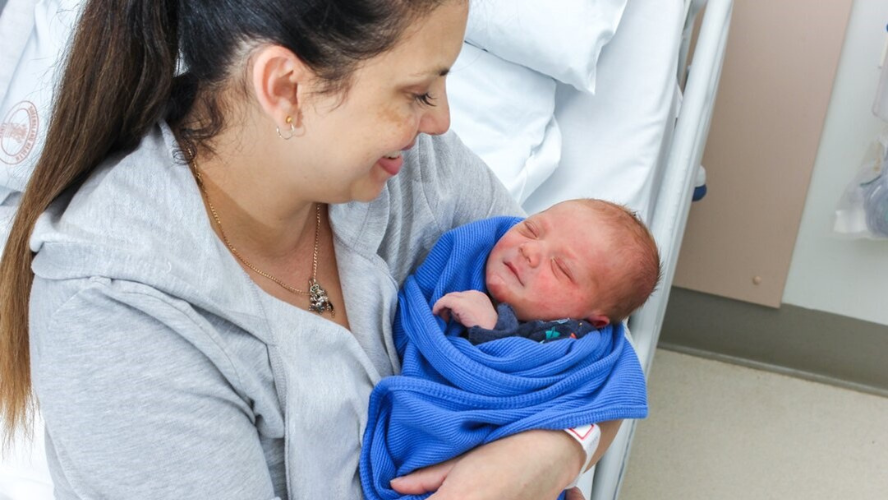
- You can have skin-to-skin contact with your baby straight after birth if you and your baby are both well.
- If your baby has breathing or other difficulties, staff will decide what sort of medical help your baby needs.
- Your baby will have some standard checks and immunisations in the first 24 hours.
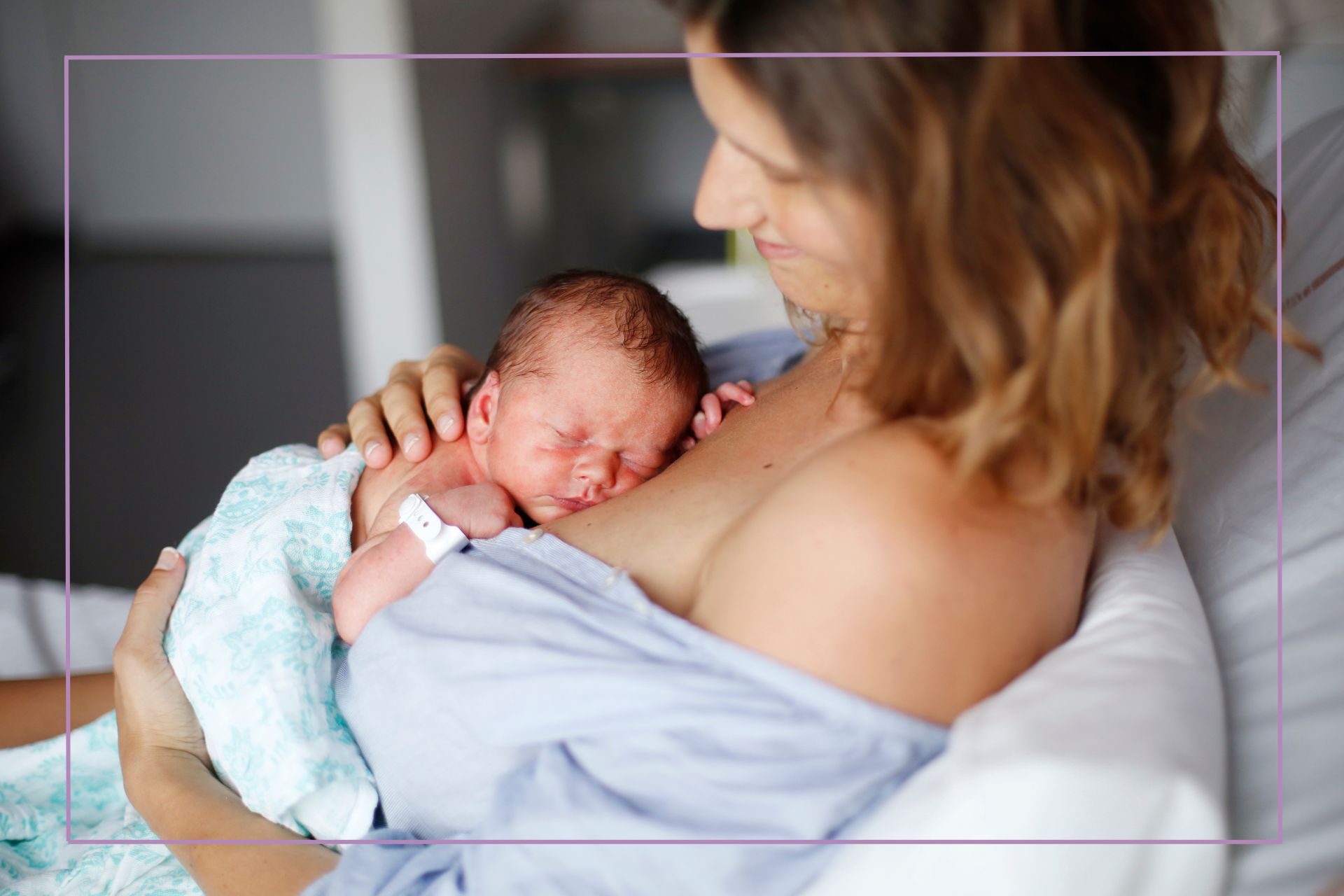
What happens to a newborn immediately after birth?bond with your baby.
The midwife will dry your baby while they’re on you and then cover you both with a warm blanket or towels.
If you prefer, your baby can be dried and wrapped in warm towels or blankets for you to hold.
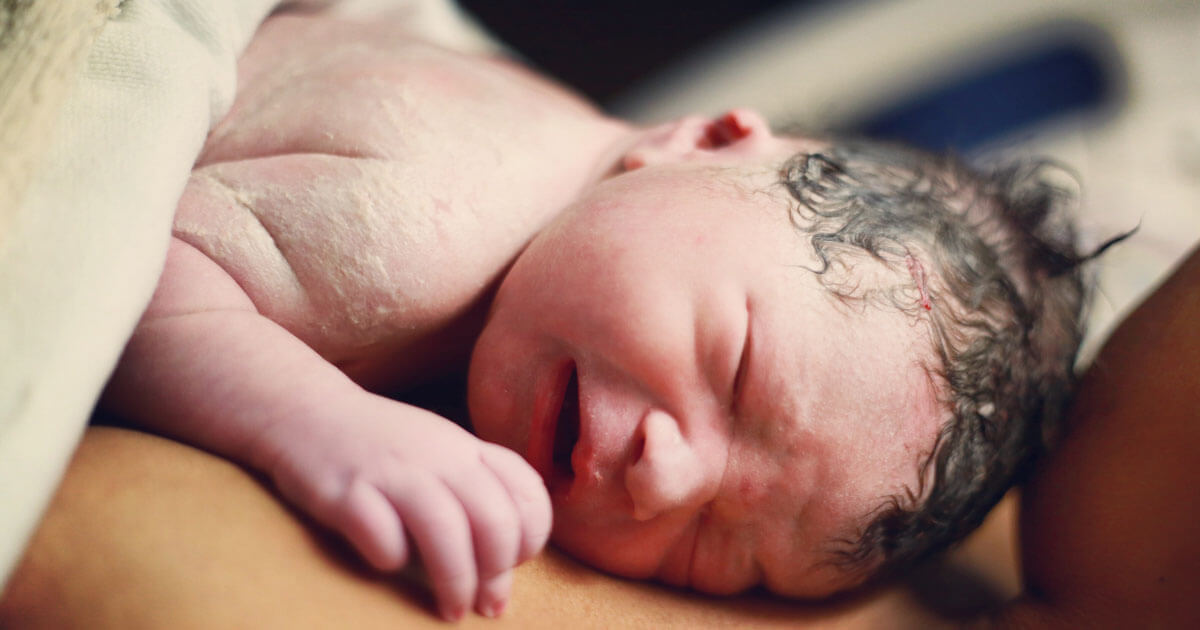
Vaginal birth with forceps or vacuum extraction
Most babies born with the help of forceps or vacuum will breathe and cry at birth. But some babies might be a little stunned or slow to breathe, especially if they were distressed during labour. If this happens, the midwife, paediatrician will take your baby to a special warming station. They’ll dry your baby and check your baby’s breathing.
You can hold your baby once they’re breathing well. You can hold your baby skin to skin, or your baby can be dried and wrapped in warm towels or blankets for you to hold.
Elective caesarean section
Most babies born via elective caesarean section breathe and cry at birth.
If you’re well and your baby is breathing well, you can have skin-to-skin contact before your baby goes to a special warming station to be dried and checked. Sometimes your baby’s breathing will be checked before you can hold them. You can ask to hold your baby skin to skin, or they can be wrapped in warm blankets or towels for you to hold while you’re on the operating table.
Sometimes you might need further medical attention, so that first cuddle might have to wait. Your birth partner can stay with your baby and give your baby skin-to-skin contact or cuddles until you get back to recovery or the maternity ward.

Unplanned (emergency) caesarean section
Babies born via unplanned caesarean section are more likely to need help to breathe at birth. The midwife, neonatal nurse or paediatrician will take your baby to a special warming station for drying. They’ll give your baby help to breathe or any other medical care that’s needed.
If you’re well and your baby is breathing well, you can hold your baby. Even if you’re still on the operating table, it’s OK to ask for skin-to-skin contact or cuddles.
If you’ve had a obstetrician will clamp and cut the cord.
The cord is quite tough to cut, but cutting it isn’t painful for you or your baby.
Hear parent stories about bonding with newborns. Some parents describe the joy of bonding at birth. Others say that they didn’t feel an instant attachment to their baby. These parents talk about how they formed that bond later.
How your baby will look and what they’ll do after birth
Skin colour
It’s normal for your baby to look blue, purple or dark red in the first few minutes after birth. If your baby is breathing well, your baby’s skin colour will gradually become pink within 7-10 minutes after birth.
Your baby’s hands and feet might stay blue for up to 24 hours. This is because the blood vessels in your baby’s hands and feet are very small, and it takes time for blood to circulate properly and turn them pink.
Crying
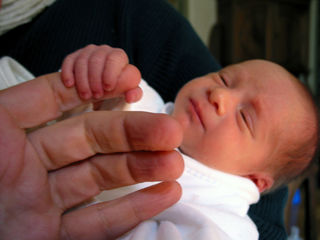
If all is well, most babies cry immediately after birth. Most then quietly gaze with large, open eyes at their surroundings before falling asleep. But some might stay awake and want to feed.
Breastfeeding
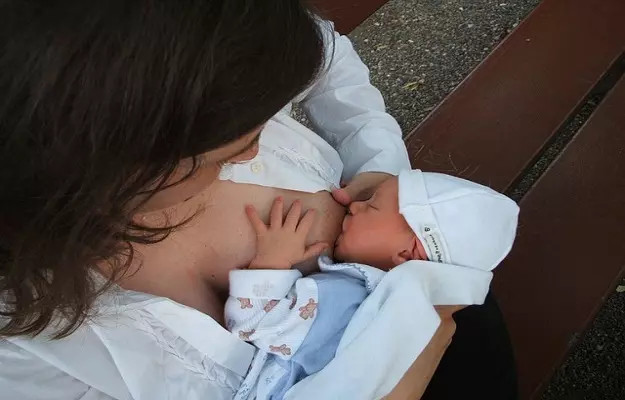
If your baby seems ready, you can try breastfeeding within a few minutes of birth. The midwife can help you and your baby with attachment if you need it.
What is the Apgar score?
The Apgar score is a rating of your baby’s:
- heart rate
- breathing
- muscle tone
- response to stimuli
- skin colour.
A score of 0, 1 or 2 is given for each of these 5 criteria, and the total is the Apgar score. The maximum Apgar score is 10.
Your baby’s Apgar score measures how well your baby has made the transition from life inside the womb to life outside. If your baby’s Apgar score is 7 or above, this is a sign that your baby is in good health and transitioning well to life outside the womb. But if your baby’s Apgar score is 6 or less, this means that your baby might need medical help.
Apgar scores are recorded at 1, 5 and 10 minutes after birth in your baby’s child health and development book.
When your baby needs medical help after birth
Your baby might need medical help after birth if they:
- aren’t breathing well and need help to breathe
- have a low heart rate (below 100 beats per minute)
- are floppy.
What will happen?
In this situation, your baby will be taken quickly to the warming station. Staff will decide what sort of extra medical help your baby needs.
A doctor, midwife or neonatal nurse might clear your baby’s airways and help your baby to breathe by giving normal air through a special baby mask and breathing device. The breathing device and face mask might stay on until your baby can breathe by themselves.
If your baby’s breathing, heart rate and floppiness don’t improve, your baby might need oxygen through a mask or breathing tube.
If your baby needed help to breathe at birth, your baby will be taken to the special care nursery or NICU for further assessment and close monitoring.
What checks and medicines will your baby need in the first 24 hours?poos and wees. This is usually within the first 24 hours.
Medicines
You’ll be asked to give your permission for your baby to have 1 or 2 injections. These injections are given into your baby’s thigh muscles after birth, either immediately or within a few hours. The injections are:
- Vitamin K – this can help prevent a bleeding disorder caused by a vitamin K deficiency (haemorrhagic disease of the newborn).
- Hepatitis B immunisation – this is the only immunisation required at birth and is given as part of Australia’s universal childhood immunisation program.
Skin-to-skin contact or breastfeeding can comfort your baby and reduce their pain during injections. If your baby can’t breastfeed or be held skin to skin, a very small amount of oral sucrose – a special sweet syrup – can also help.
You can discuss newborn baby checks and medicines with your midwife, GP or obstetrician at one of your appointments towards the end of your pregnancy.
:max_bytes(150000):strip_icc():focal(749x0:751x2):format(webp)/Kia-Thompson-110525-1-770510e2d37345cf861932e5224c360c.jpg?fit=750,500&ssl=1 "Furloughed Mom of 4 Reveals Heartbreaking Choices She’s Had to Make for Her Kids amid Government Shutdown (Exclusive)")







:max_bytes(150000):strip_icc():focal(753x271:755x273):format(webp)/cole-the-deaf-dog-112125-1a-ad248101bd174108a795d88d6afd93d8.jpg?fit=750,500&ssl=1 "Elementary School Throws Deaf Therapy Dog a Surprise Birthday Party as Students Learn Sign Language to Sing ‘Happy Birthday’")







:max_bytes(150000):strip_icc():focal(750x357:752x359)/prince-william-princess-catherine-state-visit-president-republic-korea-2023-042825-8f4b6a5dfefc480fa98cf6c50346e387.jpg?fit=1500,1000&ssl=1 "Kate Middleton and Prince William Are Caught Sharing a Secret Kiss Before Glamorous Royal Date Night")


:max_bytes(150000):strip_icc():focal(749x0:751x2)/dog-rescued--49-10092024-65e8d85d77af4fd688dc10c97351646d.jpg?fit=1500,1000&ssl=1 "Florida Highway Patrol Rescues Dog Tied to Pole Before Hurricane Milton Makes Landfall")


:max_bytes(150000):strip_icc():focal(749x0:751x2):format(webp)/Elijah-Hearn-225-081925-11ea4021cf3145f1b9eb56d309c4f3f2.jpg?fit=128,85&ssl=1 "Body of ‘Fun-Loving’ 5-Year-Old Was Found Beaten in Dumpster, as Disturbing Video Emerges from Night of Killing")