
As I sit here now, surrounded by silence that feels louder than any sound, I find myself replaying every moment I was given with my precious boy. Time feels cruel in its movement—too fast when I want it to slow, too heavy when I want to breathe. Each passing day reminds me that our time is slipping away, that the moments I once thought were endless are now heartbreakingly finite. I can feel the closeness of goodbye pressing in on me, and with it comes a kind of sorrow that words were never meant to hold.

There is a particular kind of pain in knowing that soon, I will no longer be able to hold him in my arms. No more kisses pressed gently against his forehead. No more whispering his name like a promise. No more singing softly as his eyelids grow heavy. The thought of it settles deep in my chest, a weight that never lifts, only shifts. The last bath I gave my sweet boy did not feel extraordinary at the time. It was part of our routine—one of those quiet rituals that mothers perform without thinking, believing there will always be another tomorrow. But now, that moment has become sacred. Holy. A memory wrapped in tenderness and grief. I remember the warmth of the water, how it steamed softly against the cool air of the room. I remember the way his skin felt beneath my hands—so delicate, so impossibly soft. I remember the washcloth, the careful strokes, the way I moved slowly, instinctively, as if my body already knew this moment mattered more than I understood then. He looked up at me with those trusting eyes, unaware of the weight I would one day place upon that memory.

For those few minutes, the world seemed to pause. Nothing existed beyond the two of us. No fear. No countdown. No future to dread. Just love, pure and unguarded. He was so small. So fragile. And yet, there was a quiet strength in him—a bravery I had seen time and time again. Still, in those moments, he was simply my baby. And he trusted me completely. Trusted my hands. Trusted my voice. Trusted that I would keep him safe.
After his bath, I wrapped him in a towel, pulling him close to my chest the way I always did. I remember the way he relaxed in my arms, the way his tiny body seemed to melt into me. I whispered lullabies—soft, imperfect songs that only a mother sings. Songs filled with love rather than melody. He would sigh, just slightly, and slowly drift into sleep, believing without hesitation that the world was gentle because I was holding him.
Those were the moments I lived for. In those quiet nights, I told him everything without words: You are safe. You are loved. You are enough. I am here. Now, looking back, the pain of knowing those moments are behind me feels unbearable. I ache for them in a way that feels physical. I would give anything—anything—to return to those nights. To feel his warmth again. To hear his breathing. To watch his chest rise and fall in that peaceful rhythm that once meant everything was okay.

Just one more night.
Just one more lullaby.
Just one more moment where the world felt right.
Nothing could have prepared me for the reality of saying goodbye. After all the struggles, all the battles he fought so bravely, I never imagined that our journey would lead here. Losing him feels like losing part of myself. The grief wraps around my heart, tightening until it feels hard to breathe, until even standing still feels exhausting. And yet—even here, in the deepest sorrow—love remains. I carry him with me in ways no loss can erase. In every memory. In every quiet moment. In every breath I take. His laugh, his expressions, the way his tiny fingers wrapped around mine—those things are etched into me forever. He changed my life in ways I will never fully understand, and loving him has reshaped my heart completely. Now, the simplest moments are my most treasured possessions. A bath. A towel. A lullaby. Things that once felt ordinary have become priceless. They are proof that he was here. That he was loved deeply. That our bond was real and unbreakable. Even when I cannot hold him anymore, I feel him with me. His presence lives in my heartbeat, in the quiet spaces where love never leaves. I will always be his mother. That truth does not end with goodbye. And he will always be my son—now and forever.

There are moments when I wish I could have done more. Moments when guilt whispers cruel questions, asking if I could have been stronger, faster, better. But when I sit with the truth, I know this: I gave him everything I had. My love. My care. My heart. My soul. And there is no regret in that. So I hold on to the memory of that last bath—the last time my hands could care for him in that gentle, intimate way. A moment when my love could still wrap around him completely. It is a memory I will carry for the rest of my life, not as a source of pain alone, but as a reminder of a bond so powerful that even loss cannot destroy it.
He was mine.
He is still mine.
And my love for him will never fade. 💙
Two Hearts, One Miracle: The Extraordinary Journey of Anna Grace and Hope Elizabeth
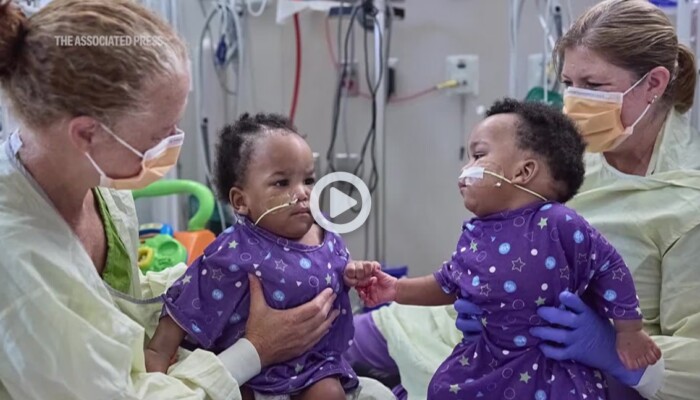
Anna Grace and Hope Elizabeth Richards came into this world already facing challenges most people will never encounter in a lifetime. From their very first breath, their lives were intertwined in the most literal and fragile way possible. Born conjoined at the abdomen and sharing vital organs — including a complex and life-threatening heart connection — their survival was uncertain from the moment doctors confirmed their condition.

Their parents were thrust into a reality they had never imagined. Instead of planning for ordinary newborn milestones, they were forced to confront medical terminology, surgical risks, and life-or-death decisions. Each appointment brought new questions, new fears, and an overwhelming sense of responsibility. Yet, even in the face of uncertainty, one thing remained unshaken: their determination to fight for their daughters.
Born at 37 weeks, Anna Grace and Hope Elizabeth entered the world surrounded by specialists, monitors, and cautious optimism. Their condition, an extremely rare form of conjoined twinning, meant that their hearts were intricately connected in a way that prevented them from surviving independently. Every heartbeat was shared. Every breath depended on careful balance. What most people take for granted — circulation, movement, rest — required constant medical supervision.

The early days were filled with anxiety and vigilance. Their parents learned quickly that there were no guarantees. Each day was a gift. Each stable moment was a victory. And yet, despite the complexity of their condition, the girls showed remarkable resilience. They grew. They responded. They held on.

For nearly two years, life revolved around hospital visits, tests, and careful monitoring. Their parents lived in a constant state of cautious hope, celebrating small milestones while knowing that the path ahead was uncertain. The girls’ shared heart made even routine illnesses dangerous. Infections were feared. Simple setbacks could quickly become life-threatening. But still, Anna Grace and Hope Elizabeth continued to surprise everyone around them.

Throughout it all, their parents never stopped believing in a future where their daughters could live independent lives. That hope led them to the most difficult decision of all — separation surgery. The procedure was extraordinarily complex. It required months of planning, advanced imaging, and collaboration between highly specialized surgeons, cardiologists, anesthesiologists, and nurses. The risks were immense. There was no absolute certainty that both girls would survive. The possibility of loss loomed heavily over every discussion.

Yet their parents chose courage. At nearly two years old, Anna Grace and Hope Elizabeth were wheeled into surgery — two lives bound together, facing the unknown. The operation lasted for hours, with teams working in perfect coordination, carefully separating shared structures and reconstructing what nature had joined. When the surgery was finally complete, something extraordinary had happened. Both girls survived. For the first time in their lives, Anna Grace and Hope Elizabeth existed as two separate individuals.

But the journey did not end there. Recovery brought its own set of challenges. Their bodies had to adjust to independent circulation and function. Physical therapy became essential. The risk of infection remained high. There were moments of uncertainty, setbacks that tested everyone’s endurance, and days when progress felt painfully slow. Still, the girls persisted. With each passing week, they grew stronger. They adapted. They learned what it meant to move, rest, and exist on their own. Slowly, their personalities began to emerge — subtle differences that reminded everyone they were no longer one, but two. Today, Anna Grace and Hope Elizabeth are thriving. They are continuing to heal, grow, and discover the world as individuals. Their parents watch them with awe and gratitude, fully aware of how close they once came to a very different outcome. Every smile, every laugh, every moment of independence is a reminder of just how far they have come.

Their story is not just about medical achievement. It is about love that refuses to give up. About parents who chose hope when fear would have been easier. About resilience in the smallest bodies. And about miracles that happen when skill, faith, and determination come together. Anna Grace and Hope Elizabeth’s journey stands as a powerful testament to what is possible, even when the odds seem insurmountable. Though their road ahead may still hold challenges, they have already proven something extraordinary — that life, when fought for with love and courage, can overcome even the most impossible beginnings.
Their story continues, not defined by what they were born with, but by the strength they carry forward every day.
A Stray Cat’s Quiet Courage: Finding Home in Small, Brave Steps
The kitten’s cry was faint, trembling under the porch. I stopped, my keys still in hand.
After work, the house felt too still. That soft mewling pulled me back outside, down the steps, toward the overgrown bushes by the fence.

A tiny black shape huddled there, barely bigger than my palm. Her eyes caught the dusk light, wide with fear. One leg dragged, useless, as she tried to shrink away.
I knelt, my knees damp in the grass. She froze, staring. I spoke softly, and she answered—a small, shaky meow.
Her fur was matted, streaked with dirt. I wanted to reach out, but her trembling stopped me. She might bolt. I stood, slow, and went inside for a box.

A Fragile Trust
The kitten didn’t run when I returned. She watched, wary, as I set the box down. My neighbor, Tom, saw me crouched there and came over, his boots crunching the gravel.
Together, we moved slow, coaxing her. She hissed, her tiny body shaking, but she didn’t flee. Her leg was worse than I thought—limp, thin, like it hadn’t grown right.

Tom held the box steady. I lifted her, gentle as I could. She was light, all bones and fear.
Inside, I mixed goat’s milk powder, warm and thin, in a bowl. She couldn’t eat alone. Too young. I wrapped her in a towel, her small claws prickling through the cloth.

She drank fast, gulping, her eyes darting. My other cats, Shadow and Muffin, peered from the hallway, their tails twitching. The kitten didn’t notice. She was too hungry.
That night, she slept on a thin blanket. Her breathing was quick, like she was still running from something. I sat nearby, watching.
Shadow crept closer, sniffing. The kitten stirred, then stilled. I wondered what she’d seen before this. Where she’d been.

A Step Toward Healing
Morning came, gray and cool. I took her to the vet. She huddled in the carrier, meowing low. The vet, Dr. Ellis, wore thick gloves.
The kitten’s fear made her wild, her eyes huge. X-rays showed muscle loss, maybe from hunger, maybe something deeper. Dr. Ellis couldn’t say for sure. “Care for her,” he said. “Give her time.”
Back home, I didn’t dare bathe her yet. Her leg worried me. I wiped her with damp cloths, slow, so she wouldn’t panic.
She didn’t fight. Her eyes followed me, not trusting, but not running either. I fed her again, and she drank like she’d never stop. Shadow watched from the couch, curious but distant.

By the third day, she used a makeshift litter box—cardboard, low enough for her to crawl into. She hid in a corner after, like she knew she was messy.
I cleaned it without a word. Shadow and Muffin circled closer now, sniffing her blanket. She didn’t hiss at them. She just watched, her ears low.
I named her Dobby. It fit her—small, brave, a little broken. She started to explore, dragging her leg. The other cats weren’t sure about her.
Muffin hissed once, then ignored her. Shadow just stared, like he was figuring her out.
A Home That Grows
Dobby changed fast. Her eyes brightened. She followed me, her limp slowing her but not stopping her. I built her a small house—wood and foam, with low steps to climb.
I wanted her to try, to move her legs. She fell at first, tumbling back. But she kept trying, her tiny paws gripping. One day, she stood for a second.
Just one. My chest tightened. I clapped, soft, and she looked at me, confused.
Shadow started to soften. He’d lie near her, not too close, watching. Dobby didn’t mind. She’d crawl to him, sniff, then flop down. Muffin stayed aloof, but she stopped hissing.
The house felt fuller, warmer. Dobby’s messes didn’t bother me as much. I cleaned them, three times a day, sometimes more. Her eyes followed me, grateful, I think.
I took her to my parents’ place for a holiday. The village had open fields, space to move. My mom loved her, brushing her fur with careful hands. My dad built a better litter box, low and wide.
Dobby ran, clumsy but fast, chasing leaves. The neighbor’s dog, Lala, wanted to play, but Dobby swatted him. He backed off, tail low. We all laughed.
Back home, Dobby grew bolder. She climbed the couch, chased Shadow’s tail. He let her, sometimes. Muffin watched from the windowsill, unimpressed.
I taped Dobby’s legs, gentle, to help her bend them. She didn’t like it, but she let me. Her steps got stronger. She stood longer each day.
One morning, she walked—shaky, like a toddler, but walking. I sat on the floor, tears in my eyes. Shadow sat beside me, his head tilted.
Dobby wobbled over, nuzzled my hand. I scratched her chin. She purred, loud and rough.
Months passed. Dobby’s legs aren’t perfect, but she runs now, jumps a little. Shadow follows her, like a big brother.
Muffin still keeps her distance, but she doesn’t hiss anymore. The house is alive with them—claws on wood, soft thumps in the night. Dobby’s eyes don’t hold fear anymore. They shine, bright and clear.

I clean her messes still. I don’t mind. She’s part of me now, like Shadow, like Muffin. She’s taught me something—about patience, about small victories.
About how a broken thing can heal, given time and care. I think of her under that porch, alone, and I’m glad I stopped to listen.
This story was inspired by a quiet, touching video you can watch here. If it moved you, feel free to support the original creator.
A Stray Cat’s Quiet Courage Carries Her Home
The rain fell soft, soaking the leaves. A small shape huddled beneath a roadside tree.
She was a cat, curled tight, her fur matted with mud and leaves. Her eyes, wide and green, held a quiet ache. I stopped my truck, delivery forgotten.

She didn’t move, didn’t meow. Just looked at me, shivering, as if she’d given up on being seen.
I knelt in the wet grass. Her body was cold, her breathing shallow. She was sick, maybe worse. I had no blanket, no carrier, just my hands and a phone.
I posted online, a quick plea to friends: Found a cat. She’s in bad shape. Help? The rain kept falling, and she stayed still, trusting me despite everything.
I found a cardboard box in the truck bed, soggy but sturdy. I lined it with my jacket. She let me lift her, limp but heavy with wet fur.
Her eyes never left mine. I whispered, “Good girl, we’re going.” She didn’t fight, didn’t make a sound. I drove, the wipers thumping like a heartbeat.

A Warm Towel and a Name
At the vet’s, we dried her first. Her fur, once matted, was soft gray, almost silver. The vet drew blood, her needle steady.
The cat didn’t flinch, just watched us, her eyes bright despite her trembling. I sat in the waiting room, staring at my muddy boots.

I thought of my old cat, gone years now, how she’d curl against me on winter nights. This one deserved that warmth, too.
Back home, I set the box by the heater. I offered her dried meat, small bits at first. She ate, slow at first, then faster, her hunger waking.
I watched her, wondering who left her under that tree. Why abandon something so gentle? Her eyes caught the light, green like spring leaves. I called her Bighead, a name that felt right for her stubborn, quiet strength.

She slept, her breathing easier. I sat nearby, not wanting her to feel alone. The house was quiet, just the hum of the heater and the soft patter of rain outside.
I thought about second chances, how they come when you least expect them.
The Weight of Waiting
The next day, the vet called. Tests showed inflammation, something worse—maggots in her wounds. My stomach turned, but I stayed calm for her.
They sedated her, cleaned her up. I couldn’t watch, didn’t want to see her still under the knife. I went home, fed her empty bowl by habit, then stopped. The house felt too big without her.
On the third day, I returned. Bighead was awake, groggy but alive. Her eyes found me, and I swear she knew me. I gave her a treat, a small reward for her fight.

She ate, her tongue rough against my fingers. I sat with her, talking low, telling her she was strong. She didn’t purr, but she leaned into my hand. That was enough.
Each day, she grew steadier. By the fourth, her appetite roared. She ate and ate, her bowl emptying fast. I laughed, the sound surprising me.
She was still weak, barely standing, but her spirit was there, pushing through. I thought of my own years, how they pile up, how some days you just keep going because you must. Bighead understood that, I think.

A New Kind of Home
By the seventh day, we brought her home. She explored, slow and wobbly, like a curious child. She sniffed corners, batted at a stray sock.
I watched, my heart full. She tried to climb onto the couch, fell, tried again. I lifted her, let her rest against me. Her warmth was a quiet gift.

On the ninth day, she found my necklace, a string of beads from my mother. She pawed at it, her eyes bright with mischief. I laughed, called her a little thief.
She was no longer the cat under the tree. She was Bighead, playful, stubborn, mine. I fed her dried fish, her favorite. She ate neatly, her tail flicking with contentment.
By the fifteenth day, she was whole. Her fur gleamed, her steps sure. She curled in my lap, her weight a comfort. I thought of the rain, the leaves, the moment I almost drove past.
I thought of how she trusted me, how she fought to live. I thought of my own life, the quiet years, the losses that linger. Bighead didn’t fix those, but she made them softer, easier to carry.

She looked at me, her eyes steady. I scratched her chin, felt her purr for the first time. It was a small sound, but it filled the room.
I was 60, too old for new starts, or so I thought. But Bighead disagreed. She’d found a home, and so had I.
This story was inspired by a quiet, touching video you can watch here. If it moved you, feel free to support the original creator.


:max_bytes(150000):strip_icc():focal(999x0:1001x2):format(webp)/bella-brave-tiktok-transplant-081023-tout-e2fc0d921f1848f497811d97fc002ed2.jpg?fit=750,500&ssl=1 "TikTok’s Bella Brave Dies at 10, Mom Shares in Heartbreaking Update: ‘She Was Fearless’")

:max_bytes(150000):strip_icc():focal(749x0:751x2)/Baby-found-alone-on-NYC-subway-platform-102025-39920c26cc6f4969bad33fc620a718db.jpg?fit=1500,1000&ssl=1 "‘Miracle on 34th St’: Newborn Baby Found Abandoned, But Alive, in Blanket at New York’s Penn Station as Authorities Look for Parents")


:max_bytes(150000):strip_icc():focal(736x253:738x255)/Susan-Lucci-All-My-Children-012325-83f3caf4d43c439d9137226e36e1cf4f.jpg?fit=1500,1000&ssl=1 "Soap Opera Icon Susan Lucci, 78, Stuns Fans With Ageless Fall Photo: ‘Classic Elegance’")


:max_bytes(150000):strip_icc():focal(753x271:755x273):format(webp)/cole-the-deaf-dog-112125-1a-ad248101bd174108a795d88d6afd93d8.jpg?fit=750,500&ssl=1 "Elementary School Throws Deaf Therapy Dog a Surprise Birthday Party as Students Learn Sign Language to Sing ‘Happy Birthday’")







:max_bytes(150000):strip_icc():focal(608x271:610x273)/CHER-poses-with-Dolly-Parton-for-a-portrait-in-1978-in-Los-Angeles-082625-6ed6da39310343ba97c5b376375a3cdc.jpg?fit=1500,1000&ssl=1 "Dolly Parton’s niece Danielle Parton opens up about cancer battle, new estate role")


