Venezuela’s interim president has called for a “balanced and respectful” relationship with the United States after American forces attacked Caracas and captured leftist leader Nicolas Maduro.
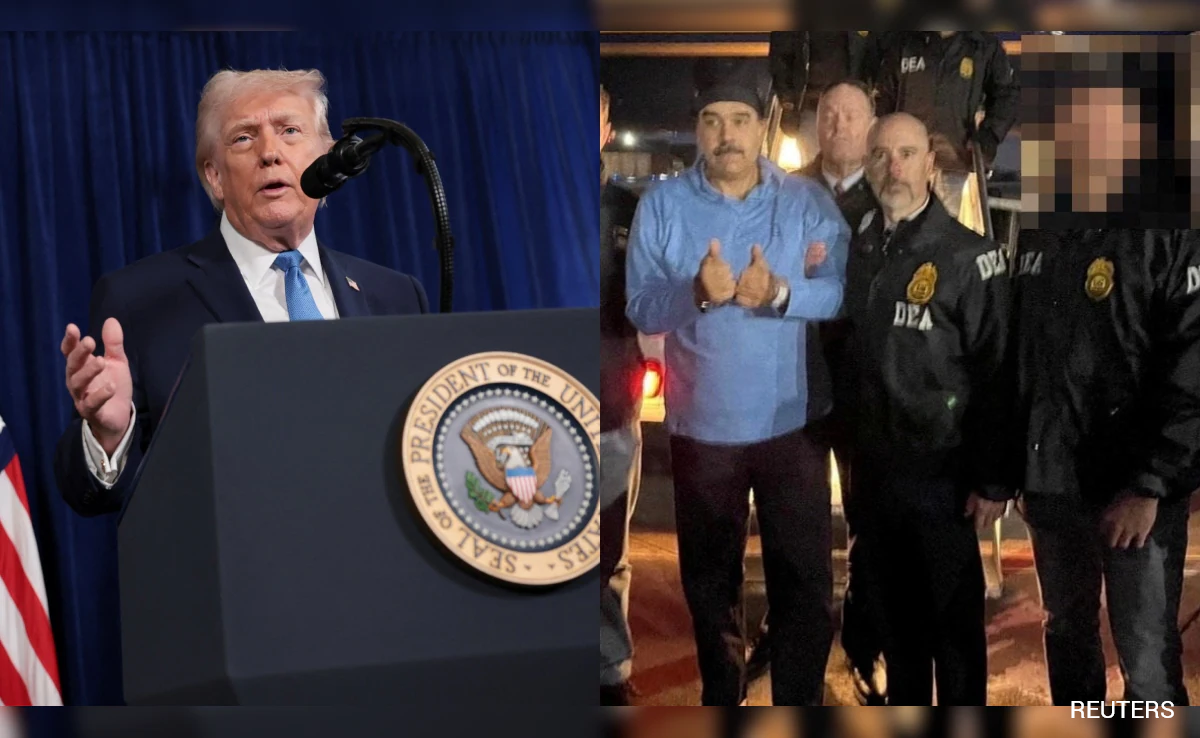
US President Donald Trump has warned Venezuelan interim President Delcy Rodriguez may have to pay a bigger price than ousted leader Nicolas Maduro “if she doesn’t do what’s right.” Rodriguez served as Maduro’s vice president since 2018, overseeing much of Venezuela’s oil-dependent economy and its feared intelligence service, and was next in the presidential line of succession.
“If she doesn’t do what’s right, she is going to pay a very big price, probably bigger than Maduro,” Trump said during an interview with The Atlantic magazine.
Trump initially praised Rodriguez after US troops captured Maduro and his wife from Caracas. Rodriguez said later, however, that her country would defend its natural resources.
The Republican leader warned that a second strike on Venezuela was not off the table if Rodriguez does not cooperate with US. “We are dealing with the people who just got sworn in. We were prepared for a second wave, were all set to go, but do not think we will need it. Will hold elections at the right time,” he said.
“US needs full access to oil and other resources in Venezuela,” Trump added.
Trump also defended his decision to take Maduro by force. “You know, rebuilding there and regime change, anything you want to call it, is better than what you have right now. Can’t get any worse,” he was quoted as saying in the telephone interview held as he arrived at his West Palm Beach golf course in Florida.
The US President warned that other countries may be subject to American intervention. “We do need Greenland, absolutely,” he said of the island that is part of Denmark, a NATO country.
He also said, “Cuba is ready to fall,” saying it would be hard for Havana to “hold out” without receiving heavily subsidised Venezuelan oil.
“I don’t think we need any action. It looks like it’s going down.”
In warning to Colombia and Mexico, he said, “Colombia is governed by a sick man. he will not be doing it very long. Operation Colombia sounds good to me. We have to do something with Mexico. Mexico has to get their act together. If they do not behave, will carry out a second strike on Venezuela.”
Venezuela’s Response
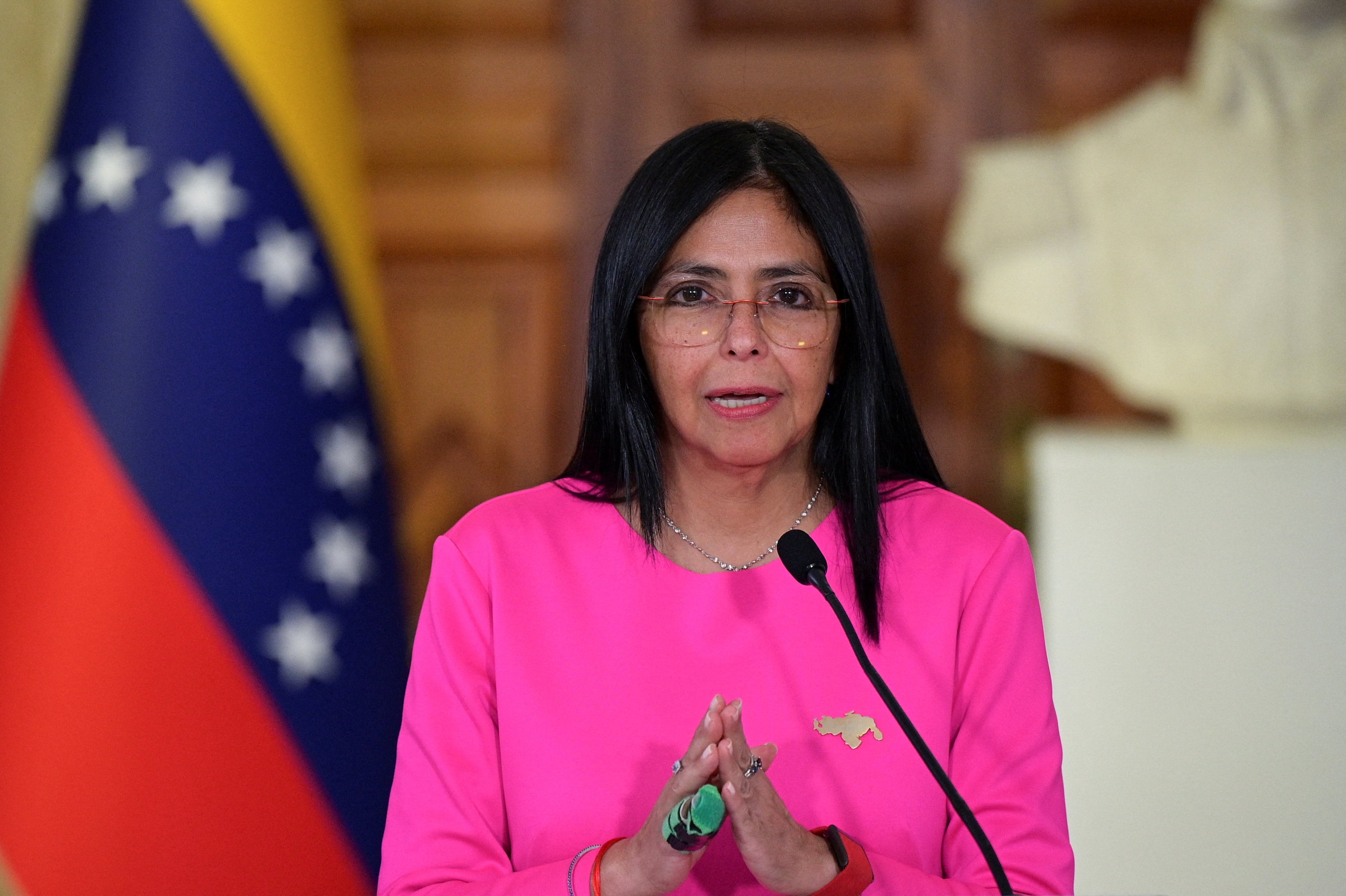
Photo Credit: Reuters
Venezuela’s interim president has called for a “balanced and respectful” relationship with the United States after American forces attacked Caracas and captured leftist leader Nicolas Maduro.
“We consider it a priority to move toward a balanced and respectful relationship between the US and Venezuela,” Rodriguez, Maduro’s vice president, wrote on Telegram.
“We extend an invitation to the US government to work together on an agenda for cooperation that is aimed toward shared development.”
Meanwhile, Venezuela’s defence minister, Vladimir Padrino Lopez, warned that the world should be on their guard because US action “poses a serious threat to the global order.”
“If today it was against Venezuela, tomorrow it could be against any state or any country. I call on the people of Venezuela to remain peaceful and orderly and not to fall into the trap of psychological warfare, threats, and fear that others want to impose on us. I call on the people of Venezuela to resume their economic, labour, educational and all other activities in the coming days,” he said.He also called for the immediate release of Maduro and the first lady, Cilia Flores de Maduro. “Its (Venezuela’s) destiny of development and prosperity, stability, and order (continues). And we, the soldiers of the nation, will be here to guarantee it. The Republic’s Military High Command, which, as you can see, is united today, standing together in the face of imperial aggression,” he added.
Maduro’s Capture
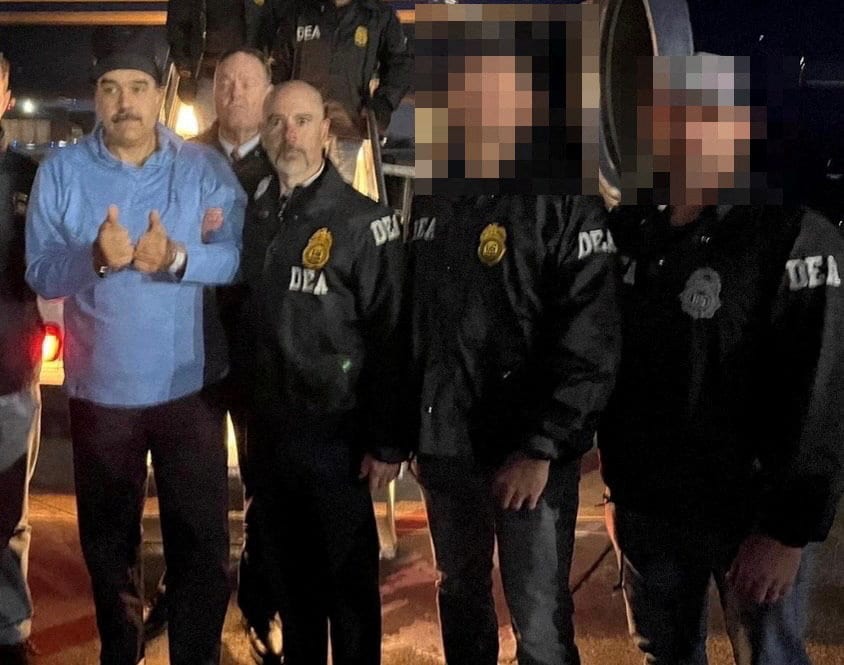
Photo Credit: Reuters
Maduro landed late Saturday afternoon at a small airport in New York City’s northern suburbs following the middle-of-the-night operation that extracted him and his wife, Cilia Flores, from their home in a military base in the capital city of Caracas – an act Maduro’s government called “imperialist”. The couple faces US charges of participating in a narco-terrorism conspiracy.
The dramatic seizure of the Maduros capped an intensive Trump administration pressure campaign on Venezuela’s autocratic leader and months of secret planning, resulting in the most assertive American action to achieve regime change since the 2003 invasion of Iraq. Legal experts raised questions about the lawfulness of the operation, which was done without congressional approval.
Day After Trump’s Will “Run” Venezuela Remark, A U-Turn By His Top Aide
Rubio’s statements on TV talk shows seemed designed to temper concerns about whether the assertive American action to achieve regime change might again produce a prolonged foreign intervention or failed attempt at nation-building.
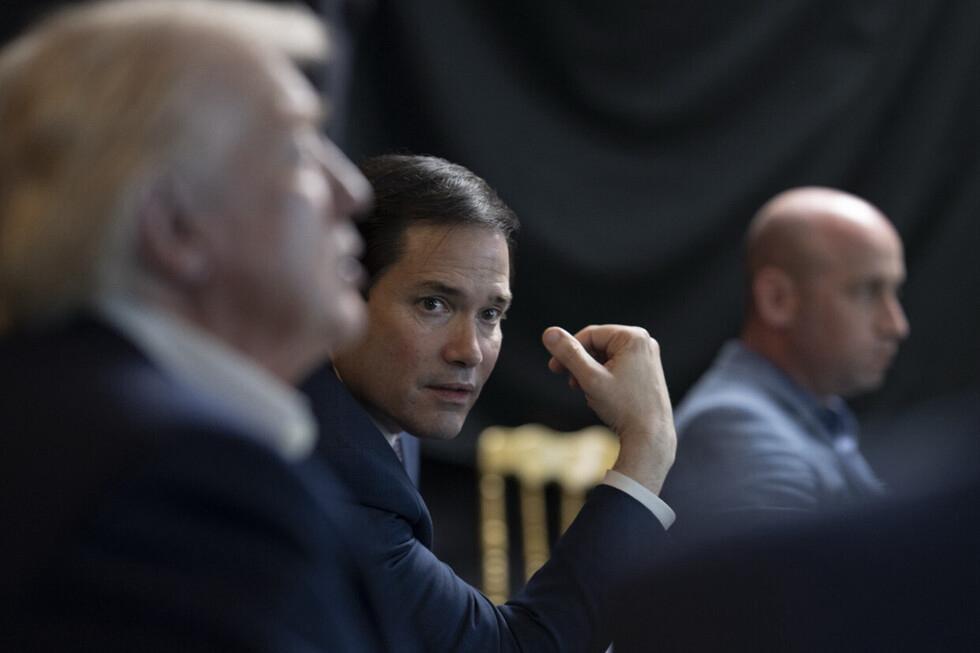
Secretary of State Marco Rubio suggested Sunday that the United States would not take a day-to-day role in governing Venezuela other than enforcing an existing “oil quarantine” on the country, a turnaround after President Donald Trump announced a day earlier that the U.S. would be running Venezuela following its ouster of leader Nicolas Maduro.
Rubio’s statements on TV talk shows seemed designed to temper concerns about whether the assertive American action to achieve regime change might again produce a prolonged foreign intervention or failed attempt at nation-building. They stood in contrast to Trump’s broad but vague claims that the U.S. would at least temporarily “run” the oil-rich nation, comments that suggested some sort of governing structure under which Caracas would be controlled by Washington.
But Rubio offered a more nuanced take, saying the U.S. would continue to enforce an oil quarantine that was already in place on sanctioned tankers before Maduro was removed from power early Saturday and using that leverage as a means to press policy changes in Venezuela.
“And so that’s the sort of control the president is pointing to when he says that,” Rubio said on CBS’ “Face the Nation.” “We continue with that quarantine, and we expect to see that there will be changes, not just in the way the oil industry is run for the benefit of the people, but also so that they stop the drug trafficking.”
The blockade on sanctioned oil tankers – some of which have been seized by the U.S. – “remains in place, and that’s a tremendous amount of leverage that will continue to be in place until we see changes that not just further the national interest of the United States, which is number one, but also that lead to a better future for the people of Venezuela,” he added.
Trump’s vow to “run” Venezuela, repeated more than half a dozen times at a news conference in Florida on Saturday, sparked concerns among some Democrats. It also drew unease from parts of his own Republican coalition, including an “America First” base that is opposed to foreign interventions, and also from observers who recalled past nation-building efforts in Iraq and Afghanistan.
Rubio dismissed such criticism, saying that Trump’s intent had been misunderstood by a “foreign policy establishment” that was fixated on the Middle East.
“The whole foreign policy apparatus thinks everything is Libya, everything is Iraq, everything is Afghanistan,” Rubio said. “This is not the Middle East. And our mission here is very different. This is the Western Hemisphere.”
Rubio also suggested that the U.S. would give Maduro’s subordinates who are now in charge time to govern, saying, “We’re going to judge everything by what they do, and we’re going to see what they do.” And though he did not rule out a U.S. military presence in Venezuela, Rubio said the current U.S. “force posture” was capable of stopping drug boats and sanctioned tankers.
A day earlier, Trump told reporters, “We’re going to run the country until such time as we can do a safe, proper and judicious transition.” He later pointed to his national security team with him, including Rubio and Defense Secretary Pete Hegseth, and said it would be done for a period of time by “the people that are standing right behind me. We’re gonna be running it we’re gonna be bringing it back.”
The White House declined to comment beyond what Trump said Saturday.
Maduro landed late Saturday afternoon at a small airport in New York City’s northern suburbs following the middle-of-the-night operation that extracted him and his wife, Cilia Flores, from their home in a military base in the capital, Caracas – an act that Maduro’s government called “imperialist.” The couple faces U.S. charges of participating in a narco-terrorism conspiracy.
The dramatic seizure of the Maduros capped an intensive Trump administration pressure campaign on Venezuela’s autocratic leader and months of secret planning, resulting in the most assertive American action to achieve regime change since the 2003 invasion of Iraq. Legal experts raised questions about the lawfulness of the operation, which was done without congressional approval.
Venezuela’s vice president, Delcy Rodriguez, meanwhile, demanded that the U.S. free Maduro and called him the country’s rightful leader as her nation’s high court named her interim president.



:max_bytes(150000):strip_icc():focal(753x271:755x273):format(webp)/cole-the-deaf-dog-112125-1a-ad248101bd174108a795d88d6afd93d8.jpg?fit=750,500&ssl=1 "Elementary School Throws Deaf Therapy Dog a Surprise Birthday Party as Students Learn Sign Language to Sing ‘Happy Birthday’")







:max_bytes(150000):strip_icc():focal(756x180:758x182)/Chad-Powers-GLEN-POWELL-PERRY-MATTFELD-Jennifer-Aniston-DavidSchwimmer-Ross-and-Rachel-Friends-3bf786e053894afcaedb0f167da60540.jpg?ssl=1 "Glen Powell Says Chad Powers Romance with Perry Mattfeld Is ‘Just Like’ Ross and Rachel in Friends (Exclusive)")
:max_bytes(150000):strip_icc():focal(870x339:872x341)/little-house-then-now-072423-tout-63f8bebf76304fa6a3eb856835994d97.jpg?ssl=1 "Where Is the Little House on the Prairie Cast Now?")

:max_bytes(150000):strip_icc():focal(748x261:750x263)/Alison-Arngrim-070826-c166c44650864085a7282b6a85a17e1d.jpg?ssl=1 "Alison Arngrim Says She Was Excited to ‘Snag the Villain Role’ on Little House, Felt a ‘Kismet Chemistry’ with Nellie (Exclusive)")
:max_bytes(150000):strip_icc():focal(999x0:1001x2)/ryan-reynolds-mayday-ny-premiere-090426-fa89d5352aa841208b777eeda01c45ec.jpg?ssl=1 "Ryan Reynolds Says He Doesn’t Like ‘Huge’ Birthday Parties Ahead of Turning 50: ‘I Get Enough Attention’ (Exclusive)")