
As Americans tire of Donald Trump, a Democratic midterm ‘tsunami’ could sweep the GOP out of power
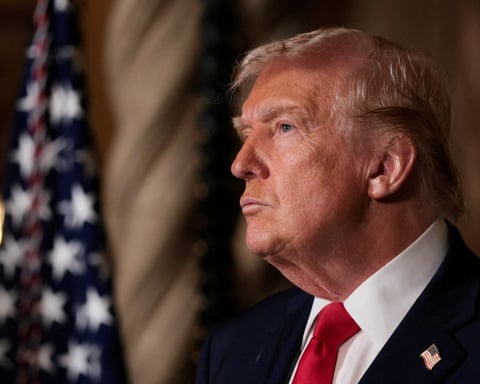
It was a wake-up call for America. In January, Donald Trump took the oath of office, declared himself “saved by God to make America great again” and issued a barrage of executive orders. In the ensuing months the US president and his allies moved at breakneck speed and seemed indomitable.
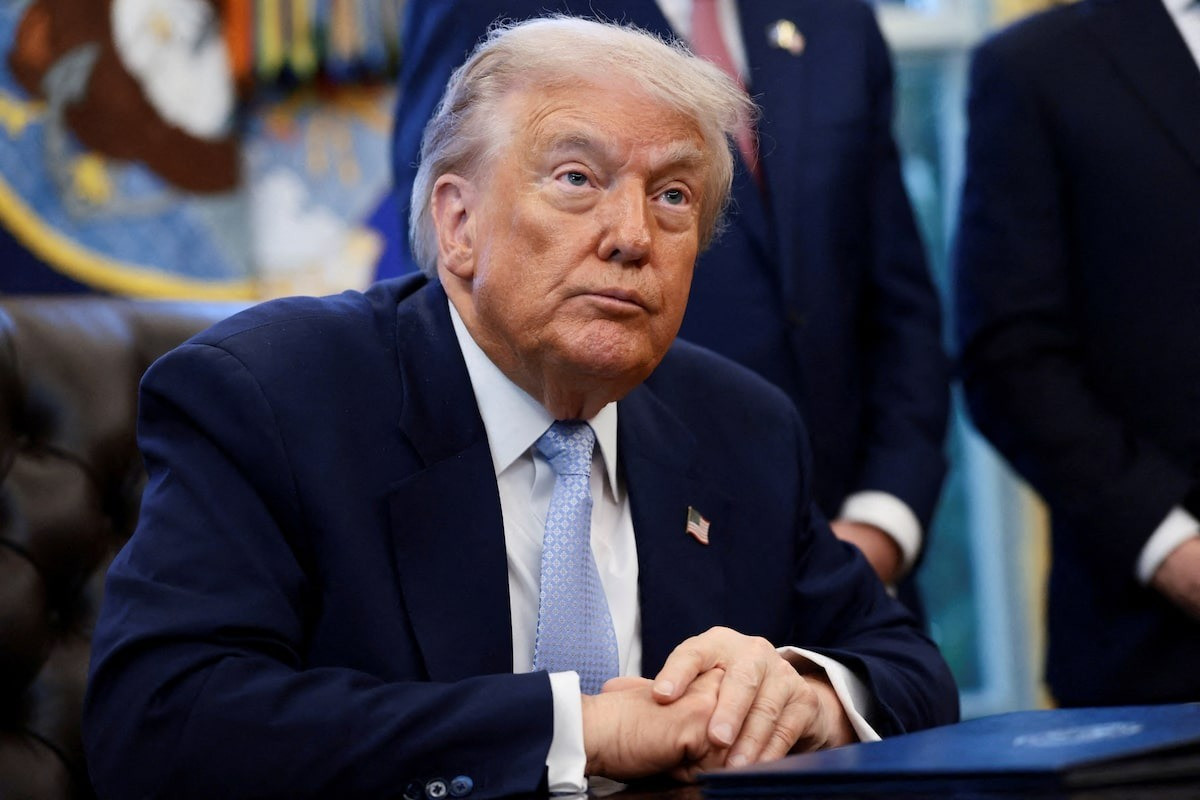
But as 2025 draws to a close with Trump struggling to stay awake at meetings, the prevailing image is of a driver asleep at the wheel. Opinion polls suggest that Americans are turning against him. Republicans are heading for the exit ahead of congressional contests next November that look bleak for the president’s party.
“He came into office and, like a blitzkrieg, was violating laws and the constitution,” said Larry Jacobs, director of the Center for the Study of Politics and Governance at the University of Minnesota. “The American political process is slow-moving and so he was able to do things that were extraordinary.
“But this is a guy whose legacy may well be the political collapse of Republicans in this era. Put another way, rather than asking who is going to be the inheritor of the Trump mantle and the so-called Maga movement, we may be talking in a year or so about which candidates can escape the odious distinction of having been connected with Trump.”
Emboldened by his political comeback in the 2024 election, Trump hit the ground running. On his first day in office he pardoned nearly everyone involved in the January 6 insurrection at the US Capitol and launched a radical expansion of executive power, a systematic retribution campaign against perceived adversaries, and a sweeping overhaul of domestic and foreign policy.
A government-wide restructuring under the “department of government efficiency” (Doge) was led by the billionaire Elon Musk and resulted in mass federal layoffs and the dismantling of agencies such as USAID. But Trump and Musk fell out and Doge burned itself out.
The president’s domestic agenda included a hardline immigration crackdown featuring mass deportations and the deployment of the national guard and other federal forces to US cities, often against the wishes of local authorities. The 1798 Alien Enemies Act was invoked to deport Venezuelans to a mega-jail in El Salvador.
Wendy Schiller, a political scientist at Brown University in Providence, Rhode Island, said: “He promised to secure the border but the deportations have gone too far. City after city, community after community has expressed frustration and dismay at the tactics.”
Trump had also promised to fix the economy but his signature legislation, the “one big, beautiful bill” – rebranded as the Working Families Tax Cut Act – will, critics say, transfer wealth from the poor to the rich and strips healthcare from millions of people. Meanwhile the president’s disruptive policy centred on aggressive tariffs that caused market volatility and fuelled higher prices for consumers.
Schiller added: “The greatest self-inflicted wound that the president has brought on himself and the Republicans are the tariffs. In the first administration, they were primarily directed at China and you can make an argument about that.
“In this administration they are so much broader and more sweeping and it’s showing in supply chains, in consumer purchasing, in pricing, in every corner of people’s lives. Whether it’s a supermarket or it’s holiday gifting or whatever it is, they’re feeling it.”
Trump’s appointment of Robert F Kennedy Jr helped fan anti-vaccine sentiment, leading to a resurgence of preventable diseases and a politicisation of the Centers for Disease Control and Prevention. He withdrew the US from the Paris agreement and systematically dismantled climate science infrastructure.
At his political zenith, Trump’s embrace of authoritarianism appeared unstoppable. He quickly fired 17 independent inspectors general in apparent violation of federal law. He ordered the justice department to investigate perceived enemies including James Comey, the former director of the FBI, and Letitia James, the New York attorney general.

The administration targeted law firms that represented adversaries, stripping contracts and security clearances to extract multimillion-dollar settlements. Billions in federal funding were frozen for universities including Harvard and Columbia, leveraging antisemitism and DEI policies to force changes in curricula and leadership.
Trump also pursued an aggressive campaign against mainstream media, suing news organisations such as CBS/Paramount, the Wall Street Journal and the New York Times, pushing the Federal Communications Commission to revoke broadcast licences and restricting access for some outlets while promoting “Maga media”.
In 11 months he signed 225 executive orders, 56 memorandums and 114 proclamations. Many mirror proposals from the conservative Project 2025 policy document and have been met with significant legal challenges, with numerous actions deemed illegal and unconstitutional by federal judges.
Skye Perryman, president and chief executive of Democracy Forward, a national-legal organisation that has filed numerous lawsuits against the administration, said: “This administration has been ruthlessly breaking the law, disregarding the protections that are provided through American law for people and communities. It has been governing in a way that is on a collision course with the constitution.”
She gave examples including infringement of free speech, disregard for due process, an effort to replace civil servants with political loyalists, and a federal funding freeze that threatened food and nutritional assistance for 42 million Americans. But Perryman also finds hope in the way that people have responded.
“The American people have been pushing back. There have been nearly 500 lawsuits filed in federal court over the course of these first 11 months of the administration. The administration is losing in court before judges that were appointed by Republicans, Democrats and President Trump himself.”

One of the most unexpected developments of Trump’s second term is how much political time and capital he has invested in foreign policy. His relationships in the Middle East and cryptocurrency ventures prompted ethical concerns. His intention to accept a $400m luxury jet from Qatar for use as Air Force One drew rare bipartisan criticism as a “bribe”.
Trump brokered a ceasefire and hostage release deal between Israel and Hamas but gave the Ukrainian president, Volodymyr Zelenskyy, an Oval Office shakedown while rolling out a red carpet for Russia’s Vladimir Putin in Alaska. He ordered military strikes on alleged drug-trafficking boats in the Caribbean, leading to allegations of potential war crimes.
Henry Olsen, a senior fellow at the Ethics and Public Policy Center thinktank in Washington, said: “The focus on foreign affairs has surprised me. It’s not just the ongoing question of Ukraine. This has been a first year that has been much more defined by what he’s doing overseas than what he’s doing at home and I did not expect that.
“I also expected more of what we saw during the campaign, which was a Trump that didn’t use social media in an explosive way on a regular basis, and instead we’ve returned significantly to the first term, where the language and the surprising use of social media is a defining feature of his presidency. People didn’t like it in term one and then they seem not to like it in term two.”
For months Trump appeared unassailable as the opposition Democratic party struggled to find its feet and protests appeared muted compared with his first term.
But a demonstration known as No Kings staged in June to coincide with Trump’s 79th birthday and a rare military parade in Washington attracted 5 million people. This was followed by another No Kings protest in October, where the turnout of 7 million was said to be the biggest civic action in the US for more than half a century.
Democrats also appeared to regain their mojo. Against the backdrop of the longest government shutdown in history, the party stormed to victory after victory in elections for governor of New Jersey and Virginia, mayor of New York, and other offices. The central theme of their campaign was affordability as millions of Americans struggle to make ends meet.
Like Joe Biden before them, Republicans’ insistence that the economy is strong does not tally with many people’s daily experience at the supermarket. The president’s efforts to dismiss affordability as a “con job”, “hoax” and “scam” by the Democrats have rung hollow as he plans a $400m ballroom at the White House.
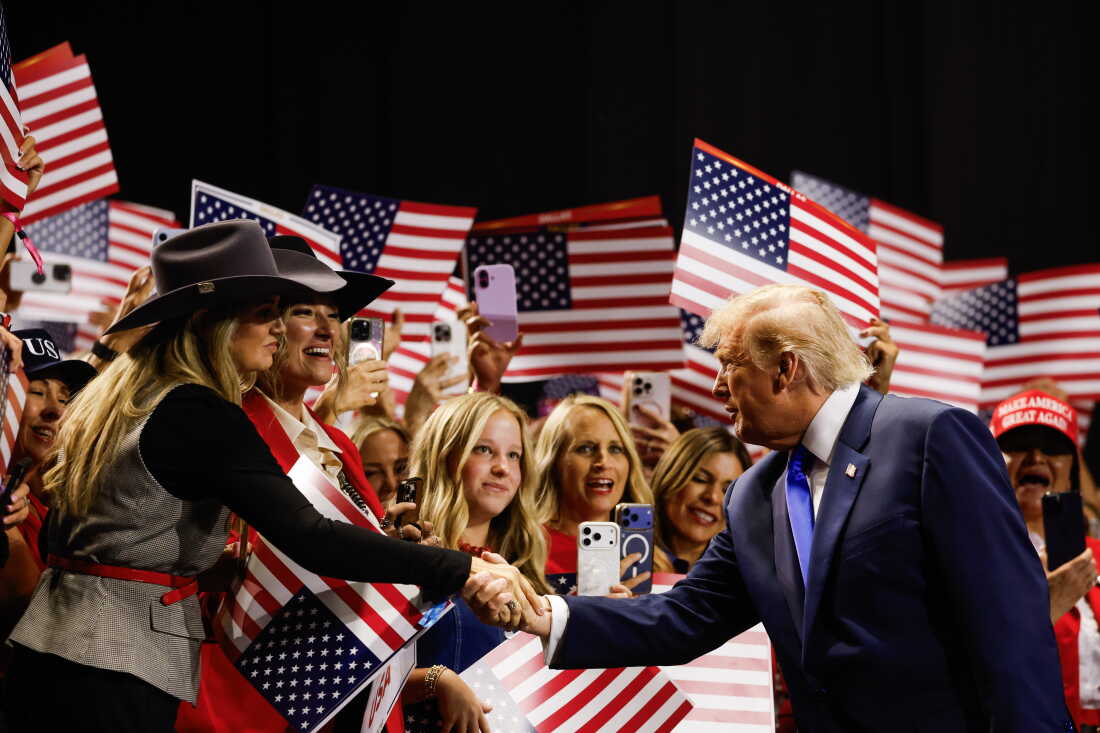
With the Jeffrey Epstein files also casting a long shadow, Trump appears increasingly out of touch. For years he travelled the country drawing big crowds to rollicking campaign rallies where he would meet local officials. This year he has held only seven rallies, focusing his travel instead on overseas trips and his own luxury golf courses. The Atlantic magazine described him as “the bubble-wrapped president”.
Last month a poll by Gallup showed Trump’s job approval rating down to 36%, the lowest of his second term, while disapproval had risen to 60% (his all-time low was 34% in 2021, at the end of his first term after the January 6 attack on the US Capitol). Notably his approval rating was underwater on crime (43%), foreign affairs (41%), foreign trade (39%) and immigration (37%).
The polls suggest that groups who moved towards Trump in 2024 – including young voters and Latino voters – are now deserting him and returning to the Democratic fold, animated by jobs, inflation and healthcare.
Schiller of Brown University said: “This is getting into territory that is Biden numbers and the question is why. The president and his team have taken the signals from the voters on particular issues – for example, immigration and bringing manufacturing home where voters said, yes, we want a change in our policies – but they took it to the extreme. They overreached.
“America, at the end of the day, is not an extremist country. If you go too far left, voters are unhappy; if you go too far right, voters are unhappy. This has been true for quite some time so what we’re seeing is voters expressing a sense of frustration, trying to send a signal, at least to the Republican party if not to the president: we’re not happy with the direction you’re taking us.”
The omens for November 2026 are grim. History shows the party that holds the White House always tends to suffer losses in midterm elections. Democrats appear galvanised and determined to curb Trump’s power. Some Republicans are already deserting what they may fear is a sinking ship.

Several Republican senators have announced they will not run for re-election next year: Mitch McConnell of Kentucky, Thom Tillis of North Carolina, Joni Ernst of Iowa and Tommy Tuberville of Alabama. Meanwhile, more than two dozen Republicans in the House of Representatives have announced they will not try to retain their seat.
Patrick Gaspard, a former assistant to Barack Obama and director of the White House office of political affairs, said: “Trump has run out of runway on Joe Biden. For the first few months of the presidency, he was given this allowance to blame everything that people are experiencing on Joe Biden.
“But now, by a margin of two to one, voters hold Trump rather than Biden responsible for the outcomes in the economy and that’s got to be pretty scary for [House speaker] Mike Johnson and company.”
Gaspard, now a distinguished senior fellow at the Center for American Progress thinktank in Washington, added: “I would place the odds at 70% that Democrats are going to recapture the House in a massive tsunami. Republicans are losing every moment they’re talking about something other than the economy and Donald Trump forces them to talk about anything but the economy.”
The midterms typically fire the starting gun for the next presidential election, consigning the incumbent to lame duck status. It is not a position that Trump – who continues to drop dark hints about running for an unconstitutional third term – is likely to relish.
Charlie Sykes, a conservative author and broadcaster, said: “With Donald Trump, ‘lame duck’ may just be another word for nothing left to lose. He will still have vast, unchecked powers, which he’s already made clear that he will exercise in the rawest, most reckless way possible.
“He’s figured out what he can do with the power of pardoning – for my friends everything, for my enemies the law. He’s pardoning major drug kingpins and corrupt politicians right and left before he’s officially a lame duck. How does Donald Trump behave when he has nothing politically left to lose? That’s a question I’m not sure that we’ve gotten our heads around.”
Republican behind Epstein files act responds to Trump ‘lowlife’ taunt
Kentucky’s Thomas Massie used the president’s insult to raise funds to run against a Trump-endorsed candidate
“There’s becoming a reckoning in Britain that needs to happen in the United States,” Massie said then. “A prince lost his title. The ambassador to the United States lost his job. We need to see those … kind of consequences here.”
Trump’s justice department failed to meet the Epstein Files Transparency Act’s 19 December deadline in full, though it did release a number of materials that day. On Wednesday, the justice department said it had discovered more than a million more documents related to Epstein, and it could take “a few more weeks” to process those files for public release.
Trump has endorsed a retired US Navy Seal, Ed Gallrein, to run against Massie in the Republican primary for the incumbent’s seat ahead of the 2026 midterms.
Massie has previously told Politico that Gallrein is a “failed … establishment hack” whom Trump endorsed out of panic.
Dear Britain: things are bad, but America will recover from Donald Trump. Just give us three years
When the president targeted me and my TV show, millions said no. So don’t give up on us – and always remember, we’re not all like him
Dear Britain: things are bad, but America will recover from Donald Trump. Just give us three years

When the president targeted me and my TV show, millions said no. So don’t give up on us – and always remember, we’re not all like him
I have no idea if you know who I am, but I was asked to deliver this year’s alternative Christmas message (which I’ve heard is a big deal) so I hope you do, but if not I host what you call a chatshow (we call it a talkshow) in what you call the colonies, I think? I honestly have no idea what’s going on over there.
I do know what’s going on over here though, and I can tell you that, from a fascism perspective, this has been a really great year. Tyranny is booming over here.
You may have read in your colourful newspapers that my country’s president would like to shut me up – because I don’t adore him in the way he likes to be adored. The American government made a threat against me and the company I work for, and all of a sudden we were off the air. But then, you know what happened? A Christmas miracle happened. Well, it was September. It was a September miracle. But the holiday does seem to come earlier and earlier every year, doesn’t it?

Millions and millions of people stood up and said: “No, this is not acceptable.” People who never watched my show, people who were on record saying they hate my show spoke out, they marched. They did this all to support the right to a free expression of speech – and because so many people spoke out, we came back. Our show came back stronger than ever. We won, the president lost – and now I’m back on the air every night, givin’ the most powerful politician on Earth a right, and richly deserved, bollocking. That’s a word, right – I used it properly?
And the reason I’m telling you this story is because maybe you’re thinking: “Oh a government silencing its critics is something that happens in places like Russia, or North Korea, or LA, not the UK.” Well, that’s what we thought, and now we’ve got King Donny the Eighth calling for executions. It happens fast.

You know, it’s funny, we Americans are very proud of not having a king. It’s kind of why we left. Earlier this year tens of millions of us marched at protests called No Kings. You had some of those there. And just for the record we have nothing against your king. I mean I don’t know if you know this, but his son lives here. We just – well some of us – have a problem with the guy who thinks he is our king.
Here in the United States right now, we are both figuratively and literally tearing down the structures of our democracy. From the free press, to science, to medicine, to judicial independence, to the actual White House itself, we are a right mess. And we know this is also affecting you, and I just wanted to say sorry. And we want you to know or, at least I want you to know, that we’re not all like him. We’re not all like that.
Look I know (from the musical Hamilton) that our countries didn’t start off on the greatest note, but I also know (from seeing Love Actually) that we have a special relationship. So, if I might speak on behalf of my country – which I most certainly do not – our message to you, our friends across the pond this Christmas is: don’t give up on us. We’re going through a bit of a wobble right now, but we’ll come around. It may not seem like it, but we love you guys. We even love the things about you that you don’t like. Like Simon Cowell, for instance. We are not bright. We’re Americans. No one knows better than you we’re always just a little bit late to the game, but do we come through in the end? Maybe. Give us about three years. Please. Thank you for your patience, and thank you for Spider-Man. Merry Christmas, and happy holidays.







:max_bytes(150000):strip_icc():focal(753x271:755x273):format(webp)/cole-the-deaf-dog-112125-1a-ad248101bd174108a795d88d6afd93d8.jpg?fit=750,500&ssl=1 "Elementary School Throws Deaf Therapy Dog a Surprise Birthday Party as Students Learn Sign Language to Sing ‘Happy Birthday’")









:max_bytes(150000):strip_icc():focal(749x0:751x2)/Mel-Gibson-Fanexpo-Chicago-083126-f90ea0e0e7904853b5fd33a8b889840f.jpg?ssl=1 "Mel Gibson Apologizes for ‘Spontaneous Thoughtless Idiocy’ After Using Mock Sign Language at Toronto Fan Event")
